
Quick answer: unpriced track interface item
Review focus: unpriced track interface item.
A partition tender unpriced track interface item review is the discipline of finding scope that affects the overhead track route but has no clear price, owner or drawing reference before award. In movable wall procurement, the panels themselves are often priced, while the interfaces around the track are left to assumption. That gap can surface later as a coordination problem rather than a product problem. This article gives project teams a structured way to flag those items early without inventing performance, engineering or commercial conclusions.
Why Track Interfaces Become Unpriced Tender Items
Project review term: unpriced track interface item.
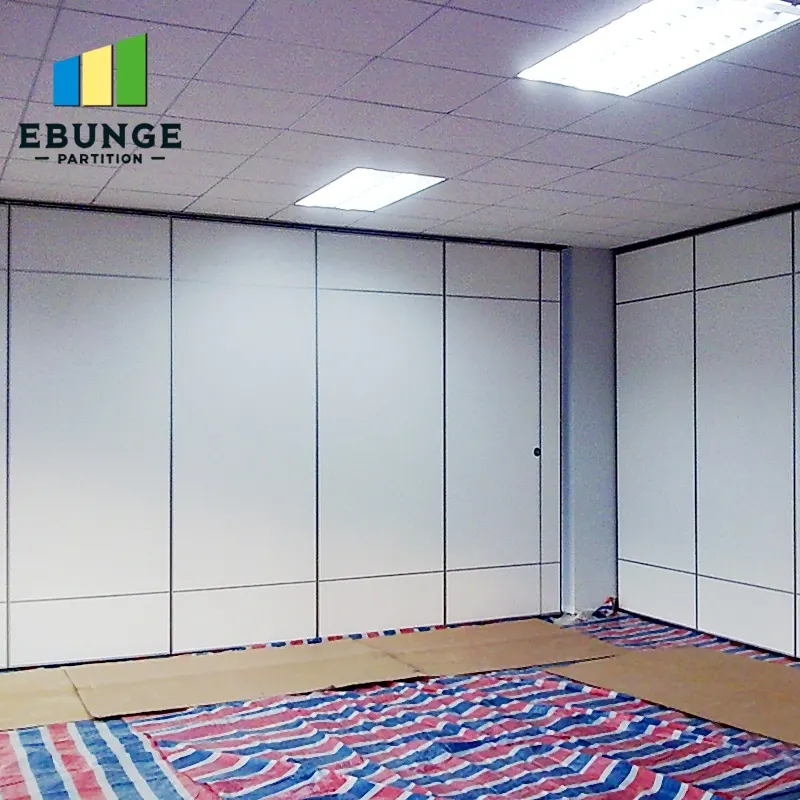
Movable wall panels are individually movable, suspended from a top track, cross the opening without a floor track, and park at a planned stacking position. The visible product is easy to describe. The surrounding interface is harder to price because it touches structure, ceiling, finishes and adjacent trades.
When a tender package prices only the partition panels, the overhead route may be treated as included, excluded or simply unstated. That ambiguity is the risk. The suitability of each route and parking arrangement depends on the approved layout, circulation, ceiling interfaces and operating sequence.
Start With the Movement Route, Not the Panel Finish
Coordination scope: unpriced track interface item.
Straight, turning and stacking routes are reviewed from the layout. Before comparing finishes or acoustic concepts, confirm that the proposed route is continuous and connected. The exact route, junction arrangement, continuous overhead path and parking position must be confirmed from the coordinated project drawings.
Use the layout to trace each route from the closed position to the planned stacking position. Those marks are candidate interface items.
Route review questions
- Does the route remain continuous from the opening to the parking position?
- Are turning points shown on the layout or left to site interpretation?
- Does the stacking position conflict with ceiling services, lighting or adjacent doors?
- Is the support condition along the route described in the tender documents?
Build a Flag List Before Comparing Bids
Checklist focus: unpriced track interface item.
A flag list is not a cost estimate. It is a scope-control tool that records what is unclear. Each item should name the interface, the drawing reference, the responsible trade and the evidence still required.
Decision checklist for tender review
- Is the overhead track route shown on a coordinated plan?
- Is the support condition identified as existing, new or by others?
- Are ceiling and finish interfaces described at the track line?
- Are pass-door requirements stated, including location and operation?
- Are parking and stacking positions coordinated with room use?
- Are acoustic requirements expressed as project-specific criteria rather than assumed values?
- Is the party responsible for interface coordination named in the tender?
Separate Product Scope From Interface Scope
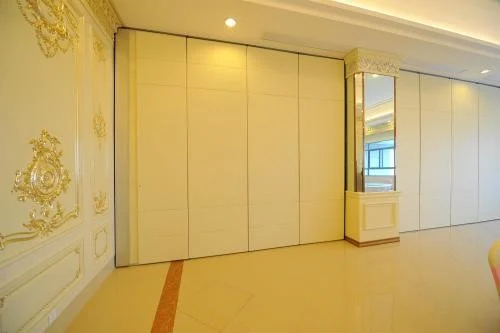
Confirmed finish options include laminate, melamine, fabric, leather, glass and other approved surfaces. These are product-facing choices. They do not resolve track support, ceiling coordination or route continuity.
Keep two columns in your review: product scope and interface scope. Product scope covers panels, finishes and pass-door requirements. Interface scope covers the overhead route, support conditions, ceiling transitions and coordination responsibilities. Mixing them makes it harder to see what is actually unpriced.
Compact comparison for tender review
| Review area | Typical tender gap | Evidence to request |
|---|---|---|
| Overhead route | Route shown only conceptually | Coordinated layout with turning and stacking positions |
| Support condition | Assumed to be by others | Project-specific structural review and responsibility matrix |
| Ceiling interface | Finish transition not described | Ceiling plan and interface detail |
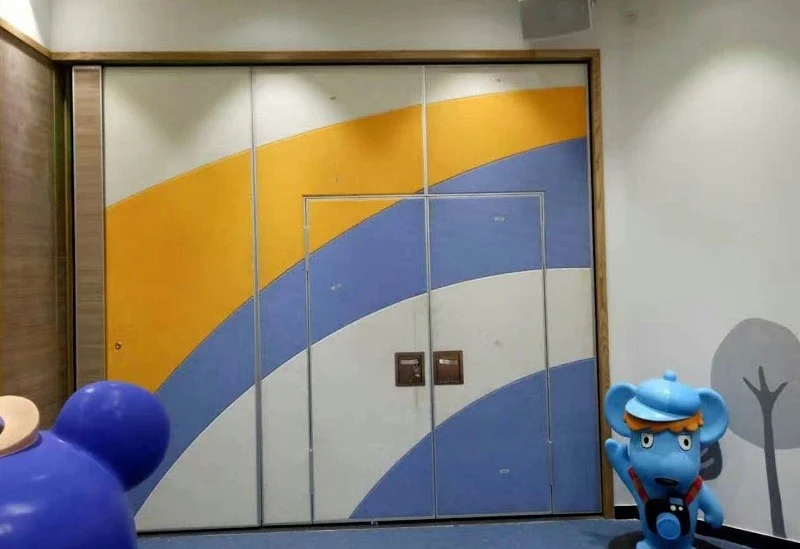
| Pass door | Requirement mentioned but not priced | Stated location, operation and finish coordination |
| Acoustic criteria | Generic STC or Rw reference | Project-specific acoustic requirement and test evidence where applicable |
Use Evidence Notes to Prevent Hidden Assumptions
An evidence note records what is known, what is not known and what must be confirmed.
Evidence note template
Item: Overhead track route at ceiling transition.
Unknown: Support condition and ceiling interface responsibility.
Boundary: No acoustic, load or installation conclusion is drawn until matching evidence is provided.
Coordinate Acoustic Language Without Overclaiming
If acoustic separation matters, state the project-specific requirement and ask for matching evidence. Do not infer performance from a finish sample, a photograph or a generic product description. Seals and acoustic concepts can be explained generically, but project-specific acoustic requirements must be confirmed against the actual configuration.
Assign Responsibility Before Award
Unpriced interface items often remain unresolved because no single party owns them. Before award, name the party responsible for each flagged item.
Responsibility should be recorded in the tender clarification log, not left in meeting notes. Each entry should reference the drawing, the question asked and the response received. If a response is still pending, mark it as open rather than assuming it is included.
Numbered process for pre-award review
- Trace each straight, turning and stacking route on the layout.
- Mark every interface where the route crosses another trade or finish.
- Create a flag list with drawing references and open questions.
- Request project-specific support, acoustic and dimensional confirmation.
- Assign responsibility for each item and record it in the clarification log.
- Reissue the tender comparison only after flagged items are priced or explicitly excluded.
Frequently Asked Questions
What is an unpriced track interface item in a partition tender?
It is scope that affects the overhead track route but has no clear price, owner or drawing reference in the tender documents. Examples include support conditions, ceiling transitions and coordination responsibilities.
Can movable partitions cross a gap without a track?
No. Panels are suspended from a top track and require a continuous connected overhead route. Every proposed movement path requires project-specific support review.
Do movable partitions need a floor track?
EBUNGE movable partition panels are top-hung and move without a continuous floor running track or floor hardware along the partition line. The exact overhead route and support arrangement must be confirmed by the responsible project team from coordinated drawings.
How should acoustic requirements be described in a tender?
State the project-specific acoustic requirement and request matching evidence.
What finish options can be discussed for movable partitions?
Confirmed finish options include laminate, melamine, fabric, leather, glass and other approved surfaces. Finish selection does not resolve track interface or support questions.
When should pass-door requirements be raised?
Pass-door requirements and project documentation can be discussed during tender review. Raise them before award so location, operation and finish coordination are not left as unpriced items.
How can project teams avoid hidden assumptions?
Use evidence notes that separate known information, unknown conditions and required confirmations.
Conclusion: Flag Early, Confirm Specifically
A partition tender unpriced track interface item review is most useful before award, when questions can still change scope and responsibility. Trace the route, flag the interfaces, separate product scope from interface scope and record what evidence is still required.
For project-specific support, acoustic and dimensional requirements, confirm the actual layout and configuration. Review the movable walls product page for maintained product context, explore resources for planning guidance, or contact EBUNGE to discuss pass-door requirements and project documentation.