
Quick answer: ambiguous track interface clauses
Review focus: ambiguous track interface clauses.
An ambiguous track interface clauses tender review is not a paperwork exercise. It is a risk-control step that decides whether the overhead route, support condition and parking strategy are clear enough for pricing, fabrication and installation planning. When a clause says the track must suit the opening without defining the interface, every bidder interprets it differently. This guide gives project teams a repeatable method to flag those gaps, ask precise questions and keep assumptions visible.
Why Track Interface Clauses Become Ambiguous
Project review term: ambiguous track interface clauses.
Track interface clauses sit between several disciplines. The suitability of each route and parking arrangement depends on the approved layout, circulation, ceiling interfaces and operating sequence. The result is a clause that reads as complete but leaves the actual support and route undefined.
A clause may also imply that panels cross an opening without confirming a continuous connected overhead route. These are not minor wording issues; they change what must be coordinated before award.
A Six-Step Review Process for Tender Teams
Coordination scope: ambiguous track interface clauses.
Use a fixed sequence so every reviewer examines the same interface points. The goal is not to redesign the system but to expose what the tender does not yet say.
- Isolate every track-related clause. The exact overhead route and support arrangement must be confirmed by the responsible project team from coordinated drawings.
- Map each clause to a drawing. Note whether a matching plan, section or detail exists. A clause without a drawing reference is a flag.
- Trace the movement route. Confirm whether straight, turning and stacking routes are shown as connected overhead paths. The exact route, junction arrangement, continuous overhead path and parking position must be confirmed from the coordinated project drawings.
- Check the parking statement. Confirm whether a planned stacking position is identified and whether it is coordinated with the layout.
- List missing project-specific confirmations.
- Issue clarification questions before pricing. Convert each flag into a question with a drawing reference and a requested response format.
Decision Checklist: What to Flag Before Pricing
Checklist focus: ambiguous track interface clauses.
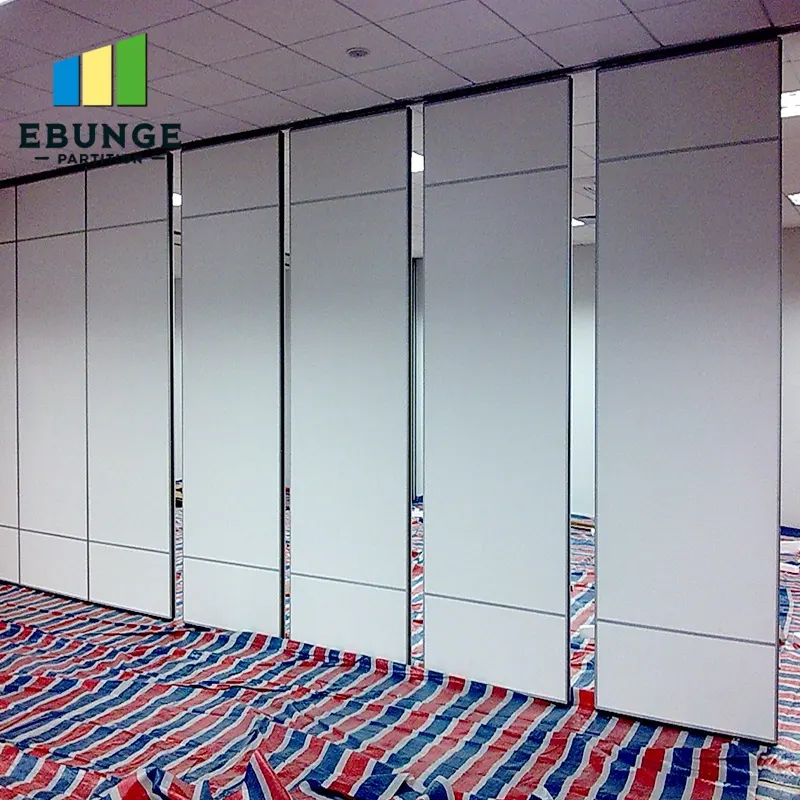
This checklist helps reviewers separate a clear clause from one that merely sounds clear. It is a screening tool, not an engineering conclusion.
| Review point | Clear if the tender states | Flag if the tender |
|---|---|---|
| Overhead route | Continuous connected route shown for straight, turning and stacking paths | Shows a route but omits a transition or gap |
| Support interface | Identifies the structural element and requires project-specific support review | Refers only to a ceiling or finish |
| Parking position | Names a planned stacking position coordinated with the layout | Uses vague terms such as suitable location |
| Floor condition | Confirms panels are top-hung and cross the opening without a floor track | Implies floor-mounted guidance without evidence |
| Finish and pass-door | Lists approved finish options and states pass-door requirements can be discussed | Leaves finish or pass-door scope open |
Evidence Notes: What a Tender Review Can and Cannot Conclude
Review focus: ambiguous track interface clauses.
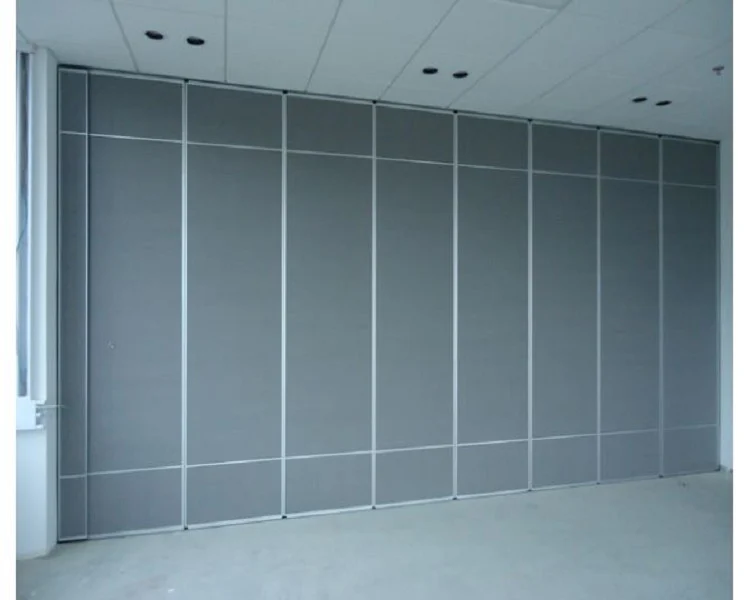
A tender review can confirm whether a clause is complete enough to price and coordinate. Visible references can support layout discussion but do not verify hidden construction or performance. Those require project-specific support, acoustic and dimensional confirmation.
Evidence note: a visible track line on a drawing does not prove support capacity, acoustic performance or a completed installation. Treat it as a coordination prompt, not a performance result.
How to Write Clarification Questions That Get Useful Answers
Weak questions produce weak answers. A useful clarification request points to the exact clause, the drawing it should match, and the decision it affects.
Structure each question around a decision
Ask whether the overhead route is continuous across the full movement path, whether the parking position is fixed, and whether the support interface has been reviewed for the project. These questions force a specific response rather than a general assurance.
Request a marked-up response
Ask bidders or the design team to return the clause with a marked-up drawing or a written confirmation. This creates a traceable record for the tender review and reduces the chance that assumptions are buried in a bid narrative.
Coordinating Across Procurement, Design and Installation
Ambiguity often survives because each discipline assumes another has resolved it. Procurement may price the clause as written, the architect may expect the contractor to coordinate, and the installation team may discover the gap later.
A short coordination meeting with a shared clause register can close this gap. The register should record the clause, the flag, the responsible party and the required confirmation. This is a documentation habit, not a performance claim.
Frequently Asked Questions

What makes a track interface clause ambiguous?
A clause is ambiguous when it does not clearly link the movable partition to a continuous overhead route, a defined support interface and a planned parking position. Missing drawing references or vague location language are common signs.
Can a tender review confirm acoustic performance?
No. A tender review can check whether acoustic requirements are stated and whether project-specific confirmation is requested. It cannot confirm a rating from a clause or drawing alone.
Do movable partitions need a floor track?
EBUNGE movable partition panels are top-hung and move without a continuous floor running track or floor hardware along the partition line.
How should parking be described in a tender?
The tender should identify a planned stacking position coordinated with the layout. Parking style is customized to the customer layout and project requirements, so the clause should not leave the location open.
What finish information should be included?
Confirmed finish options include laminate, melamine, fabric, leather, glass and other approved surfaces. The tender should state which options are acceptable and confirm that pass-door requirements can be discussed.
When should clarification questions be issued?
Issue them before pricing is finalized. Early questions give the design team time to update drawings and prevent bidders from pricing different interpretations of the same clause.
Conclusion: Turn Ambiguity into a Documented Action
Flagging ambiguous track interface clauses is a discipline of asking what the tender actually proves. A clause that names a track but omits the route, support or parking position is not ready for pricing. By using a clause register, a decision checklist and evidence notes, project teams can keep assumptions visible and request the confirmations that matter.
Review the movable wall systems for maintained product context, and use the resources for further planning guidance. When your team is ready to discuss a specific project, contact EBUNGE to confirm support, acoustic and dimensional requirements against your drawings.