
When specifying a restaurant acoustic partition supplier for private dining rooms, interior designers face a complex decision that goes beyond aesthetics. The right supplier must deliver sound privacy, fire safety, durability, and ease of operation—all within budget and timeline. This guide helps you evaluate suppliers systematically, from technical capabilities to quotation readiness, ensuring your next project meets acoustic goals and client expectations. We’ll cover key evaluation criteria, common pitfalls, and practical steps to compare proposals effectively.
Direct answer: To choose a reliable restaurant acoustic partition supplier, focus on their ability to provide detailed acoustic data, fire-rated certifications, and customization for your specific opening size and finish. Verify their track record with similar projects, request a comprehensive quotation including installation and maintenance, and ensure they offer a top-hung track system without floor rails for seamless integration.
Restaurant Acoustic Partition Supplier: Why Supplier Evaluation Matters for Restaurant Private Rooms
In restaurant design, private rooms are revenue drivers, but poor acoustics can ruin the dining experience. A movable partition wall must contain conversation and minimize noise transfer, yet many suppliers make vague claims. Evaluating a restaurant acoustic partition supplier requires verifying their engineering, materials, and installation process. Unlike performance-focused articles, this guide centers on supplier selection—what to ask, what documents to request, and how to compare bids.
As an interior designer, you need a partner who understands commercial codes, can handle custom sizes, and provides clear communication. The right supplier will help you navigate fire ratings, acoustic targets, and design flexibility without overpromising. This article walks you through eight critical areas to assess, ensuring your next restaurant project is a success.
Need help turning the restaurant acoustic partition supplier requirements into a practical project layout?
1. Acoustic Performance: Request Real Data
Sound privacy is the top concern. A reputable supplier should provide acoustic test reports from accredited labs, not just marketing numbers. Ask for the Sound Transmission Class (STC) rating or the weighted sound reduction index (Rw) for their standard panels. For restaurant private rooms, an STC of 45 or higher is often recommended, but the exact target depends on your project’s needs. Request data for the specific configuration you plan to use, as performance varies with panel thickness, seals, and track systems.
Remember, acoustic performance is affected by installation quality. Inquire about field testing or installation guidelines to ensure the partition performs as specified. A supplier that offers acoustic engineering support is a plus.
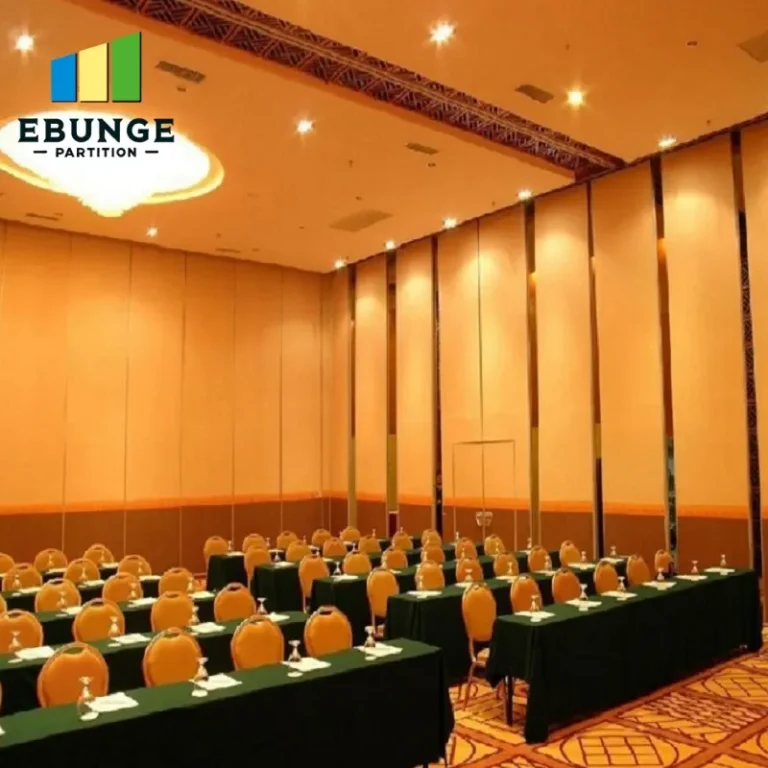
2. Fire Safety: Verify Certifications and Compliance
Commercial spaces require fire-rated partitions. Check if the supplier’s movable partition wall meets local fire codes, such as ASTM E119 or EN 1634-1. Request fire test certificates and any applicable approvals. The supplier should clearly state the fire rating (e.g., 60 minutes) and the materials used. Also, confirm that the hardware and seals maintain fire integrity.
Be cautious of suppliers who cannot provide documentation. Fire safety is non-negotiable, and you may need to share these certificates with the local authority having jurisdiction (AHJ).
3. Durability and Maintenance: Plan for High Traffic
Restaurant partitions are used frequently, so durability is key. Evaluate the panel construction—are they impact-resistant? What about the track and trolleys? Ask about the expected lifespan and maintenance requirements. A top-hung track system, which EBUNGE specializes in, eliminates floor rails, reducing trip hazards and cleaning issues. Also, inquire about the ease of replacing parts like seals or rollers.
Request a maintenance schedule and warranty terms. A reliable supplier will offer a comprehensive warranty on parts and labor, and they should be transparent about what is covered.
4. Ease of Operation: Test the Mechanism
Staff will operate the partition daily. Ensure the mechanism is smooth and requires minimal effort. Ask about the operation type—manual, semi-automatic, or motorized. For large panels, motorized options may be necessary. A supplier should provide a demonstration video or a physical sample for testing. Also, consider the storage space when the partition is stacked—does it fit your layout?
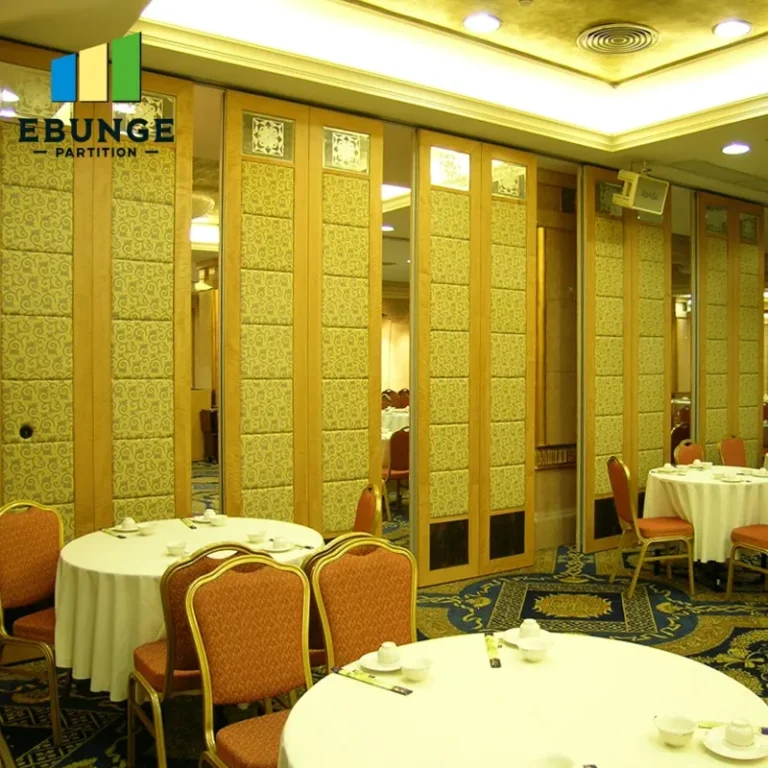
5. Installation Time and Process: Minimize Downtime
Installation can disrupt restaurant operations. Ask about the estimated installation time and whether the supplier has their own installation crew or uses certified subcontractors. The complexity of your project (e.g., ceiling height, structural support) will affect the timeline. A good supplier will provide a detailed installation plan, including coordination with other trades. Clarify who is responsible for site preparation, such as electrical work or ceiling reinforcement.
6. Cost and Quotation Transparency
Get a detailed quotation that breaks down costs: panels, track, hardware, installation, and any optional features. Be wary of hidden fees like shipping or engineering charges. Compare quotes from multiple suppliers, but also consider the value—a cheaper option may have higher maintenance costs. Ask for a cost breakdown per panel and per linear meter, and confirm what is included in the price.
For quotation readiness, be prepared to share your opening size, drawings, acoustic target, finish preference, and project location. This ensures accurate pricing and avoids surprises.
Share the opening, drawings, finish direction, and privacy target for a project-specific review.
7. Design Flexibility and Finishes
Your restaurant’s interior demands aesthetics. Does the supplier offer a range of finishes—wood veneer, laminate, fabric, or paint? Can they match custom colors or textures? Also, consider the panel thickness and whether it can accommodate doors or windows. A supplier that offers custom movable wall solutions is ideal for unique spaces. Ask for samples and photos of previous projects to gauge their craftsmanship.
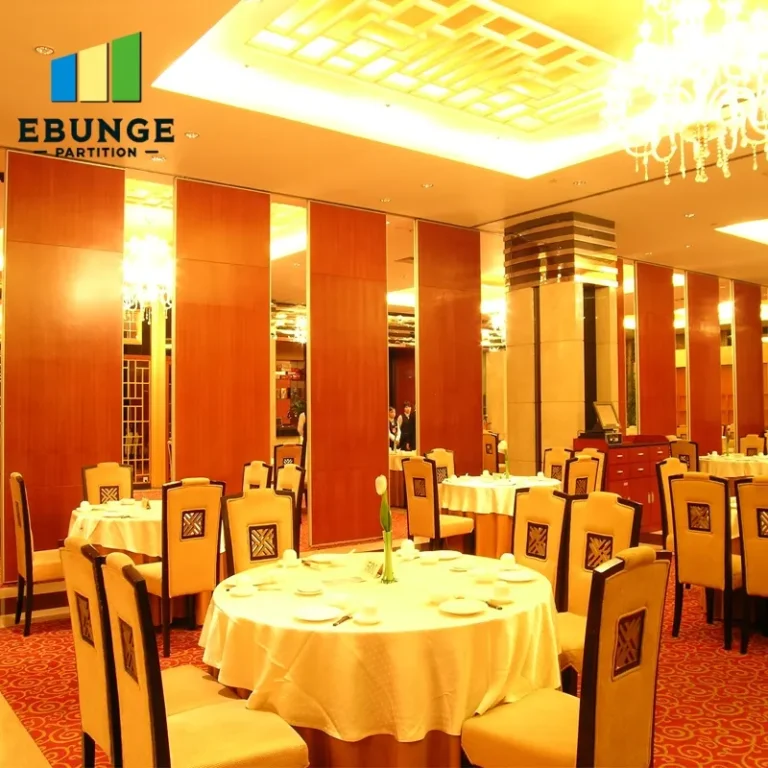
8. Supplier Reliability and Support
Finally, assess the supplier’s reputation and responsiveness. Check their experience with restaurant projects, read client testimonials, and ask for references. A reliable supplier will communicate clearly, provide technical documentation, and offer after-sales support. They should be willing to answer your questions and provide guidance throughout the project.
Also, consider their location and lead times. A supplier with local support may be more responsive. The EBUNGE team, for instance, emphasizes custom project coordination, offering drawings and installation guidance.
Checklist for Comparing Suppliers
Use this checklist when evaluating proposals:
| Criteria | What to Ask | Documents to Request |
|---|---|---|
| Acoustic performance | What is the STC/Rw rating for my configuration? | Acoustic test report |
| Fire safety | What fire rating does the partition have? | Fire test certificate |
| Durability | What materials are used, and what is the warranty? | Warranty terms, material specs |
| Ease of operation | Is it manual or motorized? How smooth is the movement? | Operation manual, demo video |
| Installation | How long does installation take? Who does it? | Installation plan, crew credentials |
| Cost | What is the total cost, and what’s included? | Itemized quotation |
| Design flexibility | What finishes are available? Can you customize? | Finish samples, custom options |
| Supplier reliability | Can you provide references from similar projects? | References, case studies |
Preparing Your Inquiry: Share Key Details
To get accurate quotations, provide suppliers with detailed information upfront. This includes the opening size (width, height, depth), ceiling height, structural details (e.g., load-bearing capacity), acoustic target (STC or Rw), finish preference, and project location. Also, share your drawings or architectural plans. This helps suppliers propose the right top-hung track system and panel configuration.
By being specific, you’ll receive comparable proposals and avoid misunderstandings. A good supplier will ask clarifying questions and offer recommendations.
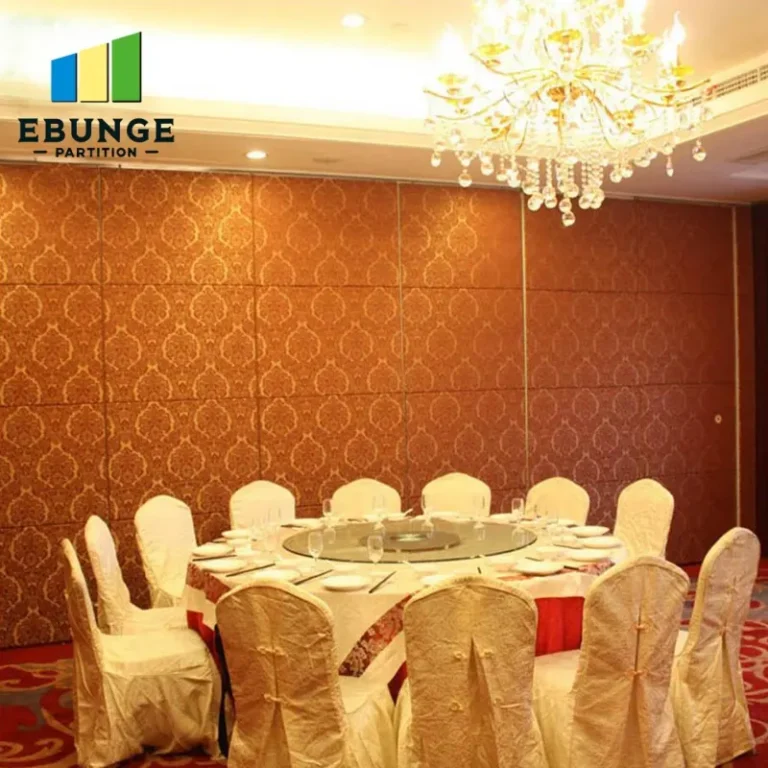
FAQ: Common Questions from Designers
1. What is the typical lead time for a custom movable wall?
Lead times vary based on complexity and supplier workload. After receiving your drawings and specifications, the supplier can provide an estimated timeline. Typically, it ranges from 4 to 8 weeks for manufacturing and installation, but confirm with your supplier.
2. Can the partition be installed in an existing restaurant without major renovation?
Yes, but it depends on the ceiling structure and space. A top-hung track system requires adequate overhead support. The supplier will assess your site and advise on any reinforcement needed.
3. How do I know if the acoustic performance will meet my needs?
Request acoustic test data and discuss your target with the supplier. They may recommend additional seals or thicker panels. For critical applications, consider on-site testing after installation.
4. What maintenance is required for the partition?
Regular maintenance includes cleaning the track and checking seals. The supplier should provide a maintenance guide. Some parts, like rollers, may need periodic replacement.
5. Do you offer a warranty, and what does it cover?
Warranties vary; typically, they cover manufacturing defects and parts for a certain period. Ask for written warranty terms and what is excluded.
Conclusion: Choose a Partner, Not Just a Supplier
Selecting a restaurant acoustic partition supplier is about building a partnership that ensures your project’s success. By evaluating acoustic data, fire safety, durability, ease of operation, installation, cost, design flexibility, and supplier reliability, you can make an informed decision. Remember to ask for documentation and be clear about your requirements. A top-hung track system without floor rails offers practical benefits for restaurants, and a supplier like EBUNGE can guide you through the process.
For more insights, explore our movable partition wall options and blog articles. If you’re ready to discuss your project, contact us for personalized assistance.
Send the opening size and drawings to discuss a differentiated restaurant acoustic partition supplier solution.