
When planning an exhibition hall, the exhibition movable partition cost is rarely a single line item. As an architect, you need to think beyond the initial quote and understand what drives the final number. This article will help you prepare for supplier conversations, ask the right questions, and evaluate quotations with clarity. We’ll break down the cost components, technical requirements, and hidden factors that affect your budget, so you can make an informed decision for your project.
Direct answer: The exhibition movable partition cost depends on several factors: wall dimensions, acoustic performance target, finish selection, hardware type (top-hung vs. floor-supported), installation complexity, and customization. To get an accurate quote, you must provide the opening size, ceiling structure details, acoustic requirements, desired finish, and project location. Expect costs to vary significantly based on these specifications; a simple operable wall without acoustic ratings will cost less than a high-performance acoustic partition with custom finishes. Always request a detailed quotation that breaks down materials, hardware, installation, and delivery.
Why a Simple Price Quote Is Never Enough
Exhibition halls have unique requirements: large spans, high traffic, and frequent reconfiguration. A basic price per square meter can mislead you. The total cost of ownership includes installation, maintenance, and potential modifications. For example, a top-hung track system may have a higher initial cost than a floor-supported system, but it offers unobstructed floor space and easier cleaning, which can reduce long-term operational costs. Similarly, acoustic performance directly impacts price: the higher the Sound Transmission Class (STC) rating, the more materials and engineering are required, increasing both material and installation costs.
When you request quotes, ensure they include all components: panels, seals, tracks, hardware, installation labor, and delivery. Some suppliers may quote a base price and then add extras for acoustic seals, custom finishes, or structural reinforcement. Clarify what is included and what is not.
Need help turning the exhibition movable partition cost requirements into a practical project layout?
Key Cost Drivers in Exhibition Movable Partition Cost
Several technical factors influence the final price of a movable partition wall. Understanding these will help you compare quotes fairly and avoid surprises.
1. Wall Dimensions and Configuration
Larger walls require more material and heavier hardware. The number of panels, stacking space, and whether the wall is straight or curved all affect cost. For exhibition halls, you may need tall walls (up to 6 meters or more) to match the hall’s ceiling height, which increases structural requirements and cost.
2. Acoustic Performance
Acoustic partition solutions are often necessary in exhibition halls to separate simultaneous events. Higher STC ratings (e.g., 50+ vs. 40) demand thicker panels, additional seals, and precise installation, raising costs. Be realistic about your acoustic needs: if you only need visual separation, a lower rating may suffice and save money.
3. Finish and Aesthetics
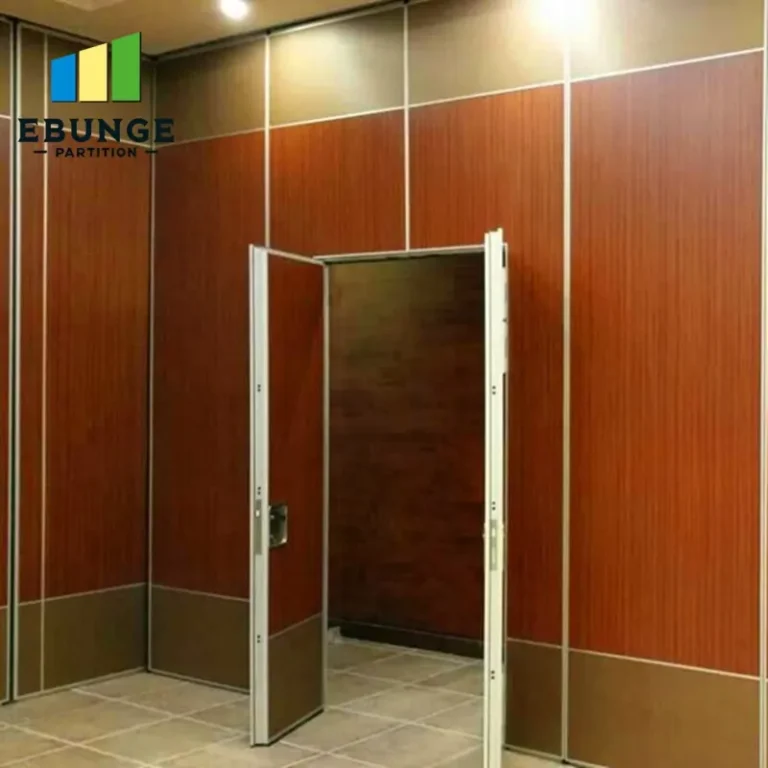
Custom movable walls can be finished with various materials, colors, or even branded graphics. While a standard laminate finish is economical, custom finishes like wood veneer, fabric, or acoustic panels increase cost. Also, the finish affects maintenance and durability, which are part of total cost of ownership.
4. Hardware and Track System
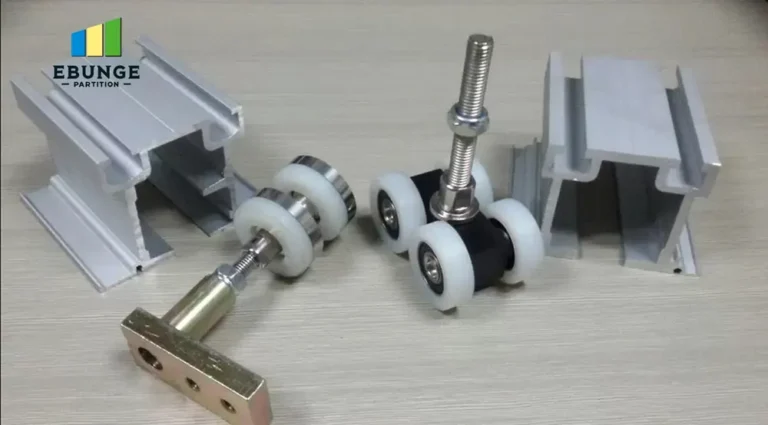
Top-hung track systems are popular for exhibition halls because they eliminate floor rails, making the floor flush and safe. However, they require a strong overhead structure to support the weight of the panels. The track length, number of trolleys, and quality of hardware (e.g., ball bearings) affect cost. A well-engineered top-hung system may cost more upfront but offers smoother operation and longer life.
5. Installation Complexity
Installation is a significant portion of the cost. Factors like ceiling height, site access, and whether the installation is during or outside exhibition hours can increase labor costs. If your project involves multiple walls or complex layouts, expect higher installation fees.
How to Get Accurate Quotes: Information Suppliers Need
To receive precise pricing, you must provide detailed information. Suppliers need to know:
- Opening size (width, height, and depth of the wall area)
- Architectural drawings (floor plans, elevations, and ceiling details)
- Acoustic target (e.g., STC rating or specific dB reduction)
- Finish preference (laminate, veneer, paint, fabric, etc.)
- Project location (for delivery and installation logistics)
Sharing these details upfront saves time and ensures the quote reflects your needs. If you are unsure about acoustic requirements, consult with an acoustic engineer before approaching suppliers.
Also, ask about delivery lead times. Custom movable walls may take 4-8 weeks for fabrication, plus delivery time. If your project has a tight schedule, this can affect your choice of supplier or require expedited production, which may add cost.
Total Cost of Ownership: Beyond the Initial Price
When evaluating exhibition movable partition cost, consider the long-term expenses: maintenance, energy efficiency, and resale value. A cheaper wall may require frequent repairs or replacement of seals, increasing operating costs. Energy efficiency is relevant if the partition helps control heating and cooling in the hall; better-insulated panels can reduce energy bills. Also, consider whether the wall can be reconfigured or expanded in the future; modular systems with standard components may have better resale value or be adaptable to other spaces.
Warranty coverage is another critical factor. Understand what the warranty includes: parts, labor, or both? How long is it? Some suppliers offer extended warranties for an additional cost, which might be worth it for high-usage areas. Maintenance requirements should be clearly defined; for example, seals may need periodic replacement, and tracks may need lubrication. Ask for a maintenance schedule and estimated costs.
Compliance and Building Codes
Exhibition halls must comply with local building codes, which can affect partition design and cost. Fire ratings, accessibility, and emergency exit requirements may dictate the use of specific materials or mechanisms. For instance, a partition may need to be fire-rated for a certain duration, which adds cost. Ensure your supplier is aware of these requirements and that their product meets them. Non-compliance can lead to expensive modifications later.
Share the opening, drawings, finish direction, and privacy target for a project-specific review.
Comparison Table: Factors Affecting Exhibition Movable Partition Cost
| Factor | Impact on Cost | Notes |
|---|---|---|
| Wall size (sqm) | Direct increase | More material and hardware |
| Acoustic rating | High increase for higher STC | Seals, panel thickness, engineering |
| Finish type | Moderate to high | Custom finishes cost more |
| Track system | Top-hung may cost more | Structural support needed |
| Installation | Varies with complexity | Height, access, schedule |
| Lead time | Expedite may add cost | Plan ahead |
| Warranty | Extended warranty costs extra | Consider usage |
Practical Checklist for Evaluating Quotes
Use this checklist to compare suppliers and ensure you are getting a complete picture:
- ☐ Does the quote itemize materials, hardware, and labor?
- ☐ Are delivery and installation included? If not, what are the costs?
- ☐ What is the delivery lead time? Is there a penalty for delays?
- ☐ What does the warranty cover and for how long?
- ☐ Are maintenance requirements and costs clearly stated?
- ☐ Does the partition meet all applicable building codes?
- ☐ Can the supplier provide references or case studies (if available)?
- ☐ What is the process for adjustments or repairs after installation?
Why Work with a Supplier Who Understands Exhibition Halls
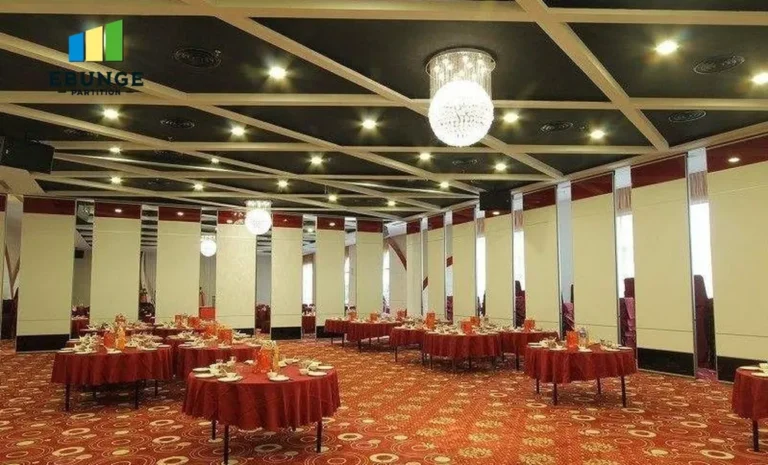
Exhibition halls have unique demands: high ceilings, heavy usage, and the need for quick reconfiguration. A supplier experienced in these environments can offer valuable insights into design and cost optimization. They can help you choose the right track system, panel design, and acoustic solutions that balance performance and budget. When contacting suppliers, ask about their experience with exhibition projects and request examples of similar work.
At EBUNGE, we specialize in top-hung track systems without floor rails, which are ideal for exhibition halls. We provide custom project coordination, including finishes, drawings, and installation guidance. Our team can assist you in preparing the necessary information for an accurate quote. For more details on movable partition walls, visit our movable partition wall page. You can also explore our blog for technical insights, or read more about movable partition costs. If you have a specific project, contact us to discuss your requirements.
Conclusion
Understanding exhibition movable partition cost requires a holistic view. By focusing on the long-term value, asking the right questions, and providing detailed specifications, you can secure a solution that meets your functional and aesthetic needs without budget surprises. Remember, the cheapest quote may not be the most cost-effective in the long run. Evaluate the total cost of ownership, including maintenance, energy, and compliance, to make a wise investment for your exhibition hall.
Frequently Asked Questions
1. What is the average cost range for exhibition movable partition walls?
Costs vary widely based on specifications. Without specific details, it’s impossible to provide a range. Factors like size, acoustic rating, finish, and installation complexity all influence price. Always request a customized quote based on your project requirements.
2. How can I reduce the cost of a movable partition wall?
To reduce costs, consider using standard sizes, simpler finishes, and lower acoustic ratings if acceptable. Also, ensure the installation area is accessible and prepared to minimize labor time. Avoid last-minute changes that could cause rework.
3. Is a top-hung track system more expensive than a floor-supported one?
Top-hung systems may have a higher initial cost due to the need for structural support and more complex hardware. However, they offer benefits like a clear floor and easier maintenance, which can offset costs over time. Compare total cost of ownership, not just upfront price.
4. What information do I need to provide to get an accurate quote?
Provide the opening dimensions, ceiling and floor details, acoustic requirements (if any), desired finish, and project location. Architectural drawings are very helpful. The more details you give, the more accurate the quote will be.
5. How long does it take to receive and install a movable partition wall?
Lead times vary by supplier and project complexity. Typically, fabrication can take several weeks, and installation depends on site conditions. Ask your supplier for an estimated timeline and plan accordingly.
6. Are there any hidden costs I should be aware of?
Potential hidden costs include delivery fees, installation labor (if not included), structural modifications (e.g., reinforcing ceiling), and maintenance items. Always ask for a detailed breakdown and clarify what is included.
Send the opening size and drawings to discuss a differentiated exhibition movable partition cost solution.