
When planning a conference room, acoustic privacy is often the deciding factor between a functional meeting space and one that distracts. You need an acoustic partition wall acoustic performance for conference rooms that meets your client’s expectations for speech privacy and sound control. However, evaluating acoustic performance goes beyond a single STC number. This guide answers your key questions, helping you specify and purchase a movable partition wall with confidence. We’ll cover what to ask, what to verify, and how to prepare for a successful project.
Quick Answer: To ensure acoustic partition wall acoustic performance for conference rooms, you must verify the STC rating from a recognized lab, assess the wall’s sealing and track system, and confirm that the chosen system can meet your project’s specific acoustic target. Always request detailed drawings and specifications, and ask for a written performance guarantee.
Acoustic Partition Wall Acoustic Performance: 1. Understand the Real Acoustic Need in Conference Rooms
Conference rooms have diverse acoustic requirements. A small huddle room may only need to mask casual conversation, while a boardroom might require complete confidentiality. Start by defining the desired level of speech privacy. The ASTM E413 classification provides STC ratings, but for speech privacy, consider the Sound Transmission Class (STC) and the Privacy Index (PI). For conference rooms, an STC of 50 or higher is often recommended, but this depends on the background noise level and the room’s volume. Discuss with your client to establish a clear acoustic target.
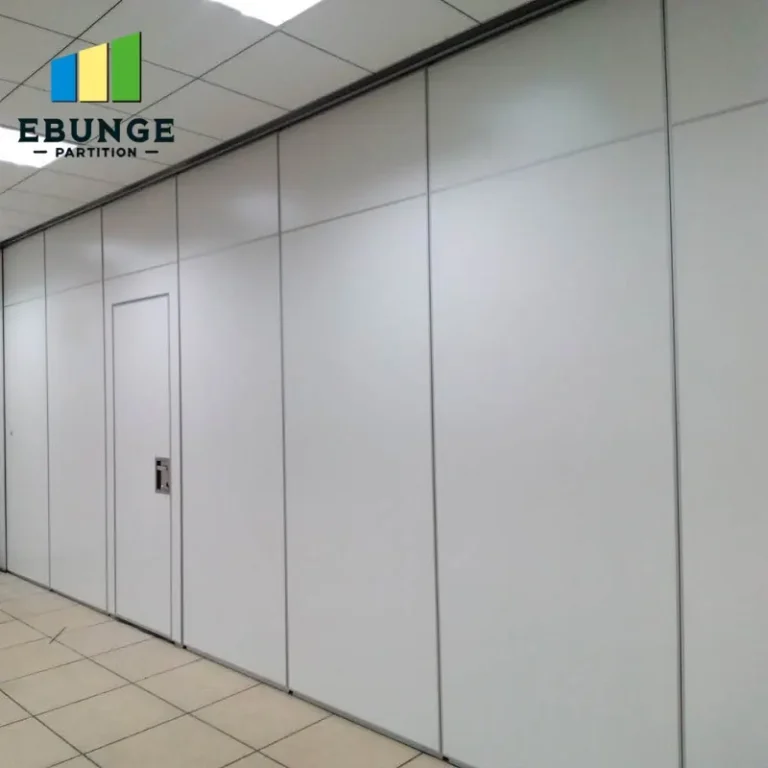
Need help turning the acoustic partition wall acoustic performance requirements into a practical project layout?
2. Scrutinize the STC Rating: What It Does and Doesn’t Tell You
An STC rating is a single-number rating derived from laboratory tests. It measures the transmission loss of a partition across various frequencies. However, it does not guarantee real-world performance. Field tests often yield lower values due to flanking paths, poor installation, or gaps. When evaluating acoustic partition wall acoustic performance for conference rooms, ask for the lab test report, not just the marketing number. Check the test standard (ASTM E90) and the specimen description. A rating of 50 in a lab might translate to 45 in the field, so account for a margin.
3. Examine the Top-Hung Track System
The track system is the backbone of a movable partition. A top-hung system, which is our specialty, suspends the wall from overhead, eliminating the need for a floor rail. This offers design flexibility and easier floor maintenance. When evaluating acoustic performance, the track must be robust and properly sealed. In a top-hung system, the perimeter seals are crucial. Ask about the type of seals at the top, bottom, and vertical edges. A continuous, automatic drop seal at the bottom is essential to prevent sound leakage under the wall. Ensure the track is designed to accommodate the wall’s weight and movement without compromising the seal.
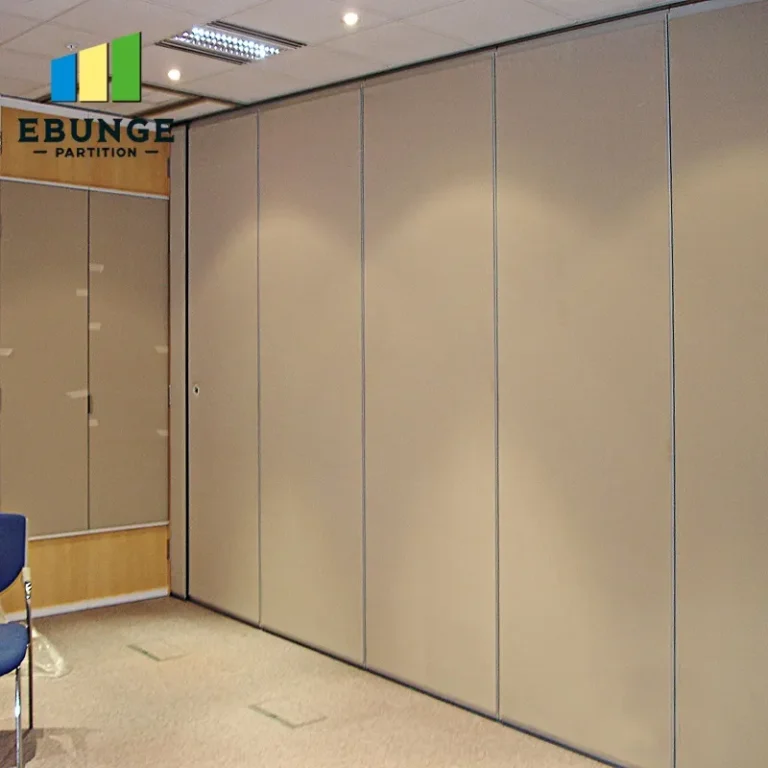
4. Assess the Wall’s Sealing and Edge Details
Sound leaks through even the smallest gaps. A high STC rating is meaningless if the perimeter seals are inadequate. Look for a system that uses double seals or acoustic gaskets. The vertical edges where panels meet must compress firmly. Also, consider the interface with the ceiling and floor. In a top-hung system, the top track is fixed, and the bottom seal drops to meet the floor. Verify that the seals are durable and replaceable. Ask about the sealing mechanism: are they manual or automatic? For ease of use and consistent performance, automatic seals are preferable.
5. Consider the Operable Wall System’s Construction
The wall panel’s construction significantly affects acoustic performance. Typically, movable partitions have a metal frame with multiple layers of gypsum board and an acoustical core. The mass and damping properties are key. Ask about the panel thickness, number of gypsum layers, and type of insulation. A panel with an STC of 50 might have a specific layering. Ensure the design matches your acoustic requirements. Also, consider the weight of the panels; heavier panels generally offer better isolation but may require a more robust track and more effort to move.
6. Evaluate Durability and Maintenance
In a commercial setting, a partition wall must withstand frequent use. The acoustic performance should not degrade over time. Investigate the quality of the seals and the track mechanism. Are the seals prone to wear? Are the panels easy to repair? A durable system will have a longer lifespan and lower maintenance costs. Ask about the warranty on the acoustic components. A reputable supplier will stand behind their product. Also, consider the ease of adjusting the panels if they become misaligned.
7. Compliance with Building Codes and Standards
Your project must comply with local building codes, which may specify minimum acoustic performance for certain spaces. For conference rooms, there may be requirements for sound isolation to ensure privacy. Check the International Building Code (IBC) or your local code. Also, consider accessibility standards (ADA) if applicable. The movable partition system should not create trip hazards or obstruct egress. Verify that the supplier’s system meets these requirements.
Share the opening, drawings, finish direction, and privacy target for a project-specific review.
8. Cost vs. Benefit: Making a Smart Investment
Acoustic partitions are a significant investment. Compare the cost of the system against the benefits of flexibility and acoustics. A cheaper system might save money upfront but could result in poor acoustic performance, leading to complaints and potential rework. Consider the long-term value. Also, factor in installation costs and any structural modifications needed for a top-hung system. A detailed quotation should include all components, installation, and any additional items like seals or hardware.
9. Supplier Reliability and Support
Choosing a reliable supplier is crucial. Look for a manufacturer with experience in acoustic partitions. Ask for references and case studies. Inquire about their project management and installation support. A supplier that offers guidance on drawings and installation can save you time and reduce errors. Also, check their after-sales service. Will they provide maintenance instructions? Is replacement hardware available? A long-term partnership is beneficial.
10. Prepare for Quotation: Information to Share
To get an accurate quotation, you need to provide specific information to the supplier. This includes the opening size (width and height), the number of panels, the stack area, the acoustic target, and the finish preference. Also, share your project location and timeline. The supplier can then recommend the appropriate system and provide a detailed proposal. By being prepared, you streamline the process and ensure the quote meets your needs.
Conclusion
Evaluating acoustic partition wall acoustic performance for conference rooms requires a holistic approach. Look beyond the STC rating and consider the track system, seals, construction, and supplier support. By asking the right questions and preparing detailed information, you can select a movable partition wall that meets your acoustic and functional needs. For more insights, explore our blog or browse movable partition design ideas. When ready, contact us to discuss your project.
Practical Checklist for Specifying Acoustic Partitions
| Item | Questions to Ask | Why It Matters |
|---|---|---|
| STC Rating | What is the lab-tested STC? What is the field performance? | Sets performance expectation. |
| Track System | Is it top-hung? How does the bottom seal work? | Affects acoustic sealing and floor design. |
| Seals | Are seals automatic? Are they replaceable? | Prevents sound leaks. |
| Panel Construction | What layers and insulation are used? | Determines mass and damping. |
| Durability | What is the warranty on acoustic components? | Ensures long-term performance. |
| Compliance | Does it meet local codes? | Avoids legal issues. |
| Supplier | Can they provide references and support? | Ensures reliable installation. |
Frequently Asked Questions
What is a good STC rating for a conference room?
An STC of 50 or higher is generally recommended for conference rooms to ensure speech privacy. However, the required rating depends on the ambient noise level and the room’s size. Consult with an acoustician to determine the exact target.
How does a top-hung track system affect acoustic performance?
A top-hung track system eliminates the floor rail, which can be a source of sound leakage. The track is installed overhead, and the bottom seal drops to the floor, providing a continuous seal. This design can improve acoustic isolation compared to systems with floor guides.
Can a movable partition wall achieve the same STC as a fixed wall?
In laboratory tests, some movable partitions can achieve STC ratings comparable to fixed walls. However, field performance may be lower due to installation factors and flanking paths. It’s essential to work with a skilled installer and ensure proper sealing.
What information do I need to provide for a quotation?
To receive an accurate quote, provide the opening size (width and height), the number of panels, the stack area, the desired acoustic rating, finish preferences, and project location. Also, share any drawings or specifications you have.
How do I maintain the acoustic performance over time?
Regularly inspect and replace worn seals. Ensure that the track and panels are properly aligned. Follow the manufacturer’s maintenance guidelines. A well-maintained system will retain its acoustic properties for years.
What is the difference between STC and NIC?
STC is a laboratory rating, while Noise Isolation Class (NIC) is a field measurement. NIC is often lower than STC due to real-world conditions. When specifying, consider both values to set realistic expectations.
For more detailed information on movable partition walls, visit our movable partition wall page. If you have specific project requirements, get in touch with our team.
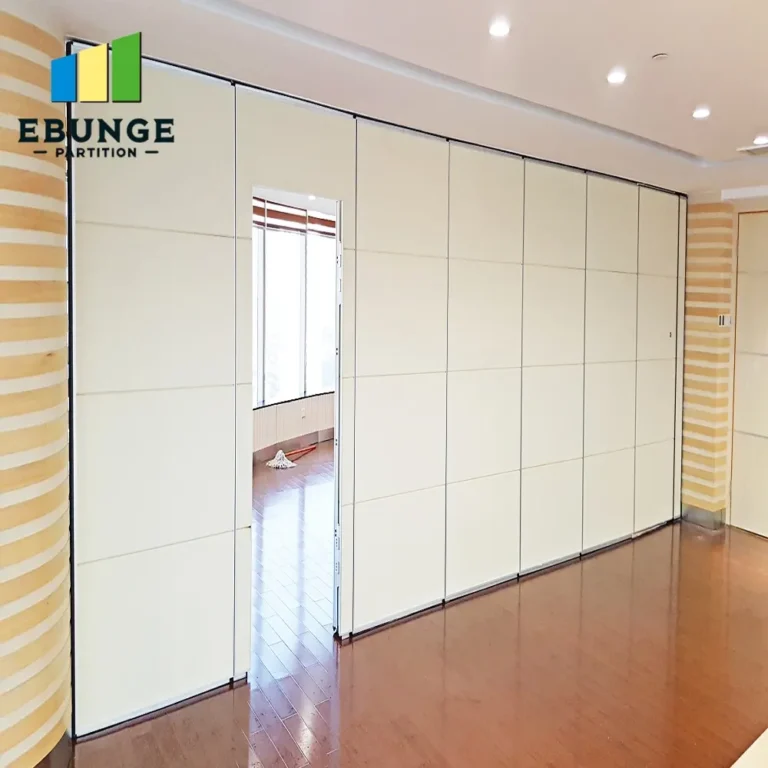
For this buyer review, acoustic partition wall acoustic performance should be checked against the confirmed opening, drawings, operating plan, and project specification.
Send the opening size and drawings to discuss a differentiated acoustic partition wall acoustic performance solution.