
When planning a government multipurpose room, the partition wall system you choose must balance acoustic performance, durability, and ease of use—while also meeting the strict requirements of public procurement. Whether you are outfitting a recording studio, rehearsal room, or music classroom, the design decisions you make early on will directly impact your quotation readiness and project risk. This guide focuses on the practical design ideas that help you specify a partition wall system with confidence, especially when sourcing from overseas.
Direct Answer: To ensure a successful government multipurpose room project, specify your partition wall system with clear opening sizes, acoustic targets (e.g., STC or Rw values), finish preferences, and detailed drawings. Work with a factory-direct supplier that offers custom coordination and installation guidance—this reduces overseas procurement risks and ensures compliance with building codes.
Partition Wall System: 1. Define the Acoustic Target Early
Before exploring design ideas, establish the acoustic performance your room requires. For a recording studio or music classroom, the partition wall system must provide a high sound insulation rating. Common targets range from STC 45 to STC 55, but the exact value depends on the noise sources and the intended use. Always request a specification from the manufacturer and verify it with independent test data. Do not rely on vague marketing claims—ask for the test report that corresponds to the exact configuration you plan to install.
Consider the movable partition wall specification carefully: panel thickness, seals, and the track system all influence acoustic performance. A top-hung track without a floor rail is often preferred in government buildings because it allows for a flush floor and easier cleaning, but ensure the ceiling structure can support the weight. Your supplier should provide a detailed specification that includes the track type, panel dimensions, and seal details.
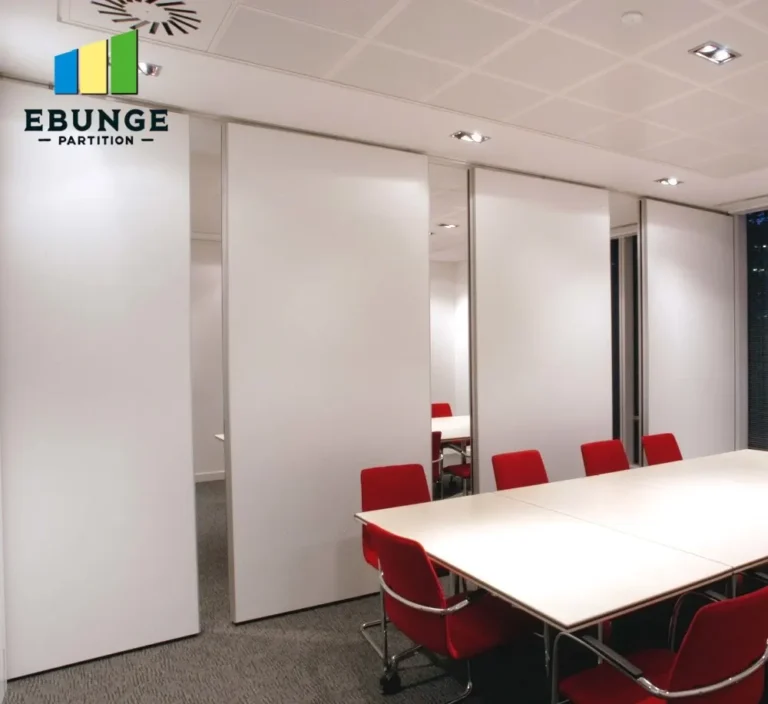
Need help turning the partition wall system requirements into a practical project layout?
2. Optimize Opening Sizes for Flexibility
The opening size of your partition wall system determines how you divide the multipurpose room. Think about the maximum and minimum room sizes you need. For example, a large hall might require a partition that creates two equal halves, while a music room might need a smaller, more intimate space. Work with your supplier to design a system that offers the flexibility you need without compromising acoustic integrity.
When preparing your quotation, include the exact opening dimensions, the number of panels, and the stacking area (where the partition stores when not in use). This information is critical for the manufacturer to provide an accurate price and for your contractor to prepare the site. Remember to confirm the clear opening height and width, as these affect the track length and the number of panels required.
3. Choose Finishes That Meet Government Standards
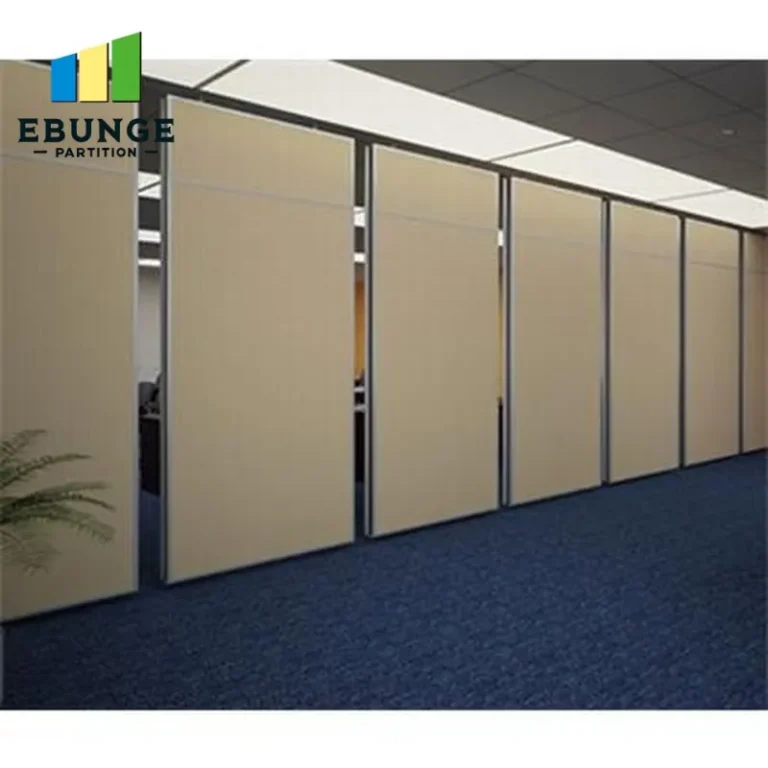
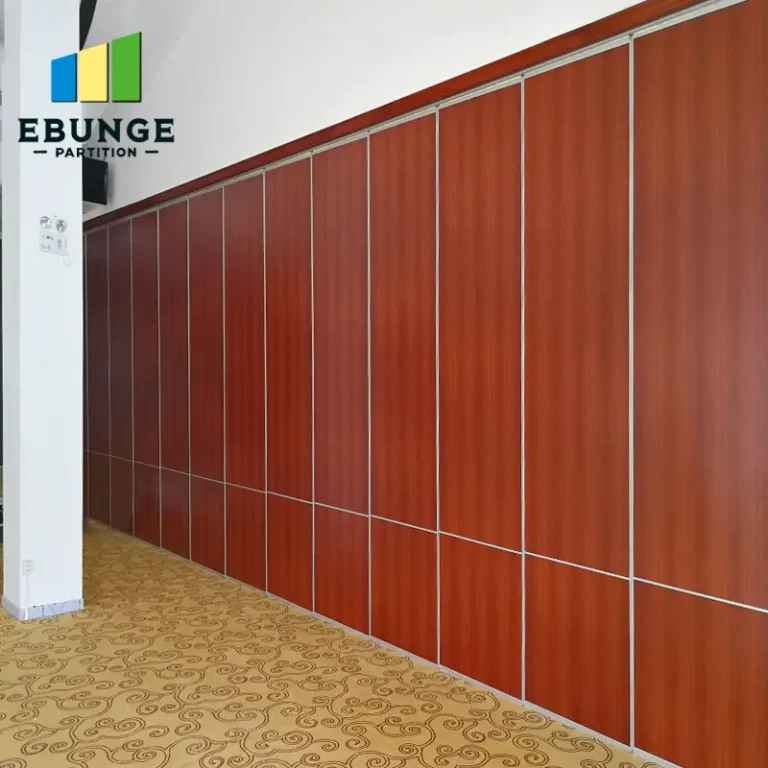
Finishes on your partition wall system should be durable, easy to clean, and compliant with fire safety regulations. Popular options include laminated surfaces, fabric panels, or vinyl wraps. For high-traffic government buildings, scratch-resistant and impact-resistant finishes are essential. Specify the finish on your drawings and in your tender documents to avoid ambiguity.
Also consider the color scheme and how it integrates with the room’s design. A custom color or pattern can enhance the aesthetics, but ensure the manufacturer can deliver it. Factory-direct suppliers often offer a range of standard finishes, but if you need a custom match, request a sample before committing. This is especially important for overseas procurement, where color and texture may vary.
4. Provide Detailed Drawings for Accurate Quotations
One of the biggest risks in overseas procurement is miscommunication due to inadequate drawings. To get an accurate quotation for your partition wall system, provide the manufacturer with detailed architectural drawings, including plan views, elevations, and section details. Show the location of the partition, the ceiling height, the floor finish, and any obstacles like lighting or HVAC diffusers.
If you are working with a consultant, have them prepare a performance specification that includes the acoustic rating, fire rating, and operational requirements. The manufacturer will use this information to design the system and provide a proposal. The more precise your drawings, the fewer surprises during installation.
5. Plan for Minimal Disruption to Government Operations
Government buildings often operate continuously, so installation must be planned to minimize disruption. Discuss the installation schedule with the supplier and your facilities team. A partition wall system with a top-hung track can be installed without floor work, reducing dust and downtime. Also, ask about the installation time—some systems can be installed in days, but complex projects may take longer.
Consider whether the installation can be done after hours or on weekends. Your supplier should provide a detailed installation plan, including the sequence of work and the number of technicians. For overseas suppliers, clarify who will be responsible for installation: the factory, a local agent, or your own contractor. Factory-direct support is valuable, but ensure the supplier offers remote guidance or on-site supervision if needed.
6. Ensure Compliance with Building Codes and Accessibility
Your partition wall system must meet local building codes, including fire safety, accessibility, and structural requirements. For example, in many jurisdictions, the partition must have a fire-resistance rating if it separates different occupancy areas. Also, if the room is accessible to the public, the partition’s operation must be easy for non-technical staff, with clear controls and minimal effort.
Ask the manufacturer for documentation that proves compliance with relevant standards, such as ASTM, EN, or local equivalents. This is especially important for overseas procurement, where standards may differ. Your supplier should be able to provide certificates and test reports, but verify them with your building inspector or a local engineer.
Share the opening, drawings, finish direction, and privacy target for a project-specific review.
7. Focus on Durability and Ease of Operation
In a high-traffic government multipurpose room, the partition wall system will be used frequently, often by staff who are not technical. Choose a system with robust components, such as heavy-duty hangers and seals that resist wear. The operating mechanism should be simple—either a manual pull-and-turn handle or a motorized system with a remote. If you opt for motorized, ensure the controls are intuitive and that staff are trained.
Regular maintenance is also a consideration. A top-hung track system with fewer moving parts is easier to maintain. Ask the supplier for a maintenance schedule and the availability of spare parts. For overseas purchases, confirm that parts can be shipped quickly or that the supplier has a local distributor.
8. Compare Quotations Effectively
When you receive quotations from different suppliers, compare them on a like-for-like basis. Look beyond the total price and examine the scope of supply: does it include the track, panels, seals, and installation? Are the acoustic ratings comparable? What is the lead time? Use the checklist below to evaluate each proposal.
| Criteria | Supplier A | Supplier B |
|---|---|---|
| Acoustic rating (STC/Rw) | ||
| Opening size (W x H) | ||
| Finish options | ||
| Track type | ||
| Installation support | ||
| Lead time | ||
| Compliance documents |
Also, consider the supplier’s experience with government or similar projects. Ask for references, but do not rely solely on testimonials. Ideally, visit an installation or request a sample to assess quality firsthand.
9. Leverage Factory-Direct Support for Custom Projects
One of the best ways to reduce project risk is to work directly with the manufacturer. A factory-direct supplier can offer custom movable partition wall solutions tailored to your exact requirements, and they can provide detailed drawings and technical support. They are also more likely to offer competitive pricing because there is no middleman.
When communicating with the factory, be very specific about your needs. Provide them with the acoustic target, opening size, finish preference, and any other relevant details. Ask for a detailed proposal that includes a drawing and a technical specification. This will help you make an informed decision and avoid costly changes during installation.
10. Conclusion: Reduce Risk with a Well-Defined Specification
In summary, the key to a successful government multipurpose room project is a well-defined specification for your partition wall system. By focusing on opening sizes, acoustic targets, finishes, and detailed drawings, you can obtain accurate quotations and minimize the risk of overseas procurement. Remember to choose a durable, easy-to-operate system that complies with all codes, and take advantage of factory-direct support for custom coordination.
Frequently Asked Questions
What is the typical opening size for a partition wall system in a multipurpose room?
How do I determine the acoustic target for my partition wall system?
What finishes are available for partition wall systems?
Why are detailed drawings important for overseas procurement?
Can I get factory-direct support for a custom partition wall system?
For more information on movable partition walls, explore our movable partition wall guide and blog posts. You can also view our installation category for technical insights, or contact us for project-specific advice.
Send the opening size and drawings to discuss a differentiated partition wall system solution.