
Quick answer: contractor track zone release verification partition installation
Review focus: release verification partition installation.
Releasing a track zone to the next trade is a critical handover point in any movable partition project. For contractors, the decision to sign off on this zone affects every downstream activity, from panel installation to final commissioning. This article provides an evidence-bounded framework for contractor track zone release verification partition installation, helping project teams coordinate without inferring hidden performance or making unsupported claims. The guidance applies to offices, hotels, schools, conference centres, and other flexible-space projects where top-hung movable walls are planned.
Why Track Zone Release Deserves a Formal Check
Project review term: release verification partition installation.
The track zone is the overhead path that carries the entire movable partition system. Unlike floor-supported systems, EBUNGE movable partitions are top-hung and travel without a continuous floor track. The suitability of each route and parking arrangement depends on the approved layout, circulation, ceiling interfaces and operating sequence.
However, release does not mean the track zone is complete in every detail. It means the responsible parties have verified that the zone is ready for the next trade to proceed under the agreed scope. The exact overhead route and support arrangement must be confirmed by the responsible project team from coordinated drawings.
What Contractors Should Verify Before Release
Coordination scope: release verification partition installation.
Verification is a structured review of what can be seen, measured, and documented. It is not a performance test. The following checklist covers the core items that contractors typically need to confirm before releasing the track zone.
Decision Checklist for Track Zone Release
- The exact route, junction arrangement, continuous overhead path and parking position must be confirmed from the coordinated project drawings.
- Alignment and level: Check that the track zone is aligned and level according to the project specification, using the approved methods and tolerances.
- Visible references can support layout discussion but do not verify hidden construction or performance.
- Stacking position readiness: Confirm that the planned parking or stacking position is clear and coordinated with the layout.
- Documentation status: Verify that approved drawings, submittals, and inspection records are available for the next trade.
- Open items log: Record any outstanding items that must be resolved before panel installation begins.
Evidence Note: What Visible Checks Cannot Confirm
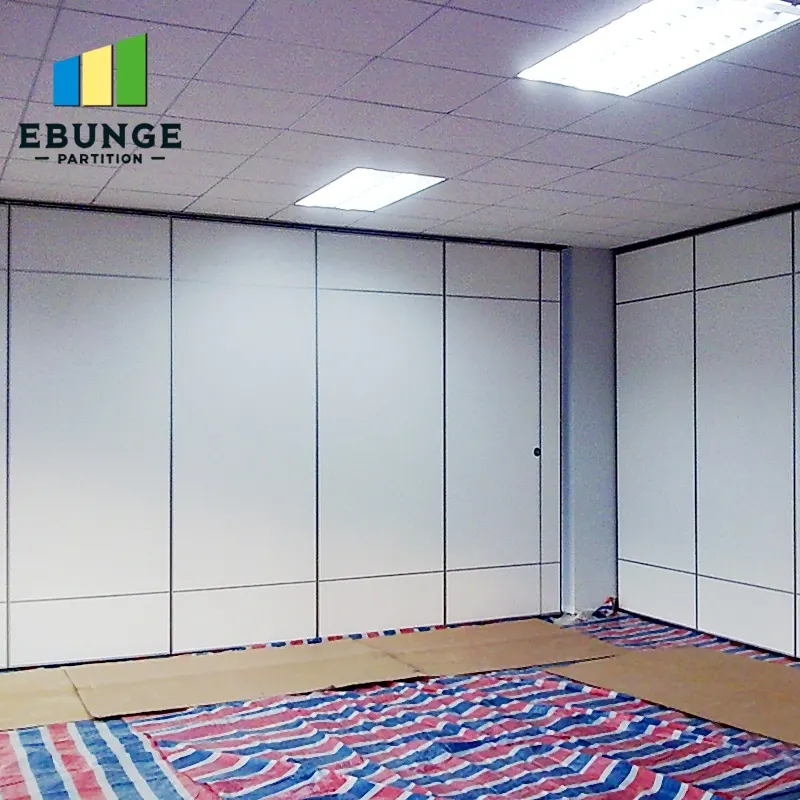
These characteristics depend on project-specific engineering, material selection, and installation quality. Contractors should not infer these properties from appearance alone.
Coordinating with the Next Trade
Checklist focus: release verification partition installation.
Release is a coordination event, not just a physical handover. The next trade—whether that is the partition installer, ceiling contractor, or finishing team—needs clear information about what has been verified and what remains open. A short coordination meeting or written handover note can prevent misunderstandings.
For movable partition projects, the next trade will need to understand the planned movement routes. EBUNGE panels are individually movable and suspended from a top track. They cross the opening without a floor track and park at a planned stacking position. Straight, turning, and stacking routes are reviewed from the layout. Contractors should confirm that the released zone supports the entire planned route, not just the straight section.
Documentation and Project-Specific Confirmation
Review focus: release verification partition installation.
Every project has unique requirements. The track zone release should be documented with reference to the approved drawings, specifications, and any project-specific instructions. This documentation becomes the basis for resolving disputes and for confirming that the next trade is working from the correct information.
Contractors should also confirm pass-door requirements and project documentation with the partition supplier or manufacturer. EBUNGE can discuss pass-door requirements and project documentation, but these must be confirmed for each project. Do not assume that a generic detail applies to your project without checking the approved submittals.
Compact Comparison: Release Readiness vs. Open Items
| Item | Ready for Release | Requires Further Action |
|---|---|---|
| Support structure | Matches approved drawings and is accessible | Discrepancies with drawings or access blocked |
| Overhead route | Continuous and connected along planned path | Gaps, misalignment, or uncoordinated penetrations |
| Stacking position | Clear and coordinated with layout | Conflicts with other trades or obstructions |
| Documentation | Approved drawings and submittals available | Missing approvals or unresolved RFIs |
Common Pitfalls in Track Zone Release
Project review term: release verification partition installation.
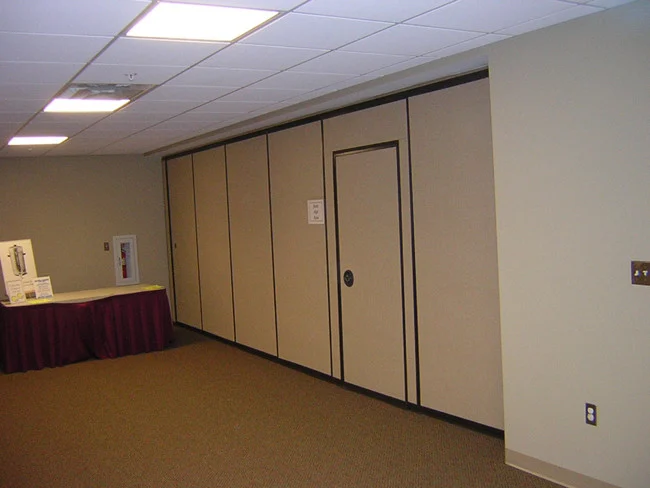
Even experienced teams can overlook details when schedules are tight. One common pitfall is treating release as a formality rather than a verification step. Another is assuming that the track zone is complete because the visible structure looks correct. Without checking the approved drawings, contractors may miss coordination issues that only appear later.
A third pitfall is failing to document open items. If the next trade starts work while unresolved items remain, responsibility for those items can become unclear. A simple open-items log, signed by the relevant parties, helps maintain accountability.
How EBUNGE Supports Project Coordination
EBUNGE provides movable partition systems with confirmed finish options including laminate, melamine, fabric, leather, glass, and other approved surfaces. The panels are top-hung and move without a continuous floor track. Parking style is customized to the customer layout and project requirements and may support compact stacking when the coordinated design permits it.
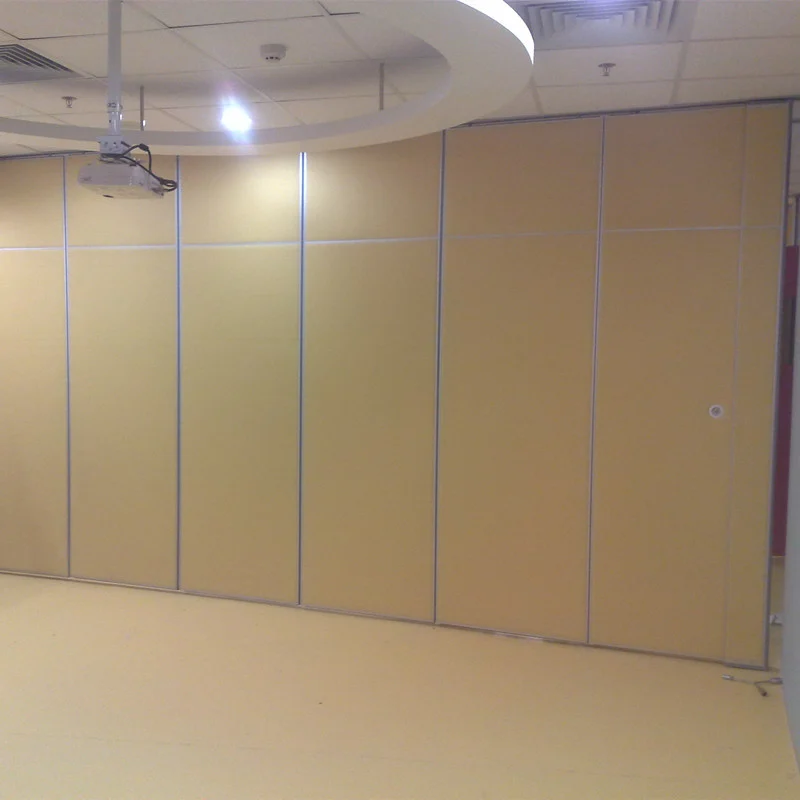
For contractors, the most useful support is early coordination. Review the layout with the EBUNGE team to confirm straight, turning, and stacking routes. Discuss pass-door requirements and project documentation. Confirm project-specific support, acoustic, and dimensional requirements before releasing the track zone. You can find more resources on our resources page or explore the movable walls product page for general information.
FAQ: Track Zone Release Verification
What does track zone release mean in a movable partition project?
Track zone release is the point when the overhead track area is handed over from one trade to the next. It confirms that the zone is ready for the next phase of work, based on approved drawings and visible checks.
Can I release the track zone if the support structure is not fully inspected?
No. Release should only occur after the support structure has been verified against the approved project drawings. If inspection is incomplete, the zone should remain open until the responsible party confirms readiness.
What documentation should accompany a track zone release?
Typical documentation includes approved shop drawings, submittals, inspection records, and an open-items log. The exact requirements depend on the project specification and should be confirmed with the project manager or architect.
How do I confirm that the overhead route supports turning and stacking?
Review the layout with the partition supplier. The overhead route must be continuous and connected through any turns and to the stacking position.
Does releasing the track zone guarantee acoustic performance?
No. Release of the track zone is a coordination step, not an acoustic verification.
What should I do if I find a conflict with another trade?
Document the conflict and notify the relevant parties before releasing the zone. Resolve the conflict through the project coordination process.
Conclusion: Release with Evidence, Not Assumptions
Releasing a track zone to the next trade is a decision that should be based on verified information. Contractors should confirm support structure readiness, route continuity, stacking position, and documentation status. They should also recognize the limits of visible checks and avoid inferring performance characteristics that require project-specific evidence.
If you have questions about movable partition coordination, contact EBUNGE to discuss your project documentation and layout review.