
When a recording studio needs a flexible space divider, the conference room partition is not just a wall—it is an acoustic instrument. For overseas partition dealers, quoting such projects demands more than a price list; it requires a deep understanding of studio workflows, sound isolation targets, and finish integration. This guide focuses on preparing accurate quotations and minimizing project decision risks, helping you align with studio owners, architects, and acoustic consultants from the first inquiry.
Direct answer: To quote a conference room partition for a recording studio, gather the opening size, acoustic target (e.g., STC rating), finish preference, and detailed drawings. Then, request factory-direct support for custom coordination, including top-hung track installation and finish matching. Confirm all specifications in writing before pricing.
Why recording studios demand more from a conference room partition
Recording studios are acoustically sensitive environments. Unlike offices, they require precise control of sound transmission and reverberation. A conference room partition in this context must not only divide space but also maintain acoustic integrity. For dealers, this means the partition’s design, installation, and finish must be specified with care. The focus is on meeting performance requirements without overpromising.
Common challenges include matching the partition’s finish with the studio’s interior design—whether it is fabric-wrapped panels, wood veneer, or custom colors—and ensuring the partition integrates with existing acoustic treatments. Dealers must also consider the partition’s operability: a heavy acoustic wall that is difficult to move will frustrate users.
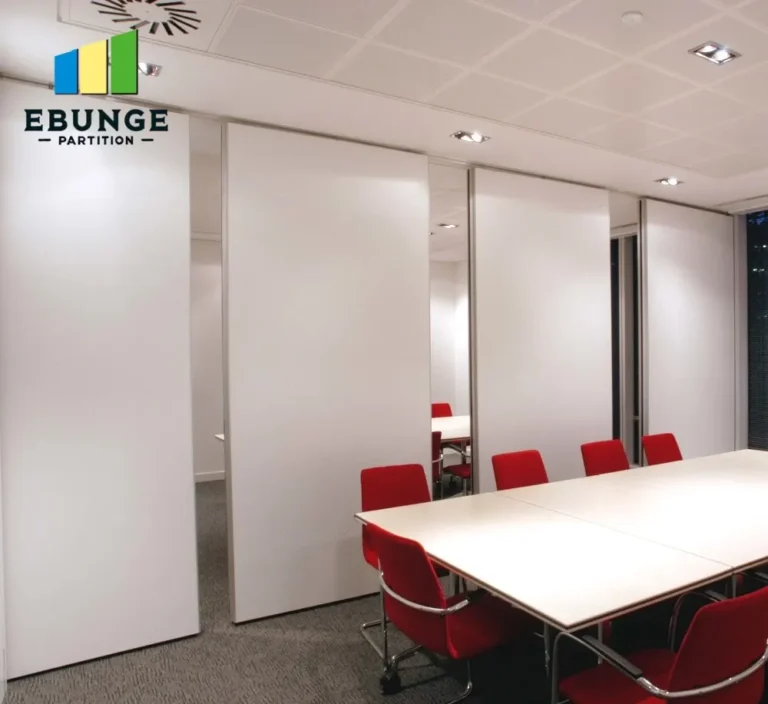
Need help turning the conference room partition requirements into a practical project layout?
Understanding the acoustic target: STC ratings and what they mean
Sound Transmission Class (STC) is a key metric for partition performance. However, STC alone does not guarantee acoustic satisfaction in a studio. Low-frequency sounds, common in music production, require special attention. A partition with a high STC rating may still leak bass if not properly sealed. For quoting, you need to know the client’s target STC and any additional acoustic requirements, such as sound absorption or isolation from structure-borne noise.
When discussing STC, avoid making assumptions. Ask for the studio’s acoustic specification or the consultant’s report. If the client is unsure, offer to coordinate with our engineering team to assess feasibility. Remember, exact STC values depend on installation conditions, wall construction, and sealing details—not just the partition panel itself.
Key specifications to collect before quoting
To prepare a reliable quotation, gather these details:
- Opening size: Width, height, and clearance for the partition. Include tolerances for uneven floors and ceilings.
- Acoustic target: Required STC or specific acoustic performance, as well as any sound absorption or damping needs.
- Finish preference: Material, color, texture, and pattern. For studios, fabric or acoustic panels are common, but custom finishes may be needed.
- Drawings: Architectural or interior design drawings showing the partition location, surrounding structure, and integration points.
- Operational requirements: How often the partition will be moved, and whether it needs to stack into a pocket or align with other partitions.
- Installation constraints: Ceiling type, floor conditions, and access for installation. Our top-hung track system requires a strong overhead structure.
These details directly affect cost and lead time. Missing information leads to change orders and delays.
Finish matching: the art of blending with interior design
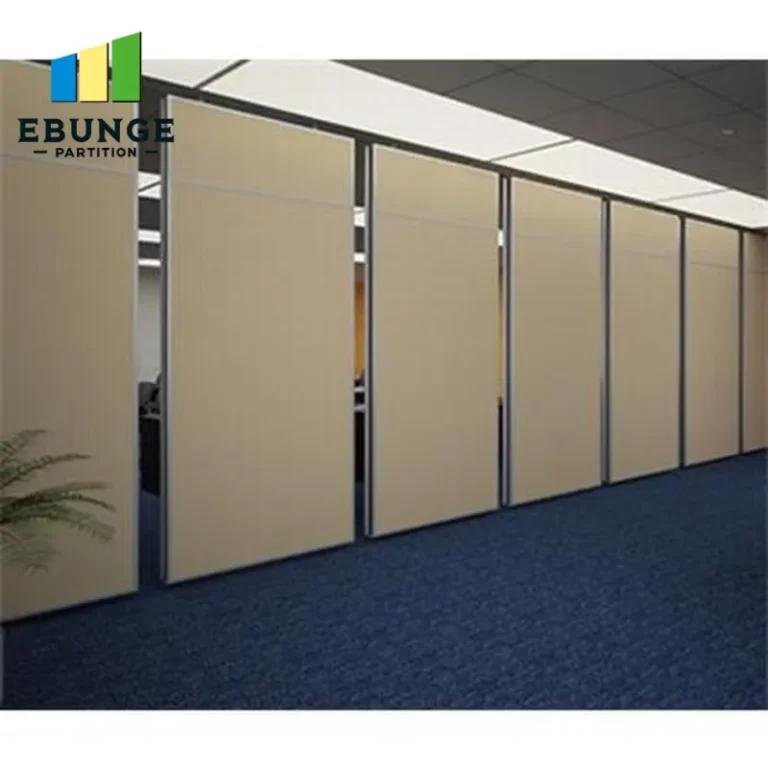
In a recording studio, the partition is often a prominent visual element. Clients expect the finish to match their interior design vision. This can be challenging when the partition must also provide acoustic performance. For example, a fabric finish may be chosen for sound absorption, but the color must match the studio’s palette. Or a wood veneer may be desired for aesthetics, but it may require additional acoustic backing.
As a dealer, you should offer finish samples and coordinate with our factory to ensure color consistency and material quality. Provide clients with a range of options, but clearly state what is standard and what is custom. Custom finishes may extend lead times and cost more. Always confirm the finish specification in writing before production.
Installation complexity: top-hung track without floor rail
Our conference room partition systems use a top-hung track, eliminating the need for a floor rail. This is advantageous in studios where a clean, unobstructed floor is essential for cables and movement. However, the overhead track must be securely anchored to the building structure. During quoting, assess the ceiling conditions and determine if additional structural support is needed.
Installation complexity also depends on the partition’s size and weight. Larger panels may require special handling equipment. Provide the client with installation guidance and recommend professional installation by trained technicians. We offer installation drawings and on-site support to ensure correct setup.
Durability and maintenance: long-term performance
Recording studios are high-traffic environments, with equipment moving in and out. The partition must withstand frequent use without compromising performance. Look for durable materials, robust hardware, and quality seals. Maintenance requirements should be minimal: easy-to-clean surfaces, replaceable seals, and accessible rollers for lubrication.
Discuss warranty terms with the client, but avoid making specific promises unless they are in the contract. Typically, our partitions come with a standard warranty, but extended coverage may be available. Clarify what is covered—parts, labor, or both—and for how long.
Cost vs. performance: balancing budget and expectations
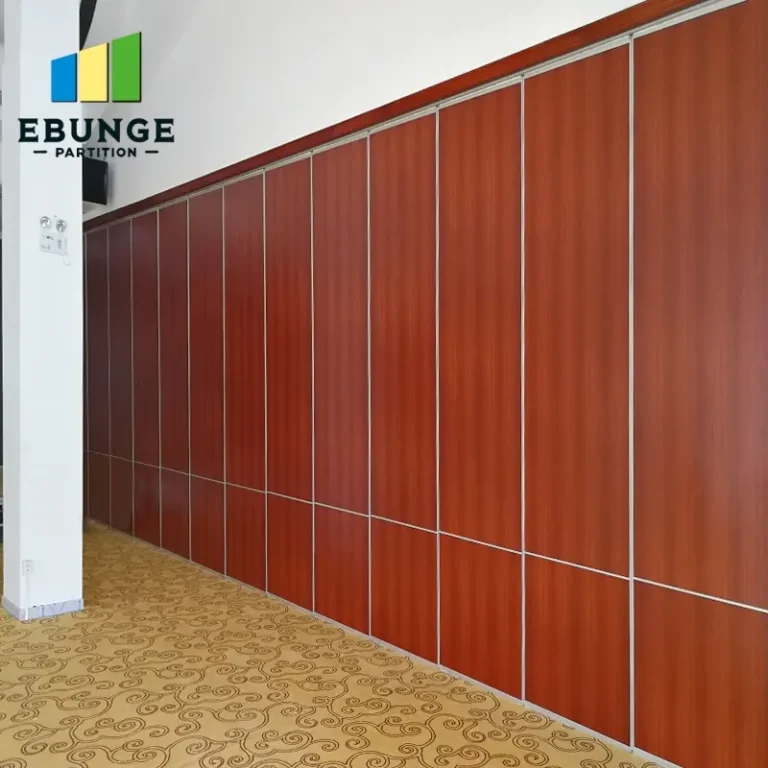
In studio projects, the partition is a significant investment. Clients want the best acoustic performance within their budget. As a dealer, you must present options that balance cost and performance. For example, a higher STC rating may require thicker panels and better seals, increasing cost. Alternatively, a slightly lower STC might be acceptable if the studio rarely records loud sources.
Provide a transparent breakdown of costs: partition panels, track, hardware, installation, and any custom finishes. Avoid hidden fees. Encourage clients to prioritize their requirements: what is non-negotiable and what can be adjusted.
Share the opening, drawings, finish direction, and privacy target for a project-specific review.
Lead time and project scheduling
Lead time is critical in construction projects. Studios often have tight deadlines. When quoting, confirm the production and delivery schedule with our factory. Custom finishes and large orders may require more time. Provide the client with a realistic timeline, including buffer for unforeseen delays. We recommend confirming lead times in writing and updating the client regularly.
Warranty and after-sales support
A reliable warranty gives clients confidence. Our standard warranty covers manufacturing defects and hardware functionality. However, installation errors or misuse are not covered. Explain the warranty terms clearly and provide documentation. After-sales support includes spare parts availability and technical assistance. For overseas dealers, we offer remote support and training.
Practical checklist for quoting a recording studio partition
Use this checklist to ensure you have all necessary information:
| Item | Details to collect | Status |
|---|---|---|
| Opening dimensions | Width, height, depth, tolerances | ☐ |
| Acoustic target | STC rating, low-frequency needs | ☐ |
| Finish preference | Material, color, texture, sample | ☐ |
| Drawings | Architectural/structural drawings | ☐ |
| Installation details | Ceiling type, floor condition, access | ☐ |
| Operational freq. | How often moved, stacking needs | ☐ |
| Lead time required | Project deadline, buffer | ☐ |
| Warranty expectations | Coverage, duration | ☐ |
Factory-direct support: your advantage
Working directly with the factory gives you access to engineering expertise and customization options. For studio projects, we can provide acoustic advice, finish samples, and installation guidance. Our team reviews your drawings and specifications to ensure the partition meets the project’s needs. This collaboration reduces the risk of errors and ensures a smoother quotation process.
When in doubt, ask. We are here to help you win the project and deliver a successful installation.
Conclusion: reduce risk with thorough preparation
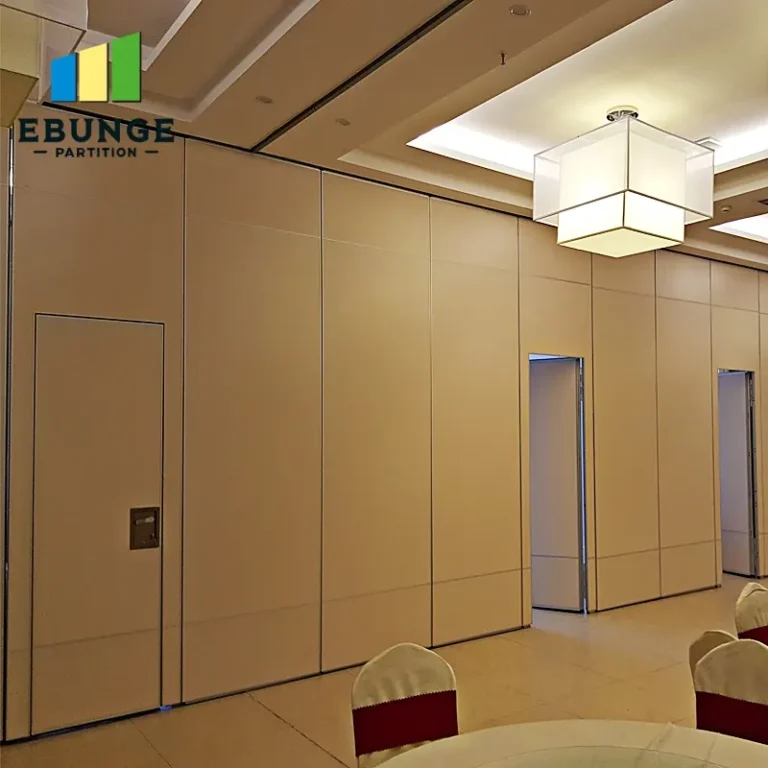
Quoting a conference room partition for a recording studio is a complex task, but with careful preparation, you can minimize risks. Collect all necessary specifications, understand the acoustic requirements, and leverage factory support. By focusing on quotation readiness and clear communication, you build trust with clients and position yourself as a knowledgeable partner.
For more insights on partition projects, explore our blog and movable partition cost category. To discuss a specific project, contact us for direct support. Remember, a well-prepared quotation is the first step to a successful studio partition installation.
Frequently asked questions
1. What is a typical STC rating for a recording studio partition?
STC ratings for studio partitions often range from 45 to 60, but the exact value depends on the studio’s acoustic design. Low-frequency isolation may require additional measures. Always confirm the target with the client’s acoustic consultant.
2. Can the partition match a specific wood veneer finish?
Yes, we offer custom finishes, including wood veneers. However, custom finishes may affect lead time and cost. Provide a sample or color code for accurate matching.
3. How does the top-hung track system work without a floor rail?
The partition is suspended from an overhead track, with a bottom guide that is recessed or removable. This leaves the floor clear for cables and easy movement. The ceiling structure must support the partition’s weight.
4. What installation support do you provide?
We provide detailed installation drawings and guidance. Our team can also offer on-site supervision or training for local installers, depending on the project scope.
5. How long does a custom partition take to deliver?
Lead times vary based on size, finish, and customization. Standard products ship faster, while custom orders may take several weeks. We provide a confirmed schedule before production.
6. What is the warranty on your partitions?
Our standard warranty covers manufacturing defects and hardware functionality for a specified period. Extended warranties may be available. Terms are outlined in the quotation and contract.
Send the opening size and drawings to discuss a differentiated conference room partition solution.