
When planning a school hall that needs to flex between assemblies, exams, and drama productions, the classroom movable wall often becomes the centerpiece of the design. As a project contractor, you need a partition that meets acoustic targets, withstands daily student traffic, and stays within budget. Understanding movable partition cost is not just about the price per square meter; it involves system selection, installation complexity, and long-term maintenance. This guide walks through the technical decisions you will face, helping you prepare for accurate quotations and a successful installation.
Direct Answer: The movable partition cost for a school hall depends on the system type (top-hung vs. floor-supported), acoustic rating, panel size, and finish. For most projects, a top-hung track system without floor rail offers better durability and easier maintenance. To get an accurate quote, you must provide the opening size, ceiling height, acoustic target (e.g., STC/Rw), finish preference, and project location. This information allows suppliers to tailor a system that meets your specific requirements.
1. Why a Classroom Movable Wall Is a Strategic Investment for School Halls
School halls are multipurpose by nature. A classroom movable wall allows you to divide a large space into smaller classrooms, meeting rooms, or activity areas. This flexibility maximizes the use of square footage and can defer the need for new construction. For contractors, this means understanding the operational benefits: quick space reconfiguration, improved acoustics for simultaneous activities, and compliance with safety standards. The right system also enhances the building’s value, making it a worthwhile investment for educational institutions.
Need help turning the movable partition cost requirements into a practical project layout?
2. Key Factors Influencing Movable Partition Cost
Several variables directly impact the movable partition cost. The first is the system type: top-hung track systems, which suspend panels from an overhead track, are generally more expensive than floor-supported systems but offer better durability and easier cleaning. The acoustic performance required (e.g., STC 40 vs. STC 50) also affects cost, as higher ratings necessitate thicker panels and better seals. Panel size and weight, finish materials (e.g., dry-erase boards, tackable surfaces), and the complexity of the track layout (straight, curved, or with switches) all contribute. Additionally, installation labor, site conditions, and the need for custom fabrication can influence the final quote.
3. Top-Hung Track Systems: Why They Are Preferred for Schools
In educational settings, top-hung track systems are often the go-to choice. These systems hang panels from a track mounted to the structural ceiling, eliminating the need for a floor rail. This design prevents trip hazards and allows for a completely flat floor surface, which is crucial for safety and easy cleaning. Top-hung systems are also more reliable in high-traffic areas because they do not rely on floor guides that can wear out or become misaligned. For contractors, this means fewer callbacks and a longer-lasting solution. When specifying, ensure the track is engineered for the panel weight and that the ceiling structure can support the load.
4. Acoustic Performance: Meeting the Needs of a School Hall
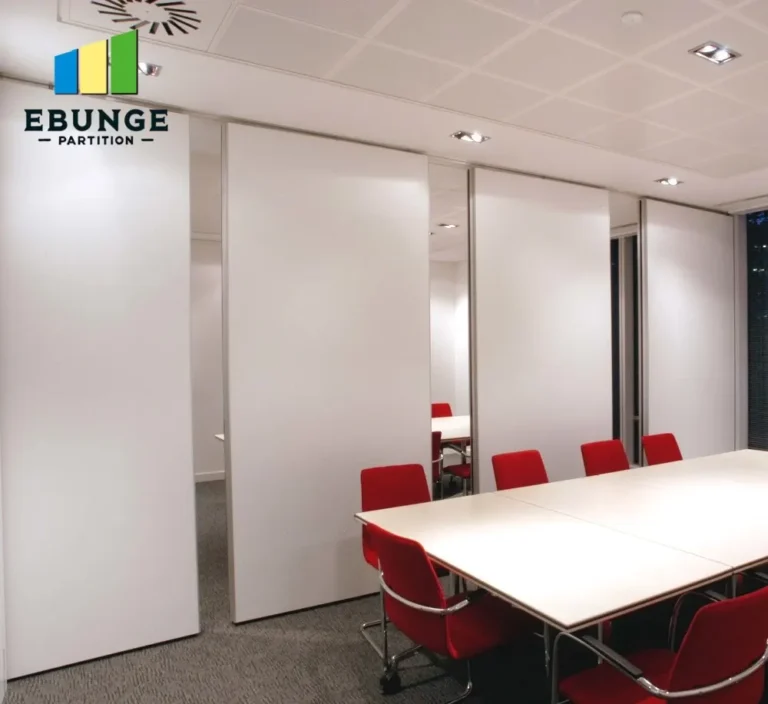
Acoustic control is a primary concern in school halls, where simultaneous activities are common. The acoustic partition solutions you choose must meet specific Sound Transmission Class (STC) or Weighted Sound Reduction Index (Rw) targets. For speech privacy and reduced distraction, an STC of 40-45 is typical for classroom divisions, while music rooms may require STC 50+. To achieve these ratings, the partition must have proper perimeter seals, acoustic gaskets, and dense panel cores. As a contractor, you should ask suppliers for acoustic test data and ensure the system’s performance is certified. Remember, the actual performance also depends on the installation quality and the surrounding wall/ceiling construction.
5. Ease of Operation and Safety for Children
School staff, not professional movers, will operate the partition daily. Therefore, ease of operation is critical. Look for systems with smooth gliding mechanisms, ergonomic handles, and minimal force required to move panels. Safety is equally important: panels should have no sharp edges, and the track system must prevent derailment. For child safety, consider systems with soft-close features and locking mechanisms that are easy for adults but not for small children. When evaluating a classroom movable wall supplier, ask about the operating force and any safety certifications.
6. Durability and Maintenance: Built for School Use
School environments are tough on building components. Partitions face impacts from carts, bumps, and constant use. Therefore, durability is non-negotiable. Choose panels with impact-resistant surfaces, such as high-pressure laminate or steel, and hardware that can withstand repeated cycling. Maintenance requirements should be minimal: top-hung systems with sealed tracks require less cleaning and lubrication than floor-guided systems. Regular inspections of seals and gaskets will extend the life of the partition. In your request for quotation, specify the expected frequency of use and ask about recommended maintenance schedules.
7. Installation Complexity: What Contractors Need to Know
Installation of a movable partition wall is a specialized task. It involves verifying the ceiling structure, installing the track, hanging panels, and adjusting seals. Complexity increases with curved tracks, multiple tracks, or integration with existing fire alarm systems. As a contractor, you must assess the site conditions and coordinate with the supplier for installation guidance. Many suppliers offer technical drawings and on-site supervision. Clarify whether installation is included in the quote or if it is an additional service. Proper installation is vital for acoustic performance and safety, so do not cut corners here.
Share the opening, drawings, finish direction, and privacy target for a project-specific review.
8. Cost-Effectiveness: Balancing Budget and Quality
Movable partition cost is not just the initial purchase price. Consider the total cost of ownership, including maintenance, energy savings from flexible space use, and the longevity of the system. A cheaper, floor-supported system may seem attractive, but it could require more maintenance and have a shorter lifespan. On the other hand, a high-quality top-hung system may have a higher upfront cost but offer better durability and lower operating costs. For schools with tight budgets, prioritize the acoustic rating and durability that meet the project’s needs without over-specifying. Obtain multiple quotes and compare the value, not just the price.
9. Compatibility with Existing Infrastructure
Before selecting a system, assess the existing building infrastructure. The ceiling must be able to support the track loads, and the floor should be flat if a floor rail is used (though top-hung systems avoid this). Consider the integration with lighting, HVAC, and sprinkler systems. The partition should not obstruct these services. In your initial inquiry, provide details about your building’s structure to ensure the supplier can recommend a compatible system. This will prevent costly changes during installation.
10. Inquiry Conversion: How to Get Accurate Quotations
To receive a precise movable partition cost quote, you must provide comprehensive information. At a minimum, include:
- Opening size (width, height, and depth) and number of panels
- Architectural drawings or detailed sketches
- Acoustic target (STC/Rw rating)
- Finish preference (e.g., dry-erase, tackable, wood grain)
- Project location and site access details
- Expected frequency of use and any special requirements (e.g., fire rating)
This information allows suppliers to provide a tailored quote and reduces the back-and-forth. Be clear about your deadline and any constraints. This approach also helps you compare quotes fairly.
11. Practical Checklist for Evaluating Movable Partition Systems
Use this checklist when reviewing proposals:
| Criteria | Questions to Ask |
|---|---|
| System type | Is it top-hung? Does it require a floor rail? |
| Acoustic rating | What is the STC/Rw? Is it tested? |
| Operation | Is it easy to move? What is the operating force? |
| Safety | Are there sharp edges? Are locks child-safe? |
| Durability | What materials are used? What is the warranty? |
| Maintenance | What is the recommended maintenance schedule? |
| Installation | Is installation included? What are the site requirements? |
| Cost | What is the total cost, including delivery and taxes? |
12. Why Working with a Specialized Supplier Matters
Choosing the right classroom movable wall supplier is as important as choosing the system itself. A specialized supplier can offer custom solutions, provide technical drawings, and guide you through installation. They understand the unique demands of school environments and can recommend the most cost-effective options. When you contact a supplier, be prepared to share your project details. A reputable supplier will respond with a detailed quote and be willing to answer your questions. For more information on movable partition walls, you can explore our resources on movable partition walls and our blog.
Conclusion
Selecting a classroom movable wall for a school hall involves careful consideration of acoustic performance, durability, ease of operation, and movable partition cost. By understanding the technical aspects and preparing a detailed inquiry, you can ensure that the system you choose meets the needs of the school and your project budget. Remember to prioritize safety and maintenance, and work with a supplier who can provide custom guidance. For a comprehensive overview of cost factors, visit our Movable Partition Cost category. When you are ready to move forward, contact us with your project specifications.
Frequently Asked Questions
What is the average cost of a classroom movable wall?
The cost varies widely based on size, acoustic rating, and finish. Typically, prices range from $30 to $100 per square foot, but exact figures depend on your specific requirements. For an accurate estimate, provide your opening dimensions and acoustic target to suppliers.
How does a top-hung track system compare to a floor-supported system?
Top-hung systems hang panels from an overhead track, eliminating floor rails. This design offers easier cleaning, fewer trip hazards, and better durability in high-traffic areas. Floor-supported systems may be less expensive but require floor tracks that can wear out and be harder to maintain.
What acoustic ratings should I consider for a school hall?
For general classroom use, an STC of 40-45 is often sufficient. For music rooms or areas requiring high speech privacy, aim for STC 50 or higher. Always request certified test data from the supplier to ensure the system meets your needs.
How long does installation typically take?
Installation time depends on the system complexity and site conditions. A simple straight track with a few panels may take a day, while a multi-track system with switches could take several days. Your supplier can provide a timeline based on your project details.
What maintenance is required for a movable partition wall?
Routine maintenance includes checking and cleaning the track, inspecting seals for wear, and ensuring panels operate smoothly. Top-hung systems generally require less maintenance than floor-guided ones. Follow the manufacturer’s recommendations for lubrication and adjustments.
Send the opening size and drawings to discuss a differentiated movable partition cost solution.