
When planning a medical consultation space, the choice of an operable partition is not merely a matter of dividing a room. It directly affects patient privacy, acoustic comfort, workflow efficiency, and compliance with healthcare regulations. For exhibition center buyers overseeing such projects, the decision involves balancing technical specifications, budget constraints, and long-term operational reliability. This buying guide focuses on quotation readiness and project decision risk, helping you prepare the essential information needed to obtain accurate quotes and avoid costly mistakes. Whether you are an architect, facility manager, or project lead, understanding the key factors—from track systems to acoustic performance—will empower you to make an informed choice.
Direct answer: To choose the right operable partition for a medical consultation space, you must first define the opening size, acoustic target, and finish preference. Then, prepare detailed drawings and specifications, and work with a factory-direct supplier that offers engineering support and installation guidance. Prioritize a top-hung track system without a floor rail for hygiene and ease of movement, and ensure the partition meets healthcare compliance requirements for fire safety and accessibility.
Why the Track System Matters for High Movable Partition Walls
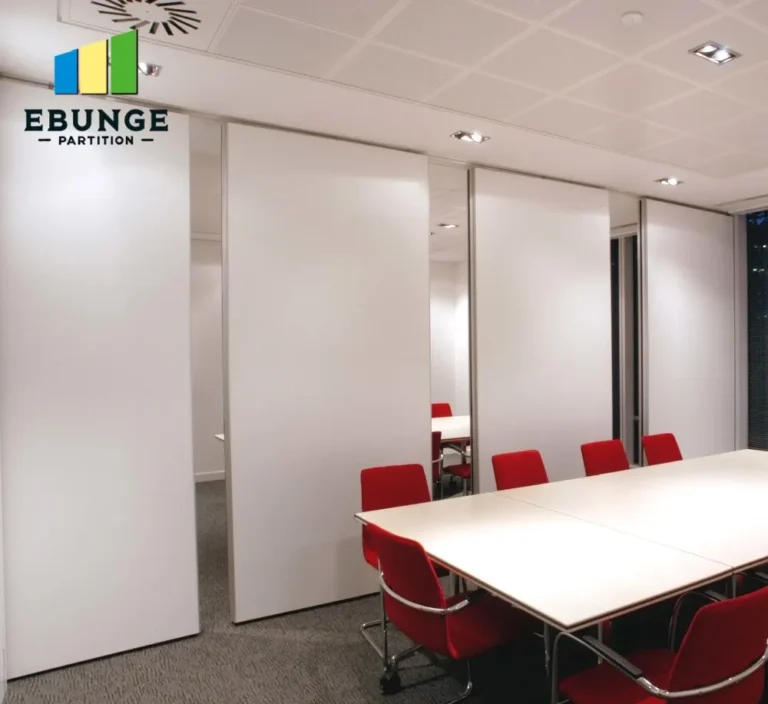
The track system is the backbone of any operable partition. For high movable partition walls—often exceeding 4 meters in height—the choice of track system profoundly impacts ease of operation, durability, and maintenance. A top-hung track system, where the partition is suspended from an overhead rail, eliminates the need for a floor rail, reducing trip hazards and facilitating cleaning—a critical factor in medical environments. When evaluating track systems, consider the load-bearing capacity, the smoothness of movement, and the quality of the trolley wheels. Ask your supplier for the maximum partition weight and height their system supports, and verify that the track is designed for frequent use.
Need help turning the operable partition requirements into a practical project layout?
Acoustic Performance: Setting Realistic Targets
In a medical consultation space, acoustic privacy is non-negotiable. Patients expect confidential conversations to remain private. The acoustic performance of an operable partition is measured by its Sound Transmission Class (STC) rating. However, the actual performance depends on the entire assembly, including perimeter seals, the ceiling and floor gaps, and flanking paths. Instead of relying solely on a single STC number, discuss your specific acoustic target with the manufacturer. For consultation rooms, an STC of 40-50 is often sufficient, but this varies based on the background noise level and the sensitivity of the consultations. Provide your supplier with details about the surrounding environment, such as HVAC noise or adjacent room usage, so they can recommend the appropriate panel construction and sealing systems.
Compliance with Healthcare Regulations
Medical facilities are subject to strict regulations concerning fire safety, accessibility, and hygiene. Your operable partition must comply with local building codes and healthcare standards. For instance, the partition may need to have a fire-resistance rating, depending on the building’s fire compartmentation plan. It must also meet accessibility requirements, such as being easy to operate for people with disabilities. When requesting quotes, explicitly ask for compliance documentation, including test certificates and certifications. However, do not accept these at face value; verify that they are current and applicable to your specific project. If a supplier cannot provide evidence of compliance, consider it a red flag.
Durability and Maintenance in High-Traffic Environments
Exhibition centers and medical facilities experience heavy usage. Your operable partition will be operated frequently, so durability is essential. Look for partitions with robust construction, high-quality finishes that resist scratches and stains, and hardware that can withstand repeated use. Ask about the expected lifespan of the track system and the warranty terms. Maintenance requirements should also be minimal; for example, a top-hung system with sealed bearings may require less lubrication than a floor-mounted system. Consider the ease of replacing worn parts, such as seals or trolleys, and whether the manufacturer offers spare parts. A low-maintenance design reduces downtime and total cost of ownership.
Installation Time and Complexity
The installation of an operable partition can be a significant project, especially in a medical consultation space where downtime must be minimized. The complexity of the installation depends on factors such as the partition’s size, weight, and the building’s structural conditions. A factory-direct supplier can provide detailed installation drawings and guidance, which can reduce on-site issues. Ask for a preliminary installation schedule and identify any potential challenges, such as limited access or the need for structural reinforcement. While you should not expect a precise timeline without a detailed site assessment, a reputable supplier should be able to give you a realistic estimate based on similar projects. Remember that faster installation may not always be better; quality and compliance should never be compromised.
Cost-Effectiveness: Beyond the Initial Quote
When comparing quotes, look beyond the initial price. Consider the total cost of ownership, including installation, maintenance, and potential operational disruptions. A cheaper partition may have higher maintenance costs or a shorter lifespan, making it more expensive in the long run. Also, factor in the cost of any necessary structural modifications, such as reinforcing the ceiling to support the partition’s weight. To ensure you are comparing like-for-like, ask each supplier for a detailed breakdown of costs, including materials, hardware, seals, and installation. Be wary of hidden costs, such as delivery fees or charges for additional drawings. A transparent quote is a sign of a reliable supplier.
Share the opening, drawings, finish direction, and privacy target for a project-specific review.
Preparing Your Quotation Request: A Practical Checklist
To obtain accurate quotes and reduce project risk, prepare a comprehensive request for quotation (RFQ). This should include:
- Opening size: width, height, and number of panels required.
- Acoustic target: desired STC rating or specific acoustic performance criteria.
- Finish preference: material, color, and texture (e.g., laminate, veneer, or writeable surface).
- Drawings: architectural drawings, including ceiling height, structural details, and any obstructions.
- Operational requirements: frequency of use, ease of operation, and any special needs (e.g., motorized operation).
- Compliance requirements: fire rating, accessibility standards, and hygiene regulations.
- Project timeline: expected start and completion dates.
- Site conditions: access constraints, storage space, and any special installation considerations.
By providing this information, you enable suppliers to offer more precise quotations and reduce the risk of misunderstandings later.
Comparison Table: Key Considerations for Operable Partitions
| Consideration | Why It Matters | Questions to Ask |
|---|---|---|
| Track system | Affects ease of use, durability, and hygiene | Is it top-hung? What is the load capacity? Is a floor rail required? |
| Acoustic performance | Ensures patient privacy and comfort | What is the STC rating? How are seals designed? What flanking paths are addressed? |
| Compliance | Meets legal and safety standards | Does it meet fire codes? Is it accessible? Are certifications available? |
| Durability | Withstands frequent use | What materials are used? What is the warranty? What maintenance is required? |
| Installation | Affects downtime and project timeline | How complex is the installation? Do you provide drawings? What is the estimated time? |
| Cost | Impacts budget and ROI | What is included in the quote? Are there hidden costs? What is the total cost of ownership? |
Factory-Direct Support: Why It Matters
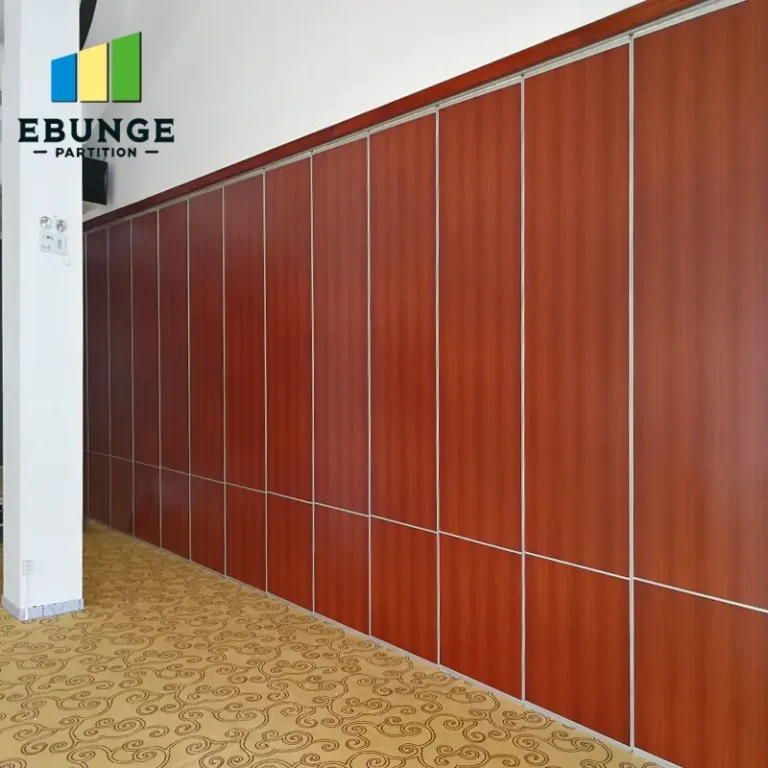
Working directly with a manufacturer offers several advantages, especially for custom movable partition wall projects. Factory-direct suppliers can provide customized solutions, direct access to engineering expertise, and better pricing by eliminating intermediaries. They are also more likely to offer detailed drawings and installation guidance, ensuring that the partition is correctly installed and performs as intended. When evaluating suppliers, ask about their experience with medical or exhibition projects, and request references. A reputable manufacturer will be transparent about their capabilities and limitations.
Conclusion
Choosing the right operable partition for a medical consultation space requires careful consideration of track systems, acoustic performance, compliance, durability, installation, and cost. By preparing a detailed quotation request and engaging with factory-direct suppliers who offer engineering support, you can reduce project risks and achieve a successful outcome. The key is to focus on your specific needs and verify all claims with documented evidence. An informed decision today will lead to a partition that serves your facility effectively for years to come.
Frequently Asked Questions
What is the typical lead time for a custom operable partition?
Lead times vary based on the complexity of the project, the manufacturer’s production schedule, and the availability of materials. A factory-direct supplier can provide a more accurate estimate after reviewing your drawings and specifications. Always confirm the lead time in writing and factor in potential delays.
Can an operable partition achieve the same acoustic performance as a fixed wall?
While operable partitions are designed to provide good acoustic insulation, they may not match the performance of a fixed wall due to the presence of seals and moving parts. However, with proper installation and high-quality seals, they can meet the requirements of most medical consultation spaces. Discuss your specific acoustic needs with the manufacturer to find the best solution.
How do I ensure the partition complies with healthcare regulations?
Ask the supplier for documentation such as fire test certificates, accessibility compliance statements, and material safety data sheets. Additionally, consult with your local building authority or a healthcare compliance expert to understand the specific requirements for your project.
What maintenance is required for an operable partition?
Maintenance typically involves regular cleaning of the panels and track, periodic inspection of seals and hardware, and occasional lubrication of moving parts. Top-hung systems without floor rails may require less maintenance. The manufacturer should provide a maintenance schedule and instructions.
Can I operate the partition easily, especially for staff with limited physical strength?
Yes, many operable partitions are designed for ease of operation, with smooth-gliding mechanisms and optional motorized systems. When requesting quotes, specify the operational requirements, and the supplier can recommend the appropriate hardware.
For more information on movable partition walls, visit our movable partition wall page or explore our blog for insights. If you need installation guidance, check our installation category. For specific project inquiries, please contact us.
Send the opening size and drawings to discuss a differentiated operable partition solution.