
Quick project answer
For project teams, changeover staffing model room turn duration data should be reviewed against the opening, ceiling interface, operating sequence and approved finish requirements. Building a changeover staffing model from room turn duration data starts with a simple discipline: separate what you can observe from what you still need to confirm. For overseas contractors, architects, interior designers, owners, and renovation teams, the goal is not to promise a fixed changeover time. It is to create a defensible planning framework that links room turn duration data to layout decisions, movable partition routes, and project-specific confirmation. This guide explains how to structure that work without inventing performance, cost, or engineering conclusions.
Why Room Turn Duration Data Matters for Staffing Plans
Room turn duration data describes how long a space takes to move from one use to the next. In flexible venues, that duration depends on many variables: furniture reset, cleaning, AV checks, and whether movable partitions are involved. A staffing model built on assumptions alone tends to break when the actual sequence changes.
Use duration data as a planning input, not a guarantee. Record what was measured, under what conditions, and with which room configuration. If the data comes from a different layout, finish, or partition route, treat it as a reference point rather than a direct substitute.
Define the Changeover Scope Before Counting Staff
Before estimating how many people are needed, define the changeover scope in plain terms. Which rooms are turning? What is the starting configuration and the ending configuration? Are movable wall panels being moved, or only furniture and equipment?
Separate fixed tasks from variable tasks
Fixed tasks happen every time, such as resetting tables or checking lighting. Variable tasks depend on the event, such as adding a pass-door requirement or changing the partition layout. A staffing model should show both categories so planners can see where duration data is stable and where it is not.
Map the sequence, not just the total
A single total duration can hide bottlenecks. Break the changeover into stages: clear the room, move partitions, reset furniture, clean, and final check. Each stage can then be compared against observed data. The suitability of each route and parking arrangement depends on the approved layout, circulation, ceiling interfaces and operating sequence.
Use Movable Partition Routes as a Planning Constraint
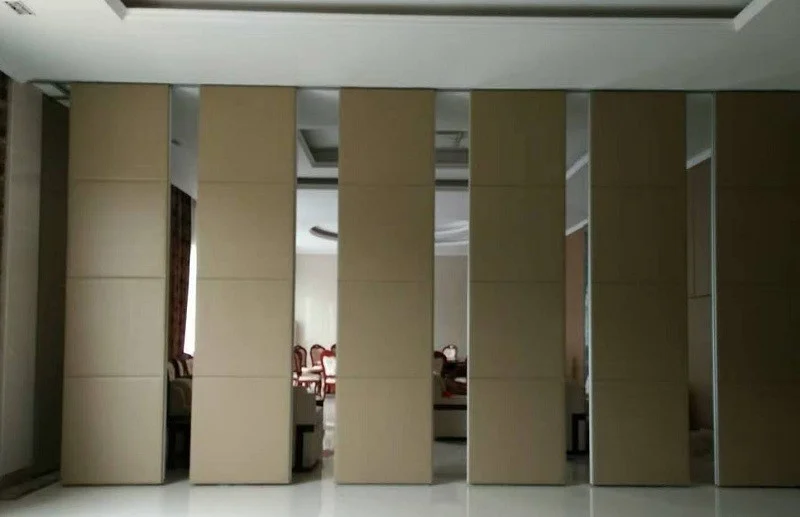
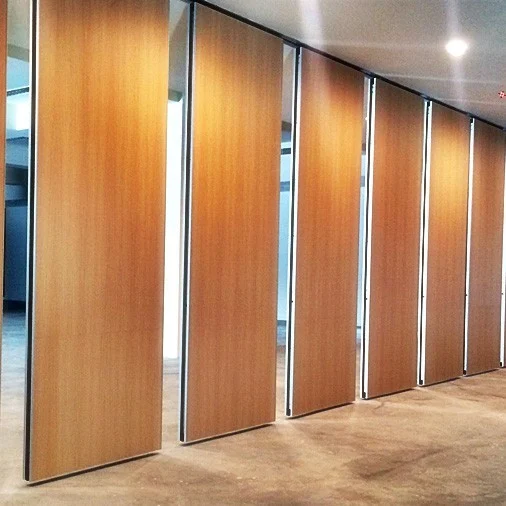
EBUNGE movable wall panels are individually movable, suspended from a top track, and cross the opening without a floor track. They park at a planned stacking position. Straight, turning, and stacking routes are reviewed from the layout. Panel handling and the operating sequence must be confirmed for the selected layout and project conditions.
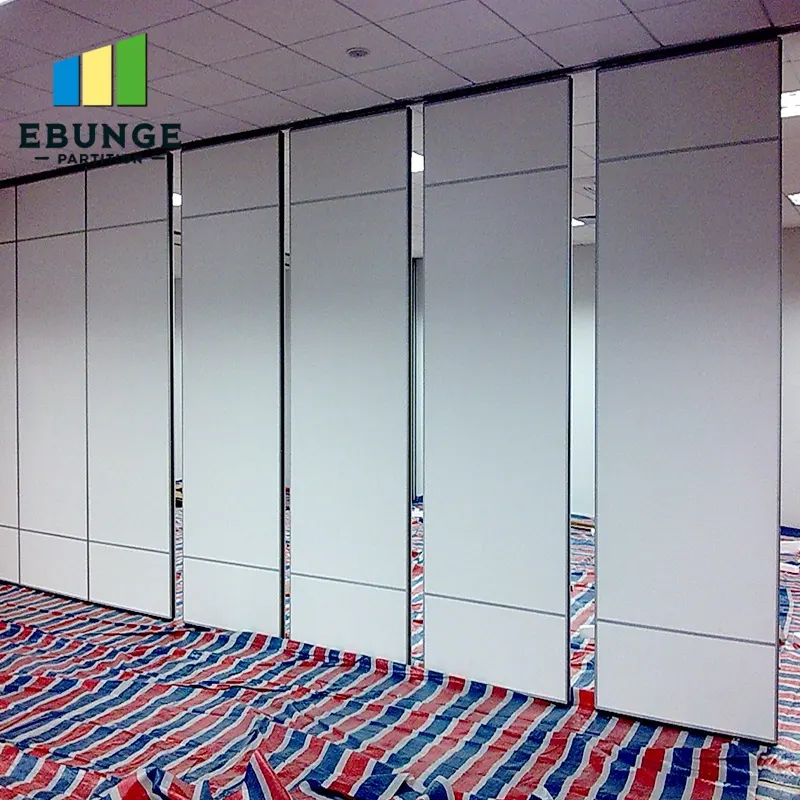
The exact route, junction arrangement, continuous overhead path and parking position must be confirmed from the coordinated project drawings. Every proposed movement path requires a continuous connected overhead route and project-specific support review. If the layout shows a turning route or a compact stacking position, confirm that the coordinated design permits it. Parking style is customized to the customer layout and project requirements.
Build the Staffing Model in Numbered Steps
- Collect duration data by room type. Group similar rooms together and note the configuration used during measurement.
- List every changeover task. Include partition movement, furniture reset, cleaning, and any pass-door requirements.
- Assign each task to a stage. Use the sequence from the layout review so the model reflects real movement paths.
- Compare observed duration to planned duration. Flag gaps where the data does not match the proposed configuration.
- Estimate staffing by stage, not by total. The exact overhead route and support arrangement must be confirmed by the responsible project team from coordinated drawings.
- Document assumptions and confirmation items. Mark every item that still requires project-specific support, acoustic, or dimensional review.
Evidence Checklist for Changeover Planning
Use this checklist to keep the staffing model tied to verifiable information. It is not a performance claim; it is a way to separate confirmed facts from open questions.
| Item | What to Confirm | Evidence Status |
|---|---|---|
| Room turn duration data | Source, date, room type, configuration | Recorded or estimated |
| Partition route | Straight, turning, or stacking path | Reviewed from layout |
| Finish selection | Laminate, melamine, fabric, leather, glass, or other approved surface | Project-specific |
| Pass-door requirement | Location and sequence | To be discussed |
| Acoustic concept | STC or Rw as a rating concept, not a decibel count | Project-specific confirmation |
Coordinate Across Facility Operations Planning
A change in one area can affect the others. For example, a different stacking position may change how the room is cleared, which changes the duration data used for staffing.
Share the duration data with the design team early. Ask whether the proposed movable partition layout supports the intended changeover sequence. If the answer is unclear, mark it as a confirmation item rather than filling the gap with an assumption.
What Not to Infer From Duration Data
It also does not confirm that a finish is suitable for a particular cleaning method.
Do not derive hidden performance from a visible shape, finish, photograph, or drawing. Comparative, absolute, and causal statements require corresponding evidence. If that evidence is not available, state the exact project-specific confirmation boundary instead.
FAQ: Changeover Staffing and Room Turn Duration
What is the first step in building a changeover staffing model?
Start by defining the changeover scope and collecting room turn duration data by room type. Record the configuration used during measurement so the data can be compared fairly.
How do movable partitions affect room turn duration?
Movable partitions add a movement stage to the changeover. The route, stacking position, and layout review all influence how that stage is planned. Confirm the route from the project layout.
Can I use duration data from one venue for another?
Use it as a reference only. Different layouts, finishes, and partition routes can change the sequence. Treat cross-venue data as a starting point for discussion, not a direct substitute.
What should be confirmed with the supplier?
Confirm project-specific support, acoustic, and dimensional requirements. Also discuss pass-door requirements and project documentation. These items depend on the actual layout and specification.
Does a staffing model guarantee a changeover time?
No. A staffing model is a planning tool. It should show assumptions, stages, and confirmation items rather than promise a fixed outcome.
Where can I find more planning resources?
Review the EBUNGE resources page for general buyer and project planning context. For product context, see movable walls.
Conclusion: Plan With Evidence, Confirm With the Project Team
A changeover staffing model from room turn duration data is only as useful as the evidence behind it. Keep the model staged, document assumptions, and review partition routes from the layout. Where information is missing, mark it for confirmation instead of inventing a result.
To discuss project-specific support, acoustic, and dimensional requirements, contact EBUNGE. The team can review pass-door requirements and project documentation with your layout in mind.