
Quick answer: changeover policy rooms split mid-booking
Review focus: changeover policy rooms split mid-booking.
A changeover policy rooms split mid-booking is a scheduling rule that decides what happens when one confirmed booking needs a room divided into two or more usable zones before the original booking ends. The operational question is not only who moves what, but whether the room can be reconfigured without breaking the terms of the existing booking. For project teams, the policy should connect booking rules, movable wall routes and documented responsibilities.
This article offers an evidence-bounded framework. It does not claim measured acoustic results, installation times or commercial outcomes. Every configuration still requires project-specific support, acoustic and dimensional confirmation.
Why Mid-Booking Splits Create Policy Pressure
Project review term: changeover policy rooms split mid-booking.
A mid-booking split happens when a room is already committed to one event, class, meeting or function, and a second use needs part of that space. The conflict is rarely about the wall alone. It is about timing, access, storage, cleaning, furniture, audio-visual equipment and the authority to change the room.
If the policy is silent, staff improvise. If the policy is too rigid, the venue loses flexibility. A useful policy names the decision owner, the notice period and the physical route that a changeover would follow.
Separate booking rules from building rules
Booking rules cover notice, approval and priority. Building rules cover what the partition system can physically do. Keep them separate so a commercial decision does not quietly become an engineering assumption.
Define the Split Before Choosing the Wall
Coordination scope: changeover policy rooms split mid-booking.
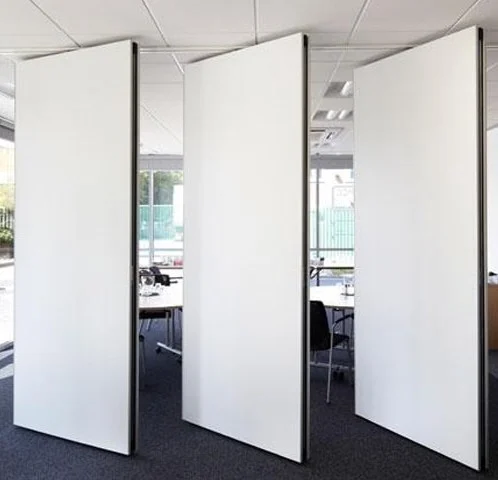
Start with the room diagram and mark the proposed division line. Then mark where panels will park when the room is open. A top-hung movable partition is suspended from a top track and crosses the opening without a floor track, so the route must be continuous and supported overhead.
Straight, turning and stacking routes should be reviewed from the layout. A route that looks simple on a floor plan may need a different parking position once door swings, columns, services and adjacent uses are considered.
Questions that expose hidden assumptions
- Which booking keeps priority when two uses overlap?
- Who authorizes a split after the room is already occupied?
- Where will panels park without blocking circulation or emergency routes?
- Does the proposed division line match the overhead route?
- Which finishes are approved for this room and this project?
Coordinate the Changeover Sequence
Checklist focus: changeover policy rooms split mid-booking.
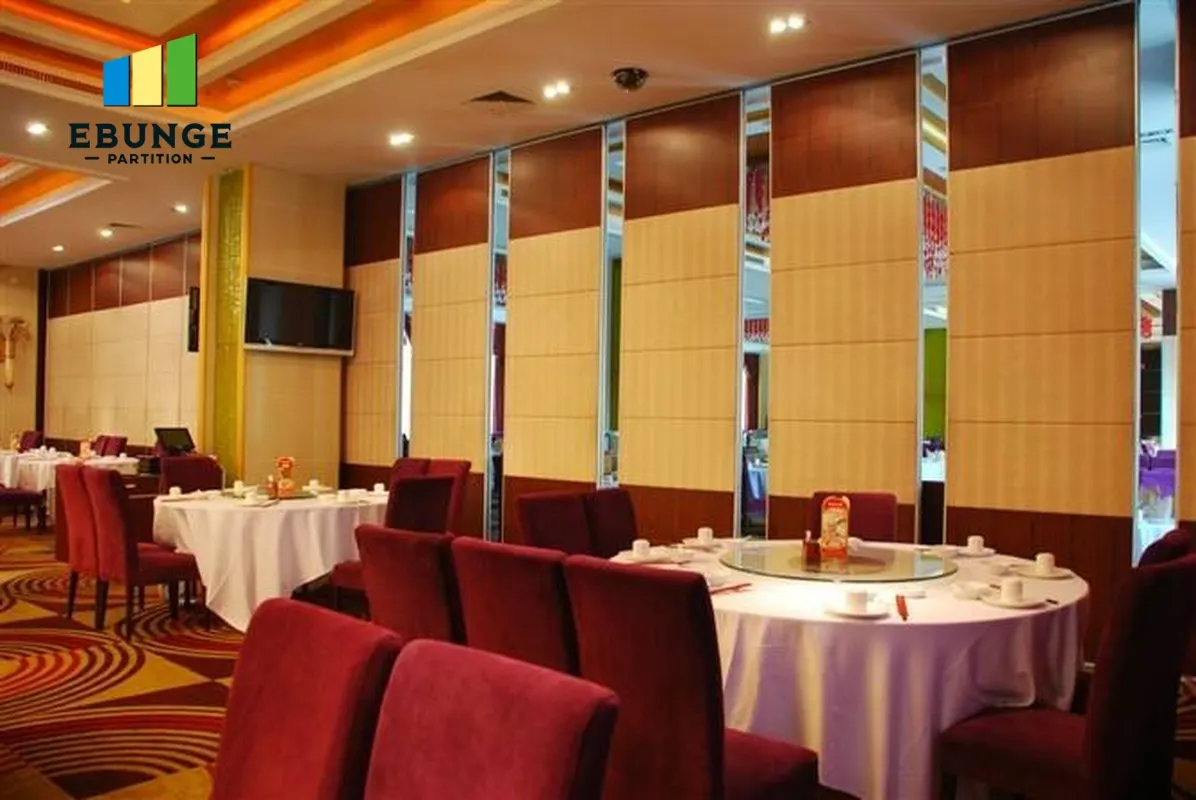
A changeover sequence is the ordered set of actions that turns one room into two, or returns two zones to one. The sequence should be written for the people who will actually perform it, not for a brochure.
- Confirm the booking change and record the approved split line.
- Clear the opening and the planned stacking position.
- Move panels individually along the reviewed route.
- Close the partition line and check the agreed room condition.
- Record completion and release the new zone for use.
This sequence is generic. It does not define manpower, tools or timing, because those depend on the project and must be confirmed separately.
Match the Policy to the Partition System
Review focus: changeover policy rooms split mid-booking.
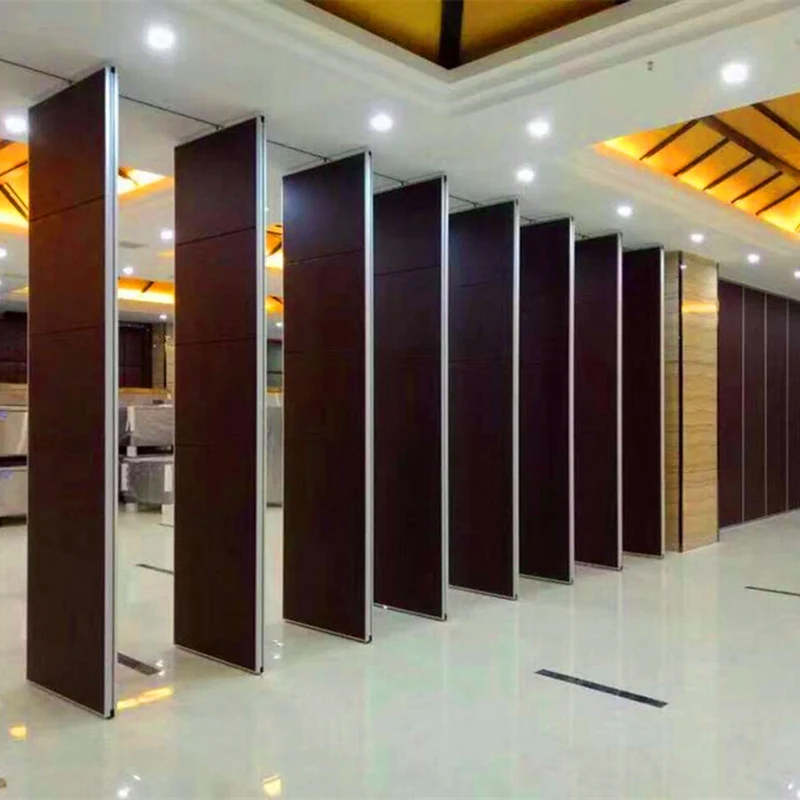
EBUNGE movable wall panels are individually movable, suspended from a top track, cross the opening without a floor track and park at a planned stacking position. The suitability of each route and parking arrangement depends on the approved layout, circulation, ceiling interfaces and operating sequence.
Finish options include laminate, melamine, fabric, leather, glass and other approved surfaces. Finish choice affects appearance and maintenance discussions, not a hidden performance rating. If a project needs a pass door, that requirement should be discussed with the project documentation.
Evidence note: what a drawing can and cannot show
A drawing can show a proposed route, a parking position and a division line. It cannot prove acoustic performance, structural capacity, fire behaviour or application reference results unless matching project-specific evidence is provided.
Write the Policy in Plain Operational Language
Policy language should be short enough to use during a busy changeover. Avoid vague phrases such as flexible when needed. Replace them with named approvals, defined room states and a clear route.
| Policy element | What to state | Evidence needed |
|---|---|---|
| Approval | Who may approve a mid-booking split | Internal authority record |
| Room state | Open, divided or partially divided | Agreed layout drawing |
| Route | Straight, turning and stacking path | Reviewed overhead route |
| Finish | Approved surface for the room | Project finish schedule |
| Acoustics | Concept only until confirmed | Project-specific acoustic review |
Review the Policy Against Real Constraints
A policy that ignores storage, cleaning or adjacent bookings will fail in practice. Review the split against the busiest realistic day, not the quietest one.
Check whether the parking position conflicts with furniture storage, whether the divided zones still have usable access, and whether the changeover affects another confirmed booking. If the answer is unclear, the policy should require escalation rather than improvisation.
Project-specific confirmation points
- Support and overhead route requirements.
- Acoustic expectations and the evidence available for them.
- Dimensional limits of the opening and parking area.
- Finish approvals and cleaning compatibility.
- Pass-door and documentation requirements.
Keep Booking Staff and Project Teams Aligned
Booking staff need a simple rule. Project teams need a technically reviewed layout. The two should meet in one document that names the room states, the approved route and the person who can authorize a change.
When a split is proposed mid-booking, the policy should trigger a short review: does the route still work, is the parking position clear, and has the acoustic expectation been confirmed for this project? If any answer is missing, the split should wait for confirmation.
Frequently Asked Questions
What is a mid-booking room split?
It is a change to a confirmed booking that divides an already committed room into separate usable zones before the original booking ends.
Can a movable partition be added after a booking starts?
That depends on the room layout, the overhead route, the parking position and the project-specific support review. The policy should require confirmation before the change is approved.
Do movable walls need a floor track?
EBUNGE movable wall panels are top-hung and cross the opening without a floor track. The exact route, junction arrangement, continuous overhead path and parking position must be confirmed from the coordinated project drawings.
How should acoustic expectations be handled?
Provide the current layout, opening dimensions, ceiling information, intended room use, and relevant project drawings for review. The exact overhead route and support arrangement must be confirmed by the responsible project team from coordinated drawings.
Which finishes can be considered?
Confirmed options include laminate, melamine, fabric, leather, glass and other approved surfaces. Final selection depends on the project finish schedule and approval process.
What should the policy say about pass doors?
Pass-door requirements should be discussed with the project documentation so the door position, route and room state are coordinated before the booking change is approved.
Conclusion and Next Step
A changeover policy rooms split mid-booking works when it separates booking authority from building constraints, defines the split line and parking position, and requires project-specific confirmation for support, acoustics and dimensions. Use the checklist above to test your current policy, then review the proposed layout with the people who will operate it.
For product context, start with EBUNGE movable walls. For planning references, see the resources page. To discuss a specific room, pass-door requirement or project documentation, contact EBUNGE.