
Quick answer: room booking rules
Review focus: room booking rules.
When a room must shift between layouts, the changeover policy room booking rules operable walls framework determines how the space is scheduled, how panels are parked and how the next booking is prepared. This article gives project teams an evidence-bounded way to connect scheduling rules with the maintained facts of a top-hung operable wall system.
Operable wall panels are individually movable, suspended from a top track, cross the opening without a floor track and park at a planned stacking position. Those facts shape booking rules more than any generic assumption about flexibility.
Why Changeover Policy Belongs in the Booking System
Project review term: room booking rules.
A booking system that only records start and end times treats a room as a single condition. Operable walls introduce a second condition: the room can be open, divided or partially divided. The changeover policy is the bridge between those conditions and the calendar.
If the policy is vague, the booking rule becomes optimistic. A room may be promised as two separate spaces while the panels are still parked across one of them. The fix is not a more complex calendar; it is a clearer policy that names who confirms the room condition before a booking is accepted.
Policy questions that belong to the owner
Owners should decide which room conditions are bookable, who authorizes a changeover and how much buffer the schedule needs. These are operational choices, not product claims. They should be written down before the booking rules are configured.
Policy questions that belong to the project team
Contractors, architects and designers should confirm that the layout supports the intended routes. Straight, turning and stacking routes are reviewed from the layout, so the booking policy must match the routes that the drawings actually show.
How the Top-Track System Shapes Scheduling Rules
Coordination scope: room booking rules.
Because panels are suspended from a top track and cross the opening without a floor track, the floor remains clear along the partition line. That clear floor is useful for seating, tables and circulation, but it does not remove the need for a planned stacking position.
Booking rules should identify where panels park when the room is open. If the stacking position sits inside a bookable area, the calendar must treat that area as unavailable during the open condition. This is a layout and scheduling issue, not a performance claim.
Continuous overhead route
Every proposed movement path requires a continuous connected overhead route and project-specific support review. The exact route, junction arrangement, continuous overhead path and parking position must be confirmed from the coordinated project drawings.
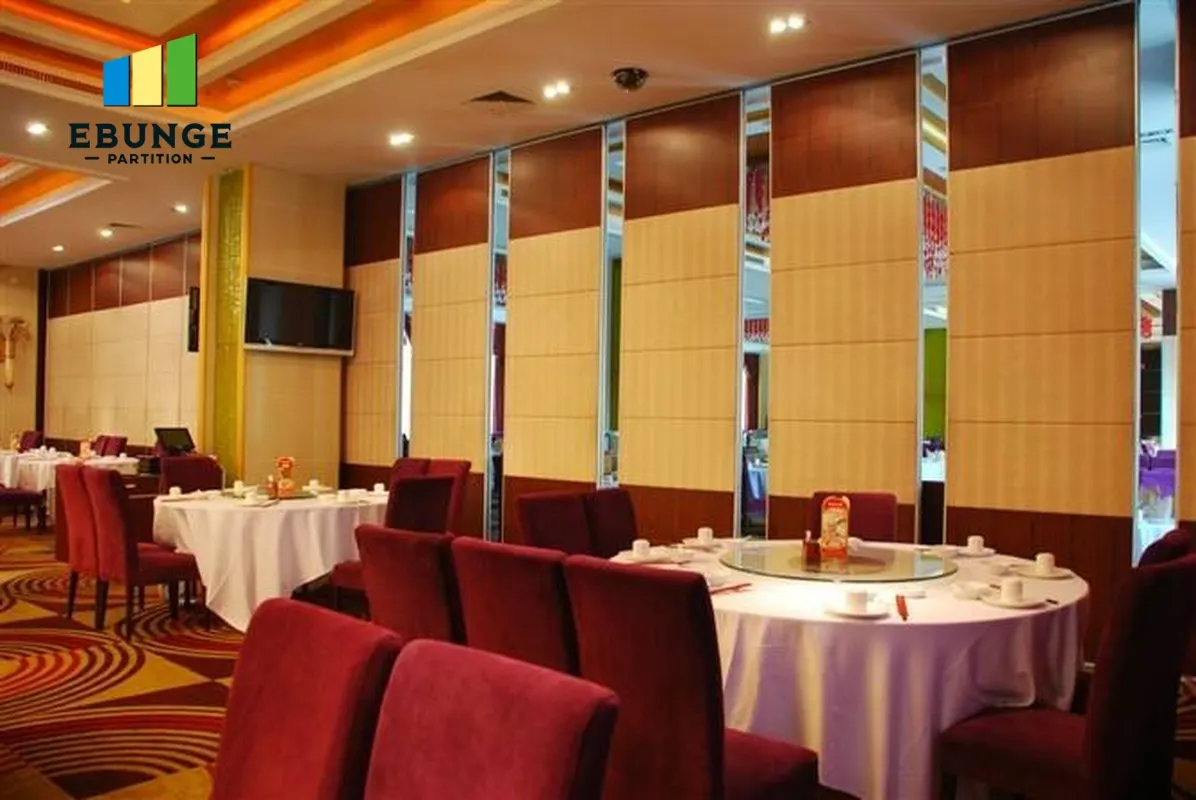
Parking style and layout
Parking style is customized to the customer layout and project requirements and may support compact stacking when the coordinated design permits it. The booking policy should reflect the parking arrangement shown in the coordinated drawings.
Decision Checklist for Booking Rules
Checklist focus: room booking rules.
- List every bookable room condition: open, divided or partially divided.
- Mark the planned stacking position on the booking plan.
- Identify which areas become unavailable when panels are parked.
- Confirm who authorizes a changeover and who verifies the room condition.
- Check that straight, turning and stacking routes match the reviewed layout.
- Confirm pass-door requirements and project documentation with the project team.
- Record the finish schedule so booking descriptions match the visible room.
This checklist is a coordination tool. It does not replace project-specific support, acoustic and dimensional confirmation.
Evidence Boundaries Around Acoustic Expectations
Review focus: room booking rules.
The suitability of each route and parking arrangement depends on the approved layout, circulation, ceiling interfaces and operating sequence.
Seals and acoustic concepts can be explained generically, yet the actual performance of any configuration depends on the reviewed design. Project teams should confirm acoustic requirements with the responsible specialists and keep booking language neutral.
What the booking policy should not claim
Those statements require evidence that a scheduling document cannot supply. Keep the policy focused on room condition, availability and responsibility.
What the booking policy can state
The policy can state which condition is booked, where panels park, who confirms readiness and which documentation governs the installation. It can also direct users to the project’s approved drawings and finish schedule.
Coordinating Finishes With Booking Descriptions
Project review term: room booking rules.
Confirmed finish options include laminate, melamine, fabric, leather, glass and other approved surfaces.
Booking descriptions should use the approved finish names and avoid implying performance from appearance. A fabric finish and a glass finish may look different, yet both require the same project-specific confirmation of support, acoustics and dimensions.
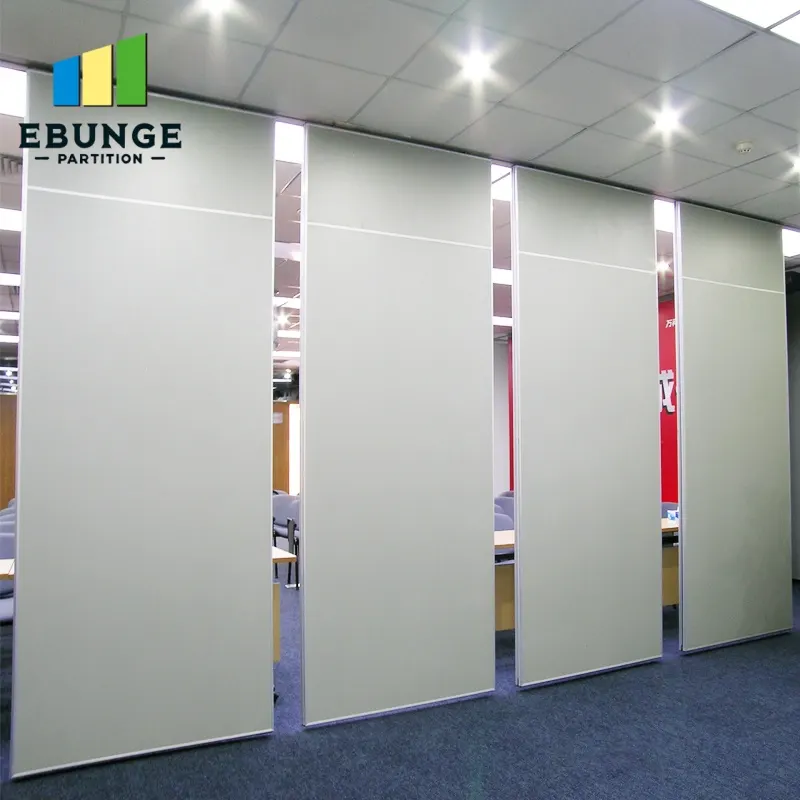
Finish schedule as a coordination document
The finish schedule should be reviewed alongside the layout. If a booking rule refers to a room by finish or by panel type, that reference should match the approved documentation rather than a marketing label.
Pass doors and access
Pass-door requirements and project documentation can be discussed with the project team. If a pass door is part of the design, the booking policy should note how it affects room condition and circulation.
Numbered Process for Aligning Policy and Calendar
Coordination scope: room booking rules.
- Define the bookable room conditions with the owner.
- Review the layout for straight, turning and stacking routes.
- Mark the planned stacking position and any unavailable areas.
- Confirm support, acoustic and dimensional requirements for the project.
- Agree who authorizes and verifies each changeover.
- Write booking rules that match the reviewed drawings.
- Review the policy after the finish schedule and documentation are approved.
This process keeps the calendar aligned with the physical room. It also prevents booking rules from drifting into unsupported performance or engineering conclusions.
Common Coordination Gaps to Avoid
One common gap is treating the open condition as the default. If the room is usually divided, the booking rule should reflect that. Another gap is ignoring the stacking position when counting seats or tables.
A third gap is assuming that a clear floor means no coordination is needed. A fourth gap is using acoustic shorthand in public booking descriptions.
Keep the rule readable
Booking rules should be short enough for staff to apply and precise enough to prevent conflicts. Use the reviewed layout as the source of truth and avoid adding performance language that the project has not confirmed.
Keep the evidence separate
Product facts, project drawings and booking policy are three different documents. Mixing them creates claims that cannot be supported. Keep each document in its proper role.
FAQ
What is a changeover policy for operable walls?
It is the written rule that defines how a room moves between open, divided and parked conditions, and who confirms each condition before a booking is accepted.
Do operable walls need a floor track for booking purposes?
No. The maintained product facts describe panels suspended from a top track that cross the opening without a floor track. Booking rules should still account for the planned stacking position.
Can a booking policy promise acoustic privacy?
No. Acoustic requirements are project-specific and must be confirmed with the responsible specialists.
How should the stacking position affect room capacity?
The stacking position should be marked on the booking plan. Any area occupied by parked panels should be treated as unavailable during the open condition.
Which finishes can be referenced in booking descriptions?
Confirmed finish options include laminate, melamine, fabric, leather, glass and other approved surfaces. Use the approved finish schedule and avoid implying performance from appearance.
What should the project team confirm before booking rules are finalized?
Confirm project-specific support, acoustic and dimensional requirements, plus the reviewed straight, turning and stacking routes shown in the layout.
Conclusion and Contact
Define the bookable conditions, mark the parking position, confirm the routes and keep performance language out of the calendar.
To discuss pass-door requirements, project documentation or layout review for your next flexible-space project, contact EBUNGE. You can also review the operable partition product page and the resources section before finalizing your booking policy.