
Quick answer: movable partition changeover labor shared resource planning
Review focus: movable partition changeover labor shared resource planning.
Movable partition changeover labor shared resource planning starts with a simple shift in perspective: the people who reconfigure a room are not a separate department, but part of the facility’s operating capacity. When a venue, school, office or hotel treats changeover as a shared resource, the conversation moves from “who is available today” to “what the layout, route and stacking plan actually require.” That is a planning question, not a performance claim. This article offers an evidence-bounded framework for overseas contractors, architects, interior designers, owners and renovation teams who need to coordinate changeover labor without inventing engineering, acoustic or commercial conclusions.
Why Changeover Labor Belongs in Facility Operations Planning
Project review term: movable partition changeover labor shared resource planning.
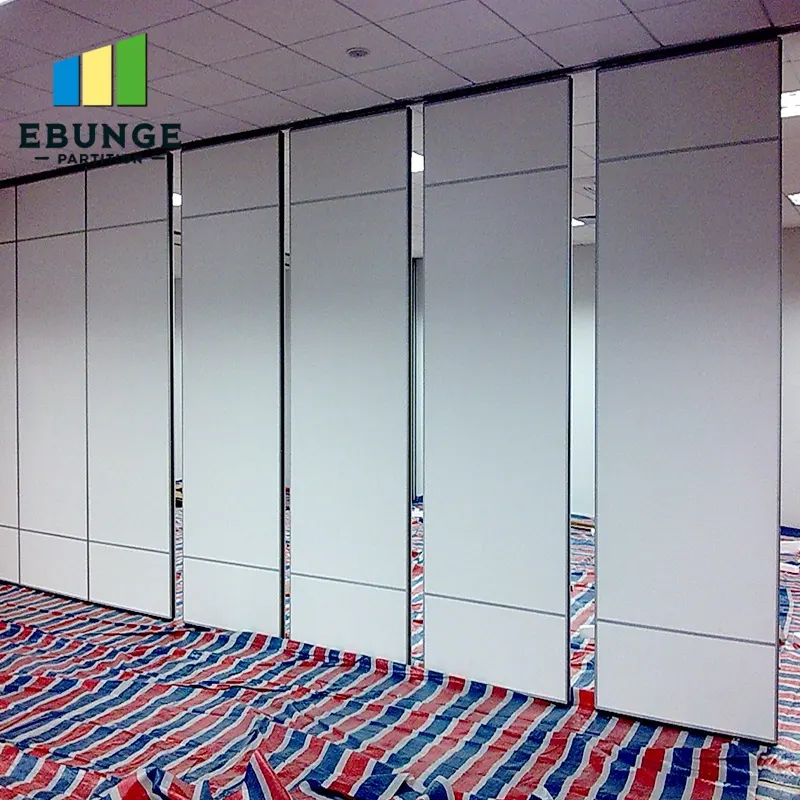
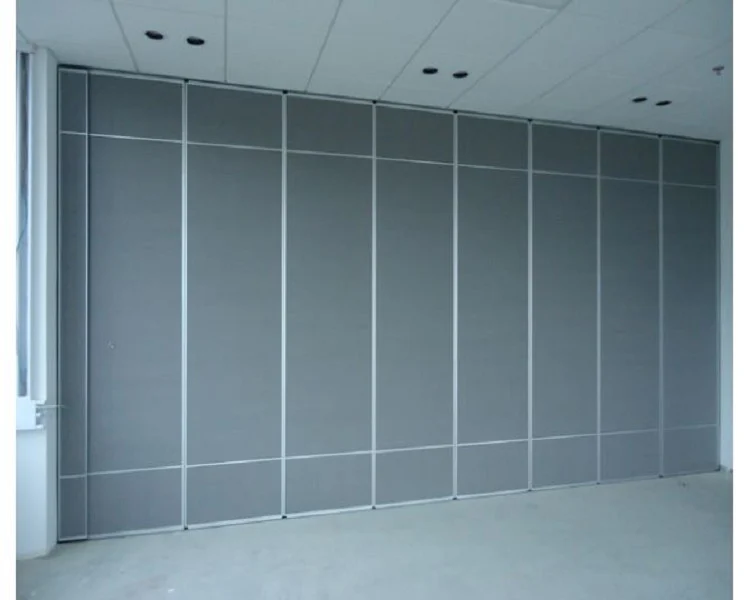
Facility Operations Planning coordination usually covers cleaning, maintenance, security and room setup. Changeover labor sits at the intersection of all four. A movable partition system is top-hung, so panels travel on an overhead track and cross the opening without a continuous floor track or floor hardware along the partition line. That single maintained fact changes how teams think about routes: the floor stays clear, but the overhead path must be continuous and supported according to the project design.
When changeover is treated as a shared resource, the facility can compare competing demands — a morning classroom layout, an afternoon conference setup, an evening event — against the same pool of trained people and the same approved movement routes. Panel handling and the operating sequence must be confirmed for the selected layout and project conditions. The goal is to make the assumptions visible so that the project team can confirm them.
What the Maintained Product Facts Allow Us to Say
Coordination scope: movable partition changeover labor shared resource planning.
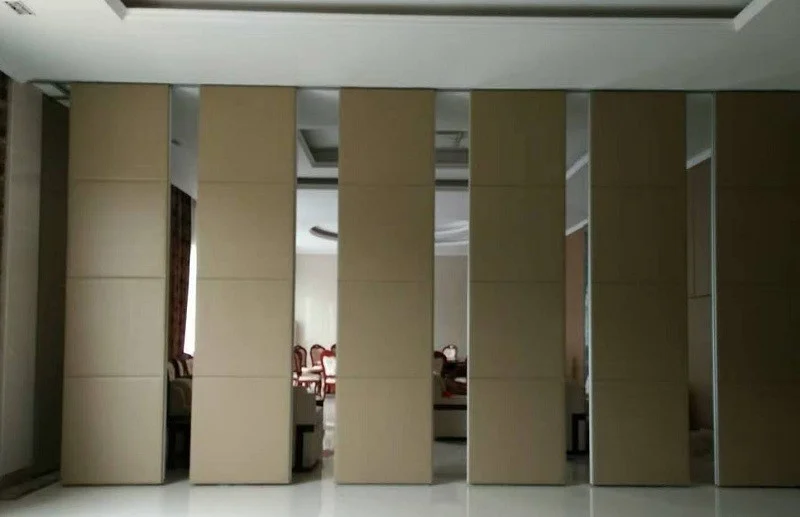
EBUNGE movable wall panels are individually movable, suspended from a top track, and park at a planned stacking position. Straight, turning and stacking routes are reviewed from the layout. Confirmed finish options include laminate, melamine, fabric, leather, glass and other approved surfaces. Pass-door requirements and project documentation can be discussed with the project team.
Those facts support planning conversations about access, storage and sequence. They do not support claims about how long a changeover takes, how many people are needed, what a panel weighs, how a seal performs, or what acoustic result a room will achieve. The suitability of each route and parking arrangement depends on the approved layout, circulation, ceiling interfaces and operating sequence.
A Drawing Review Checklist for Shared Changeover Routes
Checklist focus: movable partition changeover labor shared resource planning.
Before labor is assigned, the project team should review the drawings that define how panels move and where they rest. The checklist below is a coordination tool, not an engineering approval.
- The exact route, junction arrangement, continuous overhead path and parking position must be confirmed from the coordinated project drawings.
- Stacking position: confirm the planned parking location, its relationship to the opening, and whether compact stacking is part of the coordinated design.
- Pass doors: note any pass-door requirement and how it affects daily circulation when the partition is closed.
- Finish protection: record which approved finish surfaces need protection during movement and storage.
How to Coordinate Changeover Without Hidden Assumptions
Review focus: movable partition changeover labor shared resource planning.
Separate visible layout evidence from performance questions
A drawing can show a route, a turning point and a stacking zone. When a stakeholder asks for those outcomes, the correct response is to request matching project evidence rather than infer it from a shape, finish or photograph.
Assign a single coordination owner
Shared labor fails when two teams each assume the other has checked the route. A named coordination owner can maintain the drawing set, record confirmed decisions and route open questions to the right discipline. This role does not need to be a dedicated hire; it needs to be explicit.
Keep a changeover question log
A simple log can track items such as stacking clearance, pass-door use, finish protection and support confirmation. The log becomes the shared source of truth during handover and avoids relying on memory.
Evidence Note: What This Article Does Not Claim
This article does not claim a specific changeover time, labor count, acoustic rating, structural capacity, maintenance interval, service life or financial return. Those items require project-specific evidence and confirmation. Named venues and room types are examples only; movable partitions can be considered wherever flexible spatial division, combination or reconfiguration is required.
Compact Comparison: Planning Questions by Project Stage
| Stage | Shared-resource question | Evidence boundary |
|---|---|---|
| Concept design | Which rooms may need to combine or divide, and who will operate the change? | Layout intent only; no performance inferred. |
| Drawing review | Are straight, turning and stacking routes shown as continuous overhead paths? | Requires project-specific support and dimensional review. |
| Procurement | Which approved finish surfaces suit the space and its cleaning routine? | Cleaning compatibility must be confirmed, not assumed. |
| Handover | Who owns the question log, the route drawings and the stacking zone? | Operational ownership is a project decision. |
Frequently Asked Questions
What information is required for movable partition changeover labor shared resource planning?
Project teams typically need the room layout, the intended combination and division scenarios, the proposed movement routes, the planned stacking position, pass-door requirements and the support conditions shown on the drawings. Each item should be confirmed for the specific project rather than assumed from a generic example.
Can changeover labor be planned without a floor track?
Yes, planning can start from the maintained fact that panels are top-hung and cross the opening without a continuous floor track or floor hardware along the partition line.
Does a stacking plan affect how changeover is organized?
Parking style is customized to the customer layout and project requirements and may support compact stacking when the coordinated design permits it. The stacking position influences circulation, protection of finishes and the sequence in which panels are moved, so it should be agreed early with the project team.
How should acoustic expectations be handled in this planning?
Acoustic separation should be discussed as a project-specific requirement. The project team should confirm the assembly, opening conditions and any required documentation.
Which finish options are relevant to changeover planning?
Confirmed finish options include laminate, melamine, fabric, leather, glass and other approved surfaces. Confirm suitability for the project’s cleaning and use requirements.
When should the project team contact EBUNGE?
Contact the team early, while routes, stacking and pass-door requirements can still influence the drawings. Project documentation can be discussed, and open questions can be routed to the right discipline before procurement decisions are fixed.
Conclusion: Make the Shared Resource Visible
Planning changeover labor as a shared facility resource is less about assigning people and more about making assumptions visible. Review the routes, confirm the stacking position, record pass-door needs and separate layout evidence from performance questions. Keep every recommendation tied to maintained product facts and project-specific drawing review.
For coordinated support on movable partition planning, visit the movable walls product page, explore the resources library, or contact the EBUNGE team to discuss your project documentation and layout requirements.