
Quick answer: changeover labor hour
Review focus: changeover labor hour.
Creating a changeover labor hour budget without booking history is a common challenge for contractors, architects and facility teams planning flexible rooms. Without past event data, the budget must be built from the physical layout, the movement routes and the finish choices that affect handling. This article explains how to structure that estimate using confirmed product facts and clearly marked evidence limits.
Why Booking History Is Usually Missing
Project review term: changeover labor hour.
New buildings, renovated halls and multi-purpose rooms often open before a reliable event calendar exists. The team may know the room dimensions and the intended uses, but not how often the space will be reconfigured or how many panels will move each time.
In that situation, a labor hour budget cannot be copied from another venue. It must be assembled from the layout drawings, the planned stacking position and the confirmed panel movement method. Every assumption should be written down so it can be reviewed when real usage data becomes available.
Start With the Confirmed Movement Method
Coordination scope: changeover labor hour.
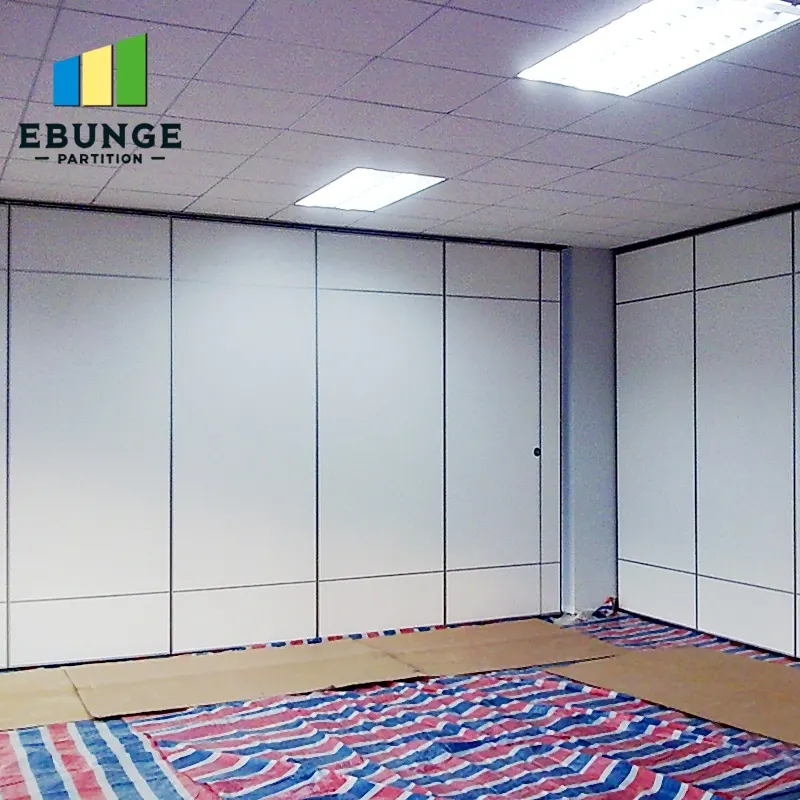
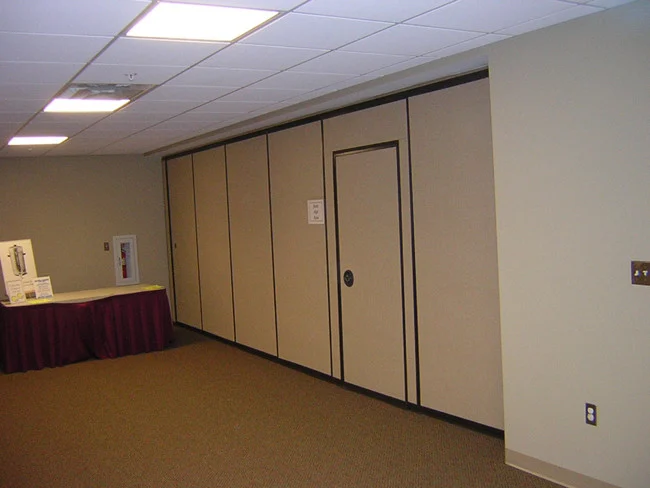
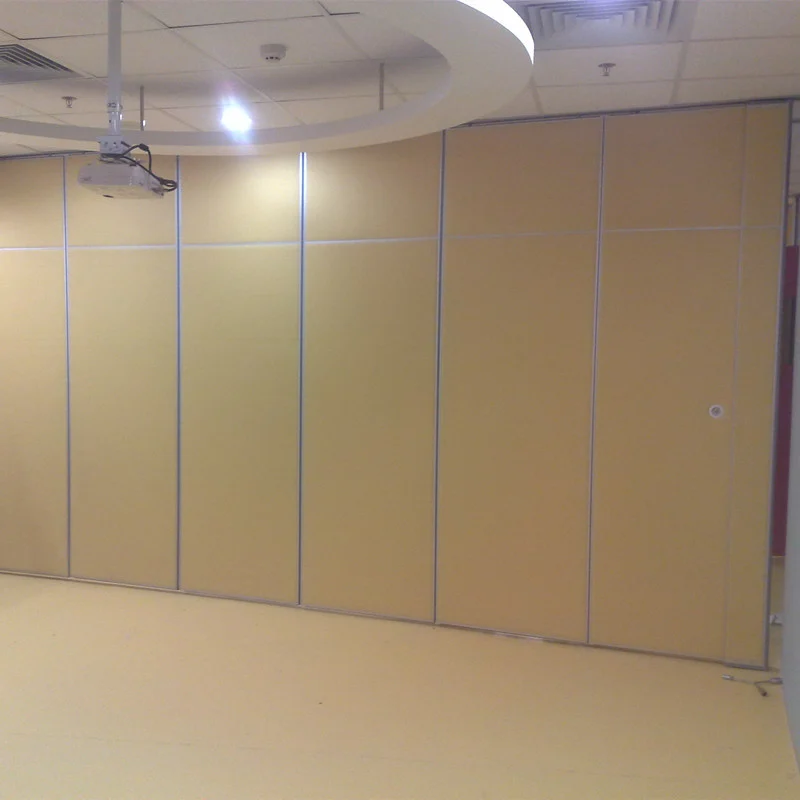
EBUNGE movable wall panels are individually movable, suspended from a top track, cross the opening without a floor track, and park at a planned stacking position. This matters for budgeting because the movement path is overhead and continuous, not along the floor.
Straight, turning and stacking routes are reviewed from the layout. A route that looks simple on a plan may include a turn or a parking area that changes how panels are handled. The budget should reflect the route as drawn, not an assumed shortcut.
What the Drawings Must Show
- The full opening width and the panel parking location.
- Any turning point between the opening and the stacking position.
- The overhead route continuity from the opening to the parking area.
- Adjacent walls, columns or fixed elements that affect access.
- Finish type for each panel face, where it differs.
Build a Route-Based Estimate
Checklist focus: changeover labor hour.
A route-based estimate treats each changeover as a sequence of movements rather than a single block of time. The sequence begins at the parked position, follows the overhead route to the opening, and ends when the panels are secured in the required configuration.
Because the panels are top-hung and cross the opening without a floor track, the estimate should focus on the number of panels, the number of turns and the distance to the stacking position. These are visible from the layout and can be discussed with the project team.
Numbered Process for a First-Pass Budget
- List every room configuration the space must support.
- For each configuration, mark which panels move and which stay parked.
- Trace the overhead route from the parking position to the opening.
- Note any turning or stacking movement that changes the handling sequence.
- Group configurations that share the same route and panel set.
- Record the assumptions and the evidence source for each line.
Finish Choices and Handling Time
Review focus: changeover labor hour.
Confirmed finish options include laminate, melamine, fabric, leather, glass and other approved surfaces. Finish choice can affect handling because different surfaces may require different care during movement and parking. The budget should note where finishes differ across a panel set.
The suitability of each route and parking arrangement depends on the approved layout, circulation, ceiling interfaces and operating sequence. Those are project-specific matters. If a finish is selected for a reason beyond appearance, that reason should be confirmed separately.
Compact Comparison Table
| Budget Input | Visible From Layout | Needs Project Confirmation |
|---|---|---|
| Number of panels | Yes | Panel set per configuration |
| Route turns | Yes | Support and overhead continuity |
| Stacking position | Yes | Parking style and clearance |
| Finish type | Partly | Handling and care requirements |
| Acoustic intent | No | Project-specific acoustic design |
Separate Evidence From Assumption
An evidence note helps reviewers see which parts of the budget are supported and which are provisional. This is especially important when no booking history exists, because the estimate is built on planned use rather than observed use.
Evidence note: the layout shows the route and parking position. It does not prove acoustic performance, structural capacity, maintenance needs or commercial outcomes. Those require separate project-specific confirmation.
When a statement cannot be supported, remove it or mark it as an open item.
Coordinate With the Wider Project Team
The goal is not to predict every future event, but to create a budget that can be adjusted as real usage data arrives.
Pass-door requirements and project documentation can be discussed with the supplier. These items may affect how a configuration is used, so they belong in the planning conversation rather than in a hidden assumption.
Decision Checklist for Reviewers
- Is the movement route continuous and connected overhead?
- Is the stacking position shown on the layout?
- Are finish choices listed per panel set?
- Are acoustic and support requirements marked for confirmation?
- Is every labor assumption linked to a drawing or a stated planning rule?
Acoustic Concepts Without Invented Ratings
If acoustic separation matters for a configuration, the requirement should be confirmed for that project. The changeover budget should not claim a performance level that has not been verified for the actual assembly and installation.
Frequently Asked Questions
Can I estimate changeover labor hours without any booking history?
Yes, as a first-pass planning estimate. Build it from the layout, the movement route and the number of panels per configuration, then mark every assumption for later review.
Does the absence of a floor track change the budget?
It changes the movement method. Panels are top-hung and cross the opening without a floor track, so the estimate should follow the overhead route and the parking position rather than a floor path.
How do finish choices affect the estimate?
Finish choices can affect handling and care during movement and parking. List finishes per panel set and confirm any special requirements with the project team.
Should the budget include acoustic performance?
Acoustic intent should be recorded as a project requirement, not as a budget assumption. Confirm the acoustic design for the specific assembly and room before relying on any rating.
What if the layout changes after the budget is issued?
Revisit the route, the stacking position and the panel sets. A layout change can alter the movement sequence, so the estimate should be updated with the revised drawings.
Where can I discuss project documentation?
Pass-door requirements and project documentation can be discussed through the contact page. Review the movable walls range and the resources section before the conversation.
Conclusion
A changeover labor hour budget without booking history is possible when it is built from confirmed movement facts, visible layout routes and clearly stated assumptions. Keep the estimate tied to the drawings, separate evidence from expectation, and confirm acoustic, support and dimensional requirements for each project.
To review your layout and documentation, contact EBUNGE and share the project drawings for a project-specific discussion.