
Quick answer: changeover labor forecast
Review focus: changeover labor forecast.
For project teams, changeover labor forecast room booking patterns should be reviewed against the opening, ceiling interface, operating sequence and approved finish requirements. Building a changeover labor forecast from room booking patterns is a planning exercise, not a promise of performance. For contractors, architects, interior designers, owners, and renovation teams, the goal is to translate observed booking behavior into a defensible estimate of how often a flexible room must be reconfigured, and what that reconfiguration involves. The forecast should be built from maintained product facts, visible evidence limits, and project-specific drawing review. The suitability of each route and parking arrangement depends on the approved layout, circulation, ceiling interfaces and operating sequence.
This guide explains how to structure that forecast for movable partition spaces. It uses the phrase changeover labor forecast room booking patterns as the organizing idea, but every recommendation remains bounded by what can be confirmed for a specific project.
Why Booking Patterns Matter for Changeover Planning
Project review term: changeover labor forecast.
Room booking data shows how often a space is used, for how long, and in what sequence. That sequence drives changeover demand. A room booked for a morning meeting and an afternoon workshop may require one reconfiguration. A room booked in short, alternating blocks may require several.
Booking patterns also reveal clustering. If most reconfigurations happen on the same day or within the same hour, the forecast must reflect that concentration. If bookings are spread evenly, the changeover workload is distributed differently.
What Booking Data Can and Cannot Tell You
Booking data can show frequency, duration, and sequence. It cannot show how long a changeover actually takes, how many people are needed, or whether a proposed route is feasible. Those items require project-specific review of the layout, the partition system, and the support conditions.
Define the Changeover Unit Before You Count
Coordination scope: changeover labor forecast.
A changeover is a transition from one room configuration to another. Define it clearly before forecasting. For a movable partition system, a changeover may involve moving panels along a top track, crossing an opening without a floor track, and parking panels at a planned stacking position.
If the definition is vague, the forecast will be vague. Write down what counts as a changeover, what does not, and which rooms are included.
Separate Routine and Exceptional Transitions

Some transitions are routine and repeatable. Others are exceptional, such as combining several rooms for a large event. Treat them separately. Routine transitions can be forecast from booking patterns.
A Step-by-Step Method for Building the Forecast
- Collect booking records. Gather room-level booking data for a representative period. Include start and end times, room names, and any notes about configuration.
- Identify configuration states. List the distinct room configurations used in the period. For movable partitions, these may be open, divided, or combined layouts.
- Count transitions. For each booking, compare its configuration with the previous booking in the same room. Each change is one transition.
- Group transitions by route type. Straight, turning, and stacking routes are reviewed from the layout. Group transitions by the route they require.
- Flag peak periods. Identify days or hours with clustered transitions. These are the periods where changeover demand is highest.
- Review against the layout. Check each route against the project drawings. Confirm that every proposed movement path has a continuous connected overhead route and that support conditions are reviewed.
- Document assumptions. Record what is known, what is assumed, and what requires confirmation. Keep this record with the forecast.
Route Review: The Step Most Forecasts Skip
A changeover forecast is only useful if the routes are feasible. Movable partition panels are individually movable, suspended from a top track, cross the opening without a floor track, and park at a planned stacking position. Straight, turning, and stacking routes are reviewed from the layout.
The exact route, junction arrangement, continuous overhead path and parking position must be confirmed from the coordinated project drawings. Every proposed movement path requires a continuous connected overhead route and project-specific support review.
Parking and Stacking Considerations
Parking style is customized to the customer layout and project requirements and may support compact stacking when the coordinated design permits it. The forecast should note where panels park, whether that position conflicts with other uses, and whether the stacking area is available during peak periods.
Evidence Boundaries for a Defensible Forecast
The exact overhead route and support arrangement must be confirmed by the responsible project team from coordinated drawings. Visible references can support layout discussion but do not verify hidden construction or performance. Comparative, absolute, and causal statements require corresponding evidence; otherwise remove them or state the exact project-specific confirmation boundary.
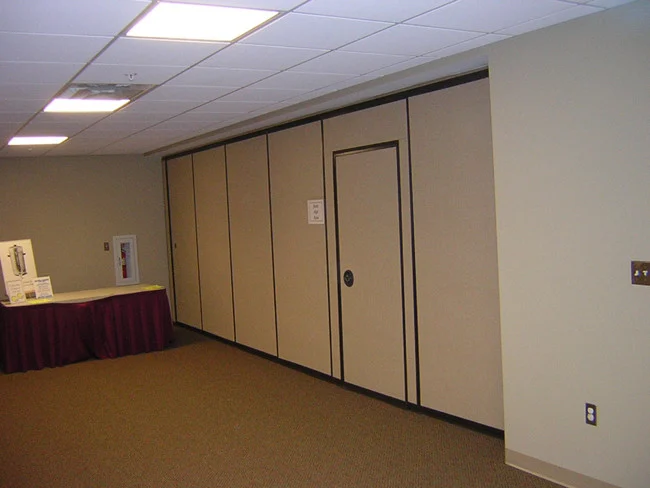
This boundary matters because changeover forecasts often drift into unsupported claims. A forecast can say how many transitions are expected. It cannot say how long each transition will take unless that has been confirmed for the project.
Acoustic Concepts in Plain Language
If acoustic separation matters for a room, confirm the project-specific acoustic requirements with the relevant specialists.
Turning the Forecast Into a Planning Tool
Once transitions are counted and routes are reviewed, the forecast can support planning decisions. It can help teams compare booking scenarios, identify peak periods, and coordinate with facility operations. It can also highlight where project-specific confirmation is still needed.
Which routes need drawing review? Which stacking positions need coordination? Which peak periods need additional planning attention?
Coordination With Facility Operations Planning
Facility Operations Planning coordination should include the people who manage bookings, the people who review layouts, and the people who confirm support conditions. Share the forecast with them and record their feedback. If a route or stacking position changes, update the forecast.
Common Mistakes to Avoid
- Counting bookings instead of transitions.
- Assuming a route is feasible without reviewing the layout.
- Panel handling and the operating sequence must be confirmed for the selected layout and project conditions.
- Ignoring peak periods where transitions cluster.
- Failing to document which items still require project-specific confirmation.
Each of these mistakes weakens the forecast. Correcting them early keeps the planning process grounded in evidence.
Frequently Asked Questions
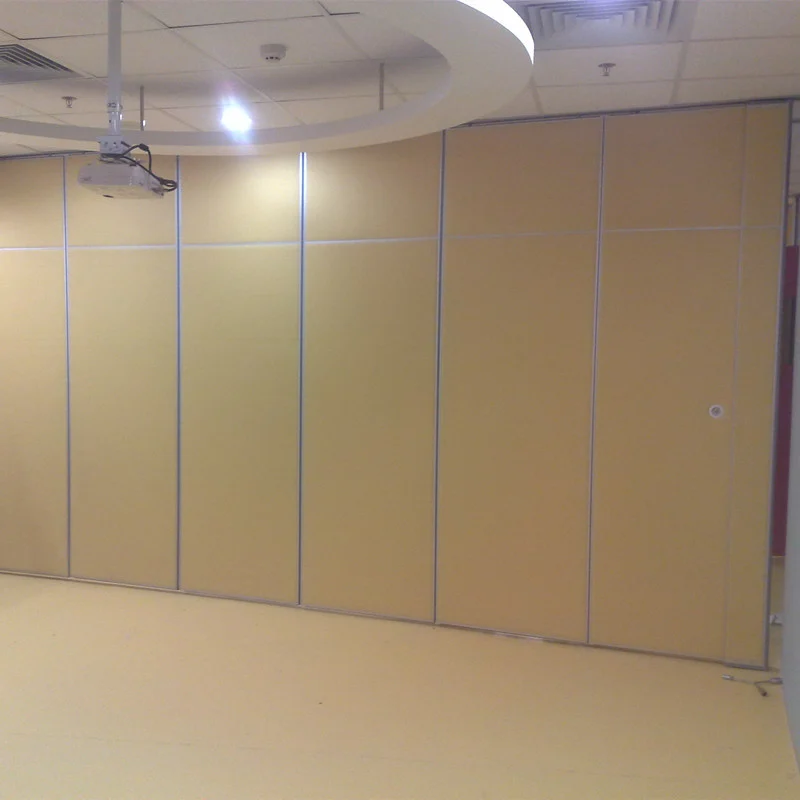
What project information is required for a changeover labor forecast?
You need room-level booking records, a clear definition of a changeover, the distinct configuration states, and the project layout drawings. The layout is essential because straight, turning, and stacking routes are reviewed from it. Support conditions and any pass-door requirements should also be discussed with the project team.
Which statements about changeover forecasting need project-specific evidence?
If evidence is not available, state the confirmation boundary instead of making a claim.
How should teams coordinate without inferring hidden performance?
Coordinate by sharing the forecast, the layout, and the list of open items. Ask the project team to confirm routes, stacking positions, and support conditions.
Can movable partitions be used in different room types?
Named venues are examples only. Movable partitions can be considered wherever flexible spatial division, combination, or reconfiguration is required. The suitability of a specific application still depends on the project layout and confirmed requirements.
What finish options are available for movable partitions?
Confirmed finish options include laminate, melamine, fabric, leather, glass, and other approved surfaces. Finish selection should be discussed with the project team.
How often should the forecast be updated?
Update the forecast when booking patterns change, when the layout changes, or when project-specific confirmations are received. A forecast is a living planning document, not a one-time calculation.
Conclusion and Next Steps
A changeover labor forecast built from room booking patterns can help project teams plan flexible spaces more responsibly. The method is straightforward: count transitions, group them by route, review the layout, document assumptions, and flag what still needs confirmation. Keep every claim within the evidence boundary.
To discuss pass-door requirements, project documentation, or layout review for movable partitions, contact EBUNGE. You can also review movable wall products and explore additional planning resources before finalizing your forecast.