
Quick answer: changeover labor forecast
Review focus: changeover labor forecast.
Building a reliable movable partition changeover labor forecast facility operations plan starts with the layout, not with a stopwatch. EBUNGE movable wall panels are individually movable, suspended from a top track, cross the opening without a floor track, and park at a planned stacking position. That means the labor forecast depends on how straight, turning and stacking routes are reviewed from the project layout, not on a generic rule of thumb. This article gives contractors, architects, designers, owners and renovation teams an evidence-bounded framework for planning changeover labor without inventing performance, cost or time claims.
Start With the Confirmed Product Facts
Project review term: changeover labor forecast.
Before any labor estimate is useful, confirm what the system actually does. EBUNGE panels are top-hung and move without a continuous floor running track or floor hardware along the partition line. Parking style is customized to the customer layout and project requirements and may support compact stacking when the coordinated design permits it.
These facts shape the forecast. A clear floor along the partition line can reduce trip hazards and obstruction checks, but it does not by itself determine how long a changeover takes. The number of panels, the route length, the turning points and the stacking position all come from the coordinated layout. Treat any labor figure that ignores those variables as an assumption, not a forecast.
Map the Changeover Route Before Counting Labor
Coordination scope: changeover labor forecast.
The route is the backbone of the forecast. Review the straight travel path, any turning sections and the final stacking area on the project drawings. Every proposed movement path requires a continuous connected overhead route and project-specific support review. The exact route, junction arrangement, continuous overhead path and parking position must be confirmed from the coordinated project drawings.
Route review checklist
- Confirm the opening width and the number of panels in the coordinated layout.
- Trace the straight route from the closed position to the turning point.
- Identify turning sections and verify the overhead route is continuous and connected.
- Locate the planned stacking position and check that it matches the layout.
- Flag any gap, obstruction or support question for project-specific review.
- Record who is responsible for confirming support and dimensional requirements.
This checklist is a coordination tool, not a performance claim. It helps the project team ask the right questions before labor assumptions harden into a schedule.
Separate Fixed and Variable Labor Drivers
A changeover labor forecast improves when fixed and variable drivers are separated. Fixed drivers include the number of panels, the route geometry and the stacking arrangement. Variable drivers include how often the space is reconfigured, who performs the changeover, and whether the room must be reset for a different event type.
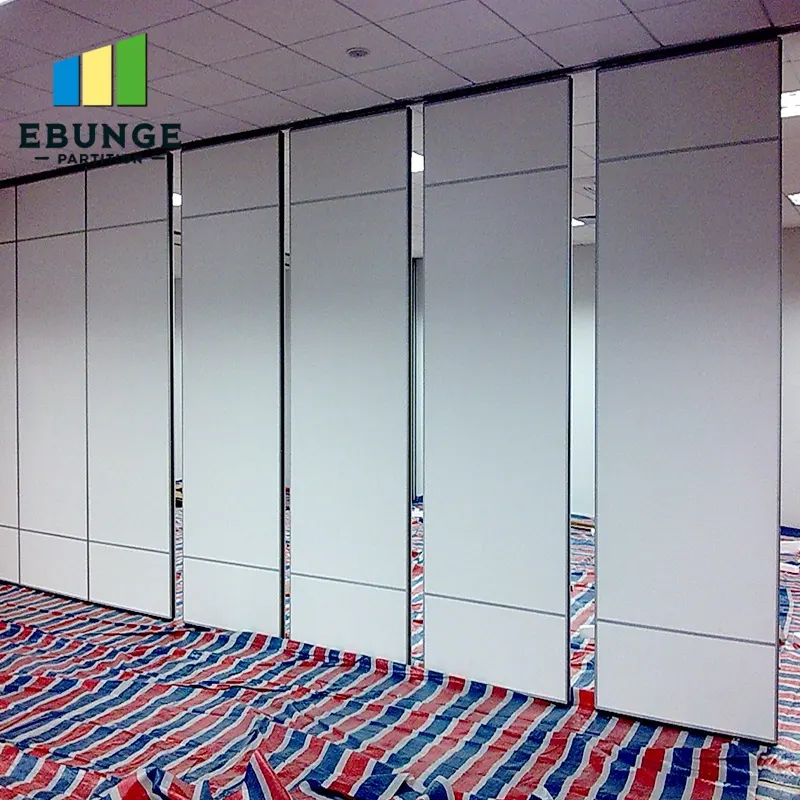
Do not convert these drivers into a single labor number without project-specific confirmation. The forecast should show the assumptions behind each driver so that operations teams can update the plan when the layout or usage pattern changes.
Compact comparison of forecast inputs
| Input | Source | Confirmation needed |
|---|---|---|
| Panel count and opening width | Coordinated layout | Dimensional review |
| Straight, turning and stacking routes | Layout drawings | Continuous overhead route and support review |
| Parking position | Customer layout and project requirements | Stacking coordination |
| Changeover frequency | Operations schedule | Owner and facility team input |
| Finish and surface | Approved finish options | Project-specific selection |
Use the table as a working register. Each row should have a named owner and a status before the forecast is treated as reliable.
Account for Finish and Surface Choices
Confirmed finish options include laminate, melamine, fabric, leather, glass and other approved surfaces. Finish choice can affect handling care and surface protection during a changeover, but it does not by itself establish acoustic, durability or maintenance performance. The suitability of each route and parking arrangement depends on the approved layout, circulation, ceiling interfaces and operating sequence.
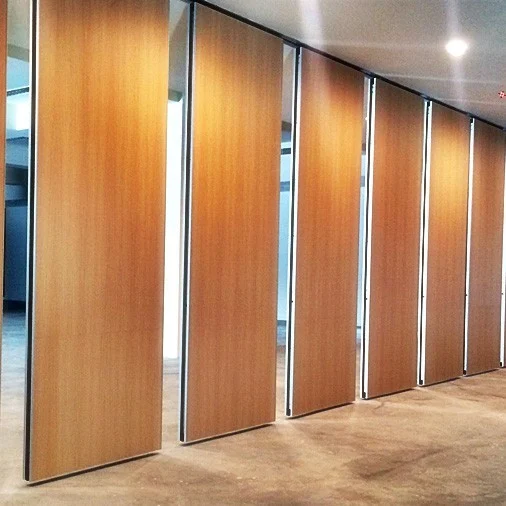
Acoustic requirements must be confirmed for the specific project, assembly and layout.
Build the Forecast as a Numbered Process
A repeatable process keeps the forecast honest and easy to update. The steps below are a coordination sequence, not a guarantee of any labor outcome.
- Collect the coordinated layout, including straight, turning and stacking routes.
- Confirm the panel count, opening width and parking position with the project team.
- Review support and dimensional requirements for the overhead route.
- List the changeover scenarios the facility expects to run.
- Assign owners for each forecast input and record open questions.
- Draft the labor forecast with explicit assumptions and review dates.
- Revisit the forecast whenever the layout, schedule or finish selection changes.
This sequence keeps the forecast tied to visible evidence and project-specific confirmation rather than to unsupported estimates.
Coordinate Across Disciplines
The architect confirms the opening and layout intent. The contractor checks the overhead route and support conditions. The owner confirms how the space will be used. The facility team confirms who will perform the changeover and when.
Pass-door requirements and project documentation can be discussed with EBUNGE as part of this coordination. Keep the discussion focused on the confirmed layout and the questions that still need project-specific answers. For maintained product context, see the movable walls product page and the resources library.
Document Assumptions and Evidence Limits
Every forecast should carry an evidence note. State which inputs come from the coordinated layout, which come from the operations schedule, and which remain open. Visible references can support layout discussion but do not verify hidden construction or performance.
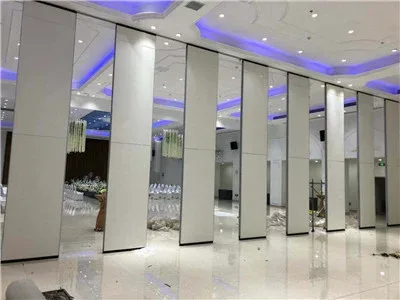
Evidence note: labor forecasts are planning documents. They do not confirm support capacity, acoustic performance, dimensional fit or changeover time without project-specific review.
This boundary protects the project team from treating a planning assumption as a verified result.
Frequently Asked Questions
What information is required to build a changeover labor forecast?
Start with the coordinated layout, panel count, opening width, straight and turning routes, and the planned stacking position. Add the expected changeover scenarios and the names of the people who will confirm support and dimensional requirements.
Can the forecast rely on a standard labor time per panel?
No. A standard time per panel would ignore route geometry, stacking arrangement, finish care and project-specific support review. Use project inputs and mark any placeholder figure as an assumption to be confirmed.
How do acoustic goals affect the labor forecast?
Acoustic goals should be confirmed for the specific project, assembly and layout.
Do movable partitions need a floor track for changeover?
EBUNGE movable wall panels are top-hung and move without a continuous floor running track or floor hardware along the partition line. Every proposed movement path still requires a continuous connected overhead route and project-specific support review.
Who should own the changeover labor forecast?
The owner or facility team should own the forecast, with input from the architect, contractor and EBUNGE project contacts. Assign an owner to each input so open questions are visible and review dates are clear.
When should the forecast be updated?
Update it whenever the layout, panel count, parking position, finish selection or changeover schedule changes. A forecast is a living planning document, not a fixed conclusion.
Conclusion and Next Step
A movable partition changeover labor forecast for facility operations is only as good as the layout review behind it. Confirm the top-hung, floor-track-free movement concept, trace the straight, turning and stacking routes, separate fixed and variable drivers, and document every assumption.
To move from framework to project-specific planning, contact EBUNGE with your coordinated layout and changeover scenarios. The team can discuss pass-door requirements, project documentation and the questions that need confirmation before your forecast is finalized.