
Quick answer: changeover labor contingency plan
Review focus: changeover labor contingency plan.
A changeover labor contingency plan facility operations document should be reviewed against the opening, ceiling interface, operating sequence and approved finish requirements. It is not a staffing schedule. It is a documented set of decisions about who moves what, when, and under which conditions, so a room can shift between layouts without relying on memory or goodwill. For facilities that use movable partition walls, the plan must respect how the system works: panels are individually movable, suspended from a top track, cross the opening without a floor track, and park at a planned stacking position. Those facts shape the labor plan because they define what a changeover task physically involves.
This article gives project teams a framework for building that plan. The exact overhead route and support arrangement must be confirmed by the responsible project team from coordinated drawings.
Start With the Movement Route, Not the Labor Count
Project review term: changeover labor contingency plan.
Labor planning usually begins with a headcount question. The suitability of each route and parking arrangement depends on the approved layout, circulation, ceiling interfaces and operating sequence. For any movable wall, the straight, turning and stacking routes are reviewed from the layout. If the route is not yet defined, the labor plan has no reliable basis.
What the route review should establish
- The full travel path from the closed position to the planned stacking position.
- Whether the path includes turns, and how those turns are represented on the coordinated drawing.
- Where panels will park, and whether that parking position is confirmed for the project.
- Which parts of the route sit above other activities, furniture zones or circulation areas.
Because panels are top-hung and cross the opening without a floor track, the floor itself does not guide the movement. That makes the overhead route the controlling element. The exact route, junction arrangement, continuous overhead path and parking position must be confirmed from the coordinated project drawings. Every proposed movement path requires a continuous connected overhead route and project-specific support review.
Map Responsibilities Before You Map Hours
Coordination scope: changeover labor contingency plan.
Contingency planning fails when responsibility is implied rather than written. Before estimating any labor, assign each changeover task to a named role and record the handover points.
Roles to define in the plan
- Who authorizes a changeover and confirms the room is released.
- Who moves the panels along the reviewed route to the planned stacking position.
- Who checks that the route is clear before movement begins.
- Who confirms the room is ready for its next use after the changeover.
- Who escalates when a route, panel or stacking position does not match the drawing.
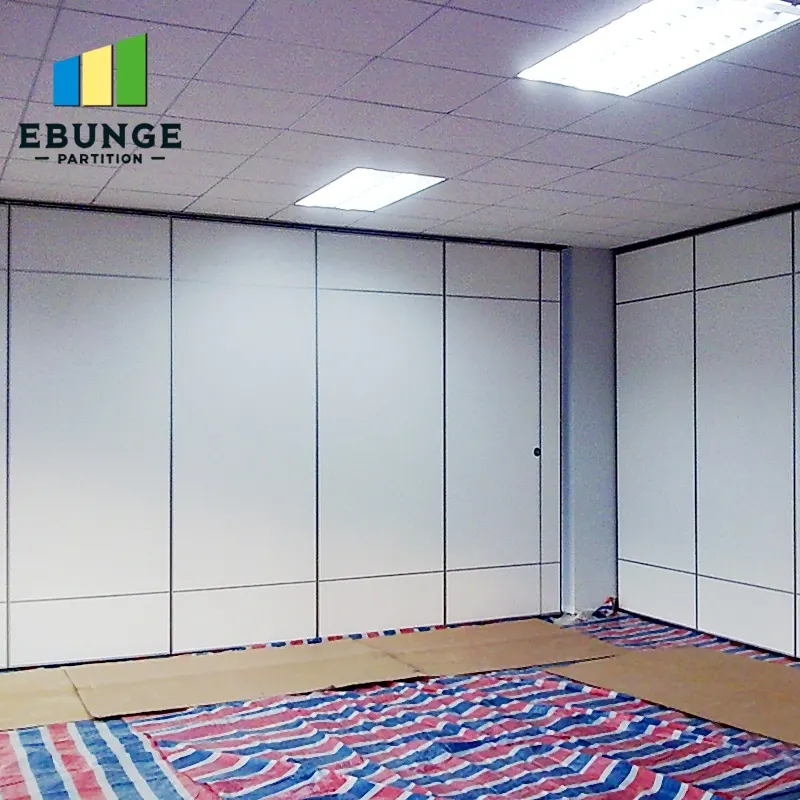
This role map is also the basis for contingency. If one role is unavailable, the plan should state whether the changeover is delayed, reassigned, or cancelled for that day. Do not assume that any role can be absorbed silently by another team.
Use a Decision Checklist for Each Changeover
Checklist focus: changeover labor contingency plan.
A short checklist keeps the plan usable under time pressure. It also creates a visible record of what was verified and what was assumed.
| Check | Question to answer | Evidence source |
|---|---|---|
| Route | Is the straight, turning and stacking route confirmed for this layout? | Coordinated layout drawing |
| Support | Has the overhead support condition been reviewed for this project? | Project-specific structural review |
| Parking | Is the stacking position planned and clear? | Layout and site walk |
| Finish | Does the specified finish match the approved surface? | Approved finish schedule |
| Acoustic intent | Is the acoustic requirement stated as a project target to be confirmed? | Project acoustic documentation |
| Pass door | Are pass-door requirements documented for this opening? | Project documentation |
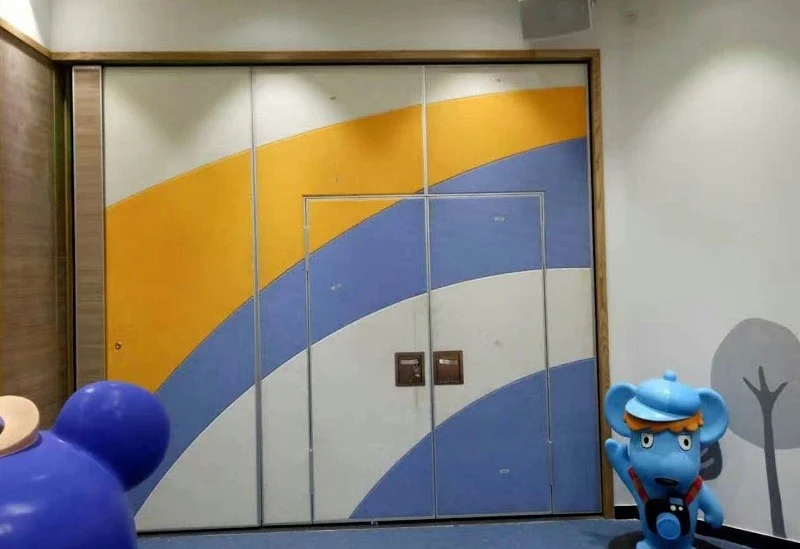
Treat this table as a planning tool, not a certification. It tells the team what to confirm; it does not confirm it.
Plan for the Changeover Conditions You Can See
Contingency labor is usually triggered by conditions, not by preference. Build the plan around observable triggers so that the response is consistent.
Common triggers to document
- A route is blocked by stored furniture or equipment.
- A stacking position is occupied or has been repurposed.
- A panel finish or surface has been damaged and needs review before use.
- A room booking changes after the changeover window has started.
- A drawing revision changes the approved route or parking arrangement.
For each trigger, state the immediate action, the role that decides, and the fallback layout if the changeover cannot proceed. The fallback should be a real room configuration, not an assumption that the event will simply wait.
Keep Acoustic and Finish Expectations Evidence-Bounded
Finish choices also carry planning implications. Confirmed finish options include laminate, melamine, fabric, leather, glass and other approved surfaces. Those attributes require their own project-specific confirmation.
Evidence note: this framework describes planning steps and confirmed product facts only. It does not establish support capacity, acoustic results, dimensions, loads or installation outcomes for any project. Those items require matching project evidence and drawing review.
Document the Plan So It Survives Staff Changes
A contingency plan that lives only in a supervisor’s experience is not a facility plan. Put the route, role map, checklist and triggers into the same document set as the layout drawings, and reference the drawing revision each version depends on.
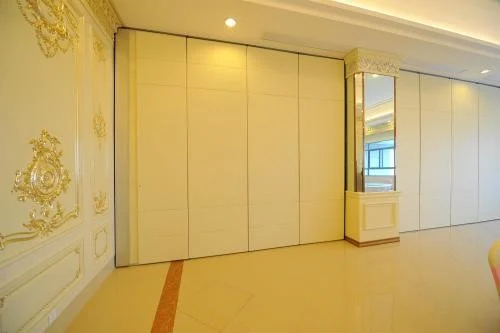
When the layout changes, the plan should change with it. Straight, turning and stacking routes are reviewed from the layout, so a revised layout can invalidate an approved route. Version control is therefore part of labor contingency, not an administrative extra.
Frequently Asked Questions
What is a changeover labor contingency plan for facility operations?
It is a documented plan that assigns roles, routes and fallback actions for reconfiguring a space, including the labor response when normal conditions are disrupted.
Does a movable partition wall need a floor track for changeovers?
No. EBUNGE movable wall panels are top-hung and cross the opening without a floor track. The movement path depends on a continuous connected overhead route, which must be reviewed for the project.
Can the plan assume panels will be carried across a gap?
No. Panels move along the supported overhead route to a planned stacking position.
How should acoustic requirements appear in the plan?
State them as project-specific targets to be confirmed against project documentation.
Which finish options can be considered?
Confirmed options include laminate, melamine, fabric, leather, glass and other approved surfaces. Selection should be coordinated with the project finish schedule.
When should the plan be reviewed?
Review it whenever the layout, route, stacking position, room use or project documentation changes, and confirm project-specific support, acoustic and dimensional requirements at each review.
Conclusion and Next Step
A changeover labor contingency plan for facility operations becomes reliable when it is built on the reviewed movement route, written role assignments, observable triggers and an honest boundary around what has been confirmed. For movable partition projects, that boundary includes support, acoustic and dimensional requirements, which must be confirmed from project drawings and documentation rather than assumed from a finish or a layout sketch.
To discuss pass-door requirements, project documentation or the layout information needed for a coordinated review, contact the EBUNGE team. You can also review the movable wall product context and the planning resources before your next coordination meeting.