
Quick project answer
Review focus: changeover crew overtime cap policy.
A changeover crew overtime cap policy is a written rule that limits scheduled overtime during room flips while keeping event quality, safety, and building operations intact. For multi-room venues, the policy must connect labor planning to the physical room system. If partitions, seating, staging, or service routes force repeated manual adjustments, the cap becomes a source of friction rather than a control. This guide gives overseas contractors, architects, designers, owners, and renovation teams an evidence-bounded way to build the policy without inventing performance, cost, or engineering outcomes.
Start With the Room-Use Matrix, Not the Overtime Number
Project review term: changeover crew overtime cap policy.
Before setting any cap, document how each room is used across a typical week. List the room name, maximum occupancy category, furniture layout, AV needs, and the sequence of changeovers. The goal is to identify which moves are routine and which are exceptions. A cap that treats every changeover equally will either be too loose for simple flips or too tight for complex ones.
Use the matrix to group rooms by changeover type. For example, a ballroom split into two breakout rooms may require a different crew sequence than a flat-floor session room. The named venue or room type is an example only; the same method applies to conference centers, hotels, schools, offices, and worship spaces.
Define What Counts as a Changeover
Write a clear definition. Does a changeover include only partition movement, or also seating reset, table changes, staging, and cleaning? Ambiguity here is a common cause of overtime disputes. The policy should state the start and end points of the changeover window and who confirms completion.
Map the Physical Route Before You Cap the Hours
Coordination scope: changeover crew overtime cap policy.
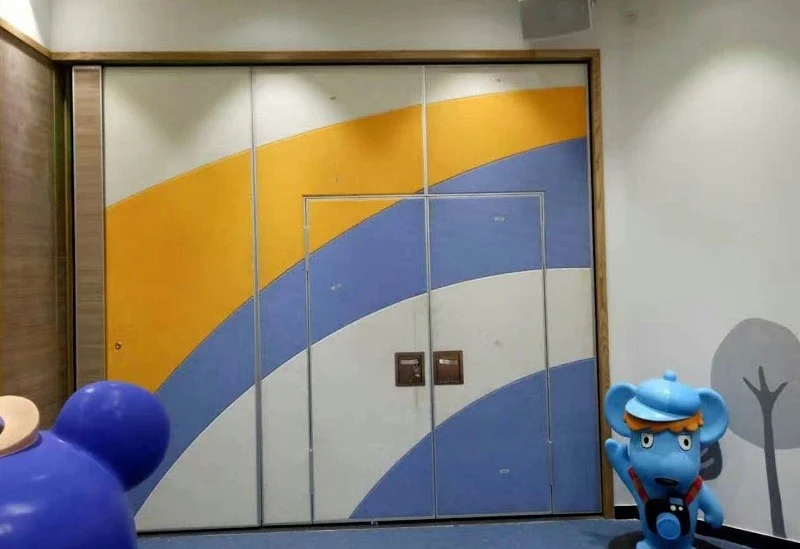
Labor time is shaped by the room system. EBUNGE movable wall panels are individually movable, suspended from a top track, cross the opening without a floor track, and park at a planned stacking position. Straight, turning, and stacking routes are reviewed from the layout. That means the route must be checked on drawings before the policy assumes a certain number of moves per hour.
Panel handling and the operating sequence must be confirmed for the selected layout and project conditions. Every proposed movement path requires a continuous connected overhead route and project-specific support review. If the route is not confirmed, the overtime cap is built on an assumption.
Route Review Checklist
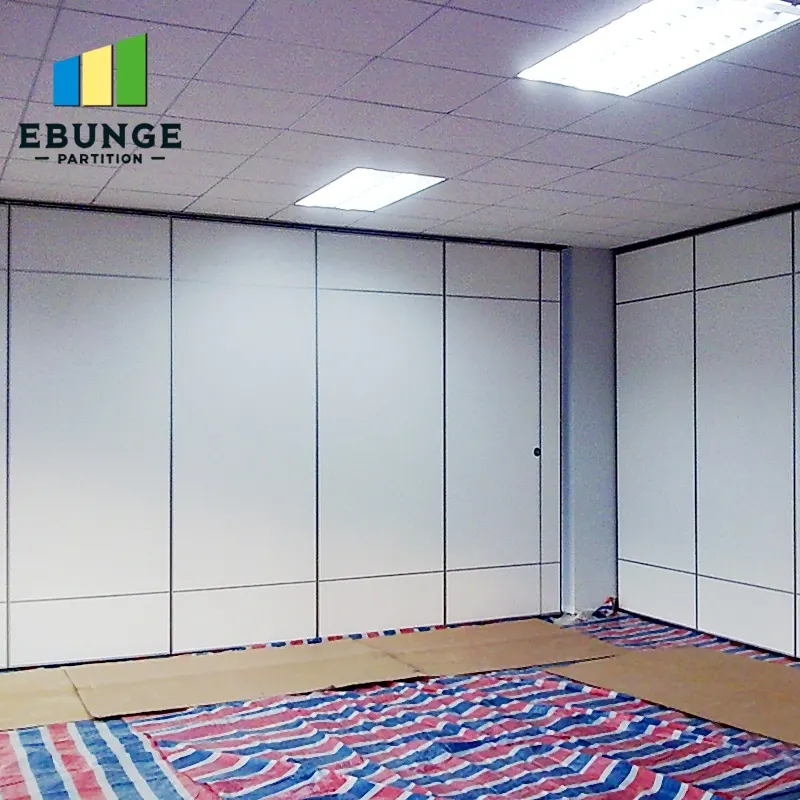
- Confirm the opening width and the planned parking position on the current layout.
- Check straight, turning, and stacking routes as a single connected path.
- Identify any fixed elements that could interrupt the route.
- Confirm support and dimensional requirements with the project team.
- Record which rooms share a route and which do not.
Build the Cap Around Confirmed Evidence, Not Assumptions
Checklist focus: changeover crew overtime cap policy.
A defensible policy separates confirmed facts from project-specific unknowns. Confirmed product facts include top-hung movement, no continuous floor running track along the partition line, and customized parking based on the layout. The suitability of each route and parking arrangement depends on the approved layout, circulation, ceiling interfaces and operating sequence.
If acoustic separation matters to a changeover, state the requirement and ask for the matching documentation.
Evidence Note: What the Policy Can and Cannot Claim
Do not derive hidden acoustic, fire, durability, load, maintenance, certification, or commercial performance from a visible shape, finish, photograph, or drawing. Comparative, absolute, and causal statements require corresponding evidence; otherwise remove them or state the exact project-specific confirmation boundary.
Set Tiered Caps by Changeover Complexity
A single overtime cap for all rooms is rarely useful. Tiered caps let supervisors apply the rule proportionally. The tiers should be based on the room-use matrix and route review, not on guessed labor times.
| Tier | Typical Trigger | Policy Action |
|---|---|---|
| Tier 1 | Simple partition move with confirmed route | Standard changeover window; no pre-approved overtime |
| Tier 2 | Partition move plus seating or staging reset | Supervisor approval before overtime is scheduled |
| Tier 3 | Multiple rooms sharing a route or complex sequence | Pre-event review with operations and the project team |
The table is a planning structure, not a performance claim. Adjust the triggers to the venue and confirm all dimensional and support requirements with the project team.
Coordinate the Policy With the Project Team
Overtime caps fail when they are written in isolation. Facility operations planning coordination should include the owner, contractor, architect, and partition supplier where relevant. The goal is to align the policy with the drawings, the event calendar, and the approved finish schedule.
Confirmed finish options include laminate, melamine, fabric, leather, glass, and other approved surfaces. Treat finish as a design decision and confirm project-specific requirements separately.
Numbered Process: From Draft to Approved Policy
- Collect the room-use matrix and current event calendar.
- Review the layout for straight, turning, and stacking routes.
- Define changeover start and end points for each room type.
- Draft tiered caps and approval thresholds.
- Confirm support, acoustic, and dimensional requirements with the project team.
- Pilot the policy for a defined period and record exceptions.
- Revise the policy using observed exceptions, not assumptions.
Document Exceptions and Review the Cap Periodically
The exact overhead route and support arrangement must be confirmed by the responsible project team from coordinated drawings. The policy should include a simple exception log. Record the room, the reason, the approval, and whether the route or layout changed. This log becomes the evidence base for revising the cap.
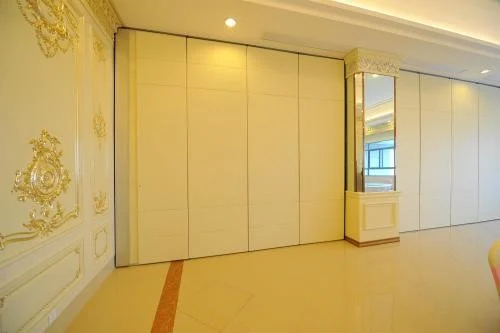
Review the policy at a fixed interval, such as quarterly or after a major event season. If the same exception appears repeatedly, the cap or the room system may need adjustment. Pass-door requirements and project documentation can be discussed with the supplier when the layout changes.
FAQ: Changeover Crew Overtime Cap Policy
What is a changeover crew overtime cap policy?
It is a written rule that limits scheduled overtime for room changeovers. It defines what counts as a changeover, who approves exceptions, and how the cap is reviewed.
Why does the physical partition route matter to an overtime cap?
Because labor time depends on the route. Straight, turning, and stacking routes are reviewed from the layout, and every proposed movement path requires a continuous connected overhead route and project-specific support review.
Can the policy assume a certain number of moves per hour?
No. Confirm project-specific requirements first.
How should acoustic requirements be handled in the policy?
State the requirement and ask for matching documentation.
What finish information can be included?
Confirmed finish options include laminate, melamine, fabric, leather, glass, and other approved surfaces.
When should the policy be reviewed?
Review it at a fixed interval and after major event seasons. Use the exception log to identify repeated issues and confirm any layout changes with the project team.
Conclusion: A Cap Built on Drawings and Evidence Holds Up
A changeover crew overtime cap policy works when it reflects the actual room system. Start with the room-use matrix, review the physical route, separate confirmed facts from project-specific unknowns, and set tiered caps that supervisors can apply consistently. Keep the policy tied to the drawings and the event calendar, and confirm support, acoustic, and dimensional requirements with the project team before finalizing.
For movable partition planning, review the movable walls product page and the resources library. When your layout, route, or pass-door requirements need review, contact the EBUNGE team to discuss project documentation and next steps.