
Quick answer: movable partition track
Review focus: movable partition track.
For project teams, ceiling void ownership above movable partition track should be reviewed against the opening, ceiling interface, operating sequence and approved finish requirements. Ceiling void ownership above a movable partition track is one of the quiet coordination problems that surfaces late in a fit-out. The panels are top-hung, travel without a continuous floor track, and park at a planned stacking position. Everything above the ceiling line — the route, the supporting structure and the interface with other services — must be agreed before anyone closes the ceiling. This article sets out a practical, evidence-bounded way to assign that responsibility.
Why the Ceiling Void Becomes a Dispute
Project review term: movable partition track.
The void above a movable partition track sits between several packages. The partition supplier provides the track and panels. The ceiling contractor closes the plane. The suitability of each route and parking arrangement depends on the approved layout, circulation, ceiling interfaces and operating sequence. Each party can reasonably assume another has checked the route.
Disputes usually appear when the ceiling is already installed and the track route has not been reviewed against the actual structure. The fix is not a single clause; it is a written scope split with named reviewers and dated drawing revisions.
What the Maintained Product Facts Actually Cover
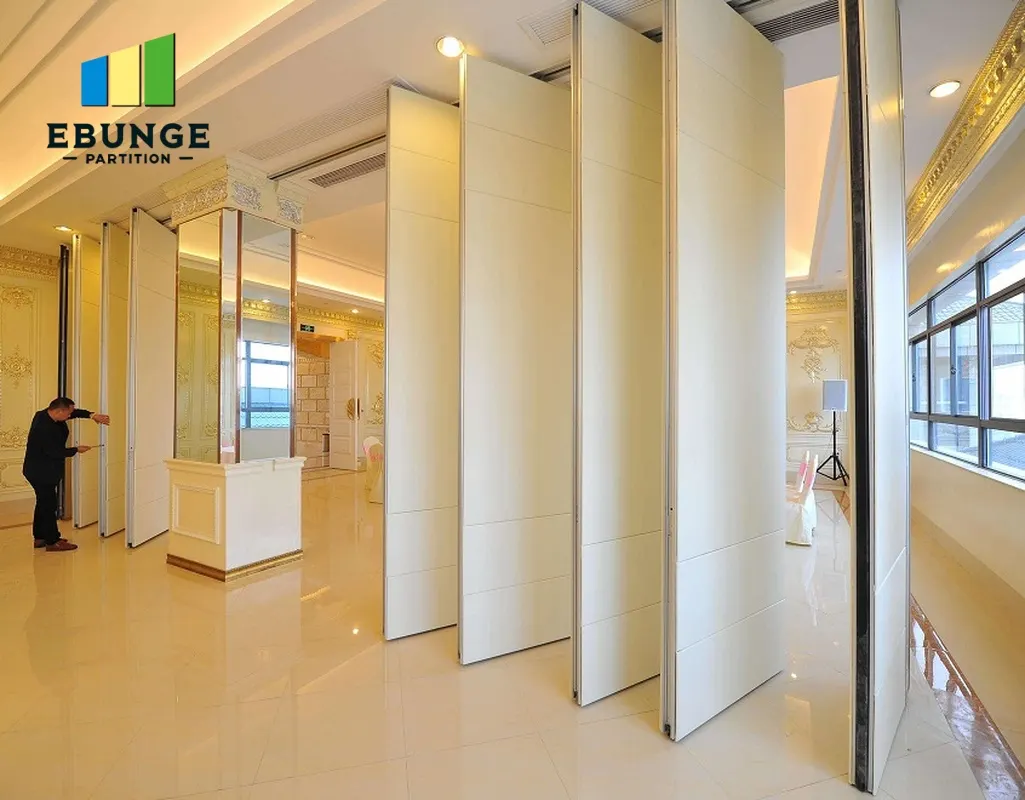
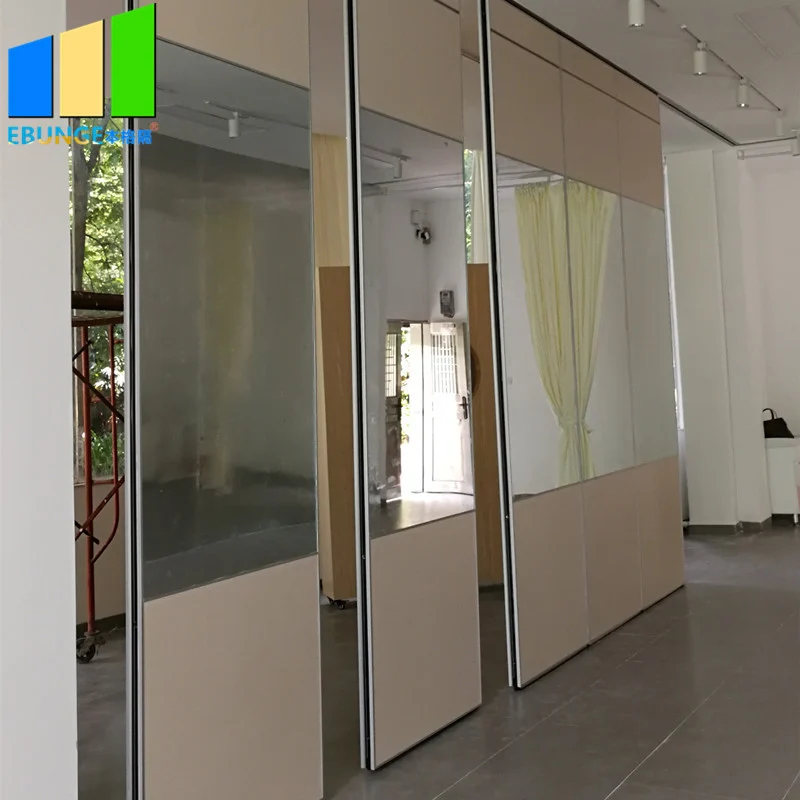
EBUNGE movable wall panels are individually movable and suspended from a top track. They cross the opening without a floor track and park at a planned stacking position. Straight, turning and stacking routes are reviewed from the layout. Confirmed finish options include laminate, melamine, fabric, leather, glass and other approved surfaces. Pass-door requirements and project documentation can be discussed.
Those facts describe the system’s movement logic. They do not describe the supporting structure, the ceiling void dimensions, the acoustic result or the interface with other trades. Those items require project-specific confirmation.
A Scope Split You Can Put in the Minutes
Use the table below as a starting point, then adapt it to the contract. It separates who provides information, who reviews it and who signs off the ceiling closure.
| Item | Typical lead | Evidence needed before closure |
|---|---|---|
| Track route and stacking position | Partition supplier with architect | Coordinated layout showing straight, turning and parking routes |
| Supporting structure above the void | Structural engineer | Project-specific support review and fixing strategy |
| Ceiling plane and access panels | Ceiling contractor | Setting-out drawing and inspection access agreed |
| Services crossing the void | MEP coordinator | Clash review against the track route |
| Acoustic and fire interfaces | Design lead | Project-specific performance specification and test evidence where required |
This table is a coordination aid, not a substitute for the project specification. Confirm the actual responsibility matrix with the contract administrator.
Drawing Reviews That Prevent Rework
Review the route, not just the opening
A movable partition does not only occupy the closed position. It travels and then stacks. The ceiling void must accommodate the full route, including any turning section and the parking zone. If the review only checks the opening, the stacking area can be missed.
Check the void against real services
A drawing review should compare the coordinated services model with the partition layout at the same revision date. Verbal assurances are not evidence.
Record the revision you reviewed
Every review should state the drawing number, revision and date.
Evidence Boundaries for Acoustic and Structural Claims
The void, the supporting structure and the junction details all affect the installed result.
Those claims need matching project evidence. Where evidence is not available, state the confirmation boundary clearly in the minutes.
Evidence note: if a statement about the ceiling void cannot be tied to a dated drawing, a project-specific calculation or a test report, treat it as an open item rather than a confirmed condition.
Questions to Ask Before the Ceiling Closes
- Who is named as responsible for the track route above the ceiling?
- Has the supporting structure been reviewed for the actual layout, including the parking position?
- Which drawing revision shows the coordinated services and the partition route together?
- How will the void be inspected after the ceiling is closed?
- What acoustic and fire evidence is required, and who will provide it?
- What happens if the route changes after the ceiling is installed?
These questions are deliberately open. They help the team identify gaps without inventing performance figures or assuming another trade has already checked.
Handover and Documentation
At handover, the ceiling void ownership trail should include the approved layout, the support review, the services coordination record and the inspection access arrangement. If any item is missing, record it as a residual risk rather than closing it silently.

For product context, see the movable walls range. For broader planning material, see the resources library. To discuss a specific project, contact the team.
FAQ
Does the partition supplier own the ceiling void above the track?
Not automatically. The supplier typically provides the track and panel system, while the void, supporting structure and ceiling plane may belong to other packages. Confirm the split in the project responsibility matrix.
Can the track route be changed after the ceiling is installed?
Changes after ceiling closure are usually disruptive and may require opening the ceiling. Review the route, turning sections and parking position before closure.
Is a floor track required for a top-hung movable partition?
EBUNGE movable partition panels are top-hung and move without a continuous floor running track or floor hardware along the partition line. The overhead route still requires project-specific support review.
How is acoustic performance confirmed for the ceiling void?
Confirm requirements with the design lead and request matching evidence.
What documentation should be kept for handover?
Keep the approved layout, the support review, the services coordination record and the inspection access arrangement. These documents show how the ceiling void ownership question was resolved.
Conclusion
Ceiling void ownership above a movable partition track is a coordination decision, not a product feature. Define the scope, review the route against real services, record the drawing revision and keep evidence boundaries visible. That approach reduces late surprises without promising performance the project has not confirmed.
To review a specific layout or discuss documentation, contact EBUNGE and share the current drawings.