
Quick answer: track envelope clearance matrix
Review focus: track envelope clearance matrix.
Ceiling coordination often decides whether a movable partition installation runs smoothly. The movable partition ceiling track envelope clearance matrix is a planning tool that maps the overhead zone reserved for the top track, rollers and panel travel against ceiling-mounted services. It is not a product specification and it does not replace project drawings. It helps contractors, architects and owners see conflicts early, while changes are still inexpensive. This article explains how to build the matrix, what information to collect and where project-specific confirmation is required.
Why the Track Envelope Needs Its Own Coordination Layer
Project review term: track envelope clearance matrix.
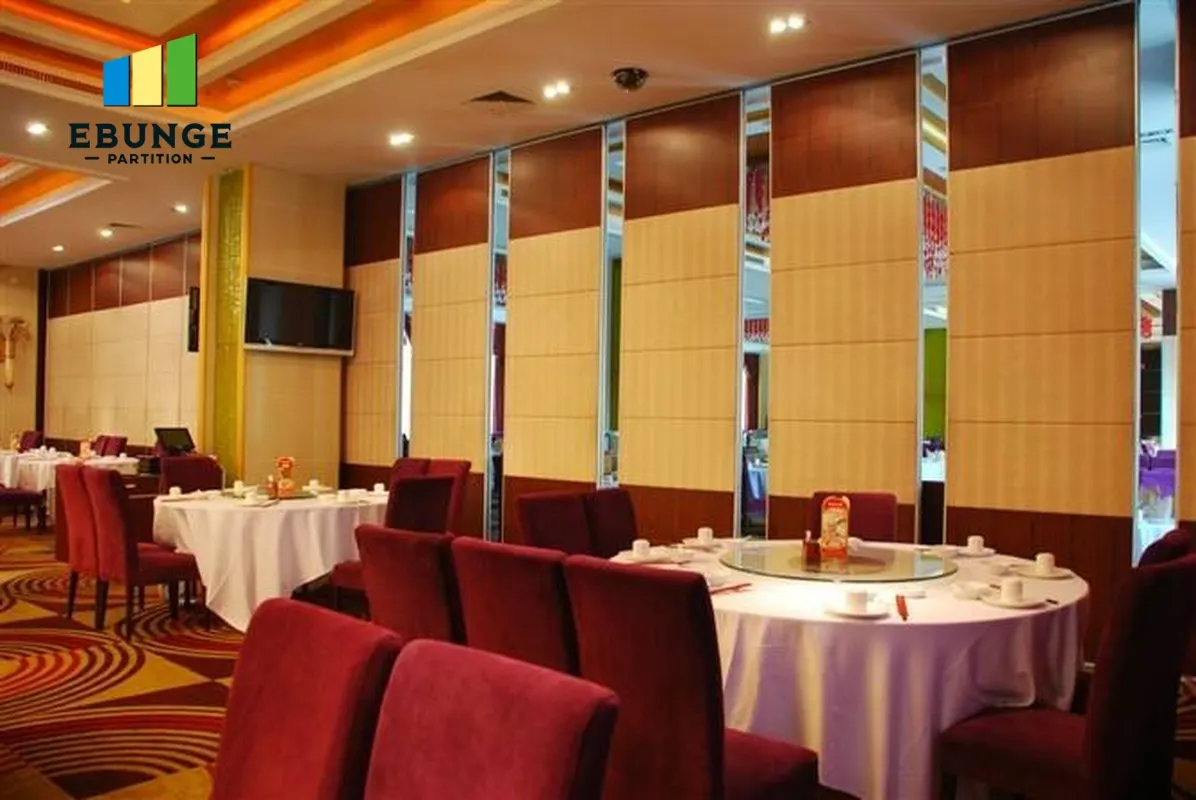
EBUNGE movable partition panels are individually movable and suspended from a top track. They cross the opening without a floor track and park at a planned stacking position. Because the panels hang from above, the ceiling zone is not just a finish surface. It is a service corridor shared with lighting, diffusers, sprinklers, cable trays and structure.
If that corridor is planned only after the ceiling layout is fixed, the partition route may conflict with services that cannot easily move. A track envelope matrix gives the team one place to compare the partition route with everything else overhead.
What the Matrix Should Contain
Coordination scope: track envelope clearance matrix.
The matrix is a simple grid. Rows represent the partition route segments: straight runs, turning points and the planned stacking position. Columns represent the overhead items that occupy or pass through the same zone. Each cell records whether the item is clear, in conflict, or needs project-specific review.
Keep the matrix visual. The suitability of each route and parking arrangement depends on the approved layout, circulation, ceiling interfaces and operating sequence. The band should follow the full movement path, including the route from the opening to the parking position.
Core columns for a first-pass review
- Route segment: straight run, turn or stacking zone.
- Ceiling service type: lighting, air device, sprinkler, cable tray or other overhead item.
- Service position: centered on the route, offset, or crossing the route.
- Conflict status: clear, conflict, or confirm with project team.
- Action owner: who will resolve the item and by when.
- Evidence reference: drawing number, revision and date reviewed.
Mapping Straight, Turning and Stacking Routes
Checklist focus: track envelope clearance matrix.
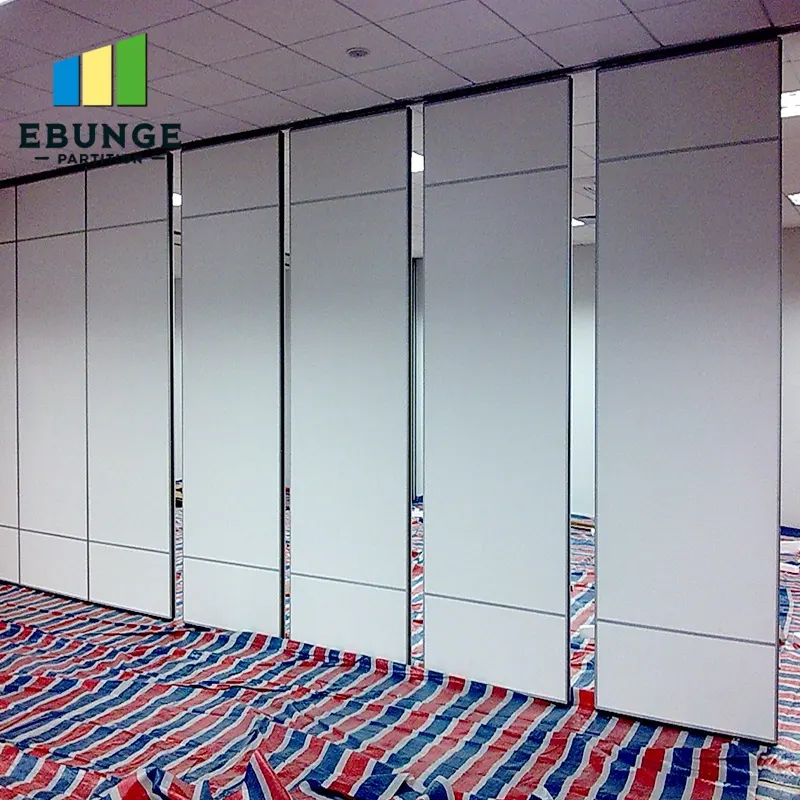
Straight routes are usually the easiest to read, but they still need a continuous connected overhead route. The exact route, junction arrangement, continuous overhead path and parking position must be confirmed from the coordinated project drawings. The track must follow the intended path, and the ceiling zone must remain clear through the turn. Stacking routes are often the most congested because multiple panels gather in one place.
Parking style is customized to the customer layout and project requirements. It may support compact stacking when the coordinated design permits it. The matrix should show the stacking zone as a distinct area, not as a single point, so ceiling services can be checked against the full parked panel group.
Questions to ask at each route segment
- Does the overhead route remain continuous and connected through this segment?
- Does any ceiling service sit inside the shaded track envelope band?
- Can the service be relocated, or does the partition route need to change?
- Is the stacking zone clear of services that would block panel movement?
- Has the structural support for the track been reviewed for this specific project?
Ceiling-Mounted Services That Commonly Interact
Lighting fixtures, air diffusers, sprinkler heads, smoke detectors, public address devices and cable trays are common examples. Their positions are often set by other disciplines before the partition is considered. The matrix does not decide who moves. It records the conflict so the project team can decide with full information.
Some services can be adjusted within their own design limits. Others cannot. That is why the matrix uses a confirm-with-project-team status rather than a simple pass or fail. The goal is to surface the question, not to answer it without evidence.
Compact comparison: service position and coordination response
| Service position | Typical coordination question | Evidence needed |
|---|---|---|
| Outside the track envelope | Is the offset maintained along the full route? | Coordinated ceiling plan |
| Adjacent to the envelope | Does installation or maintenance access intrude? | Service clearance drawing |
| Crossing the envelope | Can the service be rerouted or the route adjusted? | Project-specific review |
| Inside the stacking zone | Does it block panel parking or movement? | Stacking layout and ceiling plan |
Evidence Boundaries and Drawing Review
A drawing shows intent, not performance. If a project needs an acoustic separation target, define it in project terms and confirm it with the responsible specialist.
Those questions require their own project-specific evidence.
Evidence note for the matrix
Record the drawing revision and date for every review. A conflict marked clear on an old revision may be invalid after a ceiling layout change. The matrix is only as reliable as the drawings behind it.
Running the Coordination Review
Hold the first review when the partition route and ceiling layout are both available in draft form. Walk the route segment by segment. Mark conflicts in the matrix and assign an action owner. Repeat after each major drawing revision.
Pass-door requirements and project documentation can be discussed with the EBUNGE team. Bring the proposed route, stacking position and ceiling plan to that discussion so the review is grounded in the application reference.
Pre-installation checklist
- Track envelope band drawn on the coordinated ceiling plan.
- Straight, turning and stacking routes all reviewed.
- Ceiling services checked against the full route, not just the opening.
- Acoustic and dimensional requirements confirmed with the responsible specialist.
- Latest drawing revision recorded in the matrix.
Frequently Asked Questions
What is a movable partition ceiling track envelope clearance matrix?
It is a planning grid that maps the overhead zone reserved for the partition track and panel movement against ceiling-mounted services. It helps teams identify conflicts before installation.
Does every movable partition project need this matrix?
Any project with ceiling-mounted services near the partition route benefits from the review. The level of detail should match the project complexity and drawing stage.
Can the partition route cross a ceiling service?
Every proposed movement path requires a continuous connected overhead route and project-specific support review. Whether a service can be crossed depends on the service and the project design.
How does the stacking position affect ceiling coordination?
The stacking zone is where multiple panels gather. It should be shown as an area on the matrix so ceiling services can be checked against the full parked group.
What information should be ready before contacting EBUNGE?
Prepare the proposed route, stacking position, ceiling plan and any pass-door requirements. Project documentation helps the team discuss the specific configuration.
Does the matrix confirm acoustic performance?
No. Acoustic requirements need project-specific confirmation. The matrix is a coordination tool for geometry and services, not a performance certificate.
Conclusion and Next Steps
The movable partition ceiling track envelope clearance matrix turns a hidden coordination risk into a visible planning task. The exact overhead route and support arrangement must be confirmed by the responsible project team from coordinated drawings. Confirm support, acoustic and dimensional requirements for the specific project before installation.
To discuss your layout, pass-door needs and project documentation, contact the EBUNGE team. You can also review movable wall products and browse planning resources for further coordination guidance.