
When the Ceiling Has a Movement Joint, Who Owns the Track Break?
Quick project answer
Ceiling movement joint track break ownership becomes a live question the moment a top-hung movable wall route crosses a ceiling joint. The panels hang from an overhead track and travel without a floor track, so the head condition carries the movement path. When the ceiling is designed to move, someone must decide whether the track stops, continues or is detailed to accommodate that joint. This article sets out a coordination framework for that decision without assuming any project outcome.
Why the Head Condition Drives the Conversation
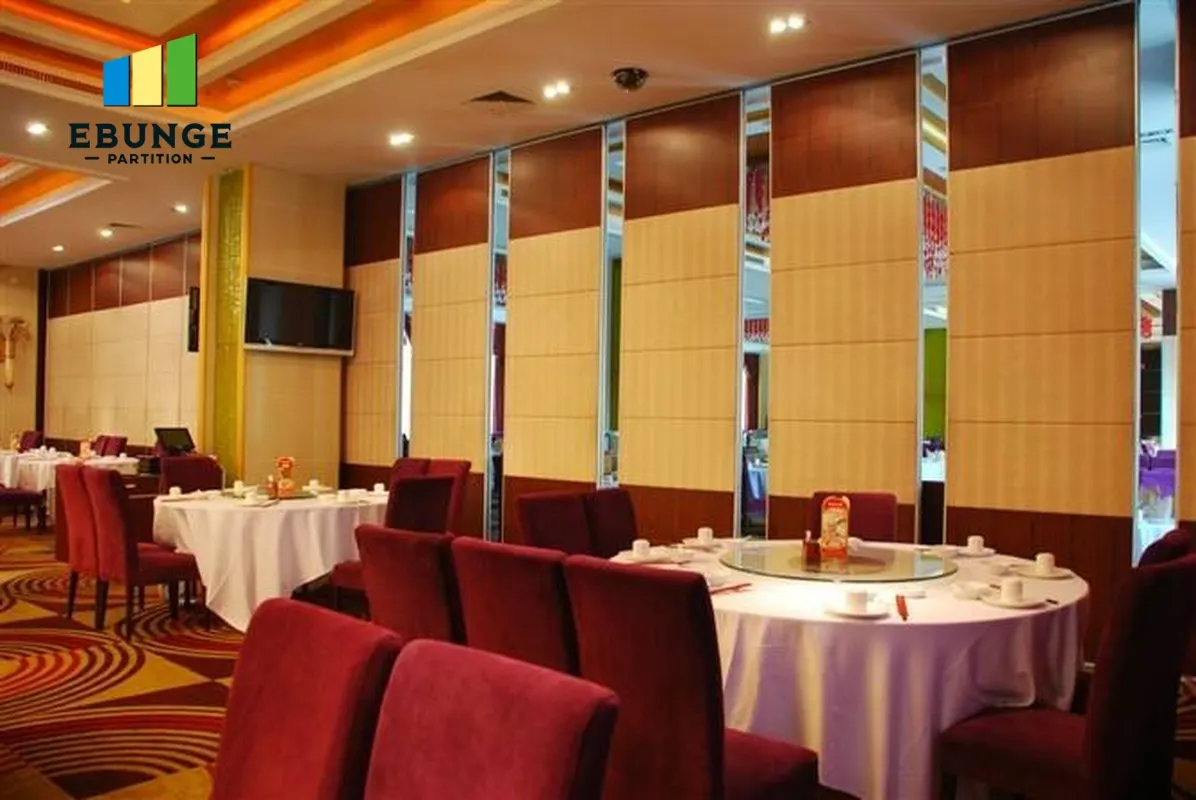
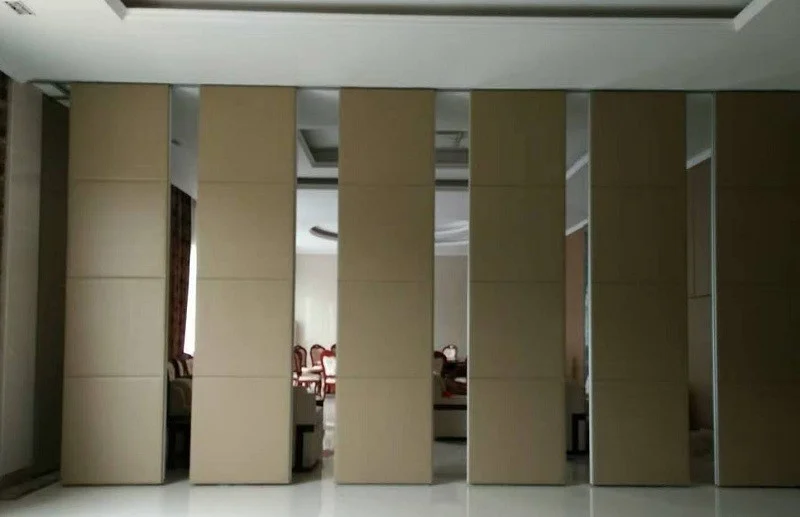
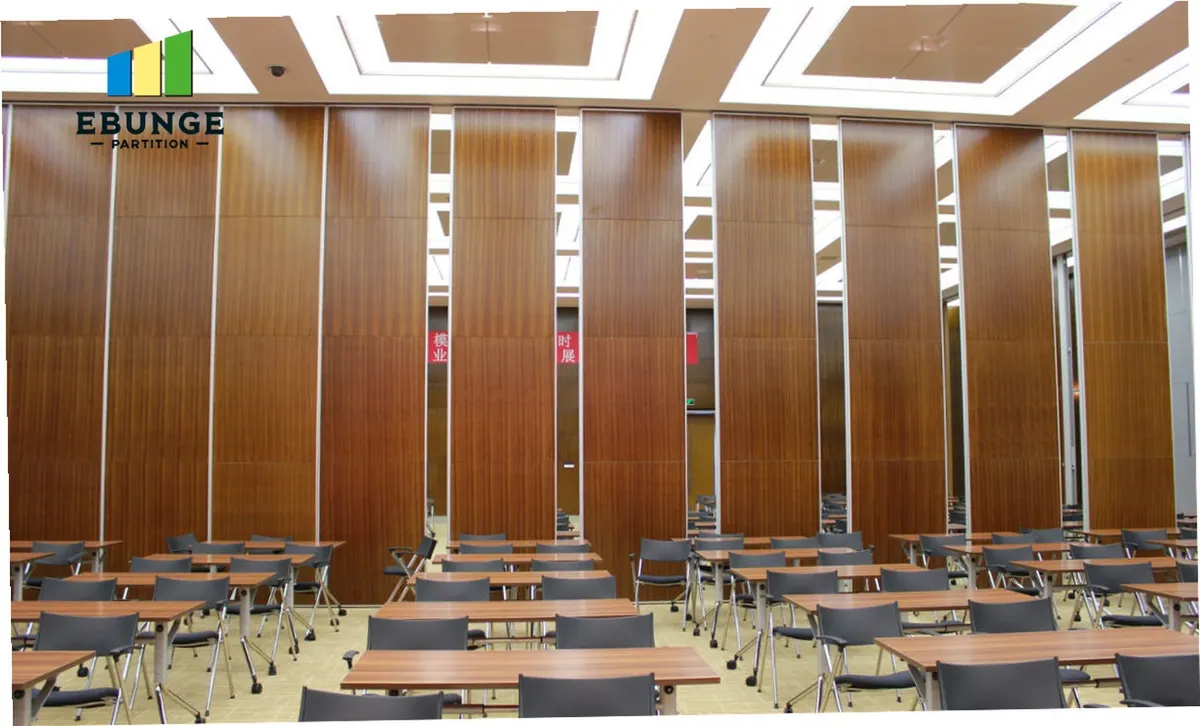
EBUNGE movable wall panels are individually movable and suspended from a top track. They cross the opening without a floor track and park at a planned stacking position. That arrangement concentrates coordination at the ceiling line: the track must follow a continuous, connected overhead route, and the supporting structure above it must be reviewed for the project.
A ceiling movement joint is a deliberate break in the ceiling plane. A track break is a deliberate interruption or transition in the partition track. They are different objects with different purposes, and treating them as the same thing is where drawings often drift apart.
What “Ownership” Should Mean in Practice
Ownership here is not a legal opinion. It is the assignment of who produces, checks and approves the interface information. Three layers usually need a named owner: the ceiling design intent, the partition route and support review, and the site verification that the built condition matches the reviewed drawings.
Design intent versus installation responsibility
The ceiling designer defines why the joint exists and how much relative movement is expected. The partition supplier reviews the straight, turning and stacking routes from the layout. The contractor confirms the supporting structure and the as-built ceiling condition. None of these roles can be inferred from a finish sample or a photograph.
Where the handover usually fails
Failures cluster at handover points: a joint shown on a reflected ceiling plan but absent from the partition layout, or a track route drawn without a note on how it meets the joint. A short written interface register, updated at each drawing revision, closes more gaps than a longer specification alone.
A Drawing Review Sequence for the Track Break
- Overlay the ceiling joint layout on the partition route drawing at the same scale and revision date.
- Mark every point where the overhead route meets or crosses a joint, and label each as stop, continue or transition.
- The suitability of each route and parking arrangement depends on the approved layout, circulation, ceiling interfaces and operating sequence.
- Check that the parking position and stacking arrangement remain reachable from the reviewed route.
- Record pass-door requirements, since a pass door changes the panel sequence and the head detail near it.
- Issue the marked-up drawing for comment and log who approved each interface point.
This sequence produces visible evidence: a dated drawing with marked interface points.
Decision Checklist Before Fabrication Release
- Is the ceiling joint type and expected movement direction documented by the ceiling designer?
- Does the partition route drawing show the joint, or only the room outline?
- Has the supporting structure been reviewed for the full route, including turns and the stacking position?
- Is the track break decision recorded as stop, continue or transition, with a named approver?
- Are finish selections confirmed from the approved options: laminate, melamine, fabric, leather, glass or other approved surfaces?
- Are pass-door needs and project documentation requirements listed for discussion?
- Is the as-built ceiling condition verified before release, not assumed from the design drawing?
Acoustic and Seal Concepts Without Invented Numbers
Acoustic separation depends on how the whole assembly is detailed, including the head junction, the perimeter and the joints between panels.
Where a ceiling joint interrupts the head line, the continuity of the acoustic boundary deserves explicit review. This article does not state seal materials, panel construction or measured results. Ask for project-specific acoustic documentation and confirm requirements with the responsible acoustic specialist.
Evidence note: a visible track, a finish sample or a layout drawing does not by itself demonstrate acoustic performance, structural capacity or compliance. Those conclusions need matching project documentation.
Comparing Three Track Break Approaches
| Approach | What the drawing must show | What still needs confirmation |
|---|---|---|
| Track stops at the joint | Termination detail and the panel route on each side | Whether the route remains continuous and supported |
| Track continues across | How the joint movement is accommodated at the head | Structural review and ceiling designer approval |
| Transition detail | Interface geometry and responsibility notes | Fabrication feasibility and site verification |
The table is a coordination prompt, not a recommendation. The correct approach depends on the ceiling design, the route and the supporting structure, all confirmed for the project.
Documentation to Request and Keep
Keep revision dates aligned across all four. Where a distributor or local partner is involved, confirm in writing who holds each document and who approves changes.
Project documentation requirements can be discussed with EBUNGE through the contact page, and general planning context is available in the resources section. Product context for top-hung movable walls sits on the movable walls page.
Frequently Asked Questions
Who should decide whether the track stops at a ceiling movement joint?
The decision belongs to the project team, with the ceiling designer defining joint intent and the partition route reviewed against it. Record a named approver rather than leaving the point open on the drawing.
Can the track simply continue across any ceiling joint?
Not automatically. Continuity of the overhead route and support must be reviewed for the specific joint and structure. Confirm the detail with the responsible parties before fabrication.
Does a track break affect acoustic performance?
The head junction forms part of the acoustic boundary, so any interruption deserves review. This article does not state measured values; request project-specific acoustic documentation.
Do movable panels need a floor track at the joint?
EBUNGE panels are top-hung and cross the opening without a floor track. The coordination focus is the overhead route and its supporting structure, not floor hardware.
What finish information is confirmed?
Approved options include laminate, melamine, fabric, leather, glass and other approved surfaces.
When should the interface register be updated?
At every drawing revision and after site verification of the ceiling condition. A register that lags behind the drawings stops being useful evidence.
Conclusion
Ceiling movement joint track break ownership is settled by clear drawings, named approvers and verified site conditions, not by assumption. Review the route, confirm support, record the break decision and keep documentation aligned. For project-specific support, acoustic and dimensional requirements, contact EBUNGE to discuss your layout and documentation needs.