
Quick project answer
Review focus: track fixing zone reservation matrix.
Cost and maintenance requirements depend on the selected configuration, finish and project conditions and require project-specific confirmation. A movable partition track fixing zone reservation matrix helps project teams reserve the necessary overhead zone early, in step with ceiling service rough-in sequencing. This article explains how to build that matrix using confirmed product facts and project-specific drawing review, without assuming hidden performance or engineering outcomes.
Why Track Fixing Zones Need Early Reservation
Project review term: track fixing zone reservation matrix.
Movable partition panels are individually movable, suspended from a top track, and cross the opening without a floor track. They park at a planned stacking position. Because the system is top-hung, the ceiling interface must accommodate a continuous overhead route. If ceiling services—ductwork, conduit, piping, or lighting supports—are roughed in without coordinating that route, the track fixing zone may be compromised.
The suitability of each route and parking arrangement depends on the approved layout, circulation, ceiling interfaces and operating sequence. It is a coordination step: marking where the track and its support interface may need clear space, then checking that ceiling services do not occupy that space. The reservation matrix is a planning tool, not a substitute for project-specific support review.
What the Reservation Matrix Should Contain
Coordination scope: track fixing zone reservation matrix.
A reservation matrix is a simple table that maps each track segment or route condition to the ceiling zone it affects. It helps teams see conflicts before grid closure. It does not replace those drawings; it organizes the interface questions they raise.
Core Columns for the Matrix
- Track route segment: straight, turning, or stacking route as reviewed from the layout.
- Ceiling zone reference: grid line, room boundary, or service corridor.
- Service rough-in sequence: which trades install first in that zone.
- Reserved clear zone: the overhead area to keep free of conflicting services.
- Coordination owner: the party responsible for checking the zone before closure.
- Status: open, reviewed, or resolved with project-specific confirmation.

Keep the matrix live. Update it as ceiling services are sequenced and as the partition layout is confirmed. A static matrix loses value once rough-in begins.
Aligning the Matrix with Ceiling Service Rough-In Sequencing
Checklist focus: track fixing zone reservation matrix.
Ceiling service rough-in typically follows a sequence: primary ductwork and large conduits first, then smaller distribution, then supports and hangers, then grid and closure. The track fixing zone must be reserved before the trades that could occupy it. If the partition track route is known early, the matrix can flag where services should be routed around or below the reserved zone.
Sequencing is not just about order; it is about information flow. The matrix should be shared with the MEP coordinator before rough-in drawings are finalized. That way, service routes can be adjusted on paper rather than in the ceiling void.
Coordination Checkpoints
- Confirm the movable partition layout and track routes from the project drawings.
- Identify ceiling zones where services will be roughed in.
- Mark reserved clear zones in the matrix and on reflected ceiling plans.
- Record any unresolved interface items for project-specific support review.
Evidence Boundaries: What the Matrix Can and Cannot Confirm
The matrix is a coordination aid. Those require project-specific engineering and product documentation.
Similarly, the matrix does not confirm that a track route is feasible. Every proposed movement path requires a continuous connected overhead route and project-specific support review. Do not infer hidden performance from a drawing or a finish sample.
Evidence note: All recommendations here are coordination concepts. Project-specific support, acoustic, and dimensional requirements must be confirmed with qualified professionals and the partition supplier before installation.
Common Interface Conflicts and How the Matrix Reduces Them
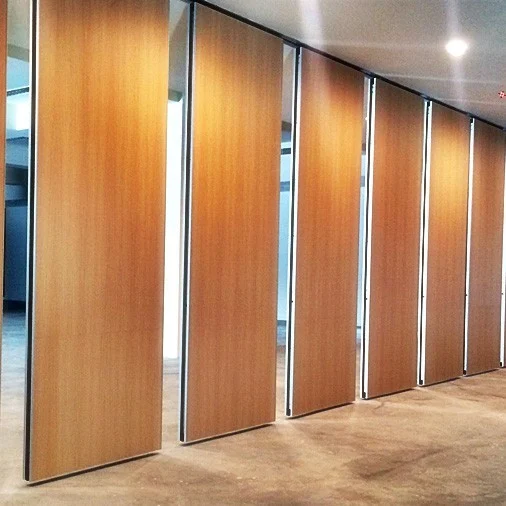
Conflicts often arise when ceiling services are installed without knowing the track route. The exact route, junction arrangement, continuous overhead path and parking position must be confirmed from the coordinated project drawings. The matrix makes these potential conflicts visible early.
It also helps teams distinguish between fixed constraints and flexible ones. A large duct may be difficult to move; a small conduit may be rerouted. The matrix supports those conversations before grid closure, when changes are still practical.
Stacking and Parking Considerations
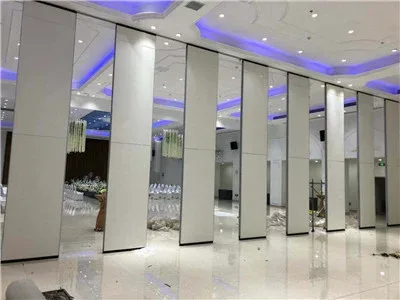
Parking style is customized to the customer layout and project requirements and may support compact stacking when the coordinated design permits it. The stacking position needs its own ceiling zone review. The matrix should include stacking routes and parking areas, not just the main opening.
Finish and Pass-Door Coordination at the Ceiling Interface
Confirmed finish options include laminate, melamine, fabric, leather, glass, and other approved surfaces. Finish selection does not change the track fixing zone requirement, but it may affect panel weight and handling, which are project-specific. Pass-door requirements can be discussed with the supplier and should be reflected in the layout and ceiling coordination.
Project documentation can be discussed to support the matrix. This may include layout drawings, reflected ceiling plans, and service coordination drawings. The goal is to give all trades a shared reference before rough-in.
FAQ: Track Fixing Zone Reservation Matrix
What is a movable partition track fixing zone reservation matrix?
It is a coordination table that maps track route segments to ceiling zones and service rough-in sequences. It helps teams reserve overhead clear space before grid closure.
Who should own the matrix during construction?
Typically the general contractor or ceiling coordinator maintains it, with input from the partition supplier and MEP trades. The owner should be the party responsible for checking the reserved zone before closure.
Does the matrix guarantee that the track will fit?
No. It identifies coordination zones.
How does the matrix relate to acoustic performance?
The matrix only helps avoid physical conflicts that could compromise the ceiling interface.
When should the matrix be started?
As early as possible, ideally during design development or pre-construction coordination, before ceiling service rough-in begins. Early start reduces the risk of late changes.
Can the matrix be used for renovation projects?
Yes. Renovation projects often have existing ceiling services and limited void space, making early coordination even more important. The matrix should reflect existing conditions and new work.
Conclusion: Coordinate Before Closure
A movable partition track fixing zone reservation matrix is a practical tool for aligning ceiling service rough-in with the overhead requirements of a top-hung movable wall. It does not replace engineering or product-specific documentation, but it helps teams ask the right questions early. By reserving zones and sequencing services, projects can reduce interface conflicts before grid closure.
To discuss your project’s ceiling interface coordination, contact EBUNGE. Review our movable walls and resources for more planning guidance.