
Quick answer: track anchor tolerancing stack
Review focus: track anchor tolerancing stack.
The suitability of each route and parking arrangement depends on the approved layout, circulation, ceiling interfaces and operating sequence. When each trade sets out from its own datum, small deviations accumulate. A movable partition track anchor tolerancing stack-up review is the coordinated check that identifies this cumulative deviation before anchors are drilled. This article explains a review sequence for overseas project teams, with evidence boundaries and a practical checklist.
Why the Stack-Up Review Belongs Before Anchor Setting
Project review term: track anchor tolerancing stack.
Track anchors transfer the partition load to the structure.
The review is not a single measurement. It is a sequence of checks that compares the designed relationship between three coordinate systems. Each trade supplies its own setting-out information. The review team then compares them against the partition layout and the approved track route.
Define the Three Reference Systems
Ceiling grid
The ceiling grid defines the finished ceiling plane, suspension points, and service zones. The partition track may sit above, within, or below the ceiling line depending on the design. The ceiling contractor confirms the grid layout and any coordination zones reserved for the track.
Partition track origin
The track origin is the starting point from which the movable partition route is set out. It relates to the opening, the parking position, and the stacking area.
A Step-by-Step Review Sequence
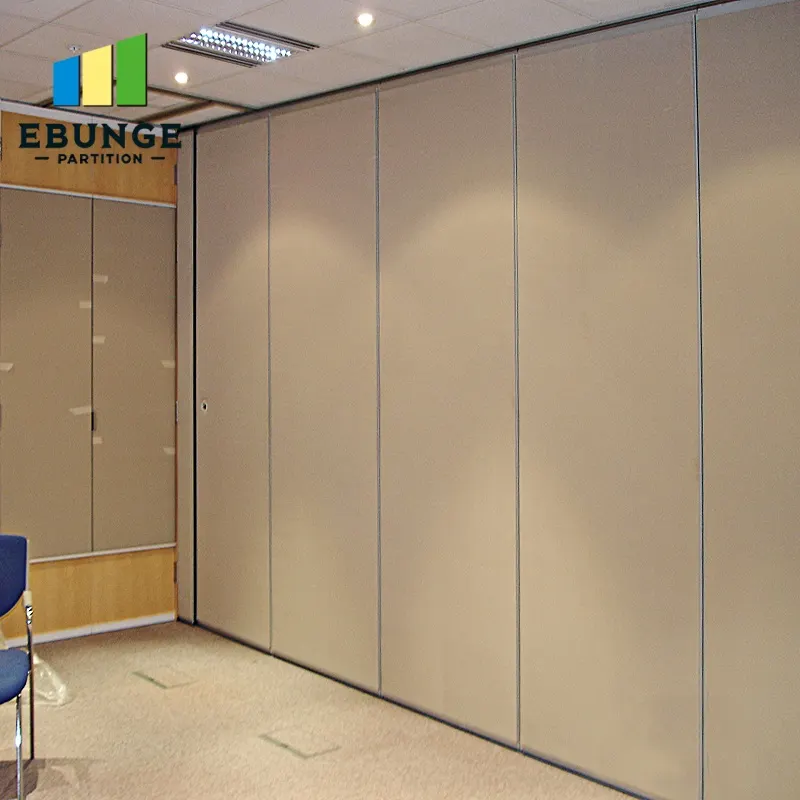
- Collect setting-out drawings.
- Identify the track route. Mark the straight, turning, and stacking routes on the partition layout. Confirm that every route is continuous and supported overhead.
- Overlay the three grids.
- List cumulative deviations. Record the direction and magnitude of each offset.
- Check anchor zones.
- Resolve conflicts on paper. Adjust the track origin, ceiling grid, or support detail before any anchor is set. Document the agreed resolution.
- Issue a coordinated set-out. Provide the approved anchor positions to the installation team with the confirmed datum and tolerances.
Decision Checklist for the Coordination Meeting
- Is a single project datum used by all three trades?
- Has the structural engineer confirmed the support locations for track anchors?
- Does the ceiling grid allow clear access to the track and anchor points?
- Are the straight, turning, and stacking routes fully supported overhead?
- Has the parking position been coordinated with the ceiling and services?
- Are pass-door locations and any special access requirements documented?
- Have finish interfaces at the track line been reviewed?
- Is there a named person responsible for the coordinated set-out?
Evidence Boundaries and Project-Specific Confirmation
This article describes a coordination process, not a performance specification.
Any acoustic requirement must be confirmed against the specific wall assembly, seals, and interface details for the project.
Evidence note: EBUNGE confirms that movable partition panels are individually movable, suspended from a top track, cross the opening without a floor track, and park at a planned stacking position. Straight, turning, and stacking routes are reviewed from the layout. Finish options include laminate, melamine, fabric, leather, glass, and other approved surfaces. Pass-door requirements and project documentation can be discussed. All other performance, structural, and dimensional requirements must be confirmed for the specific project.
Common Coordination Failures and How to Avoid Them
When the ceiling grid is adjusted for services, the track origin moves with it. Anchors may then miss the intended support zone.
Another issue is an incomplete route review. A turning route or stacking area may require additional support that is not shown on the initial layout. Reviewing the full route before anchor setting avoids late changes. The project team should confirm that every segment of the route is connected and supported.
Documentation to Bring to the Review
Include the partition layout with the track route, parking position, and pass-door locations. Provide any approved shop drawings for the track and anchor details. If finish interfaces are relevant, include the finish schedule and approved samples.
Record decisions in a coordination log. Note the agreed datum, anchor positions, and any deviations accepted by the project team. This log becomes the reference for installation and future maintenance. For further resources, see the EBUNGE resources page.
Frequently Asked Questions
What is a track anchor tolerancing stack-up review?
The goal is to identify cumulative dimensional deviation at the interface rather than during panel installation.
Who should attend the review meeting?
The architect or interior designer may also attend if finish interfaces or layout changes are involved.
Can the review be done after anchors are set?
It can be done, but the value is reduced. The review is most effective before anchor setting.
Does EBUNGE provide track anchor positions?
EBUNGE can discuss project documentation and pass-door requirements. The coordinated set-out should be issued by the project team.
How does this relate to acoustic performance?
Interface coordination supports the intended acoustic design by reducing gaps and misalignments at the track line.
What if the ceiling grid conflicts with the track route?
The conflict should be resolved on paper before anchor setting. Options may include adjusting the ceiling grid, modifying the track origin, or adding a coordination detail. The project team confirms the final resolution.
Conclusion: Coordinate First, Anchor Second
A movable partition track anchor tolerancing stack-up review is a low-cost coordination step that protects the installation schedule. Confirm all project-specific support, acoustic, and dimensional requirements with the responsible engineers and suppliers.
To discuss your project documentation, pass-door requirements, or finish options, contact EBUNGE. You can also review the movable wall product page for maintained product context.