
Quick answer: changeover time budget shifting partition mix
Review focus: changeover time budget shifting partition mix.
When a room’s function changes weekly, the changeover time budget shifting partition mix becomes a planning problem rather than a single number. A room may host a training layout on Monday, a board setup on Wednesday and an exhibition on Friday. Each configuration changes how panels travel, where they park and how the opening is closed. The goal is not to promise a fixed changeover duration, but to build a defensible budget that reflects the layout, the route and the evidence available at each stage.
This article sets out an evidence-bounded framework for overseas contractors, architects, interior designers, owners and renovation teams. It uses maintained EBUNGE product facts and treats every venue as an example. The exact overhead route and support arrangement must be confirmed by the responsible project team from coordinated drawings.
Why a Changing Partition Mix Resets the Changeover Budget
Project review term: changeover time budget shifting partition mix.
A movable partition system is not a single product with one behaviour. EBUNGE movable wall panels are individually movable, suspended from a top track, cross the opening without a floor track and park at a planned stacking position. That combination means the changeover sequence depends on how many panels move, in what order, and where they are stored between events.
When the mix changes, the sequence changes. The exact route, junction arrangement, continuous overhead path and parking position must be confirmed from the coordinated project drawings. A layout that parks panels in one bay may need a different stacking position. Each change affects the number of movements and the coordination required, even if the panels themselves are unchanged.
What the budget is actually measuring
Changeover time is the interval between one usable room configuration and the next. It includes moving panels, securing the opening and confirming the room is ready. The suitability of each route and parking arrangement depends on the approved layout, circulation, ceiling interfaces and operating sequence. Those are separate project activities with their own evidence requirements.
What it is not measuring
Panel handling and the operating sequence must be confirmed for the selected layout and project conditions. It is a planning allowance that should be reviewed whenever the partition mix, the route or the parking plan changes.
Start With the Route, Not the Panel Count
Coordination scope: changeover time budget shifting partition mix.
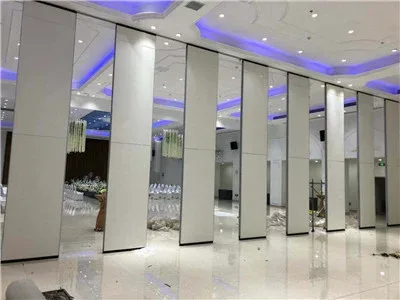
The most common budgeting error is to count panels and multiply. That ignores the route. EBUNGE reviews straight, turning and stacking routes from the layout, because a panel that must turn or cross a junction follows a different path from one that moves in a straight line.
Every proposed movement path requires a continuous connected overhead route and project-specific support review. If the layout shows a gap, the route is incomplete and the changeover budget cannot be finalised.
A route review checklist
- Mark every opening the panels must cross.
- Identify straight, turning and stacking sections on the drawing.
- Confirm the overhead route is continuous across the full path.
- Note where the panels park and whether that position is reachable.
- Flag any junction that needs project-specific support confirmation.
Why parking position matters
Parking style is customized to the customer layout and project requirements and may support compact stacking when the coordinated design permits it. A parking position that is far from the opening adds travel to every changeover. A compact stacking position may reduce travel, but only if the coordinated design allows it. Neither option should be assumed without drawing review.
Separate Fixed Elements From Variable Elements
Checklist focus: changeover time budget shifting partition mix.
A changeover budget has fixed and variable parts. Fixed elements stay the same whatever the mix: the top track, the parking zone and the opening geometry. Variable elements change with the mix: the number of panels moved, the sequence and the route.
| Element | Behaviour in the budget | Evidence needed |
|---|---|---|
| Top track and route | Fixed for a given layout | Layout drawing and support review |
| Parking position | Fixed once coordinated | Coordinated design confirmation |
| Panel movements | Variable with the mix | Sequence plan per configuration |
| Opening closure | Variable with the mix | Dimensional review |
This separation keeps the budget honest. It shows which assumptions are stable and which must be rechecked when the mix changes.
Use a Numbered Process for Each Configuration
Review focus: changeover time budget shifting partition mix.
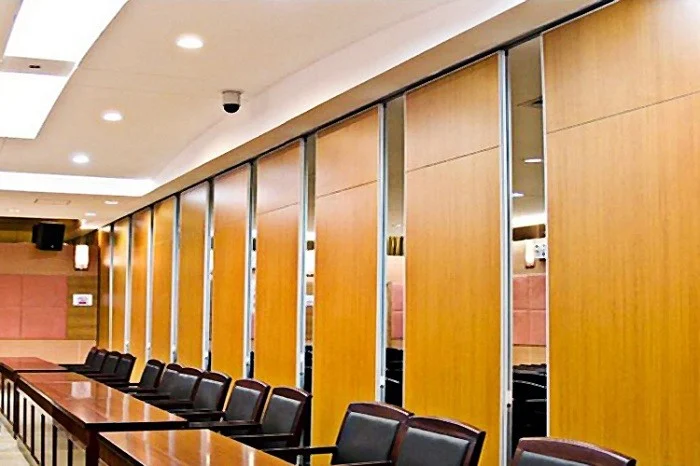
For every distinct room configuration, run the same process. It prevents one layout from being budgeted on another layout’s assumptions.
- Define the room configuration and the opening it requires.
- Mark the panel route from parking to the closed position.
- Confirm the route is continuous and supported.
- List the panel movements in sequence.
- Identify the parking position and its access.
- Record the finish and any pass-door requirement.
Step seven is the most important. A budget that hides open items is not a budget; it is a guess.
Finishes, Pass Doors and Documentation Boundaries
Project review term: changeover time budget shifting partition mix.
Confirmed finish options include laminate, melamine, fabric, leather, glass and other approved surfaces. Finish choice affects appearance and coordination, but it should not be used to infer acoustic, fire or durability performance. Those require matching project evidence.
Pass-door requirements and project documentation can be discussed with the project team. A pass door changes the opening sequence and may change the changeover plan, so it belongs in the budget from the start rather than as an afterthought.
An evidence note for specifiers
Do not derive hidden acoustic, fire, durability, load, maintenance or commercial performance from a visible shape, finish, photograph or drawing. Comparative, absolute and causal statements require corresponding evidence. Where evidence is not available, state the exact project-specific confirmation boundary instead.
Coordinate the Budget Across the Project Team
Coordination scope: changeover time budget shifting partition mix.
Changeover time sits between operations, design and construction. Facility operations planning coordination should agree who owns each assumption: the architect owns the layout, the contractor owns the route and support review, and the owner owns the operating pattern.
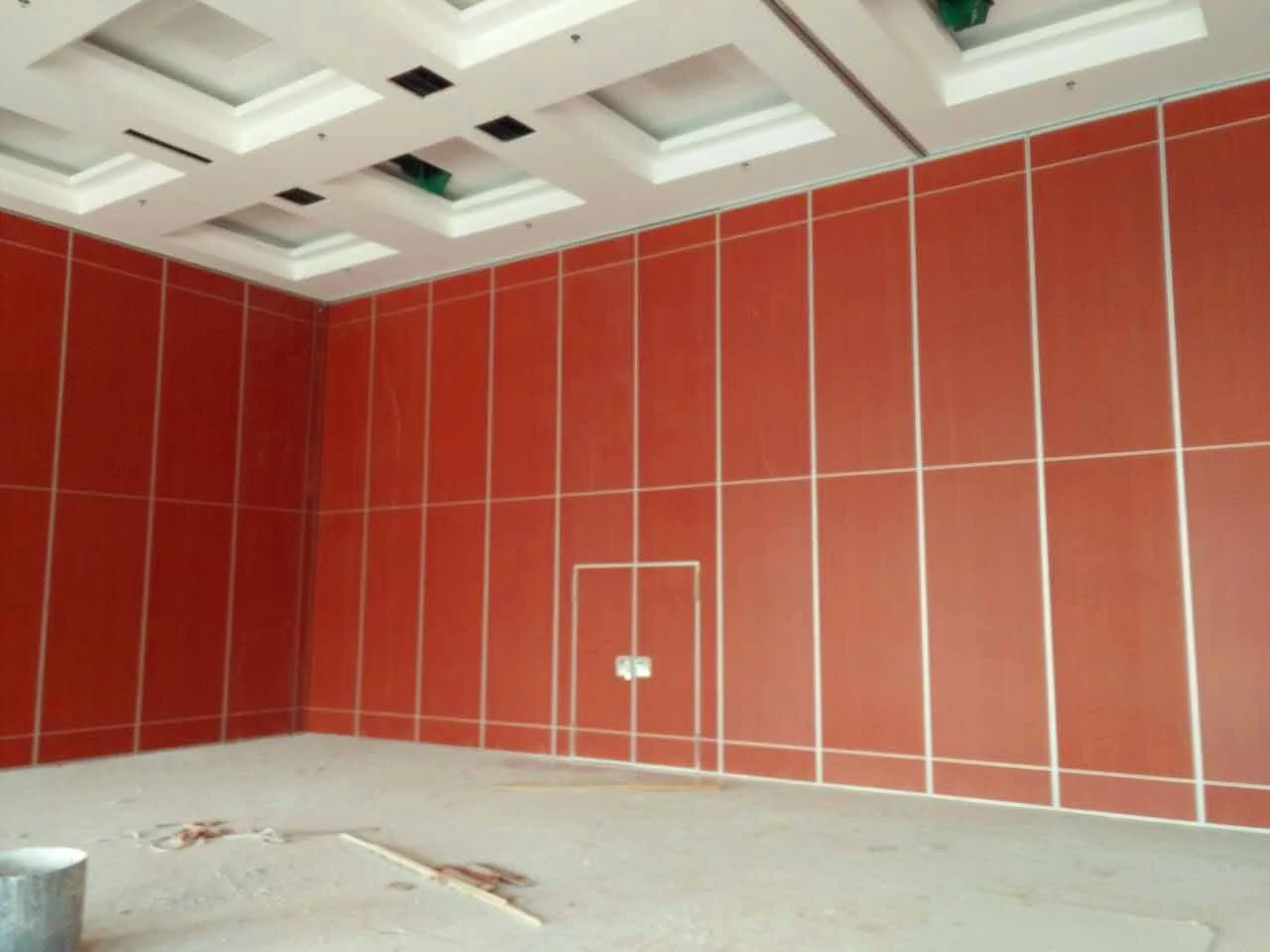
When the mix keeps changing, the coordination meeting should review the configuration list, not just the base layout. Each new configuration is a new route question. The movable walls product page provides maintained product context, and the resources page supports buyer and project planning.
Frequently Asked Questions
What is changeover time in a movable partition project?
It is the interval between one usable room configuration and the next, including panel movement, opening closure and readiness checks. It is a planning allowance, not a fixed performance figure.
Can I budget changeover time from a panel count alone?
No. The route, parking position and sequence matter as much as the number of panels. A panel count without a route review cannot support a reliable budget.
What happens if the layout shows a gap in the route?
Every proposed movement path requires a continuous connected overhead route and project-specific support review before the budget can be finalised.
Do finishes change the changeover budget?
Finish options such as laminate, melamine, fabric, leather and glass affect appearance and coordination. They should not be used to infer acoustic, fire or durability performance without matching project evidence.
How should a pass door be handled in the budget?
Pass-door requirements and project documentation can be discussed with the project team. A pass door changes the opening sequence, so it should be included in the changeover plan from the start.
When should the changeover budget be reviewed?
Review it whenever the partition mix, route, parking plan or opening geometry changes. Each new configuration is a new route question and may require updated project-specific confirmation.
Conclusion and Next Step
Budgeting changeover time when a room’s partition mix keeps changing is a discipline of drawing review, route confirmation and honest evidence boundaries. Start with the route, separate fixed from variable elements, run a numbered process for each configuration and record every open item. Do not convert a planning allowance into a performance promise.
To discuss pass-door requirements, project documentation or a specific layout, contact the EBUNGE team and share the drawings.