
What a Bidder’s Track Interface Assumptions Reveal in Tender Review
Quick project answer
Bidder track interface assumptions tender review signals are often the clearest indicator of how well a bidder has read the project. Two submissions can quote the same movable wall scope yet describe very different ideas about where the track runs, what it fixes to, and where panels park. For contractors, architects, interior designers, owners and procurement teams, those differences matter more than polished brochures. This guide offers an evidence-bounded way to read track interface assumptions, ask sharper clarification questions, and separate confirmed product facts from project-specific items that still need drawing review.
Why track interface assumptions deserve scrutiny
EBUNGE movable wall panels are individually movable and suspended from a top track. They cross the opening without a floor track and park at a planned stacking position. That description is simple, but it pushes coordination upward: the overhead route, its continuity and its support become central to whether the proposed layout works.
A bidder who treats the track as a line on an elevation, without explaining how it connects to the structure above, has left a gap. That gap is not automatically disqualifying, but it is a signal that the interface needs clarification before award.
Reading the overhead route in a bid
Straight, turning and stacking routes are reviewed from the layout. Ask each bidder to show the route they assumed, including turns and the parking position, on a drawing rather than in narrative only. The exact route, junction arrangement, continuous overhead path and parking position must be confirmed from the coordinated project drawings.
Questions that expose route assumptions
- Does the submitted drawing show one continuous connected overhead route from the closed position to the parking position?
- Are turns and stacking shown, or only the straight opening?
- Does the bid state which drawing revision the route was taken from?
- Is the parking position described as planned and coordinated, or left vague?
These questions are about visible drawing content, not hidden performance. The suitability of each route and parking arrangement depends on the approved layout, circulation, ceiling interfaces and operating sequence.
Support and structure: the boundary bidders often blur
Because panels hang from the top track, the structure above the opening carries the interface. Tender documents should make clear who confirms that supporting structure and on what basis. A bidder may reasonably note that support is by others, but the submission should say so explicitly rather than leaving readers to assume.
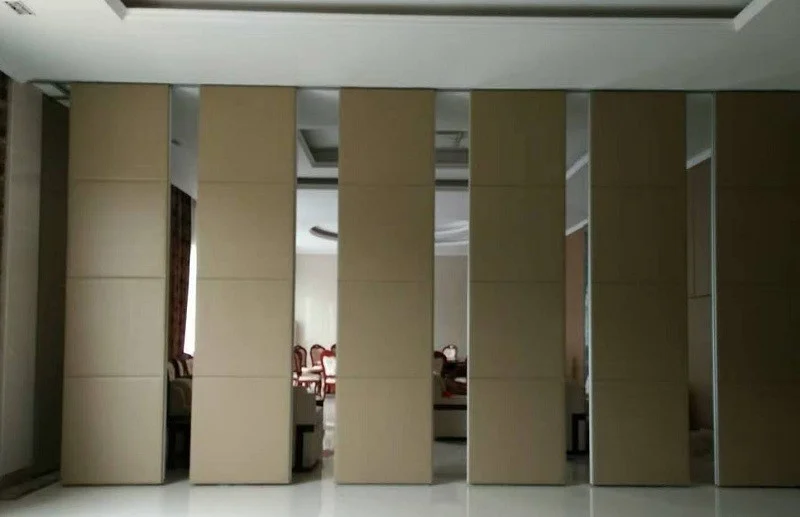
Evidence note: a bid is not evidence of structural capacity. Support points, loads and fixing arrangements require project-specific review against the actual building, and no drawing or finish sample should be read as confirming them.
Where a bidder states that support is confirmed, ask for the basis. Either answer is more useful than silence.
Parking and stacking assumptions
Parking style is customized to the customer layout and project requirements, and may support compact stacking when the coordinated design permits it. In tender review, look for whether the bidder has identified a real stacking location and whether that location is consistent with the route shown.
Bids that describe parking only as a generic feature, without tying it to the layout, tend to generate rework later. Ask for the stacking position to be marked and for any space constraints to be listed as coordination items.
A compact comparison of bid signals
| What the bid shows | Possible signal | Reasonable next step |
|---|---|---|
| Route drawn from opening to parking, with turns | Layout has been read | Confirm drawing revision and support responsibility |
| Straight route only, parking unmarked | Stacking not yet coordinated | Request a marked stacking position |
| Support described as by others, with no note | Interface boundary unclear | Ask who confirms support and when |
| Finish options listed without project context | Generic submission | Ask which approved surfaces suit the design intent |
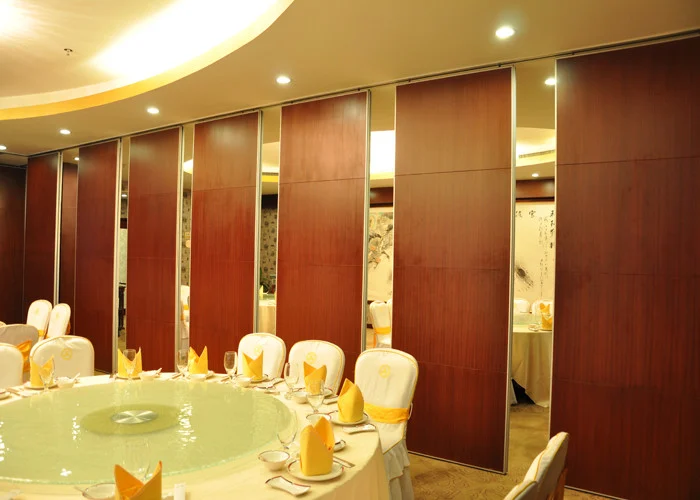
Use the table as a discussion aid, not a scoring system. A single weak signal may be a drafting omission; a pattern of them suggests the bidder has not engaged with the interface.
Finish, pass doors and documentation signals
Confirmed finish options include laminate, melamine, fabric, leather, glass and other approved surfaces. A bidder who lists finishes without linking them to the design intent is giving limited information, but that is a presentation issue rather than a performance claim.
Pass-door requirements and project documentation can be discussed as part of the submission. Where a bid is silent on pass doors, ask whether they are included, excluded or pending design decision. Silence in a tender is an assumption waiting to surface on site.
Acoustic language: read it carefully
Seals and acoustic concepts may be described generically, but tender review should not convert them into promises.
Where acoustic requirements appear in the brief, ask bidders to state what they are relying on and to identify what still requires project-specific confirmation.
Procurement and tender review coordination checklist
- Issue the current layout revision and require bidders to state which revision they used.
- Require the overhead route, turns and parking position to be drawn.
- Record who confirms supporting structure, and on what basis.
- Ask for pass-door scope to be stated as included, excluded or pending.
- Request finish selections tied to the design intent, using approved surfaces.
- Flag every acoustic statement that lacks project-specific evidence.
- Log open items in a clarification register before comparing prices.
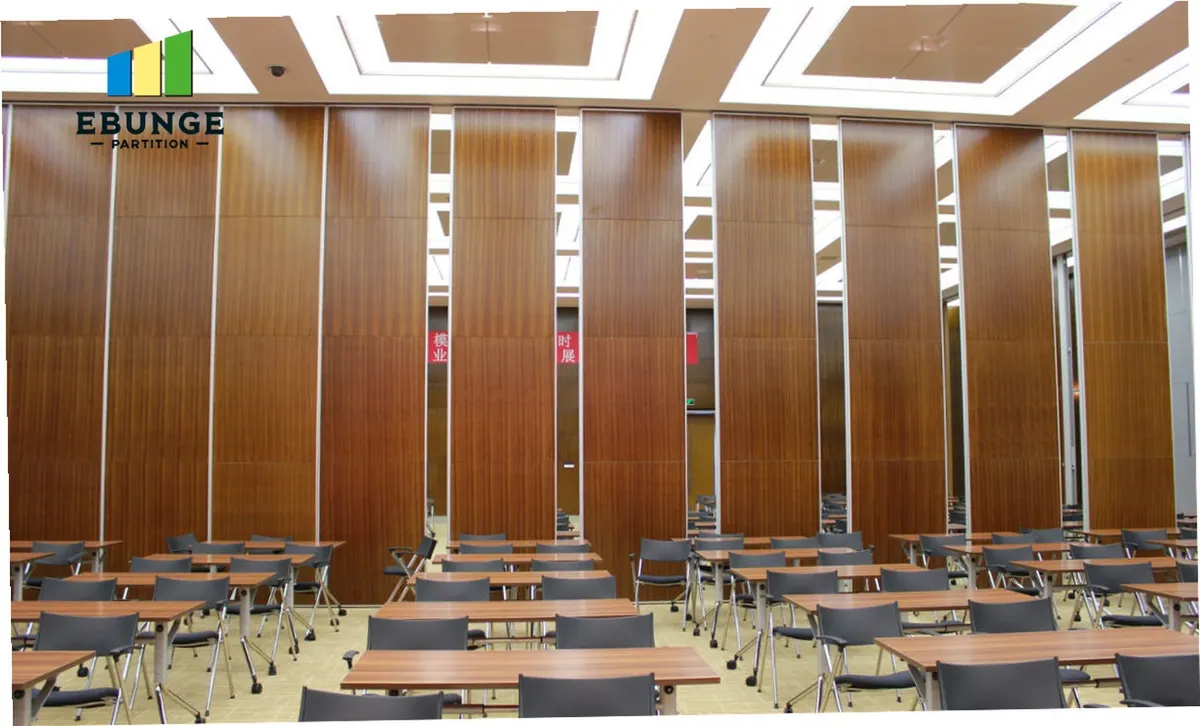
This sequence keeps bidder track interface assumptions tender review signals visible and comparable. It also protects the project from discovering interface gaps after the order is placed.
Frequently asked questions
What are bidder track interface assumptions in tender review?
They are the implied or stated conditions a bidder uses about the overhead track route, its continuity, its support and the parking position. Reading them helps reviewers see whether the bidder has engaged with the actual layout.
Should a bidder’s drawing be treated as engineering confirmation?
No. A tender drawing shows intent and assumptions.
Do movable wall panels need a floor track?
EBUNGE movable wall panels are top-hung and cross the opening without a floor track. The overhead route and its support therefore become the key interface to coordinate in tender review.
How should acoustic statements be handled in a bid?
Ask bidders to identify what their statement relies on and what still needs project-specific confirmation.
What if a bid is silent on parking or pass doors?
Silence is an assumption. Request a marked stacking position and ask for pass-door scope to be stated as included, excluded or pending before comparing submissions.
Can finishes be reviewed at tender stage?
Yes, at a general level. Confirmed options include laminate, melamine, fabric, leather, glass and other approved surfaces. Final selections should be tied to the design intent and confirmed for the project.
Conclusion and next steps
Track interface assumptions are a practical lens for tender review. They show whether a bidder has read the layout, understood the top-hung principle and identified the support boundary. Use the checklist, keep acoustic language evidence-bounded, and confirm project-specific support, acoustic and dimensional requirements before award.
To discuss your project, review the movable walls product range, browse planning resources, or contact EBUNGE with your layout and tender questions.