
What a Bidder’s Track Interface Assumptions Reveal About Its Scope
Quick project answer
Review focus: track interface.
Reading a tender return is not only a price exercise. A bidder track interface assumptions scope reading tells you where that bidder believes its responsibility ends and someone else’s begins. Because EBUNGE movable wall panels are individually movable, suspended from a top track, cross the opening without a floor track and park at a planned stacking position, the overhead route is the spine of the whole system. Any assumption about that route is a scope statement in disguise.
Why the Track Interface Is a Scope Document
Project review term: track interface.
The top track carries the panels and defines the movement path. The suitability of each route and parking arrangement depends on the approved layout, circulation, ceiling interfaces and operating sequence. It connects to structure above, meets adjacent walls and finishes, and terminates at a parking zone. Each of those junctions belongs to somebody.
When a bidder writes that the track is “by others” or “by main contractor”, it is not being vague. It is drawing a boundary. Your job during tender review is to test whether that boundary matches the design intent and whether anyone has actually priced the work on the other side of it.
Six Assumptions That Reveal a Bidder’s Scope
Coordination scope: track interface.
Most track interface assumptions fall into a small number of recurring categories. Read each return against the same list so comparisons stay fair.
1. Structural support and fixing
Who provides the supporting structure above the track, and who confirms it is adequate? That assumption is reasonable only if the approval exists in the tender pack.
2. Track supply and installation
Some returns include the track as part of the partition package; others exclude it. Neither is wrong, but the two cannot be compared as if identical. Mark clearly whether track, fixings and alignment sit inside or outside the bidder’s line.
3. Route geometry and parking
Straight runs are simple to describe. The exact route, junction arrangement, continuous overhead path and parking position must be confirmed from the coordinated project drawings. A bidder that assumes a straight route without checking the layout may be pricing a different system from the one you designed.
4. Adjacent construction and finishes
Ask who makes good after installation and who owns tolerances at those junctions.
5. Pass doors and openings
Pass-door requirements can be discussed as part of the configuration. If a bidder assumes doors are excluded, that assumption should appear in writing rather than in a footnote.
6. Documentation and approvals
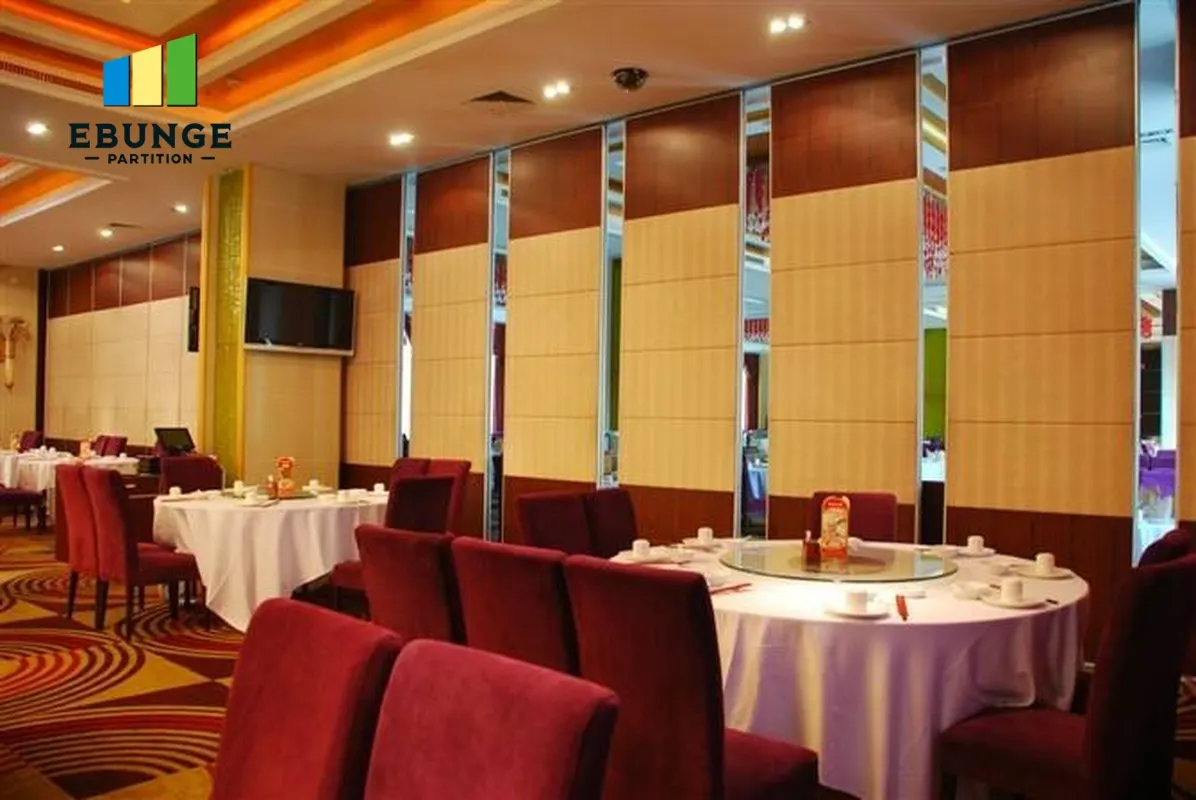
Project documentation can be discussed with the supplier. A bidder that assumes shop drawings, coordination or approval submissions are by others has narrowed its scope considerably.
A Comparison Table for Tender Review
Use a simple matrix to expose differences between returns. The table below records what each bidder states, not what you hope it means.
| Interface item | Question to ask each bidder | What a gap looks like |
|---|---|---|
| Support structure | Who confirms the structure above the track? | Both parties assume the other has checked it |
| Track and fixings | Are track, fixings and alignment included? | Excluded silently, or listed only in a schedule note |
| Route and parking | Which layout drawing was priced? | No drawing reference, or an outdated revision |
| Pass doors | Are pass-door requirements included? | Assumed excluded without a stated alternative |
| Documentation | Who prepares coordination and approval drawings? | Assumed by others with no named party |
What Drawings Should Show Before You Compare Bids
At minimum, the pack should identify the opening, the intended movement route and the planned parking position.
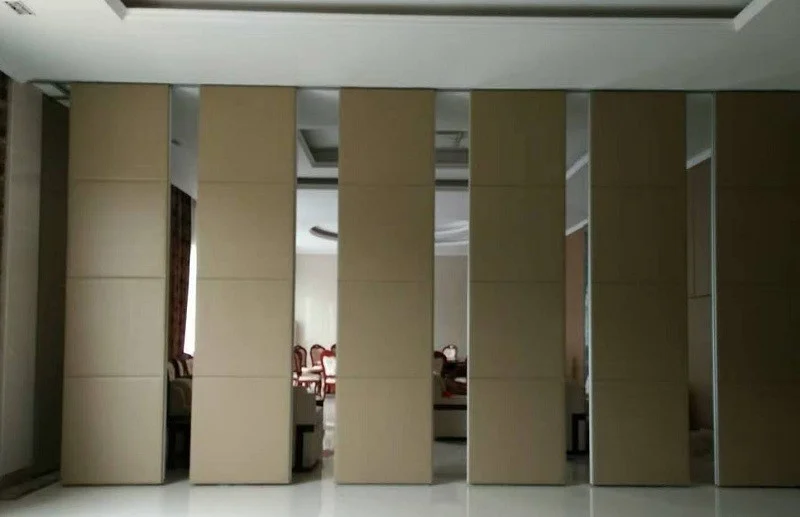
Finish schedules also matter for scope reading. Confirmed finish options include laminate, melamine, fabric, leather, glass and other approved surfaces. A bidder pricing a generic finish against a specified one is making a scope assumption about surfaces, not only about track.
Evidence note: a drawing shows geometry and intent. It does not prove structural capacity, acoustic performance or site conditions. Those require project-specific confirmation from the responsible parties.
Acoustic Language: Read Concepts, Not Promises
Seals and acoustic concepts can be explained generically, but the actual performance of an installation depends on the whole assembly, the surrounding construction and the project-specific design. Ask what is being confirmed and by whom.
Red Flags in a Bidder’s Interface Assumptions
Certain patterns deserve a clarification request before award, not after.
- No drawing revision is referenced, so the priced layout cannot be identified.
- Track is excluded but no other party is named as responsible.
- Parking position is described as “to be confirmed on site”.
- Pass doors are neither included nor explicitly excluded.
- Documentation duties are assigned to “others” without definition.
- Acoustic wording suggests a guaranteed outcome with no stated basis.
None of these automatically disqualifies a bidder. Each one, however, shifts risk to you unless it is resolved in writing. Review the movable wall product context alongside the return so the comparison stays grounded in maintained facts.
A Practical Review Sequence
- Collect every return and highlight each interface assumption in a single colour.
- Map those assumptions onto the comparison table above.
- Identify items where no party is named as responsible.
- Issue one clarification round with identical questions to all bidders.
- Re-score returns against the clarified scope, not the original wording.
- Record agreed boundaries in the contract documents before award.
This sequence keeps procurement and tender review coordination consistent across bidders and gives you a defensible record of what was agreed.
Frequently Asked Questions
Does a bidder’s track assumption change the price comparison?
Yes. If one bidder includes track and fixings and another excludes them, the headline figures are not comparable. Normalise the scope before comparing values.
Can a movable wall cross an opening without a floor track?
EBUNGE panels are top-hung and move without a continuous floor running track along the partition line. The overhead route must still be continuous and supported, and every proposed path requires project-specific review.
Should I accept “by others” as a scope statement?
Only if the other party is named and has accepted the work. An unnamed “by others” leaves responsibility unresolved.
How should acoustic wording be handled in tender review?
Ask for the basis of any acoustic statement and confirm requirements for your specific project. Do not treat a rating concept as a guarantee of on-site results.
What if the parking position is not fixed at tender stage?
Parking style is customised to the layout and project requirements. If the position is unresolved, state it as an open item and confirm it before manufacture.
Can pass doors be included in the package?
Pass-door requirements can be discussed as part of the configuration. Confirm inclusion or exclusion explicitly in each return.
Conclusion
A bidder’s track interface assumptions are one of the clearest signals of what its scope actually covers. Read them as boundary statements, compare them on a common matrix, and resolve unnamed responsibilities before award. Confirm project-specific support, acoustic and dimensional requirements with the responsible parties, and keep drawing revisions referenced throughout.
To discuss pass-door requirements, documentation or layout coordination for your project, contact the EBUNGE team.