
Quick project answer
Review focus: track fixing preliminaries.
A bidder track fixing preliminaries tender scope check is one of the most practical reviews a project team can perform before award. It compares what the tender documents require with what the bidder has actually allowed for in track support, fixing interfaces and coordination. Because movable wall panels are top-hung and travel on an overhead route, the track and its supporting structure are central to whether the opening can work as drawn. This article offers an evidence-bounded framework for that review. The suitability of each route and parking arrangement depends on the approved layout, circulation, ceiling interfaces and operating sequence.
Why Track Fixing Preliminaries Deserve Their Own Review
Track fixing preliminaries are the assumptions a bidder makes about how the overhead track will be supported, aligned and coordinated with adjacent construction.
When those assumptions are not compared with the tender scope, gaps can appear later as requests for information, variations or site delays. A structured review does not prove that a bid is correct. It does show whether the bidder has addressed the scope items the tender actually listed.
Start With the Tender Scope, Not the Bid
Begin by extracting every scope line that touches the overhead route. Mark each item as stated, implied or absent.
Only then open the bidder’s submission. This order matters because it prevents a well-written bid from setting the review agenda. The tender scope remains the benchmark.
A simple scope extraction method
- List every tender clause that mentions track, support, fixing, ceiling interface or overhead structure.
- Note whether each clause is a requirement, a performance expectation or a coordination item.
- Mark which clauses need project-specific engineering confirmation.
- Record the drawing references attached to each clause.
- Leave a column for the bidder’s response and a column for evidence still missing.
What to Look For in the Bidder’s Preliminaries
A bidder’s track fixing preliminaries may include a description of the proposed support approach, assumptions about the structure above, coordination notes and exclusions. Review these against the tender scope rather than against a generic checklist.
Where the bidder states an assumption, ask what project information supports it. Where the bidder is silent, record the silence as a question rather than filling the gap with an assumption of your own.
Evidence note: visible documents versus confirmed performance
A drawing, finish sample or photograph can show shape, layout intent or surface appearance. It does not by itself confirm structural capacity, acoustic performance, fire behaviour or application reference outcomes. Those require matching project-specific evidence.
Drawing and Route Checks That Support the Review
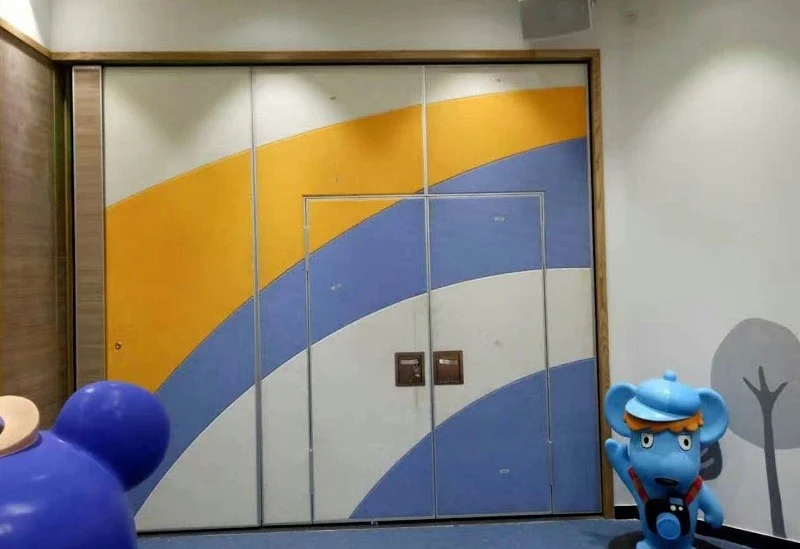
Movable wall panels are individually movable, suspended from a top track, cross the opening without a floor track and park at a planned stacking position. The tender scope should therefore describe straight, turning and stacking routes where relevant. Review the bidder’s preliminaries against those routes.
Check whether the bidder has acknowledged every route shown on the layout. A route that turns or stacks requires a continuous connected overhead route and project-specific support review. The exact route, junction arrangement, continuous overhead path and parking position must be confirmed from the coordinated project drawings.
Route review prompts
- Does the bidder reference the same layout revision as the tender?
- Are straight, turning and stacking routes all addressed?
- Is the parking position coordinated with adjacent trades?
- Are ceiling and structural interfaces identified rather than assumed?
- Are exclusions stated clearly enough to price and plan?
Comparing Bidder Statements With Tender Requirements
A compact comparison helps a review team see where the bidder has responded, where it has qualified and where it has not addressed the scope. The table below is a review aid, not a scoring system.
| Tender scope item | What to look for in the bid | Evidence still needed |
|---|---|---|
| Overhead route description | Reference to the same layout and route logic | Confirmed drawing revision |
| Support coordination | Named interface with structure or ceiling | Project-specific support review |
| Parking arrangement | Stacking position consistent with the layout | Coordinated design confirmation |
| Finish scope | Finish options listed in the tender | Approved surface selection |
| Pass-door requirements | Whether pass-doors are included or excluded | Project documentation discussion |
Acoustic and Dimensional Questions to Route Correctly
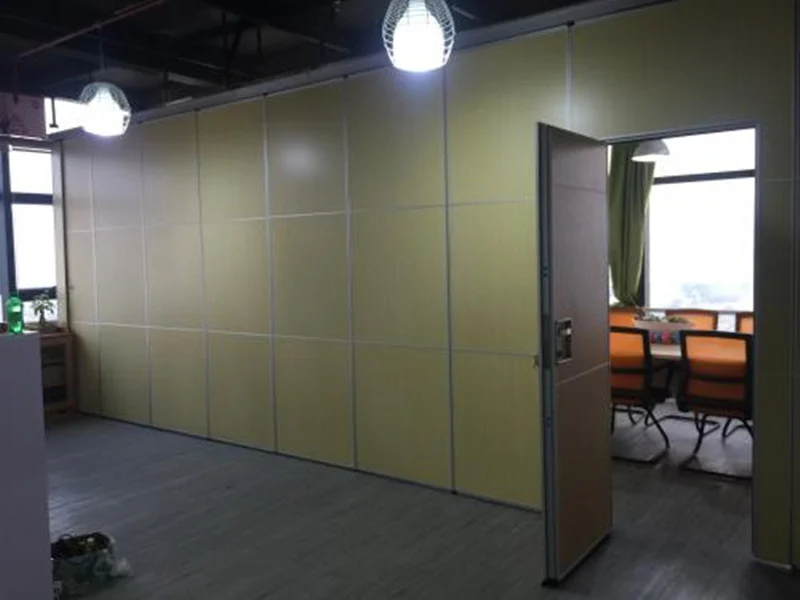
Dimensional questions belong with the layout review. Opening width, stacking space and turning geometry all affect whether the proposed route is workable. Confirm project-specific support, acoustic and dimensional requirements with the responsible disciplines before relying on any bid statement.
Documentation and Clarification Process
A fair review gives bidders a clear opportunity to clarify. Send focused questions that reference the tender clause and the bid response. Ask for the drawing revision, the coordination assumption or the exclusion that needs explanation.
Keep a written record of what was asked and what was answered. This record supports later comparison between bidders and reduces the risk of awarding on an unclear basis.
Numbered clarification sequence
- Issue written questions tied to specific tender clauses.
- Request the documents that support each answer.
- Compare answers across bidders using the same criteria.
- Record remaining unknowns as project risks, not as assumed inclusions.
- Confirm final scope in writing before award.
Common Review Mistakes to Avoid
One common mistake is treating a polished bid as evidence of coordination. A third is letting a bidder’s exclusion quietly become the project’s risk.
The review should stay within what the documents actually show. Where evidence is missing, say so plainly and route the question to the right discipline.
FAQ: Bidder Track Fixing Preliminaries and Tender Scope
What are track fixing preliminaries in a tender submission?
They are the bidder’s preliminary assumptions and allowances for how the overhead track will be supported, fixed and coordinated with adjacent construction. They are not a substitute for project-specific engineering confirmation.
Should I compare the bid against the tender or against other bids?
Compare each bid against the tender scope first. Cross-bid comparison is useful later, but it can hide a shared omission if the tender is not the benchmark.
Can a drawing confirm that a track fixing proposal is adequate?
A drawing can show layout intent and coordination. Those require matching project-specific evidence.
How should acoustic requirements be handled in this review?
Provide the current layout, opening dimensions, ceiling information, intended room use, and relevant project drawings for review. The exact overhead route and support arrangement must be confirmed by the responsible project team from coordinated drawings.
What if the bidder’s preliminaries are silent on a scope item?
Record the silence as a clarification question. Do not assume the item is included, and do not assume it is excluded. Ask for a written response before award.
When should pass-door requirements be raised?
Pass-door requirements and project documentation can be discussed with the supplier during tender review so that the bidder’s scope statement matches the tender. Raise them early enough to affect the comparison.
Conclusion and Next Step
A disciplined bidder track fixing preliminaries tender scope check keeps the tender as the benchmark, separates visible documents from confirmed performance, and routes open questions to the right discipline. It will not remove every uncertainty, but it makes the remaining unknowns visible before award.
To review movable wall options for your project, start with the movable walls product page, browse the resources library for planning context, and contact EBUNGE to discuss pass-door requirements and project documentation. Confirm project-specific support, acoustic and dimensional requirements with the responsible disciplines before finalising any scope.