
What a Bid Clarification Log Should Capture About Partition Track Scope
Quick project answer
Review focus: track scope.
A bid clarification log partition track scope entry is not a place to restate a drawing. It is the record of what the tender documents actually say, what remains unresolved, and who must confirm it before pricing is treated as comparable. Movable wall panels are individually movable, suspended from a top track, cross the opening without a floor track, and park at a planned stacking position. Each of those facts creates a scope boundary that belongs in the log.
Why Track Scope Deserves Its Own Log Section
Project review term: track scope.
Partition packages are frequently priced against architectural layouts that show the panel line but not the full movement route. A bidder who reads only the opening may miss the turning path, the stacking zone, or the structure above. When those items surface later, the comparison between tenders is no longer like for like.
A dedicated log section keeps track-related assumptions visible. It also gives the owner, architect and contractor a single place to see which items were clarified, which were deferred, and which require project-specific drawing review. For background on how EBUNGE describes its movable wall range, see the movable walls product page.
Record the Overhead Route, Not Just the Opening
Coordination scope: track scope.
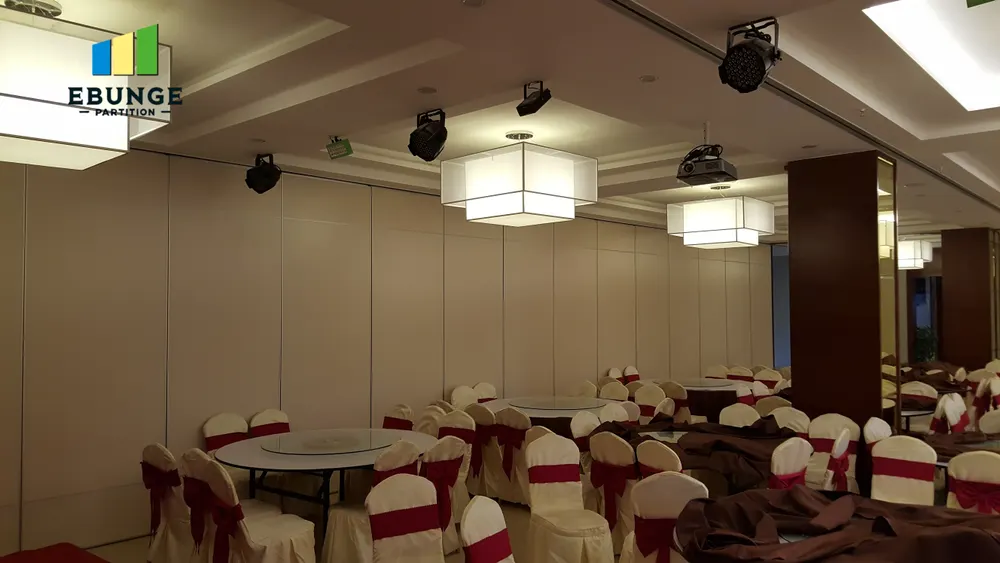
The defining characteristic of this system is that panels hang from a top track and travel without a continuous floor track along the partition line. That makes the overhead route the central scope item. The log should capture the route as drawn: straight runs, turning sections and the path to the parking position.
Straight, turning and stacking routes
Straight, turning and stacking routes are reviewed from the layout. If the layout shows only a straight opening but the panels must turn to reach a stack, the log should flag the turning section as a clarification item rather than assume it is included. The suitability of each route and parking arrangement depends on the approved layout, circulation, ceiling interfaces and operating sequence.
Continuous connected support
The exact route, junction arrangement, continuous overhead path and parking position must be confirmed from the coordinated project drawings. Every proposed movement path requires a continuous connected overhead route and project-specific support review. The log should ask who is responsible for the supporting structure, what drawings show it, and whether the interface between the partition track and the building structure has been coordinated.
Parking and Stacking Position
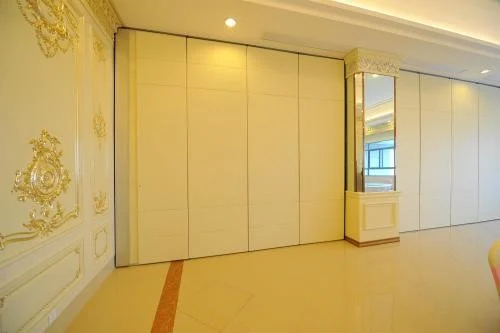
Panels park at a planned stacking position. That position affects adjacent rooms, circulation, door swings, services and finishes. The log should record where the stack is shown, whether the space is dedicated or shared, and whether the layout confirms that the stacked panels will not obstruct required clearances.
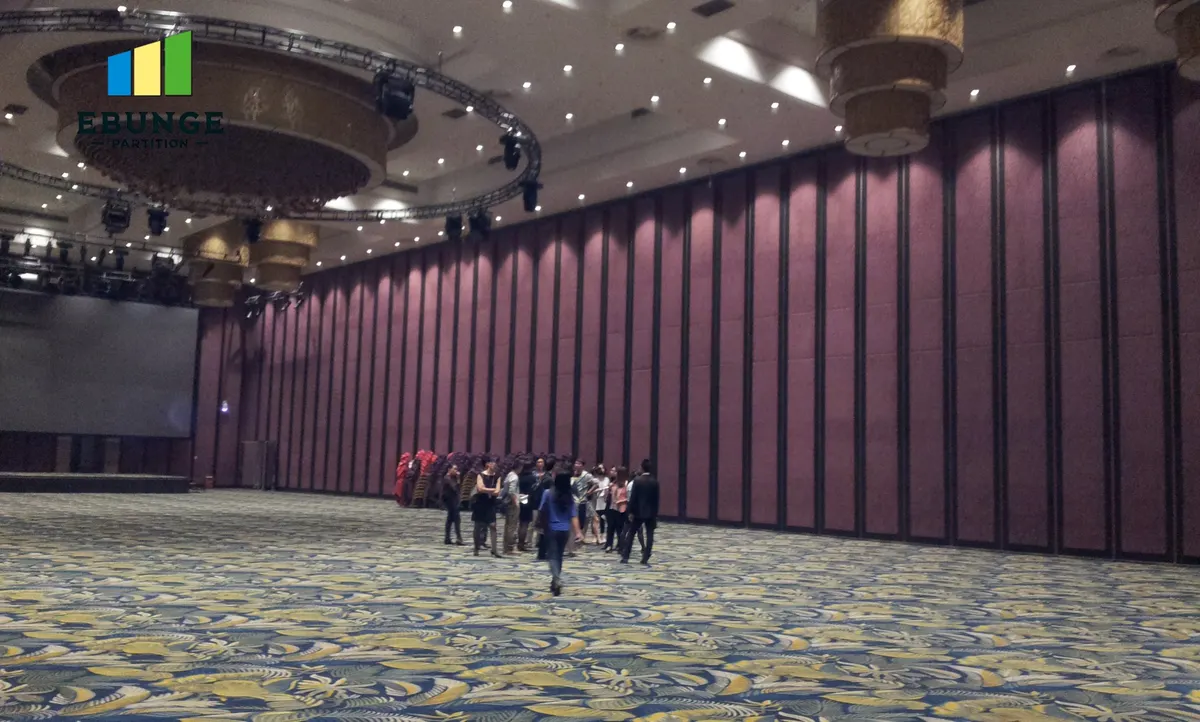
Parking style is customized to the customer layout and project requirements and may support compact stacking when the coordinated design permits it. Because this is layout-dependent, a bid clarification entry should state the assumed parking arrangement and mark it for confirmation rather than treat it as a fixed product feature.
Interfaces, Finishes and Pass Doors
Track scope rarely stands alone. The log should list each interface and name the party expected to resolve it.
Pass-door requirements and project documentation can be discussed with the supplier. If a pass door is shown, the log should capture its location, swing and whether it sits within the movable panels or the surrounding construction.
A Practical Checklist for Each Log Entry
- Reference: drawing number, revision and date the entry relates to.
- Scope item: overhead route, turning section, stacking position, interface or finish.
- What the documents show: a factual description, not an interpretation of performance.
- Open question: the specific point requiring confirmation.
- Responsible party: who must answer, and by when.
- Status: open, answered, or closed with the answer referenced.
- Evidence limit: any item that cannot be resolved from the tender documents alone.
Separating Confirmed Facts From Assumptions
A useful log distinguishes three levels of information. Confirmed product facts are stable statements about how the system works. Project-specific items depend on drawings and coordination. Assumptions are what a bidder has inferred to produce a price and must be validated.
| Level | Example | Log action |
|---|---|---|
| Confirmed fact | Panels are top-hung and cross the opening without a floor track | State as the basis of the offer |
| Project-specific | Supporting structure above the track route | Request drawing confirmation |
| Assumption | Stacking position clear of adjacent joinery | Flag for validation before award |
Evidence note: a visible finish, photograph or layout does not demonstrate acoustic, fire, load or durability performance. Those items require matching project evidence and should be logged as open questions until confirmed.
Running the Clarification Cycle
- Issue the log with the tender documents so every bidder answers the same questions.
- Collect responses and record them against the original entry, not in a separate email trail.
- Reissue the updated log before pricing is finalised so comparisons remain fair.
- Close entries only when the answer is traceable to a drawing, specification or written confirmation.
- Carry unresolved items into the award stage with a named owner.
This discipline supports Procurement and Tender Review coordination without implying that every question can be closed at tender stage. Some items legitimately move to post-award coordination, provided they are visible. The resources section offers further planning context.
Frequently Asked Questions
What is the minimum track information a bidder needs?
The bidder needs the drawn movement route, including straight, turning and stacking sections, the parking position, and the interface with the supporting structure. Where any of these are missing, the log should record the gap rather than assume a standard arrangement.
Should the log record acoustic ratings?
It may record the project’s acoustic requirement and the evidence expected to demonstrate it. The log should avoid treating a rating reference as proof of site performance.
How should finish selections be logged?
Record the specified finish, its location and the drawing reference. Confirmed options include laminate, melamine, fabric, leather, glass and other approved surfaces. A finish selection does not by itself confirm cleaning compatibility or performance.
Who confirms the supporting structure?
That depends on the project’s division of responsibility. The log should name the party expected to confirm the structure above the track and reference the drawing that shows it.
Can pass doors be included in the same package?
Pass-door requirements can be discussed as part of the partition scope. The log should record location, swing and whether the door sits within the movable panels or the surrounding construction so that responsibilities are clear.
When should an entry be closed?
Close an entry only when the answer is traceable to a document or written confirmation and the revision is recorded. If the answer depends on a later design stage, keep the entry open with a named owner.
Conclusion
A well-kept bid clarification log turns track scope from a hidden assumption into a shared record. It captures the overhead route, the parking position, the interfaces and the evidence limits, so that tenders can be compared on the same basis. Confirm project-specific support, acoustic and dimensional requirements with the project team before relying on any entry.
To discuss pass doors, finishes or documentation for a specific layout, contact EBUNGE with your drawings and clarification questions.