
Quick answer: benchmark bidder track fixing preliminaries
Review focus: benchmark bidder track fixing preliminaries.
To benchmark bidder track fixing preliminaries tender scope, compare each bidder’s stated assumptions with the tender drawings, the overhead support route and the documented scope of work. Movable wall panels are individually movable, suspended from a top track, cross the opening without a floor track, and park at a planned stacking position. The exact route, junction arrangement, continuous overhead path and parking position must be confirmed from the coordinated project drawings. This article gives procurement and tender review teams a structured way to compare bidder preliminaries without inventing engineering, acoustic or commercial conclusions.
Why Track Fixing Preliminaries Deserve Their Own Review
Project review term: benchmark bidder track fixing preliminaries.
Track fixing preliminaries are the assumptions a bidder makes about how the top track will be supported, aligned and connected to the building structure. They are not the same as the visible panel finish or the final layout. A bidder may price a track system while leaving support conditions, ceiling interfaces or route continuity to others. If those preliminaries are not benchmarked against the tender scope, the gap often appears later as a variation, a delay or an unresolved design query.
The review should stay evidence-bounded. Visible references can support layout discussion but do not verify hidden construction or performance. Instead, ask what the bidder has explicitly included, what remains a project-specific confirmation, and which drawings or calculations are still outstanding.
Start With the Tender Scope and Drawing Set
Coordination scope: benchmark bidder track fixing preliminaries.
Before comparing bids, assemble the documents that define the movable partition scope. The suitability of each route and parking arrangement depends on the approved layout, circulation, ceiling interfaces and operating sequence. It should also identify the layout routes: straight, turning and stacking routes are reviewed from the layout. A bidder cannot benchmark track fixing preliminaries properly if the route geometry is still unclear.
Documents to collect before bid comparison
- Architectural layout showing the partition line, turning points and planned stacking position.
- Reflected ceiling plan or soffit details where the track route passes.
- Tender scope clauses that define inclusions, exclusions and interface responsibilities.
- Any project-specific acoustic, dimensional or finish requirements already issued.
If a document is missing, record it as an open item rather than assuming a default. The goal is to compare bidders on the same information, not to fill gaps with optimistic assumptions.
Build a Bidder Comparison Matrix
Checklist focus: benchmark bidder track fixing preliminaries.
A compact matrix helps the evaluation team see where bidders align and where they diverge. The matrix should focus on scope and evidence, not on unsupported performance promises. Use the tender scope as the baseline column, then record each bidder’s stated position.
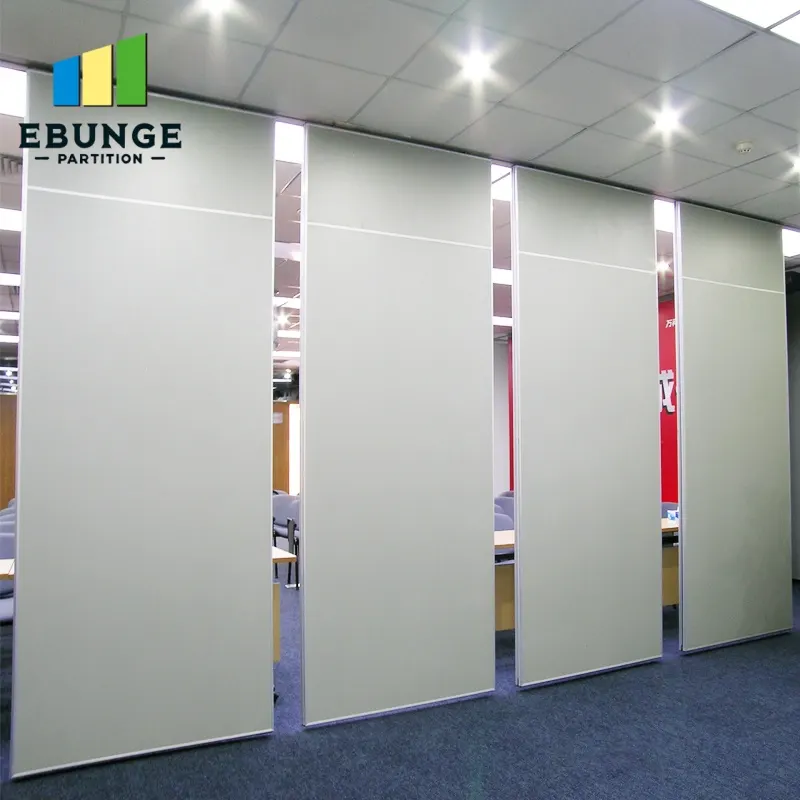
| Review item | What to look for | Evidence boundary |
|---|---|---|
| Track route continuity | Bidder acknowledges a continuous connected overhead route for straight, turning and stacking paths. | Confirm against layout drawings; do not assume an untracked gap can be crossed. |
| Support interface | Bidder states whether support is included, excluded or by others. | Project-specific support requires structural review. |
| Parking position | Bidder references the planned stacking position shown on the layout. | Parking style is customized to the customer layout and project requirements. |
| Finish scope | Bidder lists laminate, melamine, fabric, leather, glass or other approved surfaces as applicable. | Finish choice does not by itself prove acoustic or structural performance. |
| Pass-door requirements | Bidder confirms whether pass doors are in scope and how they are documented. | Pass-door requirements and project documentation can be discussed. |
This matrix is a discussion tool. It does not replace the tender documents, and it does not certify that a bidder’s proposal is complete. It simply makes the preliminaries visible.
Check the Overhead Route and Support Assumptions
Review focus: benchmark bidder track fixing preliminaries.
The most common benchmark gap is the overhead route. A top-hung system needs a continuous connected overhead route for every movement path. A bidder who prices only the straight opening may leave the turning and stacking sections unresolved.
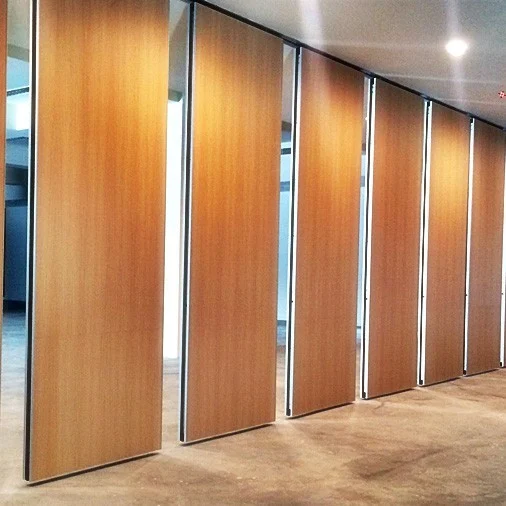
The exact overhead route and support arrangement must be confirmed by the responsible project team from coordinated drawings. The tender may place support with the main contractor, the ceiling contractor or the partition bidder. Benchmarking means checking that each bidder’s preliminaries match that allocation. Where support is by others, the bidder should still state the interface requirements and the information needed from the project team. Where support is included, the bidder should identify what project-specific review is required before fabrication or installation.
Questions to ask each bidder
- Does your price include the full track route shown on the layout, including turning and stacking sections?
- Which party is responsible for the overhead support, and what information do you need from them?
- Have you reviewed the planned stacking position and its interface with adjacent construction?
- Are pass doors included, and how will their requirements be documented?
- Which finish options are you proposing, and are they from the approved surface list?
- What project-specific confirmations remain open before your preliminaries can be treated as final?
These questions do not demand a performance guarantee. They demand clarity about scope, responsibility and evidence.
Separate Acoustic Concepts From Acoustic Claims
Project review term: benchmark bidder track fixing preliminaries.
A bidder may mention acoustic seals or acoustic concepts generically, but the tender should state the project-specific acoustic requirement and the evidence expected.
If it is not part of the scope, do not introduce it as a benchmark criterion.
Document Open Items and Clarifications
Coordination scope: benchmark bidder track fixing preliminaries.
Benchmarking is not only about scoring bids. It is about recording what remains unresolved. Create a clarification log with one row per open item, the bidder’s response and the project-specific confirmation needed. This log becomes the basis for post-tender discussions and helps avoid assumptions being treated as facts.
Evidence note: A bidder’s preliminary statement is not proof of structural capacity, acoustic performance, installation time or cost certainty. Treat each as a scope position to be confirmed against project drawings and the tender documents.
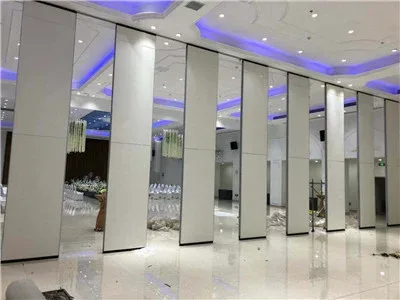
Where a bidder has not addressed a route, support interface or pass-door requirement, mark it as an open item rather than filling the gap with a default assumption. The evaluation team can then compare bidders on the same basis.
Frequently Asked Questions
What does track fixing preliminaries mean in a tender?
It refers to the assumptions a bidder makes about how the top track will be supported, aligned and connected to the building structure, including the overhead route and interface responsibilities. These preliminaries should be compared against the tender scope and layout drawings.
Can a movable partition cross a gap without a track?
No. Every proposed movement path requires a continuous connected overhead route. Straight, turning and stacking routes are reviewed from the layout, and any gap in the route must be resolved before the preliminaries can be considered complete.
How should acoustic performance be compared between bidders?
Do not infer performance from a finish or a drawing.
What finish options can be discussed with bidders?
Confirmed finish options include laminate, melamine, fabric, leather, glass and other approved surfaces.
Are pass doors part of the track fixing preliminaries?
Pass-door requirements and project documentation can be discussed. Bidders should state whether pass doors are included, excluded or by others, and how their requirements will be documented alongside the track route.
What should happen if a bidder leaves support as by others?
Record it as an open item. The bidder should still state the interface requirements and the information needed from the project team.
Conclusion and Next Steps
Benchmarking bidder track fixing preliminaries against the tender scope is a discipline of comparison, not assumption. Start with the layout and tender documents, build a matrix that exposes route continuity, support interfaces, parking position, finish scope and pass-door requirements, and log every open item. Confirm project-specific support, acoustic and dimensional requirements with the responsible parties before proceeding.
For product context, review the movable walls range and the project resources. To discuss pass-door requirements, documentation or project-specific coordination, contact the EBUNGE team.