
Quick answer: partition interface query routing before
Review focus: partition interface query routing before.
Architect partition interface query routing before tender is the discipline of capturing every unresolved interface question, assigning it to the right reviewer, and closing it with a documented answer before pricing and procurement begin. When queries are left inside drawing notes or email threads, tender returns become incomparable and later coordination becomes reactive. A simple routing register keeps design intent, evidence limits and project-specific confirmations visible to all parties.
Why Interface Queries Need a Routing Register
Project review term: partition interface query routing before.
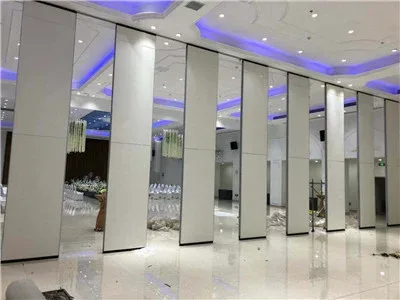
A movable partition touches many building elements: the overhead structure, adjacent wall finishes, ceiling transitions, floor finishes, door openings and the planned parking zone. Each touch point can generate a question about support, alignment, clearance or finish transition. Without a routing register, these questions arrive at different times and to different people, and answers may contradict each other.
A routing register is not a performance document. It is a coordination log that records the question, the responsible reviewer, the evidence required and the status. The suitability of each route and parking arrangement depends on the approved layout, circulation, ceiling interfaces and operating sequence.
What the register should contain
- A unique query reference and the drawing or room it affects.
- The interface category: overhead route, parking zone, finish transition, opening or documentation.
- The reviewer or discipline expected to answer.
- The evidence needed, such as a coordinated drawing, a project-specific confirmation or a finish sample.
- Status and date of closure.
Separating Maintained Facts from Project-Specific Confirmations
Coordination scope: partition interface query routing before.
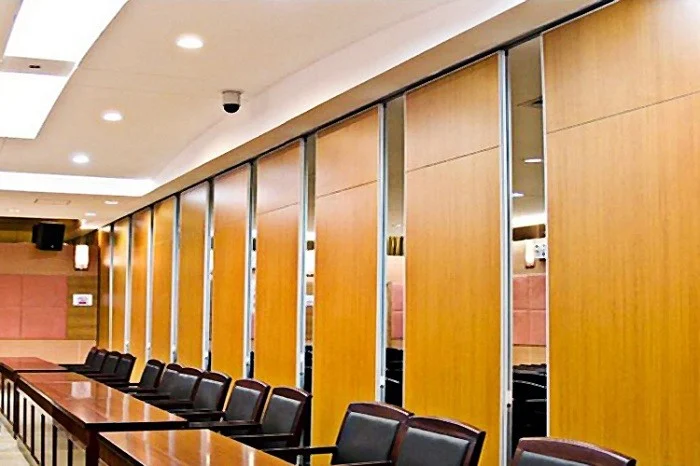
Some statements can be made from maintained product facts. EBUNGE movable wall panels are individually movable, suspended from a top track, cross the opening without a floor track, and park at a planned stacking position. Straight, turning and stacking routes are reviewed from the layout. Confirmed finish options include laminate, melamine, fabric, leather, glass and other approved surfaces. Pass-door requirements and project documentation can be discussed.
Other statements must remain project-specific. Support conditions, acoustic requirements, dimensional clearances and interface details depend on the actual building, the coordinated layout and the project documentation. The routing register should mark these as open until the relevant reviewer confirms them. This prevents a generic product description from being read as a project guarantee.
Evidence note: a visible finish, drawing or photograph does not by itself confirm acoustic performance, structural capacity, fire behaviour, durability or cleaning compatibility. Those require matching project evidence.
Routing Queries by Interface Category
Checklist focus: partition interface query routing before.
The categories below are coordination labels, not engineering conclusions.
| Interface category | Typical query | Suggested routing |
|---|---|---|
| Overhead route | Is the proposed movement path continuous and supported? | Structural or coordinated design reviewer |
| Parking zone | Where do panels stack and what adjacent elements are affected? | Architect and layout coordinator |
| Finish transition | How does the partition finish meet adjacent surfaces? | Interior designer and finish reviewer |
| Opening and pass-door | Is a pass-door required and how is it documented? | Architect and project documentation lead |
| Acoustic intent | What acoustic requirement applies to this room? | Acoustic consultant or project specifier |
Drawing Checks Before the Tender Package Is Issued
Review focus: partition interface query routing before.
Before tender, the team should walk the partition layout against the current drawing set. The goal is not to solve every detail, but to identify which details are unresolved and route them correctly.
Checklist for the pre-tender drawing review
- Confirm that every proposed movement path is shown as a continuous connected overhead route on the coordinated drawings.
- Mark the planned stacking position and check that it does not conflict with adjacent services, finishes or access routes.
- Identify every finish transition and note whether a sample or approved surface reference is required.
- List any pass-door requirement and confirm who will document it.
- Record acoustic intent as a project requirement to be confirmed, not as a value inferred from a product name.
- Flag any dimension, support or clearance question that cannot be answered from the current information.
Coordinating the Query Route Across Disciplines
A query about overhead support should not be closed by a finish decision. A query about finish transition should not be closed by an acoustic assumption. The register should state the required output clearly so the reviewer knows what evidence will close the item.
Where the answer depends on a project-specific review, the register should say so. This is more useful than a premature answer because it tells the tender team which items remain open and which assumptions must not be priced as confirmed scope.
Using the register during tender review
During tender review, compare returned queries against the register. New questions can be added, but they should follow the same routing logic. If a tenderer raises an interface question that the register already covers, the recorded answer or open status can be shared consistently. If the question is new, route it to the named reviewer rather than answering it informally.
Acoustic and Dimensional Language to Keep Precise
Where a project has an acoustic requirement, the routing register should direct the query to the acoustic consultant or specifier and record the project-specific confirmation needed.
Dimensional language should also stay precise. Panel widths, stacking depth, turning clearances and opening sizes depend on the coordinated layout and the selected configuration. The register should avoid stating dimensions as universal facts and instead reference the project drawing or the confirmation required.
Frequently Asked Questions
What is architect partition interface query routing before tender?
It is the process of logging unresolved interface questions, assigning each to a reviewer, and closing them with documented answers before the tender package is issued. It keeps design intent and procurement assumptions aligned.
Which partition facts can be stated before project confirmation?
Maintained facts include that panels are individually movable, top-hung, cross the opening without a floor track, and park at a planned stacking position. Straight, turning and stacking routes are reviewed from the layout. Finish options include laminate, melamine, fabric, leather, glass and other approved surfaces.
Can acoustic performance be confirmed from the product category?
No. Acoustic requirements should be routed to the acoustic consultant or specifier and confirmed against the project documentation.
How should overhead support questions be handled?
Every proposed movement path requires a continuous connected overhead route and project-specific support review.
When should the routing register be started?
Start it as soon as the partition layout is first coordinated, and update it through design development, tender issue and tender review. Early routing prevents unresolved interfaces from being priced as confirmed scope.
What documentation can be discussed with EBUNGE?
Pass-door requirements and project documentation can be discussed. Project-specific support, acoustic and dimensional requirements should be confirmed against the coordinated layout and the relevant project evidence.
Conclusion and Next Step
A routing register turns scattered interface questions into a reviewable trail. It separates maintained product facts from project-specific confirmations, keeps acoustic and dimensional language precise, and helps tender teams see which items remain open.
To discuss pass-door requirements, finish options or project documentation for your coordinated layout, contact EBUNGE. You can also review movable wall systems and browse the resources library before finalising your query register.