
Quick answer: partition interface query log
Review focus: partition interface query log.
Cost and maintenance requirements depend on the selected configuration, finish and project conditions and require project-specific confirmation. A query log is not a performance certificate. It is a coordination register that records what is known, what is assumed, and what still requires project-specific confirmation. For movable partitions, the most common interface questions concern the overhead route, parking position, finish selection, pass-door requirements and acoustic expectations. This article sets out a stage-by-stage method for running that log without inventing engineering, acoustic or commercial conclusions.
Why a Query Log Belongs in Architect Coordination
Project review term: partition interface query log.
Movable wall panels are individually movable, suspended from a top track, cross the opening without a floor track, and park at a planned stacking position. Those maintained facts create interface questions that touch structure, ceiling, finishes and adjacent trades. A query log gives each question an owner, a stage and a closure condition. It also prevents a drawing note from being read as a performance guarantee.
Architect Coordination coordination improves when queries are logged against the drawing revision in which they arise. A question raised during concept design may be answered differently once the ceiling zone and parking route are coordinated. The log should therefore record the stage, the drawing reference and the evidence needed to close the item.
What the log is not
The log is not a substitute for project-specific support, acoustic or dimensional review. The suitability of each route and parking arrangement depends on the approved layout, circulation, ceiling interfaces and operating sequence. It simply makes the open questions visible so the right specialist can answer them.
Stage 1: Concept Design Query Capture
Coordination scope: partition interface query log.
At concept stage, the priority is to identify whether a movable partition is being considered and where it might operate. The log should capture the room or venue type as an example only, because named venues do not limit other suitable flexible-space applications.
Useful concept-stage queries include: Is a continuous connected overhead route available for the proposed movement path? Where is the planned parking position? Does the layout show straight, turning or stacking routes? These questions come from the layout review, not from a product assumption.
Concept-stage checklist
- Record the proposed opening and the adjacent spaces.
- Sketch the intended straight, turning and stacking routes.
- Note whether a continuous connected overhead route is shown.
- Flag any gap where panels would need to travel without a supported route.
- List finish preferences for later confirmation.
Stage 2: Schematic Design and Route Review
Checklist focus: partition interface query log.
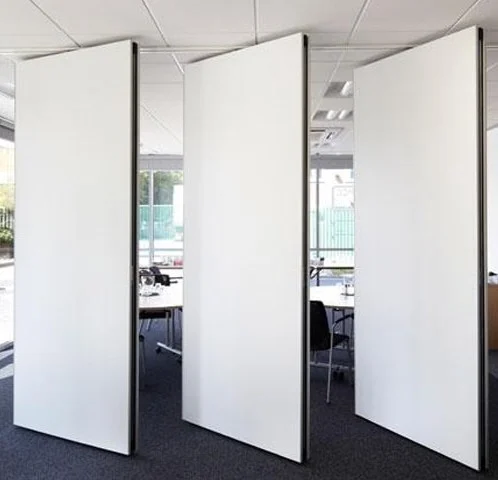
During schematic design, the query log should move from intent to geometry. The layout review should confirm that straight, turning and stacking routes are coordinated with the ceiling zone and adjacent services. The exact route, junction arrangement, continuous overhead path and parking position must be confirmed from the coordinated project drawings.
This is also the stage to log pass-door requirements. A pass-door is a project-specific requirement that can be discussed with the supplier, not a default feature. The log should record who needs to pass through the partition, in which configuration, and at which stage the requirement must be frozen.
Evidence note
Do not derive hidden acoustic, fire, durability, load or commercial performance from a visible shape, finish, photograph or drawing. Comparative, absolute and causal statements require corresponding evidence; otherwise state the exact project-specific confirmation boundary.
Stage 3: Design Development and Finish Coordination
Review focus: partition interface query log.
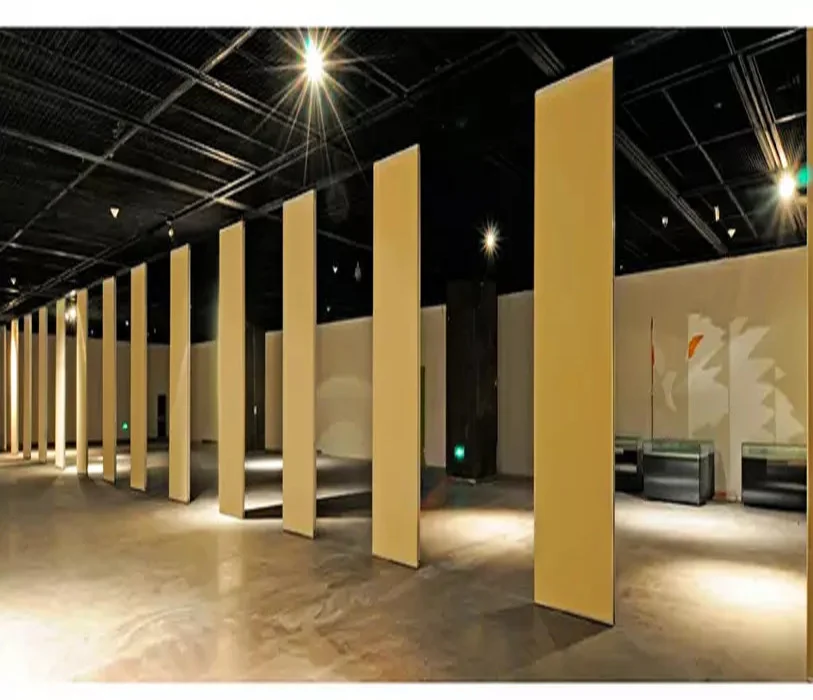
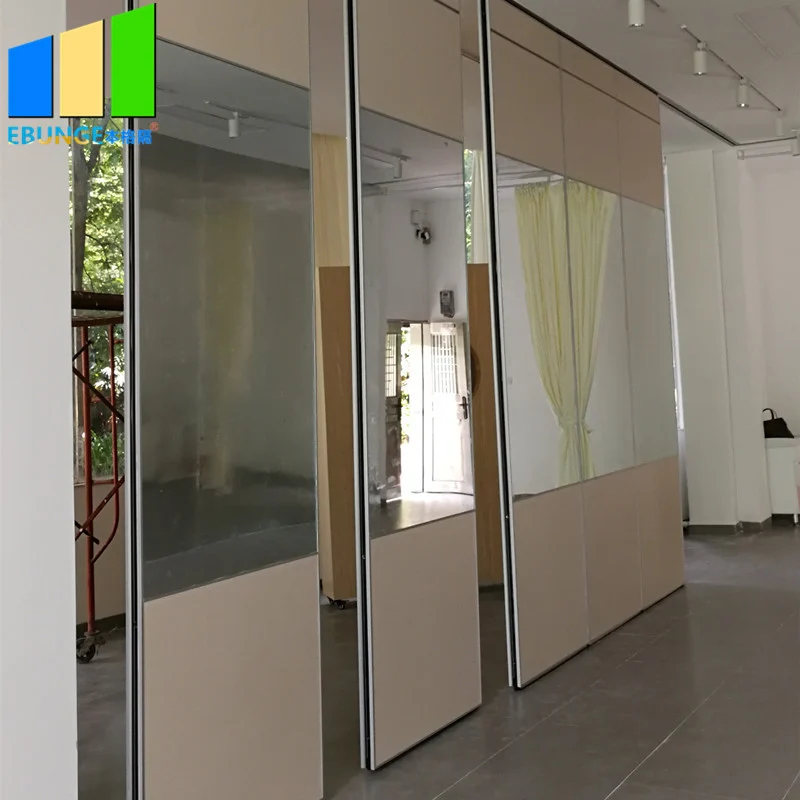
Finish selection often generates interface queries because finishes interact with adjacent materials, reveals and tolerances. Confirmed finish options include laminate, melamine, fabric, leather, glass and other approved surfaces.
Acoustic expectations should be logged conceptually. The log should record the project requirement and the evidence needed, not an inferred value from a finish or drawing.
Design-development checklist
- Confirm the finish family against the approved options.
- Record the drawing reference for each finish change.
- Log acoustic requirements as project-specific questions.
- Note any interface with adjacent ceiling, wall or floor finishes.
- Identify which queries need supplier input before tender.
Stage 4: Tender and Specification Query Closure
Project review term: partition interface query log.
At tender stage, the log should distinguish between information that can be specified generically and information that must be confirmed by the selected supplier. Visible references can support layout discussion but do not verify hidden construction or performance.
Project documentation can be discussed with the supplier, including pass-door requirements and layout drawings. The log should record the documents issued, the revision, and the queries still open.
Compact comparison: open versus closed queries
| Query status | What it means | Action |
|---|---|---|
| Open | No project-specific answer yet | Assign owner and evidence needed |
| Under review | Supplier or specialist is checking | Record drawing revision and date |
| Closed | Answer confirmed for this project | Reference the confirming document |
| Reopened | Design change affects the answer | Log the trigger and reissue |
Stage 5: Construction Coordination and Handover
Coordination scope: partition interface query log.
During construction, the log should track interface queries that arise from site conditions, coordinated services and finish samples. It should record what has been confirmed and what still requires project-specific support, acoustic and dimensional review.
Handover is the point to close the log formally. Each closed item should reference the confirming document, drawing revision or supplier response. Items that remain open should be listed as project-specific confirmations still required.
Construction-stage checklist
- Confirm the overhead route remains continuous and connected.
- Check the parking position against the coordinated layout.
- Record finish approvals and any substitutions.
- Log pass-door coordination status.
- List any acoustic or dimensional items still awaiting confirmation.
How to Keep the Log Useful Across Stages
A query log becomes unhelpful when it mixes confirmed facts with assumptions. Keep a separate column for evidence status. Use plain language: confirmed, assumed, or requires project-specific confirmation. This prevents a reader from treating a planning note as a measured result.
Review the log at each design stage gate. Reopen items when the layout, ceiling zone or finish selection changes. Share the log with the contractor, supplier and owner representative so that everyone sees the same open questions.
FAQ
What is a partition interface query log?
It is a coordination register that records open questions about how a movable partition meets structure, ceiling, finishes and adjacent trades. It tracks the stage, drawing reference, owner and evidence needed to close each item.
Does the log confirm acoustic performance?
No. The log should record the project requirement and the evidence needed, not an inferred value.
Can panels travel across a gap in the overhead route?
No. Every proposed movement path requires a continuous connected overhead route and project-specific support review. The log should flag any gap as an open query.
Which finish options can be logged?
Confirmed finish options include laminate, melamine, fabric, leather, glass and other approved surfaces.
When should pass-door requirements be logged?
Pass-door requirements can be discussed with the supplier and should be logged as early as the layout allows. The log should record who needs to pass, in which configuration, and when the requirement must be frozen.
Who should own the query log?
The architect usually maintains the log, with input from the contractor, supplier and owner representative. Each query should have a named owner and a closure condition.
Conclusion and Next Step
A well-run query log keeps movable partition coordination honest. It separates maintained product facts from project-specific questions, records evidence boundaries, and gives every interface item a stage and an owner.
To review your layout, finish options and project documentation, visit the movable walls product page, explore the resources library, or contact the team to discuss your project-specific support, acoustic and dimensional requirements.