
Quick answer: drawing issue cycle
Review focus: drawing issue cycle.
Architect partition interface query drawing issue cycle timing is the discipline of asking the right partition questions before each drawing milestone, not after it. Movable wall interfaces touch structure, ceiling, finishes, power and door openings, so a query raised at the wrong moment can delay a drawing issue or force a redesign. This guide offers an evidence-bounded framework for scheduling those queries across a typical issue cycle.
Why Interface Queries Slip Past the Drawing Issue
Project review term: drawing issue cycle.
The suitability of each route and parking arrangement depends on the approved layout, circulation, ceiling interfaces and operating sequence. When these items are left to the construction issue, the architect may receive answers that conflict with already-issued drawings.
The result is not only rework. Contractors price from issued drawings, so a late interface change can reopen commercial discussions. Owners also lose confidence when a visible element such as a partition line changes after approval.
Map Queries to Drawing Stages, Not to Calendar Dates
Coordination scope: drawing issue cycle.
Each stage has a different tolerance for unresolved interface questions.
Concept and Spatial Planning Stage
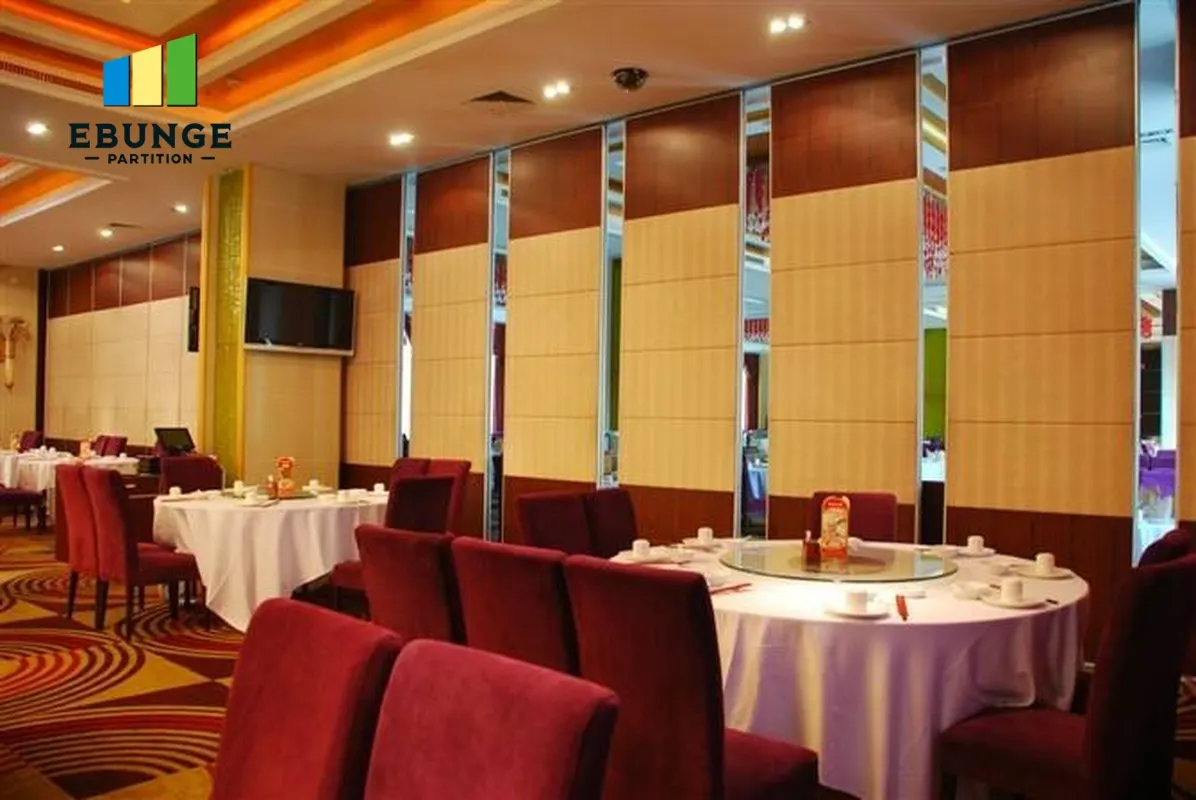
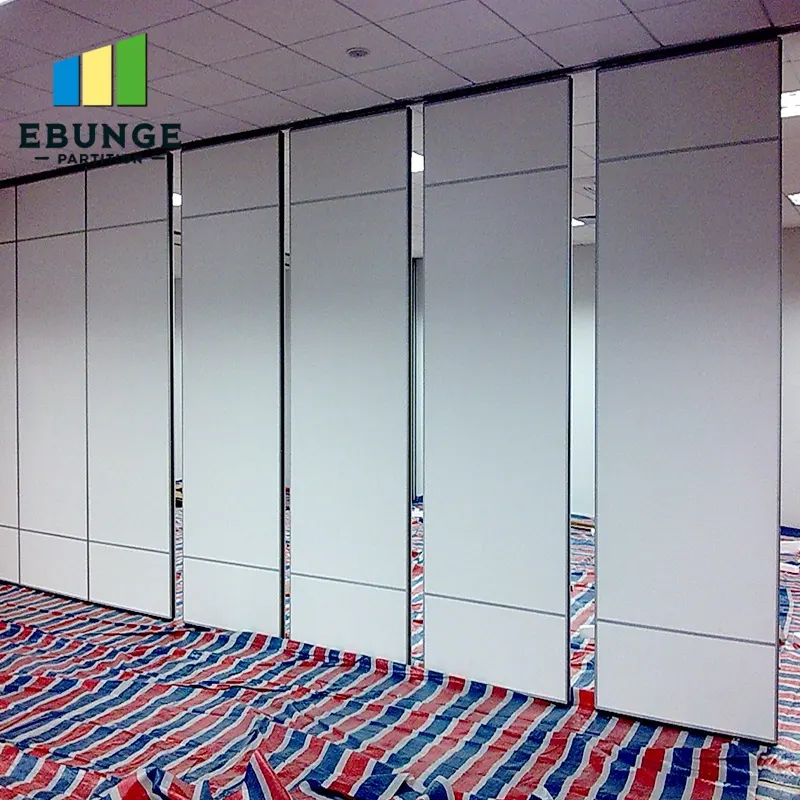
At this stage, confirm the movement concept: straight, turning or stacking routes. EBUNGE movable wall panels are individually movable, suspended from a top track, cross the opening without a floor track and park at a planned stacking position. The layout review should confirm whether the proposed route is continuous and connected overhead.
Design Development Stage
This is the natural window for finish direction, pass-door requirements and visible interface details. Confirmed finish options include laminate, melamine, fabric, leather, glass and other approved surfaces. Finish selection affects appearance and coordination, but it should not be used to infer acoustic, fire or durability performance.
Technical Design and Tender Stage
Here the team should close dimensional and support questions. Visible references can support layout discussion but do not verify hidden construction or performance. Those items require project-specific confirmation.
Construction Issue Stage
By this point, unresolved interface queries should be exceptions, not the norm. If a query remains open, issue it with a clear evidence note and a named decision owner.
A Practical Query Timing Checklist
Checklist focus: drawing issue cycle.
- Route check: Is the overhead route continuous and connected for every proposed movement path?
- Stacking check: Has the parking position been coordinated with adjacent doors, services and finishes?
- Finish check: Are finish options and direction confirmed against the approved schedule?
- Pass-door check: Are pass-door requirements documented and coordinated with the partition layout?
- Evidence check: Does each performance statement have matching project-specific evidence?
- Owner check: Is the decision owner named for every open interface query?
What Can Be Confirmed and What Needs Project Evidence
Review focus: drawing issue cycle.
Some partition facts are stable and can be used in early coordination. Others must remain open until the project provides matching evidence.
| Item | Can be discussed generically | Needs project-specific confirmation |
|---|---|---|
| Movement concept | Straight, turning and stacking routes are reviewed from the layout | Continuous overhead route and support strategy |
| Finish | Laminate, melamine, fabric, leather, glass and other approved surfaces | Cleaning compatibility, wear expectations and sample approval |
| Acoustics | Seals and acoustic concepts can be explained generically | STC or Rw values, test evidence and site conditions |
| Documentation | Project documentation can be discussed | Submittal format, approval sequence and issue dates |
How to Write an Interface Query That Survives Review
A useful query states the drawing reference, the interface in question, the decision needed and the evidence required. It avoids asking for a performance promise that the project has not yet defined.
- Reference the exact drawing and revision.
- Describe the interface condition in plain language.
- State the decision required and the date it is needed.
- List the evidence that would close the query.
- Name the decision owner and the distribution list.
This structure keeps the query traceable and reduces the chance that an answer is based on assumption rather than project information.
Coordination Habits That Protect the Issue Cycle
Teams that manage interface queries well tend to share a few habits. They keep a live query register linked to the drawing schedule. They separate confirmed product facts from project-specific requirements. The exact route, junction arrangement, continuous overhead path and parking position must be confirmed from the coordinated project drawings.
For broader planning context, the EBUNGE resources page can support early discussions, while the movable walls product page provides maintained product context. Neither replaces project-specific review.
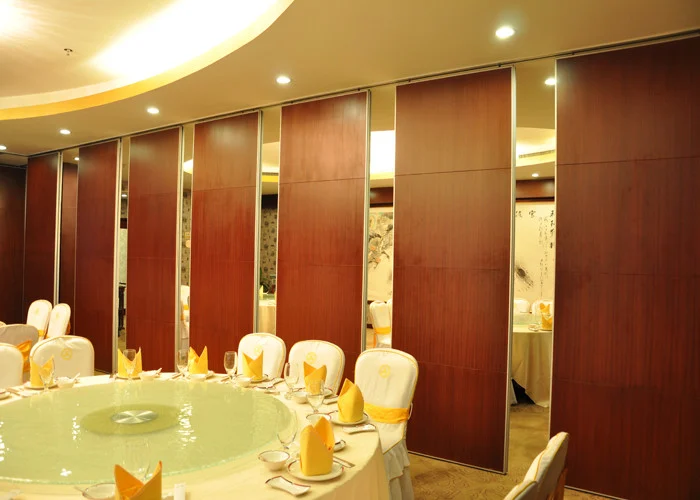
Evidence note: a visible track, finish or drawing line does not by itself prove acoustic, structural, fire or durability performance. Confirm those items with matching project evidence.
Frequently Asked Questions
When should partition interface queries start?
Start at concept or spatial planning, when the movement concept and stacking position are still flexible.
Can finish selection be confirmed before technical design?
Finish direction can be discussed early, but final approval should follow the project schedule and sample review. Do not infer performance from a finish choice.
Do movable partitions need a floor track?
EBUNGE movable wall panels are top-hung and cross the opening without a floor track. The overhead route still requires project-specific support review.
How should acoustic questions be handled?
Provide the current layout, opening dimensions, ceiling information, intended room use, and relevant project drawings for review. The exact overhead route and support arrangement must be confirmed by the responsible project team from coordinated drawings.
What documentation can be discussed?
Pass-door requirements and project documentation can be discussed with the EBUNGE team. The exact submittal format and approval sequence should be confirmed for each project.
Who should own an open interface query?
Name a single decision owner, usually the party responsible for the affected drawing package, and record the date the answer is needed.
Conclusion: Time Queries to Protect the Drawing Issue
Panel handling and the operating sequence must be confirmed for the selected layout and project conditions. By mapping route, stacking, finish and documentation questions to the right drawing stage, architects can reduce late changes and keep issued drawings coherent.
Keep every performance statement tied to project-specific evidence, and treat named venues or room types as examples rather than limits. For project-specific support, acoustic and dimensional requirements, contact the EBUNGE team to discuss your layout and documentation needs.