
Quick answer: architect coordination partition interface query tracking
Review focus: architect coordination partition interface query tracking.
Architect coordination partition interface query tracking is the discipline of logging every unresolved interface between a movable partition and the surrounding building, assigning it to a responsible reviewer, and closing it with a documented answer. On projects with flexible rooms, queries rarely arrive one at a time. The suitability of each route and parking arrangement depends on the approved layout, circulation, ceiling interfaces and operating sequence. Without a single tracking method, the same question is answered twice, or worse, assumed. This article sets out a practical, evidence-bounded workflow for design teams.
The goal is not to predict performance. It is to keep each query visible until the correct party confirms it against project-specific drawings, support conditions and acoustic requirements. Movable wall panels are individually movable, suspended from a top track, cross the opening without a floor track, and park at a planned stacking position. Those maintained facts anchor the workflow; everything else must be confirmed for the project.
Why Partition Interface Queries Get Lost
Project review term: architect coordination partition interface query tracking.
Interface queries sit between disciplines. A ceiling height change may affect the top track zone. A floor finish transition may affect how panels park. A door frame may affect the pass-door requirement. Each item touches architecture, structure, services and the partition supplier, so ownership is often unclear.
When queries live only in email threads or meeting notes, the design team loses the audit trail. A query log fixes this by giving every item a number, an owner, a due date and a status. The log does not replace drawings; it points to the drawing or confirmation that closes the item.
Separate confirmed facts from open questions
Start by marking what is already confirmed. Confirmed finish options include laminate, melamine, fabric, leather, glass and other approved surfaces. Straight, turning and stacking routes are reviewed from the layout. Pass-door requirements and project documentation can be discussed. Everything else, including support, acoustic and dimensional requirements, remains open until the responsible party confirms it.
A Query Log Structure That Works
Coordination scope: architect coordination partition interface query tracking.
A useful log is simple enough to update weekly and detailed enough to survive a design change. Keep one row per query and avoid merging unrelated issues. The structure below can be adapted to any spreadsheet or document control system.
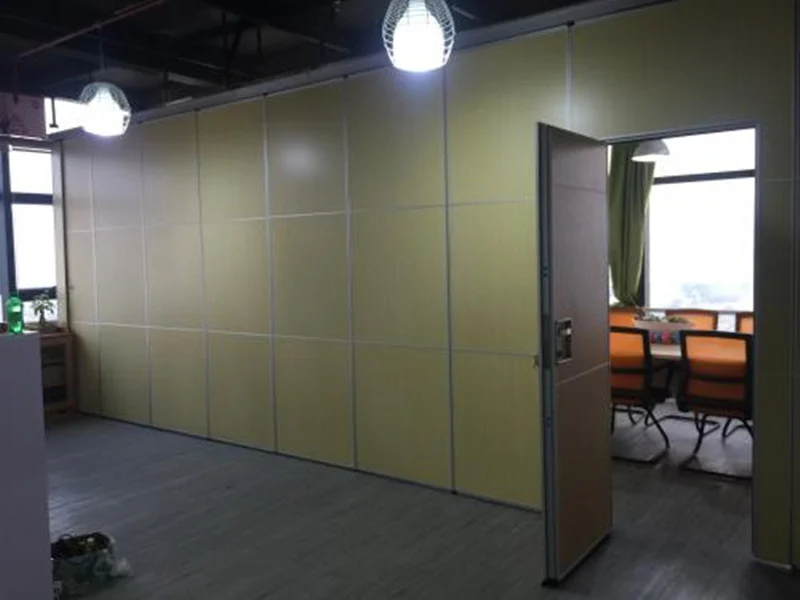
| Field | Purpose | Example entry |
|---|---|---|
| Query ID | Unique reference for drawings and minutes | PQ-014 |
| Interface zone | Locates the issue in plan or section | North opening head |
| Question | States the unresolved item plainly | Confirm top track zone relative to ceiling |
| Responsible party | Names who must answer | Structural engineer |
| Evidence required | Defines what closes the query | Coordinated section drawing |
| Status | Tracks open, answered or closed | Open |
Review the log in every design team meeting. Queries that remain open across two meetings should be escalated to the project lead.
Routing Queries Through the Right Reviewer
Checklist focus: architect coordination partition interface query tracking.
Not every query belongs to the architect. Panel handling and the operating sequence must be confirmed for the selected layout and project conditions.
- Log the query with its interface zone and a clear question.
- Assign a single responsible reviewer, not a group.
- State the evidence that will close the query.
- Set a review date that matches the next design team meeting.
- Record the answer and link it to the revised drawing or document.
- Close the query only when the linked evidence exists.
Keep the supplier in the loop early
Straight, turning and stacking routes are reviewed from the layout. If the layout changes, the route review must be repeated. Early supplier involvement helps the design team understand which items need project-specific confirmation, such as support conditions and dimensional coordination, before drawings are issued for construction.
Evidence Boundaries for Interface Queries
Review focus: architect coordination partition interface query tracking.
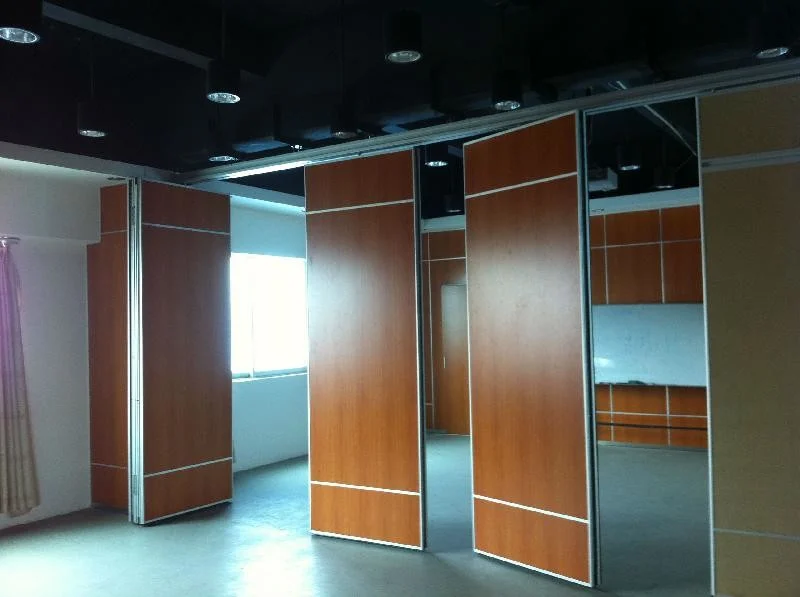
Interface tracking works only if the team respects evidence limits. Visible references can support layout discussion but do not verify hidden construction or performance.
Every proposed movement path requires a continuous connected overhead route and project-specific support review. Do not imply that panels can travel across an untracked gap.
Instead, record the project-specific acoustic requirement and ask the responsible acoustic specialist to confirm it against the actual construction.
What to write in the log when evidence is missing
Use a neutral status such as “awaiting project-specific confirmation.” This is more accurate than writing “assumed acceptable.” It also protects the design team if the condition changes later. The log should show what is known, what is unknown and who owns the next step.
Coordinating Finishes, Pass Doors and Parking
Finish selection often generates interface queries because it touches adjacent materials. Confirmed finish options include laminate, melamine, fabric, leather, glass and other approved surfaces. The design team should confirm how each selected finish meets adjacent walls, frames and floor finishes, and whether any transition detail is required.
Pass-door requirements and project documentation can be discussed with the supplier. Parking style is customized to the customer layout and project requirements and may support compact stacking when the coordinated design permits it. These items should be logged as separate queries because they affect different drawing packages.
Checklist for closing a partition interface query
- The query has a unique ID and a clear question.
- A single responsible reviewer is named.
- The required evidence is stated and linked.
- The answer is reflected in the current drawing revision.
- Any remaining project-specific confirmation is recorded.
- The status is updated in the next design team meeting.
Running the Log Through Design Stages
At concept stage, the log captures broad questions about room flexibility and route intent. At developed design, it narrows to support zones, ceiling interfaces and finish transitions. At technical design, it focuses on dimensional coordination and documentation. At construction stage, it tracks site queries and confirms that answers match the issued drawings.
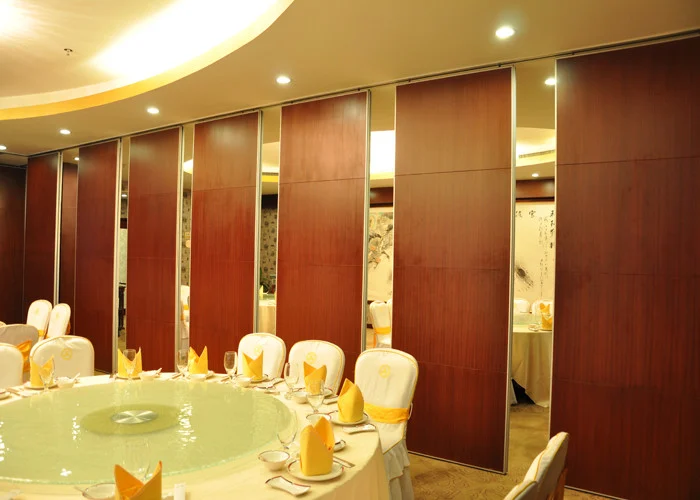
The log should be reviewed at each stage gate. Queries that cannot be closed before a gate should be carried forward with a named owner. This prevents unresolved interfaces from being buried in later packages.
Frequently Asked Questions
What is architect coordination partition interface query tracking?
It is a documented method for logging, assigning and closing every unresolved interface between a movable partition and the surrounding building. It keeps questions visible until the correct party confirms them against project-specific drawings and requirements.
Which partition facts can the design team rely on?
Movable wall panels are individually movable, suspended from a top track, cross the opening without a floor track, and park at a planned stacking position. Confirmed finish options include laminate, melamine, fabric, leather, glass and other approved surfaces. Straight, turning and stacking routes are reviewed from the layout.
Can the design team assume acoustic performance from a drawing?
No. Record the project-specific acoustic requirement and ask the responsible specialist to confirm it against the actual construction.
How should support and dimensional queries be handled?
Do not infer support points, loads or dimensions from a generic detail. The query log should state the evidence required to close each item.
When should the partition supplier be involved?
Early involvement helps the design team understand which items need project-specific confirmation. Pass-door requirements and project documentation can be discussed, and route reviews can be repeated when the layout changes.
What should happen when a query cannot be closed?
Carry it forward with a named owner and a status of awaiting project-specific confirmation. Escalate it if it remains open across two design team meetings. Do not close a query without linked evidence.
Conclusion and Next Step
Architect coordination partition interface query tracking is a lightweight discipline that protects the design team from assumptions. Keep one log, assign one owner per query, state the evidence required, and review the log at every stage gate. Use the maintained product facts as your starting point, and confirm support, acoustic and dimensional requirements for the project.
To discuss pass-door requirements, project documentation or route reviews for your layout, contact the EBUNGE team. You can also review movable wall products and browse the resources library for further planning context.