
Quick answer: architect coordination interface assumption challenge response timeframe register
Review focus: architect coordination interface assumption challenge response timeframe register.
An architect coordination interface assumption challenge response timeframe register is a simple design-phase log. It records each contested interface assumption, the discipline that raised the challenge, the date it was raised, and the elapsed time until a substantive answer arrived. For movable partition walls, the contested items usually cluster around three interfaces: the overhead track route, the parking or stacking position, and the ceiling zone where the two meet. The register does not resolve the design. It makes unresolved decisions visible before drawings are issued, so they are not discovered later on site.
This article is written for overseas contractors, architects, interior designers, owners, renovation teams and distributors who coordinate specialist suppliers. It describes a register format and a review discipline. It does not supply project-specific engineering, acoustic or dimensional conclusions; those must be confirmed for each project.
Why Track, Stack and Ceiling Assumptions Survive to Drawing Issue
Project review term: architect coordination interface assumption challenge response timeframe register.
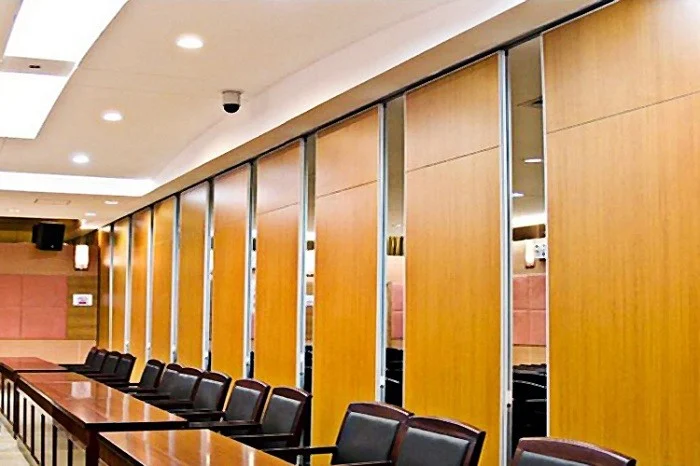
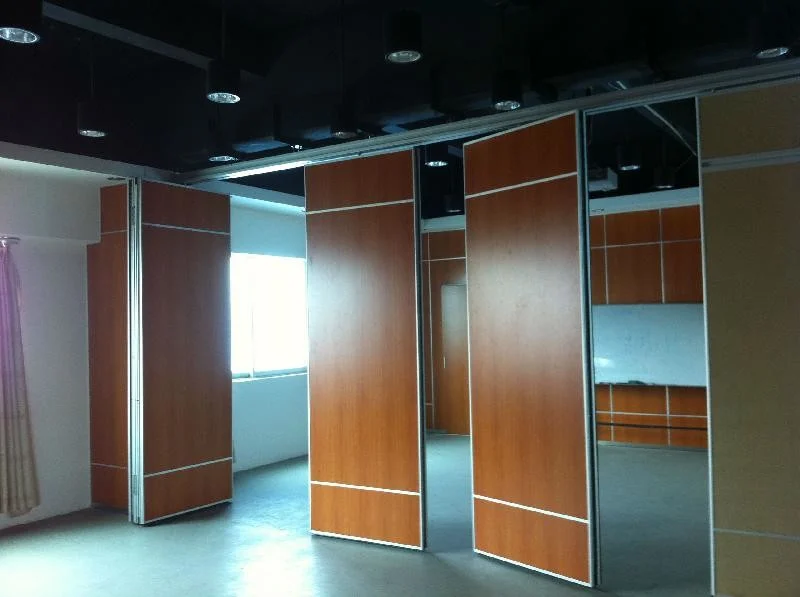
Movable wall panels are individually movable and suspended from a top track. They cross the opening without a floor track and park at a planned stacking position. That description is simple, but it depends on several interfaces being coordinated at once: the overhead route, the support condition above it, the ceiling plane, and the space reserved for parking.
In design phases, each discipline tends to assume the others have covered the interface. The suitability of each route and parking arrangement depends on the approved layout, circulation, ceiling interfaces and operating sequence. The supplier may be waiting for a ceiling zone to be fixed. None of these assumptions is unreasonable on its own, but together they can leave a contested decision open while drawings progress.
What counts as a contested assumption
A contested assumption is any interface statement that two disciplines would describe differently, or that one discipline cannot confirm without input from another. Examples include whether a straight, turning or stacking route has been reviewed from the layout, whether the parking position conflicts with a ceiling feature, and whether the ceiling zone has enough coordinated depth for the intended interface.
A Register Format for Design-Phase Interface Challenges
Coordination scope: architect coordination interface assumption challenge response timeframe register.
Keep it short enough that disciplines actually update it, and specific enough that an unanswered row is obvious. The following structure is a starting point; project teams should adapt column names to their own document control system.
| Column | What it records | Why it matters |
|---|---|---|
| Challenge ID | A unique reference for the contested assumption | Allows the item to be cited in meeting minutes and drawing notes |
| Interface area | Track route, stacking position, ceiling zone, or another named interface | Groups related challenges for review |
| Assumption as stated | The wording currently used in the design | Prevents the challenge from drifting |
| Raised by / date | Discipline and date the challenge was logged | Starts the response timeframe clock |
| Discipline responsible | The party expected to answer | Makes ownership explicit |
| Response date | Date a substantive answer was received | Records elapsed response time |
| Status | Open, answered, or escalated | Keeps unresolved items visible |
Two rules keep the register honest. First, a response is only substantive if it answers the challenge as stated, not if it acknowledges receipt. Second, elapsed time is recorded in working days from the date raised to the date answered, so the pattern of slow interfaces becomes visible across the project.
Running the Challenge and Response Cycle
Checklist focus: architect coordination interface assumption challenge response timeframe register.
The register is only useful if it is reviewed on a fixed cycle. A short weekly review, tied to the existing design coordination meeting, is usually enough. The review should not attempt to solve every challenge in the room; it should confirm ownership, check response times, and escalate items that remain open.
- Log the challenge as soon as it is identified, using the wording currently in the design.
- Assign a responsible discipline and a target response date.
- At each review, update the response date only when a substantive answer is received.
- Escalate any challenge that passes its target response date without an answer.
- Before drawing issue, confirm that no open challenge affects the track, stack or ceiling interfaces shown.
Escalation without blame
Escalation should be framed as a design risk, not a performance complaint. A challenge that remains open for several review cycles is a signal that the interface needs a decision, a survey, or a project-specific review. The register simply makes that signal visible earlier.
Evidence Boundaries for Interface Decisions
Review focus: architect coordination interface assumption challenge response timeframe register.
Not every interface question can be answered from a catalogue or a finish sample. Those require project-specific review.
Visible references can support layout discussion but do not verify hidden construction or performance. Comparative and absolute statements require matching evidence, and project-specific support, acoustic and dimensional requirements must be confirmed separately.
Where acoustic separation matters, the project team should confirm the requirement and the supporting evidence for the specific configuration.
Pre-Issue Checklist for Contested Interfaces
Project review term: architect coordination interface assumption challenge response timeframe register.
Before drawings are issued, the design team can use a short checklist to confirm that the register has done its job. This is not a substitute for project-specific engineering review; it is a visibility check.
- Every contested track, stack and ceiling assumption has a challenge ID and a responsible discipline.
- Every challenge has either a substantive answer or a documented escalation.
- The straight, turning and stacking routes have been reviewed from the layout.
- The parking position is shown and does not conflict with unresolved ceiling features.
- Pass-door requirements and project documentation have been discussed where relevant.
- Open challenges are noted on the drawing issue sheet so recipients know what remains unresolved.
Using the Register with Specialist Suppliers
Coordination scope: architect coordination interface assumption challenge response timeframe register.
Specialist suppliers can support the register by answering interface questions in writing and by stating clearly what they can and cannot confirm from the information provided. EBUNGE can discuss pass-door requirements and project documentation, and can review straight, turning and stacking routes from the layout. The exact route, junction arrangement, continuous overhead path and parking position must be confirmed from the coordinated project drawings.
For product context, see the movable wall systems page. For general planning material, see the resources page. When the register identifies an interface that needs a project-specific answer, the team can contact EBUNGE to discuss the documentation required.
Frequently Asked Questions
What is an architect coordination interface assumption challenge response timeframe register?
It is a design-phase log that records contested interface assumptions, the discipline that raised each challenge, and the elapsed time until a substantive answer is received. It is used to keep unresolved track, stack and ceiling decisions visible before drawings are issued.
Why focus on track, stack and ceiling interfaces for movable partitions?
Because movable panels are top-hung, cross the opening without a floor track, and park at a planned stacking position. The overhead route, the support condition above it, the ceiling plane and the parking space all need to be coordinated together.
Does the register replace engineering or acoustic review?
No. It is a visibility and coordination tool.
How should response time be measured?
Record the date the challenge was raised and the date a substantive answer was received, then calculate elapsed working days. Acknowledging receipt is not a substantive answer.
What should happen if a challenge remains open before drawing issue?
Escalate it, note it on the drawing issue sheet, and confirm that the unresolved item does not affect the track, stack or ceiling interfaces shown. The design team should decide whether to hold the issue or issue with a documented open item.
Can EBUNGE confirm interface requirements from a layout?
EBUNGE can review straight, turning and stacking routes from the layout and can discuss pass-door requirements and project documentation.
Conclusion and Next Step
A response timeframe register will not design the interface for you, but it will show which assumptions are still contested and which disciplines are slow to answer. Used consistently, it turns scattered coordination questions into a visible pre-issue record. Start with the columns above, adapt them to your document control system, and review the register at every design coordination meeting.
If your project involves movable partition walls and you need to discuss track, stack or ceiling interfaces, contact EBUNGE with your layout and project documentation so the relevant requirements can be reviewed.