
Quick answer: drawing revision uptake register
Review focus: drawing revision uptake register.
An architect coordination drawing revision uptake register movable partition is a design-phase control document. It records which discipline has received, reviewed and actually built to the current track and stack layout. It is not a performance certificate. It is a coordination tool that helps architects, contractors, interior designers and owners see where a revision has been acknowledged but not yet reflected in the drawings that will be used on site.
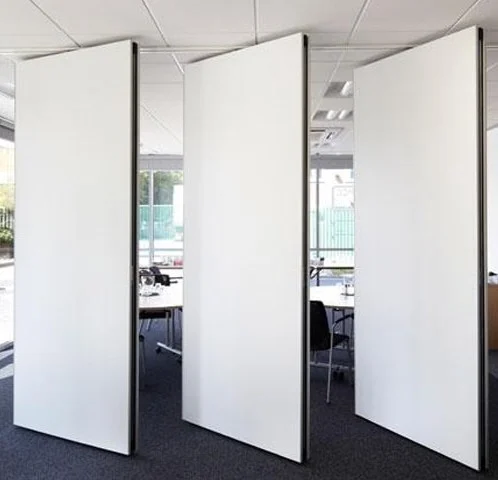
Movable wall panels are individually movable, suspended from a top track, cross the opening without a floor track, and park at a planned stacking position. Straight, turning and stacking routes are reviewed from the layout. Because those routes cross several disciplines, a revision can be issued correctly and still fail to reach the person building the supporting structure.
Why a Revision Uptake Register Matters in Design Phase
Project review term: drawing revision uptake register.
Most coordination failures are not drafting errors. They are uptake errors. The suitability of each route and parking arrangement depends on the approved layout, circulation, ceiling interfaces and operating sequence. The ceiling coordination drawing still shows a different service zone. The stacking position moves, but the adjacent joinery or glazing package is not updated.
A register makes uptake visible. It does not prove that a layout is correct, and it does not replace project-specific support, acoustic and dimensional review. It simply answers a narrow question: which discipline is currently building to which revision?
What the register is not
It is not a substitute for engineering sign-off, acoustic design or site inspection. It should not be used to infer hidden performance from a drawing. A line on a plan does not confirm load capacity, deflection limits or acoustic results.
Core Fields for the Uptake Register
Coordination scope: drawing revision uptake register.
Keep the register short enough to be maintained. Long registers are abandoned. A workable version tracks the drawing number, revision, issue date, discipline, reviewer, review status, build status and any open query.
| Field | Purpose | Evidence boundary |
|---|---|---|
| Drawing and revision | Identifies the current coordinated layout | Does not confirm buildability |
| Discipline owner | Names who must update their package | Does not transfer design responsibility |
| Review status | Shows whether the revision was seen | Review is not approval |
| Build status | Shows whether the package reflects the revision | Requires site verification |
| Open query | Captures unresolved coordination items | Must be closed by the responsible party |
Use one row per discipline per revision. The point is to see where uptake stops.
How to Run the Register Through Design Phase
Checklist focus: drawing revision uptake register.
- Freeze a coordination baseline. Record the current track and stack layout as the reference revision.
- List every affected discipline. Include structure, ceiling, services, fire strategy, finishes and the partition package.
- Issue the revision with a response date. Ask each discipline to confirm receipt and state whether their package changes.
- Review the returned drawings. Compare the track route, turning points and stacking position against the baseline.
- Mark uptake status. Use simple states such as received, reviewed, updated, queried or closed.
- Escalate open items. Any discipline that has not updated should be raised before the next coordination milestone.
This process does not require new software. A controlled spreadsheet or drawing issue log can work if it is reviewed at each coordination meeting.
Track, Turning and Stacking Routes in the Register
The register should separate the three route types because they fail differently. The exact route, junction arrangement, continuous overhead path and parking position must be confirmed from the coordinated project drawings.
Straight route checks
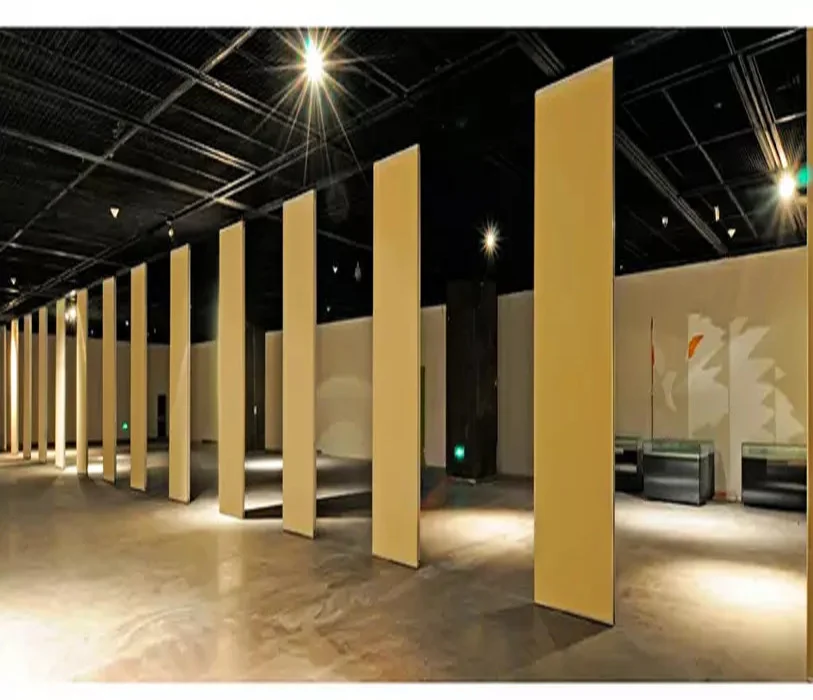
Confirm that the overhead route is continuous and that no discipline has introduced a break. Every proposed movement path requires a continuous connected overhead route and project-specific support review.
Turning and stacking checks
Record the turning geometry and the planned parking position. Parking style is customized to the customer layout and project requirements and may support compact stacking when the coordinated design permits it. The register should show which discipline owns the space at the stacking position.
Evidence Boundaries for Drawing Review
Evidence note: a coordinated drawing confirms that a revision was issued and reviewed. Those items require separate project-specific evidence and sign-off.
This boundary matters because teams often treat a clean drawing as a completed check. A drawing can be internally consistent and still lack the supporting information needed for construction. The register should link to the evidence source rather than replace it.
Visible references can support layout discussion but do not verify hidden construction or performance.
Discipline Uptake Patterns to Watch
Certain patterns repeat across projects. Ceiling packages may update early but miss later service changes. Finishes packages may not receive the revision at all if they are procured separately.
- Ceiling: confirm that service zones and access points do not interrupt the route.
- Services: confirm that no duct, pipe or cable tray crosses the movement path.
- Partition package: confirm that the finish and pass-door requirements match the current design.
- Adjacent packages: confirm that the stacking position is not blocked.
Confirmed finish options include laminate, melamine, fabric, leather, glass and other approved surfaces.
Pass-Door and Documentation Coordination

Pass-door requirements and project documentation can be discussed with the supplier. In the register, record who owns the pass-door location, which drawing shows it, and whether the adjacent disciplines have updated their packages. A pass-door change can affect the track route and the stacking position, so it belongs in the same revision cycle.
Keep the register aligned with the drawing issue schedule. If the schedule changes, the register should show which disciplines have not yet responded. This is a coordination record, not a contractual instruction.
FAQ
What is an architect coordination drawing revision uptake register for movable partitions?
It is a design-phase log that records which discipline has received, reviewed and built to the current track and stack layout. It tracks uptake, not performance.
Does the register confirm that a movable partition layout is buildable?
No. It shows coordination status.
How often should the register be updated?
At each drawing issue and coordination meeting.
Can the register be used for acoustic or fire compliance?
No. Acoustic and fire performance require separate evidence.
Who should own the register?
The design coordinator or architect usually maintains it, but each discipline must confirm its own uptake. Ownership of the register does not transfer design responsibility.
What should happen when a discipline does not update?
Raise it as an open query before the next milestone. Record the date, the responsible party and the unresolved item.
Conclusion and Contact
A drawing revision uptake register gives project teams a visible record of which discipline is building to the current movable partition track and stack layout. It supports coordination without pretending to replace engineering, acoustic or dimensional review. Keep it simple, review it at every issue, and confirm project-specific requirements with the responsible parties.
To discuss pass-door requirements, finish options or project documentation, contact EBUNGE. You can also review the movable wall product range and the project planning resources before the next coordination meeting.