
Quick answer: anchor-setting crew planning ceiling grid sectional closure
Review focus: anchor-setting crew planning ceiling grid sectional closure.
Anchor-setting crew planning ceiling grid sectional closure is a coordination problem before it is a labor problem. When a ceiling grid closes in sections, the overhead support sequence, the panel travel route and the stacking position all compete for the same zone. Contractors who treat these as separate trades often discover conflicts after anchors are set. This article offers an evidence-bounded framework for sequencing crews, reviewing drawings and confirming project-specific requirements. The suitability of each route and parking arrangement depends on the approved layout, circulation, ceiling interfaces and operating sequence.
Why Sectional Ceiling Closure Changes Crew Sequencing
Project review term: anchor-setting crew planning ceiling grid sectional closure.
A ceiling grid that closes in sections is not a single continuous plane. It is a series of zones that may be installed, inspected or closed at different times. For a top-hung movable partition, the overhead route must remain continuous and supported along the intended path. If a grid section closes before the support condition is verified, later access becomes difficult and may force rework.
The practical consequence is that anchor-setting crews cannot simply follow the ceiling crew. They must be planned around the closure sequence, the panel route and the parking position.
Information Contractors Should Collect Before Mobilization
Coordination scope: anchor-setting crew planning ceiling grid sectional closure.
Good crew planning starts with drawings and confirmed facts, not assumptions. Mark every section closure joint and note which zones must remain open for overhead access.
- Ceiling grid closure sequence and section boundaries.
- Intended partition route, including straight, turning and stacking paths.
- Planned parking or stacking position and its clearance zone.
- Finish schedule and any interface with adjacent trades.
- Inspection or sign-off points that could block access.
If any item is missing, treat it as an open question rather than a default. The partition supplier can discuss pass-door requirements and project documentation, but support and acoustic requirements remain project-specific.
A Step-by-Step Coordination Sequence
Checklist focus: anchor-setting crew planning ceiling grid sectional closure.
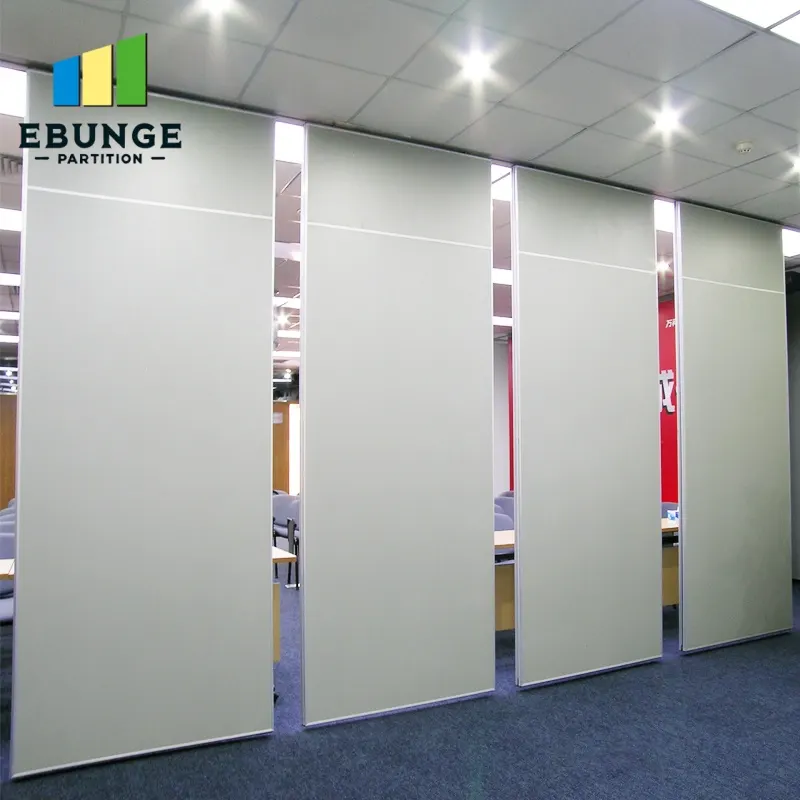
- Review the layout. Walk the straight, turning and stacking routes on paper and on site. Confirm that every proposed movement path has a continuous connected overhead route.
- Map closure sections. Overlay the ceiling grid closure sequence on the partition route. Identify zones where anchor-setting must precede grid closure.
- Confirm support conditions. Do not infer capacity from a visible grid or drawing alone.
- Sequence anchor-setting crews. Assign crews to zones that align with the closure sequence. Avoid sending crews into a zone that will be closed before their work is inspected.
- Coordinate parking and stacking. Verify that the planned stacking position remains accessible after each section closes.
- Document handover points. Record which zones are ready for partition installation and which remain open for verification.
This sequence is a planning aid, not a substitute for a project-specific method statement. Adjust it to the actual contract requirements and site conditions.
Decision Checklist for Zone Readiness
Review focus: anchor-setting crew planning ceiling grid sectional closure.
Use this checklist before releasing an anchor-setting crew into a zone. It helps prevent the common error of closing a grid section over an unverified support condition.
| Check | Evidence Needed | Responsible Party |
|---|---|---|
| Overhead route continuity | Layout drawing showing connected path | Design team |
| Support locations | Structural coordination drawing | Structural engineer |
| Closure sequence | Ceiling installation program | Ceiling contractor |
| Stacking position | Layout with clearance zone | Architect / owner |
| Pass-door requirements | Confirmed project documentation | Partition supplier |
Where evidence is missing, pause the crew rather than proceeding on assumption. This is the core discipline of anchor-setting crew planning around sectional closure.
Coordination With Other Trades
Anchor-setting crews rarely work in isolation. Electrical, mechanical, sprinkler and ceiling trades may all occupy the same overhead zone. The closure sequence should be shared with these trades so that no one closes a section before the anchor-setting inspection is complete.
Consider a short coordination meeting before each closure milestone. The goal is not to add bureaucracy but to confirm that the overhead route remains clear and that support conditions are unchanged. If a trade proposes a modification, route it through the same review process as the original design.
Evidence Boundaries and Acoustic Concepts
A higher rating generally indicates greater sound reduction in a tested configuration, but the actual performance of an installed partition depends on the full assembly, the perimeter condition and the project-specific construction.
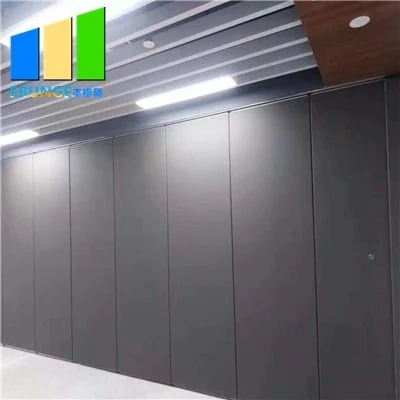
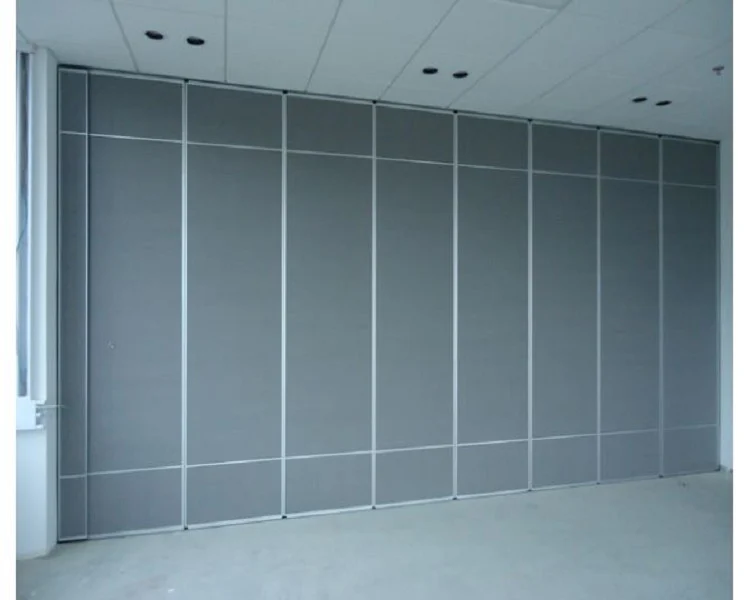
EBUNGE movable wall panels are individually movable, suspended from a top track, cross the opening without a floor track and park at a planned stacking position. Confirmed finish options include laminate, melamine, fabric, leather, glass and other approved surfaces. Confirm all project-specific support, acoustic and dimensional requirements with the responsible parties.
Frequently Asked Questions
What is the first step in anchor-setting crew planning for a sectional ceiling grid?
Review the partition layout and the ceiling closure sequence together. Identify every zone where anchor-setting must occur before the grid closes, and confirm that the overhead route is continuous and supported.
Can anchor-setting crews work after the ceiling grid is fully closed?
That depends on access and the project-specific support design. In many cases, closing a section before support verification creates access problems.
How do I confirm support locations for a top-hung partition?
Do not infer support capacity from a drawing, a visible grid or a generic product description.
Does a movable partition need a floor track?
EBUNGE movable wall panels are top-hung and cross the opening without a floor track. The overhead route must be continuous and supported along the intended path. Confirm the specific configuration with the supplier.
What finish options are confirmed for EBUNGE movable walls?
Confirmed finish options include laminate, melamine, fabric, leather, glass and other approved surfaces.
How should stacking position affect crew planning?
The stacking position must remain accessible after each ceiling section closes. Include it in the zone readiness checklist and verify clearance with the layout drawings.
Conclusion and Next Steps
Anchor-setting crew planning around a ceiling grid that closes in sections is a sequence and evidence problem. Collect the layout, map the closure zones, confirm support conditions in writing and release crews only when the zone is ready. Keep the overhead route continuous and supported, and treat every performance claim as project-specific until confirmed.
For product context, review the movable walls page. For general planning resources, see the resources section. To discuss pass-door requirements, project documentation or coordination questions, contact EBUNGE.