
Quick answer: ambulant route width
Review focus: ambulant route width.
An ambulant route width audit partition reconfiguration is a structured review that confirms people can still move safely through a space after movable walls have been rearranged. Because EBUNGE movable partition panels are individually movable, suspended from a top track, cross the opening without a floor track, and park at a planned stacking position, every new configuration changes the usable circulation zone. This article provides an evidence-bounded framework for overseas contractors, architects, interior designers, owners and renovation teams who need to verify route width without inventing performance claims.
Why Route Width Changes After Every Reconfiguration
Project review term: ambulant route width.
Movable partitions are not fixed elements. When panels travel along straight, turning or stacking routes, the clear floor area shifts. A route that was generous in one layout may become constrained in another because panels occupy a different parking position or because the opening is partially closed. The audit must therefore be repeated after each reconfiguration, not treated as a one-time approval.
The review should focus on what can be observed and measured on drawings and on site: the planned panel path, the stacking location, and the remaining clear width between fixed elements. Visible references can support layout discussion but do not verify hidden construction or performance. Those topics require separate project-specific evidence.
What the Audit Can and Cannot Confirm
Coordination scope: ambulant route width.
An ambulant route width audit can confirm that a proposed layout maintains a continuous clear path according to the project’s own accessibility criteria. The suitability of each route and parking arrangement depends on the approved layout, circulation, ceiling interfaces and operating sequence.
For EBUNGE movable walls, confirmed facts include top-hung panels, no continuous floor running track along the partition line, and parking that is customized to the customer layout. These facts help planners understand how panels move, but they do not replace project-specific support, acoustic and dimensional confirmation.
A Step-by-Step Audit Process
Use the following numbered process after each partition reconfiguration. It is designed to be repeated and documented.
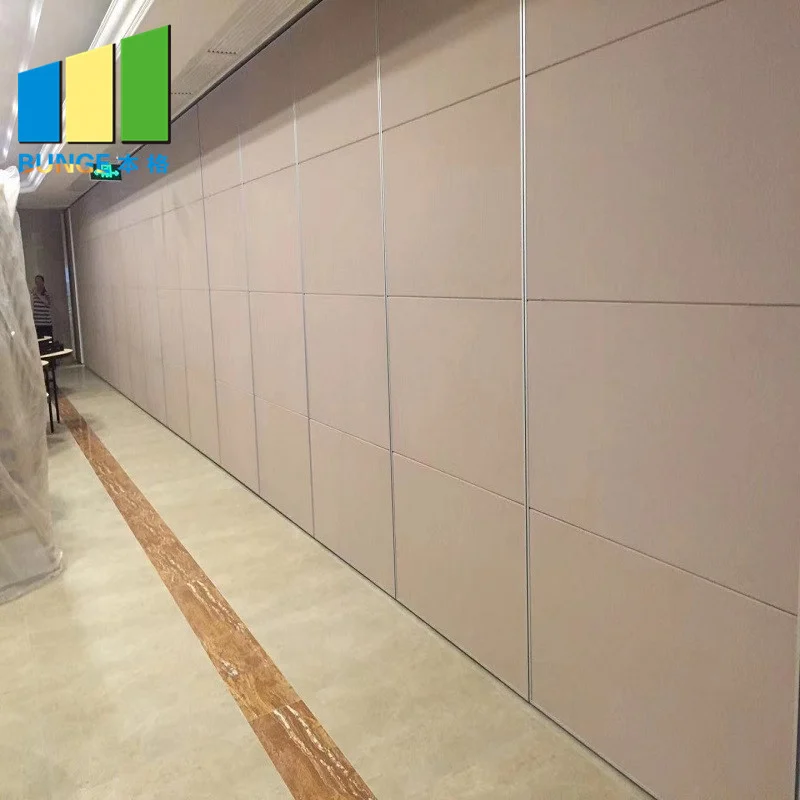
- Collect the current layout drawing. Mark the partition line, the opening, the parking position and all fixed obstructions.
- Trace the movement path. Confirm that straight, turning and stacking routes are continuous and connected overhead. The exact route, junction arrangement, continuous overhead path and parking position must be confirmed from the coordinated project drawings.
- Measure the remaining clear width. Identify the narrowest point along the ambulant route in the reconfigured state.
- Compare against project criteria. Use the accessibility standard or client brief that applies to the project. Do not substitute generic numbers.
- Record the result. Note the date, configuration, measured width and any deviation. This record supports future reconfigurations.
- Escalate unresolved items. If the route width is unclear or the support conditions are unverified, request project-specific review before proceeding.
Decision Checklist for Project Teams
Before signing off a reconfiguration, confirm the following items. This checklist is a coordination tool, not a performance guarantee.
- Is the parking position clearly shown and reachable without crossing an untracked gap?
- Does the ambulant route remain continuous from entry to exit in the new layout?
- Are pass-door requirements identified and discussed with the supplier?
- Have finish options such as laminate, melamine, fabric, leather or glass been reviewed for the project’s visible surfaces?
- Are project-specific support, acoustic and dimensional requirements confirmed in writing?
- Is the audit record stored with the layout drawing for future reference?
Coordinating with Finishes and Pass Doors
Finish choices can affect how a route is perceived and used. EBUNGE confirmed finish options include laminate, melamine, fabric, leather, glass and other approved surfaces. If a project requires specific performance, that must be verified separately.
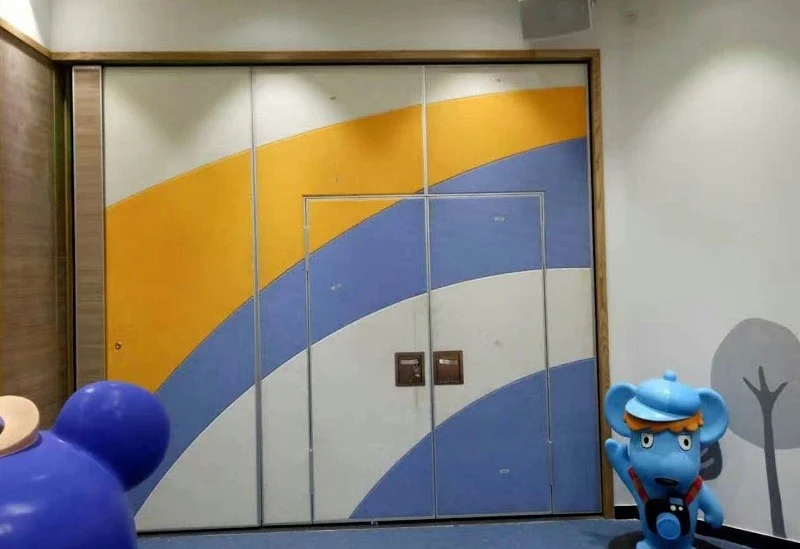
Pass-door requirements also influence route width. A pass door within a movable partition may change the clear opening and the path of travel. Discuss pass-door requirements and project documentation early with the supplier so that the layout drawing reflects the intended use.
Evidence Notes and Documentation Boundaries
Every audit should distinguish between observed facts and assumptions. Observed facts include measured clear width, panel parking position and visible obstructions. Do not derive hidden performance from a drawing or a finish sample.
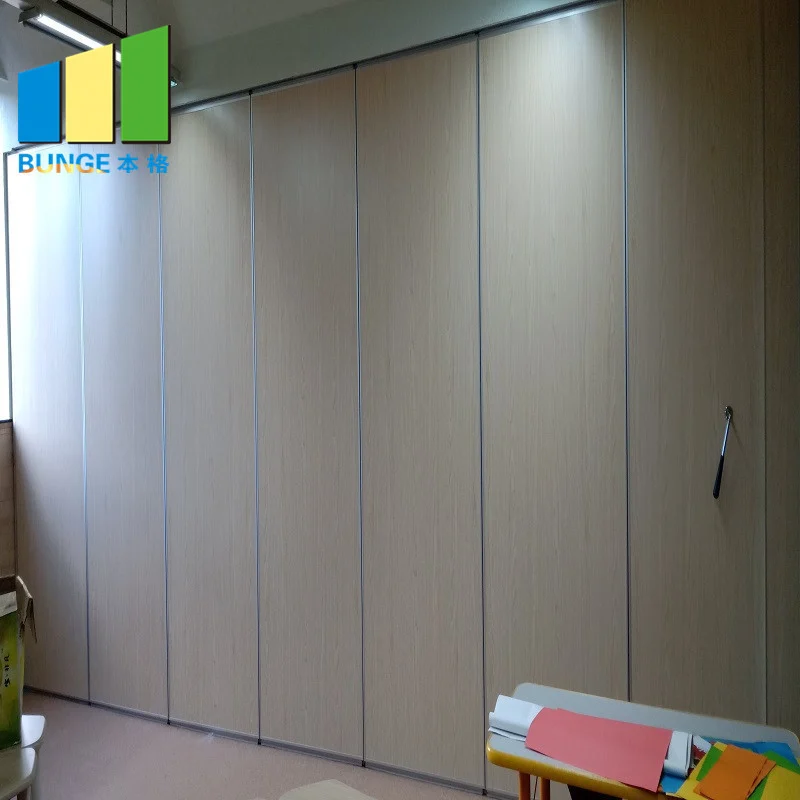
Evidence note: A route width audit confirms circulation geometry only. It does not confirm acoustic rating, fire rating, structural load, service life or financial return. Confirm all project-specific support, acoustic and dimensional requirements with qualified professionals and the supplier.
For further planning resources, see the EBUNGE resources page. To discuss a specific project, use the contact page. Product information for movable walls is available at movable walls.
Common Coordination Gaps
Route width audits often fail because teams treat them as a one-time task. In practice, each reconfiguration can change the relationship between the partition, the parking area and the fixed furniture. A layout that works for a conference room may not work for a classroom or a hotel ballroom. The named venue is an example only; movable partitions can be considered wherever flexible spatial division, combination or reconfiguration is required.
It does not. Comparative, absolute and causal statements require corresponding evidence. If evidence is missing, state the confirmation boundary instead of filling the gap with an assumption.
Frequently Asked Questions
What is an ambulant route width audit partition reconfiguration?
Provide the current layout, opening dimensions, ceiling information, intended room use, and relevant project drawings for review. The exact overhead route and support arrangement must be confirmed by the responsible project team from coordinated drawings.
How often should the audit be repeated?
After every reconfiguration that changes the partition line, opening or parking position. If the layout remains identical, a new audit may not be necessary, but the original record should still be available.
Can EBUNGE confirm a specific route width for my project?
Project-specific dimensional requirements must be confirmed with EBUNGE and the project team. This article provides a framework, not a guaranteed dimension.
Do movable partitions need a floor track?
EBUNGE movable partition panels are top-hung and move without a continuous floor running track or floor hardware along the partition line. The overhead route must still be continuous and supported according to project requirements.
What should be included in the audit record?
Include the date, configuration, measured clear width, parking position, any obstructions, and the project criteria used for comparison. Store it with the layout drawing.
Does a finish choice affect route width?
Finish options such as laminate, melamine, fabric, leather or glass are surface selections. They do not replace dimensional or performance confirmation. Route width depends on panel position and fixed elements.
Conclusion and Next Steps
Auditing ambulant route width after each partition reconfiguration is a practical discipline that protects circulation without overclaiming performance. By tracing movement paths, measuring clear width, documenting results and separating observed facts from assumptions, project teams can coordinate movable walls more reliably. Always confirm project-specific support, acoustic and dimensional requirements before finalizing a layout.
To discuss your project’s route width, pass-door requirements or documentation needs, contact EBUNGE. You can also review movable walls and the resources page for further planning context.