
Quick answer: ambulant route continuity
Review focus: ambulant route continuity.
An ambulant route continuity review parked partition panels exercise is not a check of the panel face or finish. It is a drawing-based review of what happens to the walking route once panels leave the opening and rest at their planned stacking position. For contractors, architects, interior designers, owners and renovation teams, the value of this review is simple: it forces the project team to confirm that the route remains connected, legible and coordinated with the surrounding layout before installation begins.
EBUNGE movable wall panels are individually movable, suspended from a top track, cross the opening without a floor track, and park at a planned stacking position. Those maintained facts define the review boundary. They do not, by themselves, confirm that a specific route will work in a specific building.
Why Parked Panels Change the Circulation Question
Project review term: ambulant route continuity.
When panels are in the closed position, the circulation question is usually about the opening itself. When panels are parked, the question shifts to the stacking zone and the route that passes it. A parked panel group occupies a planned location.
This is where project teams often rely on assumptions. A drawing may show a stacking position, but it may not show how the route behaves at that position. The review should therefore treat the parked state as a distinct configuration, not as an afterthought to the open state.
What the review is not
It is not a claim that any route will remain clear in every building. It is not a substitute for project-specific dimensional, support or acoustic confirmation. It is a structured way to ask the right questions early, while changes are still inexpensive to coordinate.
Start With the Maintained Product Facts
Coordination scope: ambulant route continuity.
Every route review should begin from the same maintained description. EBUNGE movable wall panels are top-hung and move without a continuous floor running track or floor hardware along the partition line.
Those facts matter because they shape where the review should focus. With a top-hung system, the overhead route and the stacking position are central. The absence of a floor track along the partition line does not remove the need to review the parked condition.
Do not infer hidden performance
Visible references can support layout discussion but do not verify hidden construction or performance. If a route review depends on a performance assumption, that assumption needs its own evidence. Otherwise, state the confirmation boundary clearly and leave the conclusion open.
Review the Straight, Turning and Stacking Routes
Checklist focus: ambulant route continuity.
Straight, turning and stacking routes are reviewed from the layout. This is a drawing exercise before it is a site exercise. The goal is to trace each proposed movement path and confirm that it is continuous and connected to the overhead route.
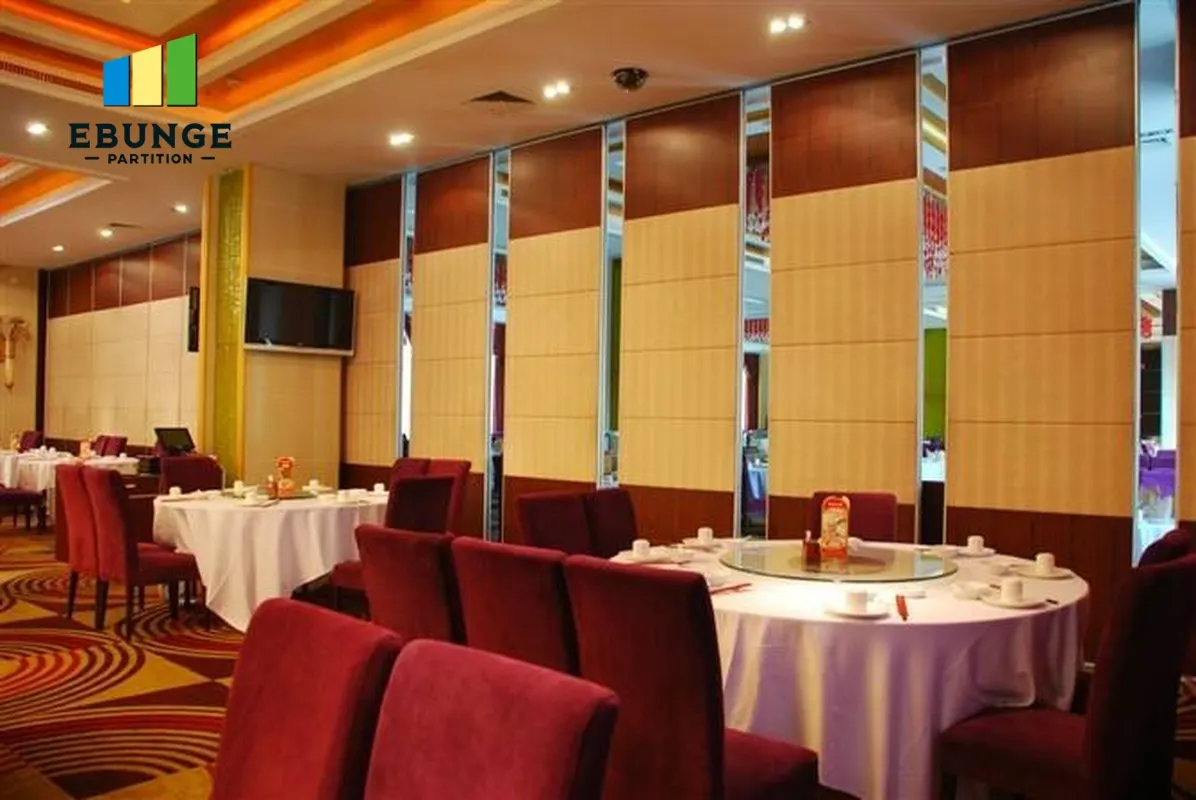
A common error is to review only the straight run across the opening. The exact route, junction arrangement, continuous overhead path and parking position must be confirmed from the coordinated project drawings. A stacking route may end in a zone that also serves as a circulation path.
Evidence note
Every proposed movement path requires a continuous connected overhead route and project-specific support review. If the drawing does not show that continuity, the review is incomplete.
A Practical Checklist for Project Teams
Review focus: ambulant route continuity.
Use the following checklist as a coordination aid. It is not a substitute for project-specific engineering or dimensional confirmation, but it helps teams ask consistent questions across disciplines.
- Mark the parked position on the layout and label it as a distinct configuration.
- Confirm that each proposed movement path connects to a continuous overhead route.
- Check how the parked position relates to adjacent circulation, doors and fixed elements.
- Record any route question that depends on support, acoustic or dimensional confirmation.
- Assign each open question to the party responsible for resolving it before installation.
- Revisit the review after any layout change that affects the stacking zone.
Coordinate Across Disciplines
Accessibility and Circulation Review coordination is rarely a single-discipline task. The architect may own the layout, the contractor may own the installation sequence, and the owner may own the operational intent. The route review should reflect all three perspectives.
Pass-door requirements and project documentation can be discussed with the supplier. That discussion is useful because it clarifies what information is needed, not because it replaces the project team’s own review. The supplier can explain the maintained product facts and the documentation boundary.
Questions to bring to coordination
Bring the layout, the proposed parked position and the route questions. Ask which items require project-specific support, acoustic and dimensional confirmation. Ask what documentation is available and what remains open. Keep the answers in the project record so later changes can be checked against them.
Common Review Gaps and How to Close Them
Most gaps are not dramatic. They are small omissions that become visible only when the panels are parked. A stacking position may be shown without the route beside it. A support question may be deferred because it seems minor.
Closing these gaps is a matter of discipline. Treat the parked state as a required drawing condition. Trace each route. Record each open question. Confirm each dependency before the layout is frozen.
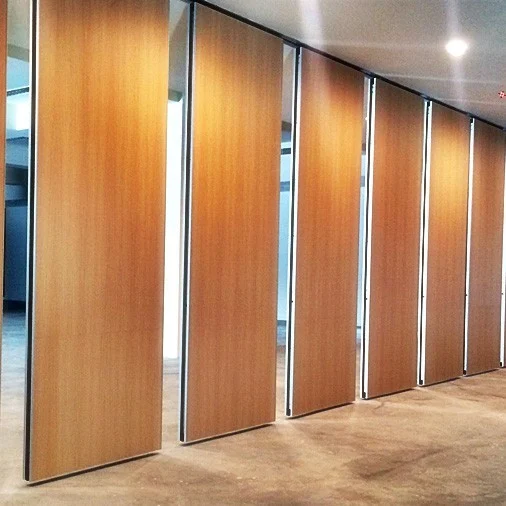
| Review item | What to confirm | Evidence boundary |
|---|---|---|
| Parked position | Location is shown on the layout | Project-specific drawing review |
| Straight route | Path is continuous and connected | Continuous overhead route required |
| Turning route | Path is traced, not assumed | Project-specific dimensional review |
| Stacking route | End position is coordinated | Project-specific support review |
| Route beside parked panels | Circulation remains legible | Accessibility and Circulation Review |
What to Confirm Before Specification
Ambulant route continuity review parked partition panels specification should not rest on generic assumptions. Before specification, confirm the layout, the parked position, the route conditions and the documentation boundary. Confirm which items are maintained product facts and which require project-specific evidence.
Finish options include laminate, melamine, fabric, leather, glass and other approved surfaces. Finish selection does not confirm route performance. It is a separate decision that should be coordinated with the layout review rather than used to answer it.
Keep the boundary visible
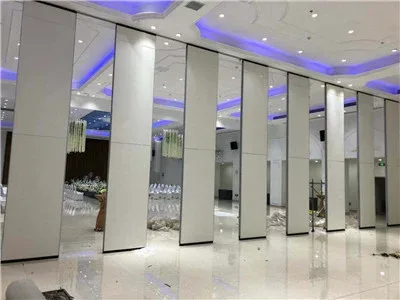
If a statement depends on project-specific support, acoustic or dimensional confirmation, say so. That is not a weakness in the review. It is the correct way to keep the review honest and useful.
Frequently Asked Questions
What is an ambulant route continuity review when partition panels are parked?
It is a drawing-based review of how the walking route behaves once panels leave the opening and rest at their planned stacking position. It traces the straight, turning and stacking routes and confirms that each proposed movement path connects to a continuous overhead route.
Do parked panels always affect the circulation route?
The suitability of each route and parking arrangement depends on the approved layout, circulation, ceiling interfaces and operating sequence. The stacking position occupies a planned location, and the route beside, in front of or around that location should be checked against the layout.
Can the supplier confirm that a specific route will work?
The supplier can explain maintained product facts and discuss project documentation. The exact overhead route and support arrangement must be confirmed by the responsible project team from coordinated drawings. The project team should keep those confirmations in the project record.
Does the absence of a floor track remove the need for route review?
No. EBUNGE movable wall panels cross the opening without a floor track, but the parked condition still needs review. The overhead route, the stacking position and the surrounding circulation remain part of the layout question.
What should be included in the review documentation?
Include the layout, the parked position, the traced routes, the open questions and the party responsible for each confirmation. Pass-door requirements and project documentation can be discussed with the supplier as part of that record.
When should the review happen in the project timeline?
It should happen early, while the layout is still flexible, and it should be revisited after any change that affects the stacking zone. Late changes are harder to coordinate and more likely to leave route questions unresolved.
Conclusion
Reviewing ambulant route continuity when partition panels are parked is a matter of tracing the layout honestly and keeping the evidence boundary visible. Start from the maintained product facts. Treat the parked state as a required configuration. Confirm the straight, turning and stacking routes.
To discuss your layout, pass-door requirements or project documentation, contact EBUNGE. You can also review the movable walls product page and the resources section for further planning context.