
When planning a training center renovation, the acoustic partition tender specification is not just a document to send to suppliers—it is your primary tool for comparing bids, managing risks, and ensuring that the final operable wall system delivers the sound privacy your clients expect. Without a clear, detailed specification, you risk receiving vague quotes, unexpected costs, and a partition that fails to meet acoustic targets. This guide explains why a precise acoustic partition tender specification matters for your training center project, how to structure it for effective supplier communication, and what to look for when evaluating responses.
Direct answer: A well-prepared acoustic partition tender specification for a training center is essential because it translates your acoustic performance needs into measurable requirements, enabling suppliers to provide accurate quotes, reducing the risk of hidden costs, and ensuring that the final movable partition wall meets your sound privacy expectations. It also streamlines bid comparison and clarifies installation, warranty, and coordination responsibilities.
Why a Detailed Specification Is Critical for Training Center Projects
Training centers often host simultaneous sessions, requiring flexible spaces that can be divided without compromising sound privacy. A vague specification leads to assumptions, and assumptions lead to mismatched expectations. For instance, if you only state “good sound insulation,” one supplier might interpret that as a 35 dB rating, while another assumes 45 dB. The result is a bid that may be too low (with a lower-performing wall) or too high (with an over-specified system). A detailed acoustic partition tender specification eliminates this ambiguity, ensuring all bidders respond to the same criteria.
Moreover, a thorough specification helps you compare bids fairly. When every supplier receives the same technical parameters—such as required sound insulation class, wall height, and operation method—you can evaluate their proposals based on cost, materials, and service, rather than on differing interpretations of your needs. This is especially important for a training center, where the acoustic performance directly impacts the user experience and the center’s reputation.
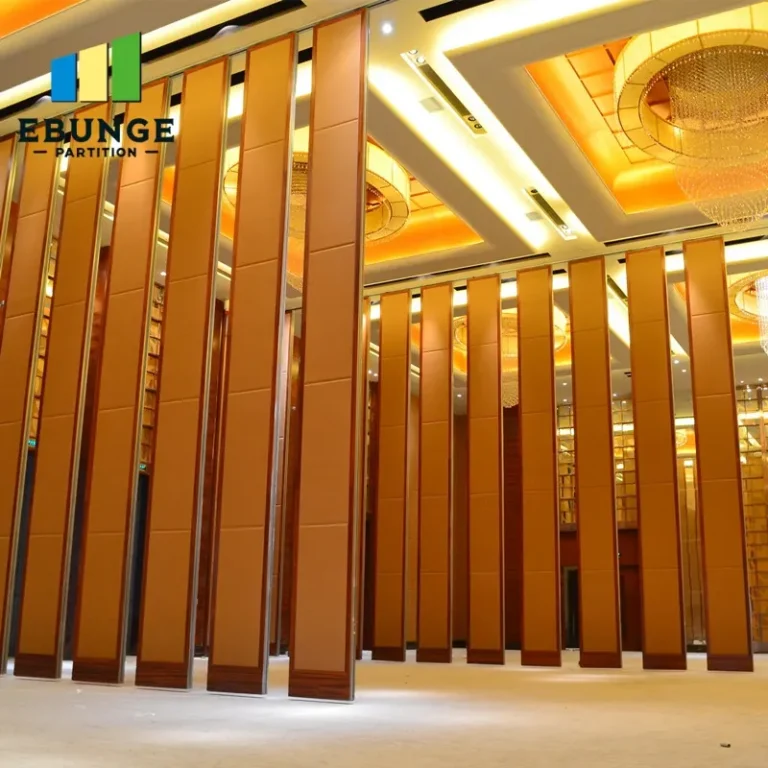
Need help turning the acoustic partition tender specification requirements into a practical project layout?
Key Technical Requirements to Include in Your Acoustic Partition Tender Specification
To ensure your specification is complete, include the following technical elements:
- Acoustic performance: Specify the required sound insulation rating (e.g., Rw or STC) based on your acoustic target. For training centers, a rating of 45-50 dB is common, but this should be confirmed through acoustic testing or consultation.
- Dimensions and configuration: Provide exact opening sizes, ceiling height, and the number of partition runs. Include details about stacking area and whether the wall needs to be curved or straight.
- Operation system: Specify whether you require a top-hung track system (without floor rail) for easier cleaning and accessibility, or if a floor guide is acceptable.
- Materials and finishes: State the desired panel finish (e.g., fabric, laminate, or writeable surface) and any acoustic properties of the surface material.
- Fire safety and building codes: Mention any fire-resistance requirements or local regulations that the partition must comply with.
- Installation and coordination: Outline the installation timeline, site conditions, and coordination with other trades (e.g., electrical, HVAC).
Providing this level of detail in your acoustic partition tender specification not only helps suppliers quote accurately but also demonstrates that you are a serious buyer, which can lead to more competitive pricing and better service.
How to Structure Your Tender Document for Clear Communication
A well-structured tender document makes it easy for suppliers to respond and for you to compare offers. Start with an introduction that describes the project scope, including the training center’s purpose and the expected usage patterns. Then, present the technical requirements in a logical order, using tables or bullet points for clarity. Include a section for commercial terms, such as payment schedule, delivery timeline, and warranty expectations. Finally, provide a response template that suppliers must follow, ensuring consistency in their submissions.
For example, you might structure your document as follows:
- Project overview and objectives
- Technical specifications (acoustic, dimensional, operational)
- Supply and installation scope
- Commercial terms and conditions
- Supplier response requirements
This structure helps suppliers quickly find the information they need and reduces the likelihood of incomplete or non-compliant bids.
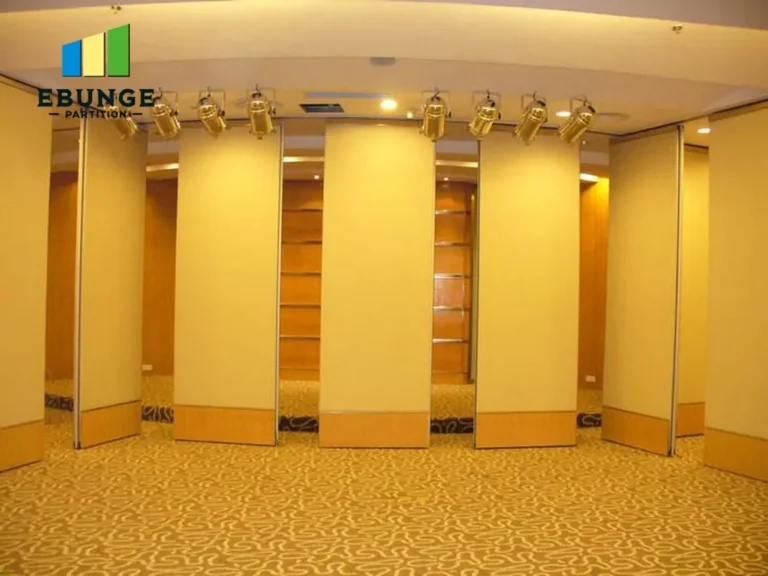
Evaluating Supplier Responses: What to Look For
When you receive bids, evaluate them systematically. Do not simply compare prices; assess each proposal against your acoustic partition tender specification. Here are key points to check:
- Acoustic performance: Does the supplier guarantee the specified sound insulation rating? Are they willing to provide test reports or certifications?
- System details: Does the proposed movable partition wall use a top-hung track system as requested? What is the panel construction and sealing mechanism?
- Installation plan: Does the supplier clearly outline the installation process, timeline, and required site preparation?
- Warranty and after-sales support: What warranty do they offer, and what does it cover? How do they handle maintenance and repairs?
- Hidden costs: Are there any additional charges for delivery, installation, or site conditions? Ensure the quote is comprehensive.
By creating a scoring matrix based on these criteria, you can objectively compare bids and select the supplier that best meets your needs, not just the one with the lowest price.
Share the opening, drawings, finish direction, and privacy target for a project-specific review.
Common Pitfalls in Tender Specifications and How to Avoid Them
Even experienced buyers can make mistakes in their acoustic partition tender specification. Here are common pitfalls and how to avoid them:
- Being too vague: Avoid terms like “good quality” or “adequate soundproofing.” Use measurable criteria.
- Over-specifying: While detail is good, specifying unnecessary features can inflate costs. Only include what is essential for your training center.
- Ignoring site constraints: Consider ceiling structure, load-bearing capacity, and access for installation. Include these in the specification.
- Not clarifying responsibilities: Clearly state who is responsible for what, especially regarding coordination with other trades.
By addressing these pitfalls, you can create a specification that is both comprehensive and realistic, leading to smoother procurement and installation.
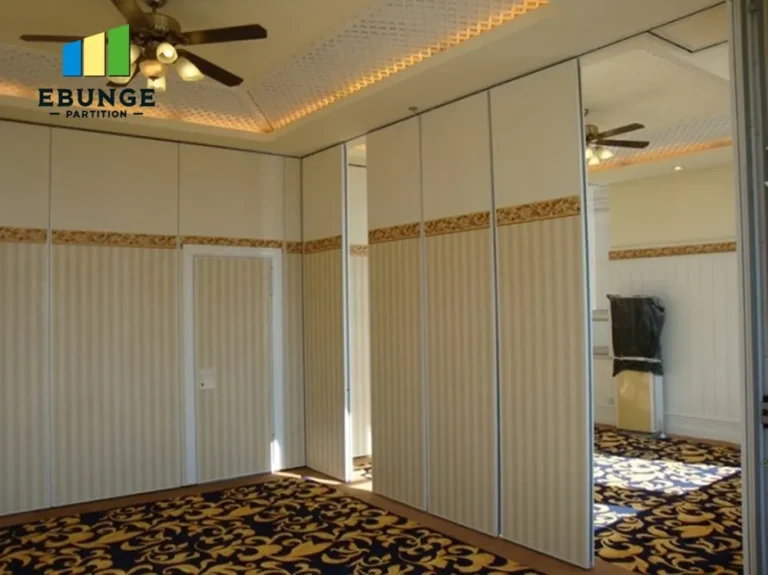
Case Example: Applying a Tender Specification in a Training Center Renovation
Consider a training center that needs to divide a large hall into two smaller rooms for simultaneous workshops. The acoustic target is 48 dB. The specification includes a top-hung track system, no floor rail, and a specific fabric finish. After sending the tender to three suppliers, the buyer evaluates bids based on compliance with the specification, price, and warranty. Supplier A offers a lower price but cannot guarantee the acoustic rating without additional testing. Supplier B provides a detailed proposal with test reports and a 10-year warranty. Supplier C is similar to B but has a longer installation timeline. The buyer selects Supplier B, as it best meets the specification and offers reliable support.
This example illustrates how a clear specification streamlines decision-making and reduces risk. For more insights on selecting the right movable partition wall, explore our movable partition wall solutions.
Checklist for Your Acoustic Partition Tender Specification
Use this checklist to ensure your specification covers all critical points:
| Item | Details to Include |
|---|---|
| Acoustic target | Rw/STC rating, test method |
| Dimensions | Opening sizes, wall height, stacking area |
| Operation | Top-hung track, floor guide, manual/automatic |
| Finishes | Material, color, writeable surface |
| Fire safety | Fire-resistance rating, compliance standards |
| Installation | Timeline, site prep, coordination |
| Warranty | Duration, coverage, after-sales support |
| Commercial terms | Payment schedule, delivery, penalties |
For further guidance on acoustic partition solutions, visit our acoustic partition solutions category.
Conclusion: Turn Your Tender Specification into a Procurement Advantage
A detailed acoustic partition tender specification is more than a formality—it is a strategic tool that protects your project from cost overruns, delays, and performance shortfalls. By clearly defining your requirements, you empower suppliers to quote accurately and you enable yourself to compare bids fairly. This leads to a better final outcome: a training center that offers the sound privacy your clients need, delivered on time and within budget.
Remember, the goal is not just to get a partition wall, but to get the right partition wall for your specific application. Take the time to craft a thorough specification, and you will reap the benefits throughout the project lifecycle.
Frequently Asked Questions
What is the ideal acoustic rating for a training center partition wall?
How can I ensure the partition meets the specified acoustic performance?
What are the hidden costs often associated with acoustic partition installation?
How long does installation typically take for a movable partition wall?
What warranty and after-sales support should I expect?
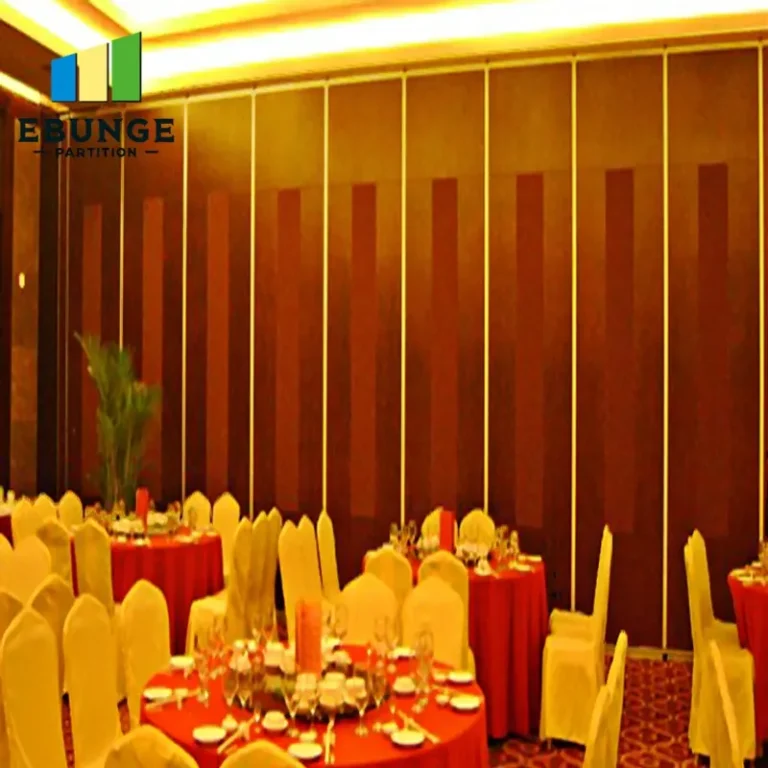
For more information on how to specify and procure acoustic partitions, or to discuss your training center project, feel free to contact our team. We are here to help you make informed decisions.
Send the opening size and drawings to discuss a differentiated acoustic partition tender specification solution.