
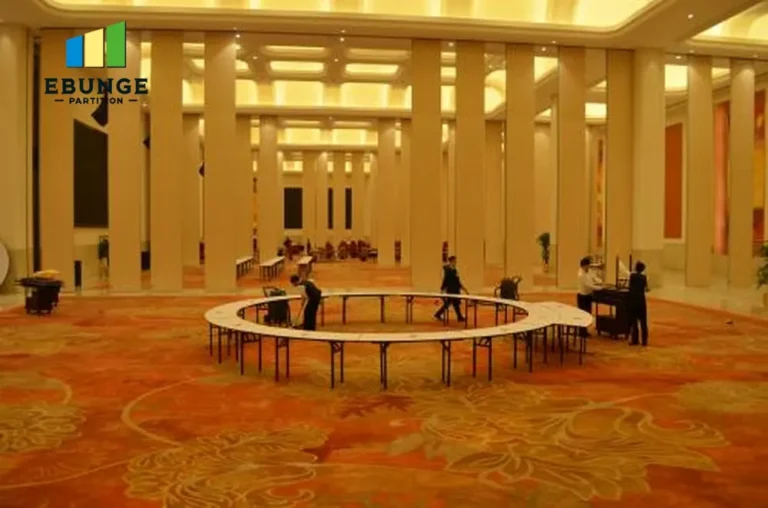
When planning a school hall that must serve assemblies, examinations, performances, and sports events, the ability to divide the space efficiently is often a deciding factor. Acoustic movable walls for school halls allow you to adapt the hall to different activities without compromising sound privacy. However, choosing the right system involves more than picking a partition that looks good on a brochure. You need to consider acoustic performance, safety, ease of operation, maintenance, installation timelines, and budget constraints. This article guides you through the key design-ideas and technical requirements to help you prepare for a successful quotation and avoid costly mistakes.
Direct Answer: Acoustic movable walls for school halls are panel systems that divide large spaces into smaller rooms while providing sound insulation. They are typically top-hung, meaning they run on overhead tracks without floor rails, offering flexibility and safety. To choose the right system, you must define the required acoustic rating (e.g., Rw value), opening sizes, finishes, and operational needs. Always consult with your architect and a reputable supplier to ensure compliance with building codes and to get accurate quotations.
Acoustic Movable Walls For School: Why Acoustic Performance Matters in School Halls
In a school hall, activities often happen simultaneously. A music rehearsal may be taking place in one section while an exam is being held in another. Without proper acoustic separation, noise can disrupt concentration and learning. Acoustic movable walls for school halls are designed to reduce sound transmission, but the level of reduction varies significantly between systems. The acoustic performance is measured in Rw (weighted sound reduction index) or STC (Sound Transmission Class). For school halls, a typical requirement is Rw 40-50 dB, but this depends on the specific activities. For example, if you need to separate a music room from a classroom, you may need a higher rating.
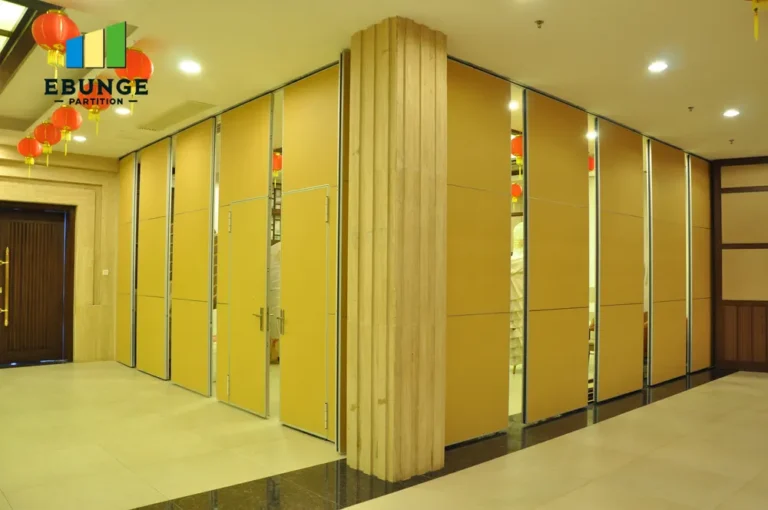
Need help turning the acoustic movable walls for school requirements into a practical project layout?
Key Design Considerations for School Hall Partitions
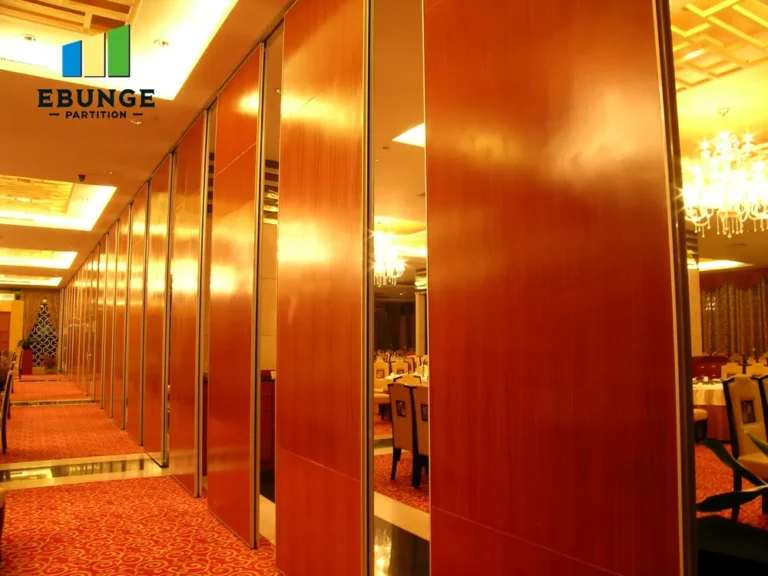
When designing with acoustic movable walls, you must consider the hall’s dimensions, ceiling height, and structural support. Top-hung track systems are popular because they do not require floor rails, making them safer and easier to maintain. The track must be securely fixed to the building structure to support the weight of the panels. The number of panels and their stacking space must be planned to avoid interfering with lighting, HVAC, or fire safety systems. Also, consider the aesthetics: panels can be finished with tackable surfaces, whiteboards, or custom colors to match the school’s interior.
Understanding Acoustic Ratings and What They Mean
Acoustic ratings are not just numbers; they indicate how well a partition blocks sound. Rw is the weighted sound reduction index, and higher values mean better insulation. However, the actual performance depends on the installation quality and flanking paths (e.g., gaps around edges). For school halls, you should aim for an Rw that meets your specific needs. It is essential to ask your supplier for acoustic test reports and to verify that the system is installed correctly to achieve the stated rating. Remember that the overall partition system’s performance is only as good as its weakest point, so attention to perimeter seals is crucial.
Safety Features for Children and Daily Use
Safety is paramount in a school environment. Acoustic movable walls for school halls should have rounded edges, pinch guards, and smooth operation to prevent accidents. Top-hung systems eliminate floor tracks, reducing trip hazards. Also, consider the operation: manual systems require physical effort, which may not be suitable for younger children. Motorized options ensure ease of use and can be operated with a simple push of a button. Ensure that the system complies with relevant safety standards and that all moving parts are protected.
Ease of Operation and Maintenance
Daily use means the partition will be moved frequently. Choose a system with durable hardware and low-maintenance features. Top-hung tracks with sealed bearings and nylon wheels require minimal lubrication. Panels should be easy to clean, with finishes that resist stains and scratches. For maintenance, consider the accessibility of the track and hardware for inspections. A well-designed system should have a long lifespan, reducing the total cost of ownership.
Installation Time and Impact on School Schedule
Installation of acoustic movable walls can take from a few days to several weeks, depending on the complexity. For a school hall, minimizing disruption is crucial. Discuss the installation timeline with your supplier and plan it during school holidays or weekends. A professional installation team will work efficiently and ensure that the system is properly aligned and tested. Also, consider the delivery time for custom-made panels, which may take several weeks. Early planning is essential to meet your project deadlines.
Budgeting for Your Movable Partition Wall
Budget is a major consideration for any school project. The cost of acoustic movable walls varies based on size, acoustic rating, finishes, and automation. It is wise to get multiple quotations and compare them carefully. However, do not compromise on quality for the sake of a lower price, as a poor-quality partition may fail to meet acoustic requirements and require costly repairs. Ask about warranty and after-sales support. A reputable supplier will offer a warranty that covers defects in materials and workmanship, and they should be responsive to any issues that arise.
Share the opening, drawings, finish direction, and privacy target for a project-specific review.
Customization and Aesthetics for School Interiors
Acoustic movable walls for school halls can be customized to match the school’s branding or interior design. Finishes include laminate, veneer, fabric, and even dry-erase surfaces. You can choose the panel width, height, and stacking configuration. Customization also extends to the acoustic properties: you can specify the Rw value based on your needs. Working with a supplier that offers custom movable walls ensures that the system fits your hall perfectly and meets all functional and aesthetic requirements.
Compliance with Building Codes and Standards
School buildings must comply with local building codes, fire safety regulations, and accessibility standards. Acoustic movable walls must meet these requirements, including fire resistance and emergency exit routes. Ensure that the partition system has the necessary certifications and that the supplier can provide documentation. Also, consider the acoustic requirements for specific spaces, such as classrooms, which may have regulations for sound insulation. A knowledgeable supplier will guide you through compliance.
Practical Checklist for Your School Hall Partition Project
To prepare for your quotation and ensure you cover all bases, use this checklist:
| Item | Details to Specify |
|---|---|
| Opening size | Width, height, and number of panels |
| Acoustic target | Required Rw value (e.g., 45 dB) |
| Finishes | Color, material, tackable surface |
| Operation | Manual or motorized |
| Safety features | Pinch guards, rounded edges |
| Compliance | Fire rating, building codes |
| Installation schedule | Preferred dates, site constraints |
| Budget range | Your budget or request for options |
Having this information ready will help you get accurate quotations and streamline the decision-making process.
Understanding the Quotation Process
When you contact a supplier for a quote, be prepared to share the opening size, architectural drawings, acoustic target, finish preferences, and project location. This information allows the supplier to provide a detailed proposal. A reputable supplier will visit the site if necessary and offer technical advice. They should also clarify what is included in the quotation, such as delivery, installation, and warranty. Always ask for a breakdown of costs and a timeline.
Why Top-Hung Track Systems Are Preferred
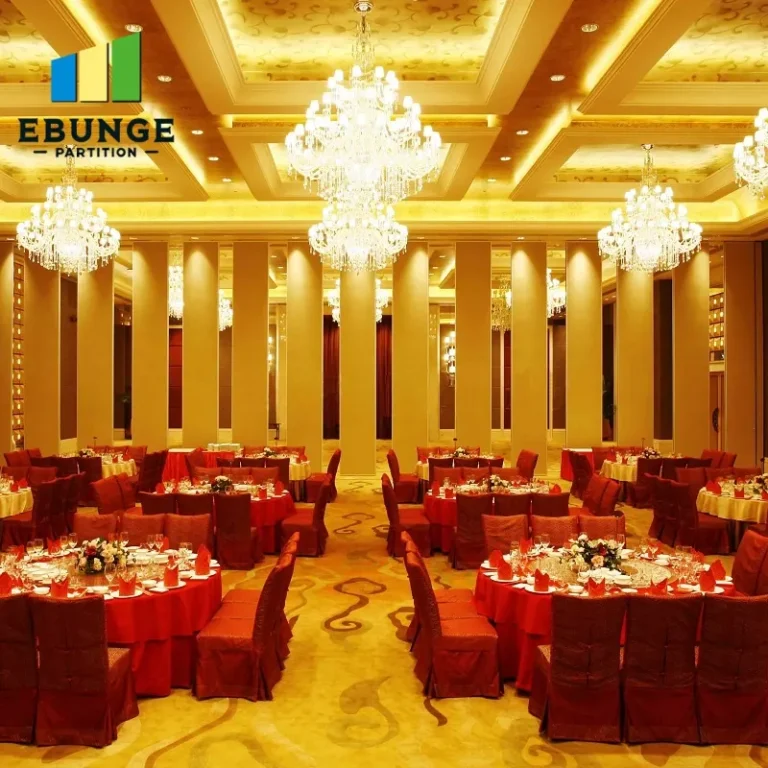
Top-hung track systems are a popular choice for school halls because they offer several advantages. Without a floor rail, there are no obstructions on the floor, making it safer and easier to clean. The weight of the panels is supported from above, reducing the risk of misalignment. Top-hung systems also provide better acoustic sealing because the bottom seal can be dropped automatically. This design also allows for easier integration with the building structure, especially when there are underfloor services.
Final Thoughts on Choosing Acoustic Movable Walls
Selecting the right acoustic movable walls for school halls requires careful planning and consideration of multiple factors. By focusing on acoustic performance, safety, ease of operation, maintenance, installation, budget, and compliance, you can make an informed decision. Remember to consult with experts and request detailed quotations. With the right system, your school hall can become a multifunctional space that serves the entire school community effectively.
Frequently Asked Questions
What is the typical acoustic rating for school hall partitions?
The typical acoustic rating for acoustic movable walls for school halls ranges from Rw 40 to 50 dB, depending on the intended use. For example, if you need to separate a music room, you may require a higher rating. Always specify your acoustic target in your inquiry.
Can acoustic movable walls be customized to match school colors?
Yes, acoustic movable walls can be finished with a wide range of colors and materials, including laminates, fabrics, and dry-erase surfaces. This allows you to match the school’s branding or interior design.
Are motorized systems worth the extra cost?
Motorized systems are more convenient, especially for large or heavy panels, and can be operated with a remote or wall switch. They are safer for children and reduce physical effort. The extra cost may be justified by the long-term benefits and ease of use.
How long does installation typically take?
Installation time varies based on the size and complexity of the system. A simple installation may take a few days, while a complex one could take weeks. It is best to discuss the timeline with your supplier and plan accordingly.
What maintenance is required for acoustic movable walls?
Maintenance is generally low. Regularly check the track and hardware for dust and debris, and lubricate moving parts as recommended by the manufacturer. Panels can be cleaned with a damp cloth. A well-maintained system will last for many years.
For more information on movable partition walls and their applications, you can explore our movable partition wall solutions or read our blog for insights. If you have specific questions, feel free to contact us for personalized assistance.
Send the opening size and drawings to discuss a differentiated acoustic movable walls for school solution.