
Quick project answer
Review focus: accessible route audit.
An accessible route audit partition stacking states review asks a simple question: when the movable wall is parked, does the route still work? Many teams check the open room and the closed room, then treat the stacking position as a storage detail. That gap can leave a corridor, door approach or turning area blocked in daily use. This article sets out an evidence-bounded way to review every state, using maintained product facts and project drawings rather than assumptions.
Why the Stacking State Is a Circulation State
Project review term: accessible route audit.
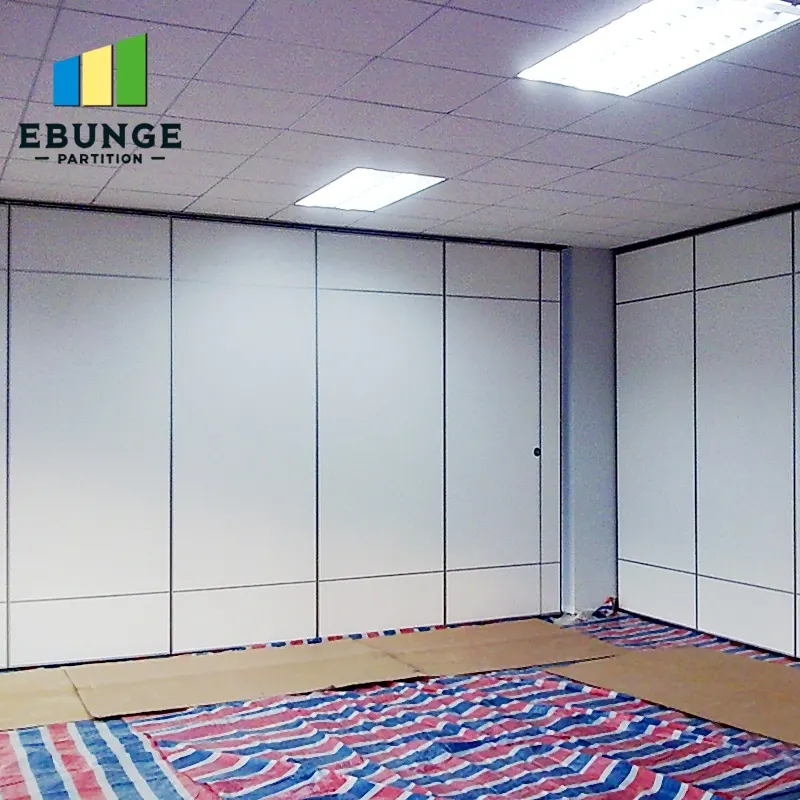
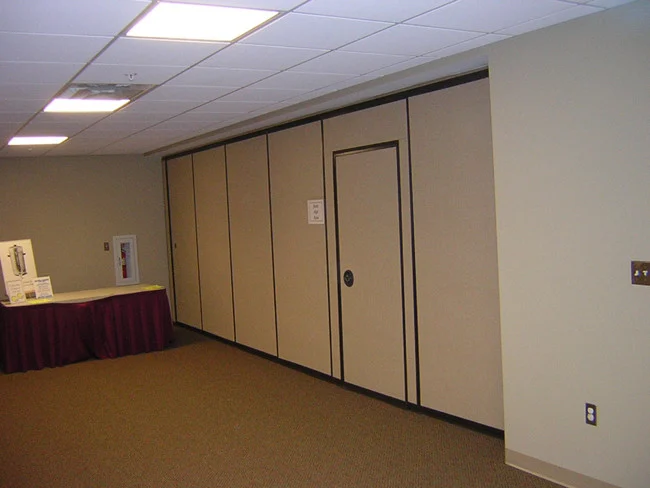
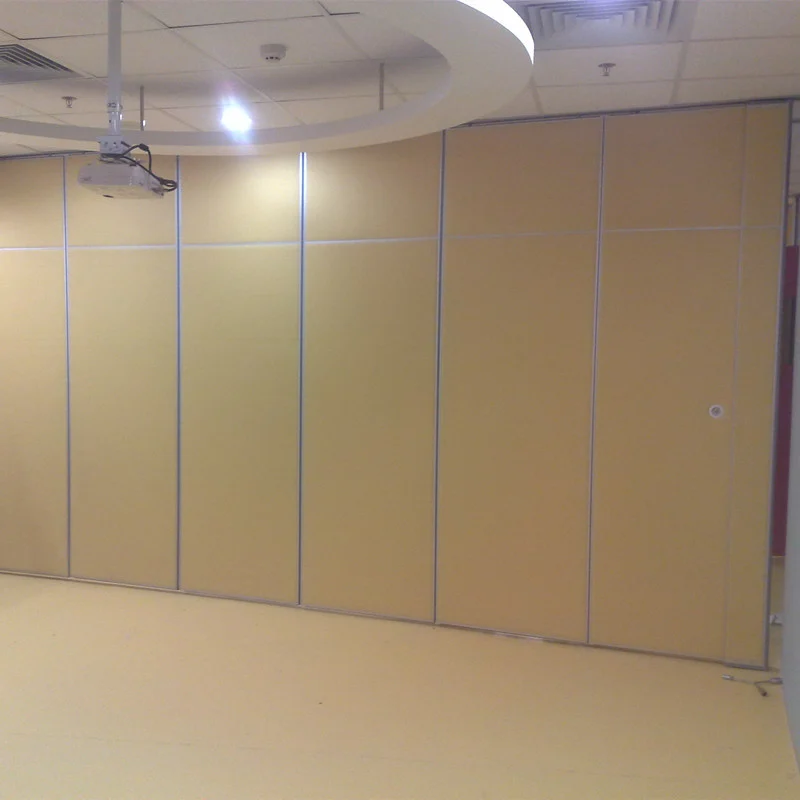
A movable partition is not only a wall. It is a sequence of states: closed, part-open, fully open, and parked. Each state changes the floor plan. EBUNGE movable wall panels are individually movable, suspended from a top track, cross the opening without a floor track, and park at a planned stacking position. The clear floor along the partition line is a maintained fact, but the parked panel group still occupies space somewhere.
That parked footprint is the part most audits miss. If the stacking position sits inside a corridor width, a door swing zone or a turning circle, the route may fail only when the room is open. Reviewers who check one state can sign off a layout that fails in another.
What an Accessible Route Audit Should Cover
Coordination scope: accessible route audit.
Treat the audit as a state-by-state route check, not a single plan review. For each partition, list the states the building will actually use, then test the route in each one. The goal is to find conflicts on paper before they become site instructions.
States to list for every partition
- Fully closed, with all panels in the partition line.
- Partially open, with a pass-door or a partial opening in use.
- Fully open, with the opening clear.
- Parked at the planned stacking position.
- In transit, if the layout allows panels to move while people are present.
For each state, mark the route, the clear width, the door approach and any turning space on the drawing. Then ask whether the parked group sits inside or outside those zones. This is a drawing exercise first; site measurement confirms it later.
Drawing Information Needed for a Reliable Review
The audit is only as good as the drawings behind it. Ask for a reflected ceiling plan showing the top track route, a floor plan showing the stacking position, and a circulation plan showing accessible routes. The straight, turning and stacking routes should be reviewed from the layout, because the overhead route must be continuous and connected for every proposed movement path.
A compact evidence note
Maintained product facts confirm top-hung panels, clear floor along the partition line, and parking customized to the customer layout. They do not confirm dimensions, support points, loads or acoustic outcomes for a specific project. Those require project-specific review.
Where a drawing shows a gap in the overhead route, do not assume panels can cross it. The exact route, junction arrangement, continuous overhead path and parking position must be confirmed from the coordinated project drawings. This is a scope boundary, not a performance claim.
A State-by-State Review Checklist
Use this checklist in design coordination meetings. It keeps the conversation on visible evidence and open questions rather than assumed outcomes.
- List every partition and every state it will use.
- Overlay each state on the accessible route plan.
- Mark the parked footprint and check it against route widths and door approaches.
- Confirm the overhead route is continuous for every movement path shown.
- Note pass-door requirements and how they interact with the route.
- Record finish selections only as finish selections, not as evidence of other performance.
- Flag every item that needs project-specific confirmation before tender or fabrication.
Step seven matters most. An audit that ends with a list of confirmed items and a list of open items is more useful than one that closes questions it cannot answer.
Coordination Across Design and Construction Teams
Accessibility and circulation review coordination usually involves the architect, the interior designer, the contractor and the owner. Each sees a different risk. The architect may focus on route continuity; the contractor on installation access; the owner on daily operation. A single stacking-state drawing can align all three.
Questions that expose hidden assumptions
- Who parks the panels, and does the parked position match the drawing?
- Does the pass-door location change the route in the part-open state?
- Is the stacking position inside any door swing or turning zone?
- Has the support condition for the overhead route been reviewed separately?
These questions do not require performance data. They require the project team to agree on what the drawings show and what still needs confirmation.
Finish, Pass-Door and Documentation Boundaries
Confirmed finish options include laminate, melamine, fabric, leather, glass and other approved surfaces. The suitability of each route and parking arrangement depends on the approved layout, circulation, ceiling interfaces and operating sequence. Keep those categories separate in the specification.
Pass-door requirements and project documentation can be discussed with the supplier, but the project team should confirm the final configuration against its own drawings.
FAQ: Accessible Route Audit and Partition Stacking
What is an accessible route audit partition stacking states review?
It is a drawing-based check that tests the accessible route in every partition state, including the parked or stacked state, rather than only the open and closed room.
Do movable partitions need a floor track?
EBUNGE movable wall panels are top-hung and cross the opening without a floor track along the partition line. The parked position still needs review because it occupies floor space.
Can panels move across a gap in the overhead route?
No.
Does the finish choice affect the route audit?
Finish is a separate selection.
What should the project team confirm before fabrication?
Confirm the stacking position, route continuity, pass-door requirements, support conditions and all dimensional and acoustic requirements against the project drawings.
Conclusion: Audit Every State, Confirm Every Boundary
A complete review treats the stacking state as a first-class circulation condition. Use the drawings to test each state, keep finish and performance categories separate, and record what still needs project-specific confirmation. This approach protects the route without inventing performance claims.
To discuss your layout, stacking position and documentation needs, contact the EBUNGE team. You can also review movable wall products and browse project resources before your next coordination meeting.