
When an overseas partition dealer prepares a quotation for a soundproof movable wall in an exhibition hall, the risk is not in the product alone but in the gap between what is specified and what is delivered. Every project decision—from acoustic targets to finish matching—carries commercial consequences. This article focuses on how dealers can reduce project decision risk by structuring quotation readiness around verified project data, clear communication, and factory-direct support. By addressing the specific pain point of matching finishes with interior design requirements, we outline a practical approach that protects margins and reputation.
Direct answer: To reduce risk in soundproof movable wall projects, overseas dealers must base every quotation on confirmed project drawings that specify opening size, acoustic target, finish preference, and installation constraints. Factory-direct support—including layout drawings, installation guidance, and finish samples—enables accurate pricing and avoids costly mismatches. Always document exact values from project documents, never assume performance, and validate supplier capabilities before committing to timelines.
Soundproof Movable Wall: Why Quotation Readiness Determines Project Success
In exhibition hall projects, the partition wall system is often a critical element for flexible space management. A dealer who submits a quote without verifying key parameters risks change orders, delays, and disputes. Quotation readiness means having all necessary information before pricing: opening dimensions, ceiling structure, acoustic requirements, finish specifications, and delivery logistics. This proactive approach reduces the likelihood of underestimating costs or overpromising performance.
For a soundproof movable wall, the acoustic target is not a generic number. It depends on the partition’s height, width, and the surrounding structure. A dealer must request the project’s acoustic specification and confirm the testing conditions. Without this, any performance claim is unsupported. Similarly, finish matching requires physical samples or detailed color codes, not verbal descriptions.
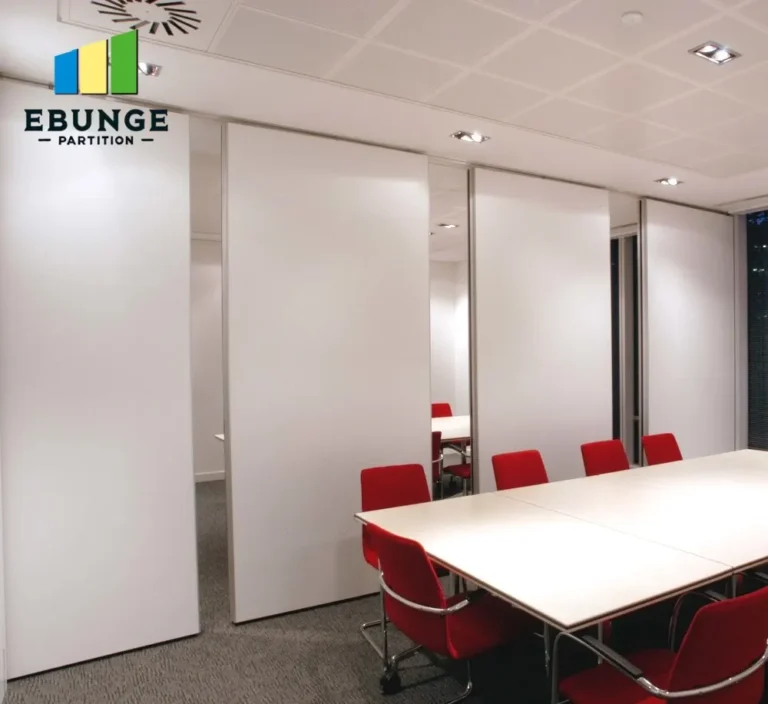
Need help turning the soundproof movable wall requirements into a practical project layout?
Defining the Project Scope: Opening Size and Acoustic Targets
The first step in risk reduction is to extract exact values from architectural drawings. The opening size—height, width, and depth—determines the operable wall’s configuration, number of panels, and stacking space. In exhibition halls, openings often exceed standard dimensions, requiring custom engineering. A dealer must verify whether the opening is rectangular or has irregularities, and whether the ceiling can support the track load.
Acoustic performance is measured in Rw (weighted sound reduction index) or STC. The required value is usually specified in the project brief. However, the actual performance of a movable partition depends on perimeter sealing, panel mass, and installation quality. A dealer should ask for the acoustic test report of the specific system and compare it with the requirement. If the target is high, additional seals or mass may be needed, affecting cost and lead time.
How to Request Accurate Acoustic Data
When corresponding with the client or architect, use a checklist: request the acoustic specification, the test standard (e.g., ISO 10140), and the required Rw value. Ask if the performance is for a single partition or a system with flanking paths. This ensures the quotation is based on realistic data.
Finish Matching: The Aesthetic Risk in Exhibition Halls
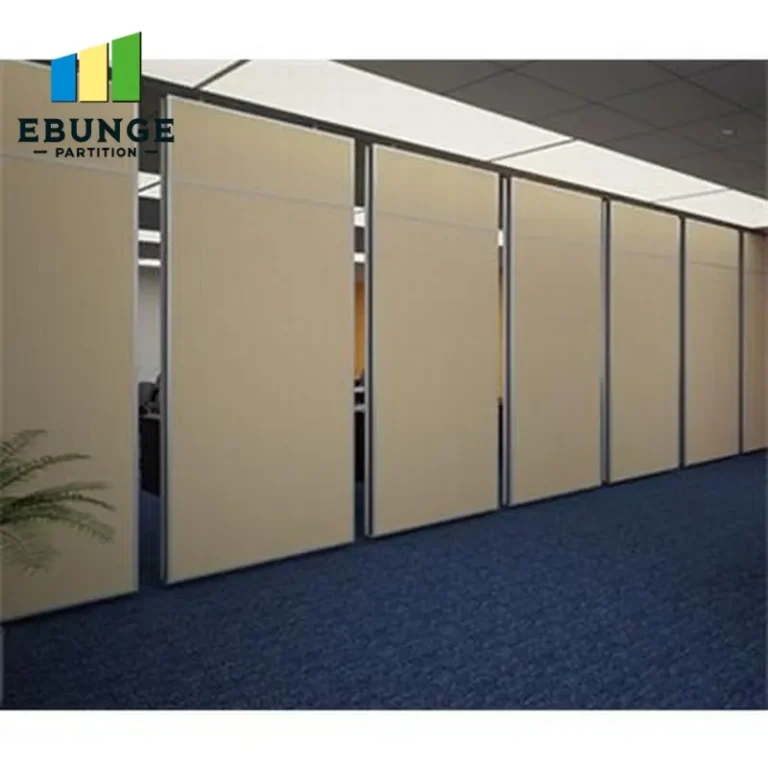
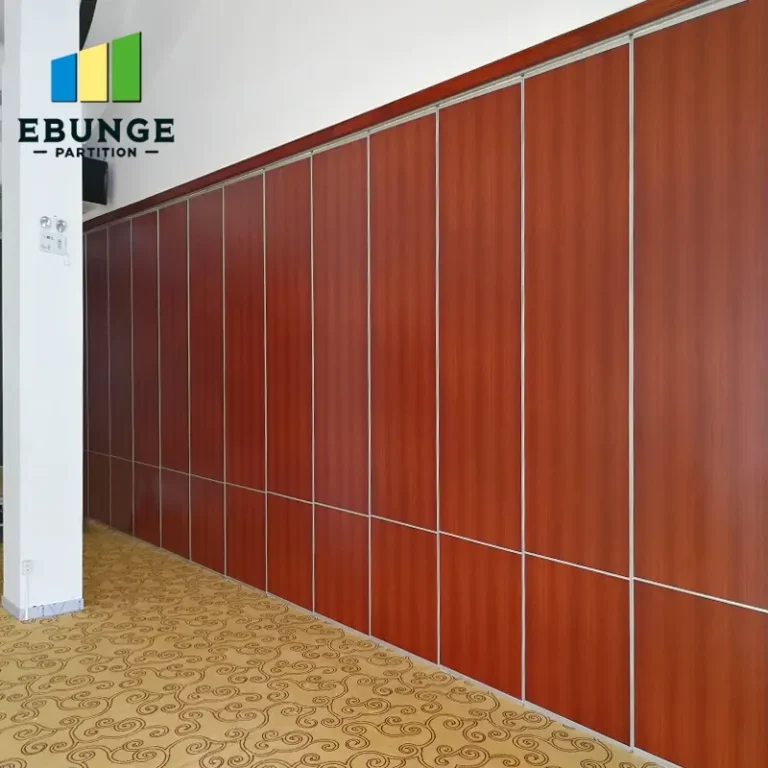
Exhibition halls are design-conscious spaces. The finish of a soundproof movable wall must harmonize with the interior design—whether it is a high-gloss laminate, wood veneer, or fabric panel. Overseas dealers often struggle because they cannot physically inspect the sample. The risk is that the delivered finish differs from what the client expected, leading to rejection.
To mitigate this, request finish samples or detailed digital color codes (e.g., RAL or NCS). If the project requires a custom match, provide the supplier with a physical sample or a high-resolution image with color calibration. Factory-direct support is crucial here: a supplier that can produce a sample in a short time reduces the risk of a mismatch.
Additionally, consider the durability of the finish in a high-traffic exhibition environment. Scratches and wear are common. Ask the supplier about surface treatment and warranty. This information should be included in the quotation to set expectations.
Installation Complexity: Planning for Site Conditions
Installation complexity directly affects labor cost and timeline. A top-hung track without floor rail is a common design for movable partitions, but it requires a robust ceiling structure. The dealer must verify the ceiling’s load-bearing capacity and the availability of power for motorized systems. If the site has uneven floors, the partition may need adjustable bottom seals, increasing cost.
In exhibition halls, the installation often occurs in a live environment with strict deadlines. The dealer should plan for a site survey or request detailed photos and structural drawings. This reduces the risk of unexpected issues during installation.
Key Installation Questions to Ask
- What is the ceiling structure and load capacity?
- Is there a power supply for automation?
- What is the floor flatness tolerance?
- Are there any obstructions in the stacking area?
Supplier Reliability: Verifying Capabilities Without Overpromising
Supplier reliability is not about taking a manufacturer’s word. It is about verifying production capacity, quality control, and track record. For an overseas dealer, this means requesting production lead times, quality certificates, and references. However, avoid inventing specific certifications or warranties. Instead, ask the supplier to provide documented evidence.
Factory direct support is a significant advantage. A supplier that offers layout drawings, installation guidance, and after-sales support reduces the dealer’s risk. For example, if the supplier provides detailed installation manuals and video tutorials, the dealer can ensure proper installation even without a dedicated technical team.
To evaluate reliability, create a vendor scorecard based on criteria like response time, sample quality, and communication clarity. This helps in making an informed decision.
Delivery Timelines and Logistics: The Hidden Risk Factor
Delivery delays can derail an exhibition project. The dealer must confirm the production time, shipping method, and potential customs issues. In the quotation, include a clear delivery schedule with milestones. However, do not promise exact dates unless they are confirmed by the supplier in writing.
For international shipments, consider the risk of damage during transit. Proper packaging is essential. Ask the supplier about their packaging standards and whether they offer insurance. This is especially important for glass or finished surfaces.
To manage logistics, use a project timeline that includes buffer time for unforeseen delays. Communicate this timeline to the client to set realistic expectations.
Share the opening, drawings, finish direction, and privacy target for a project-specific review.
After-Sales Support and Warranty: Protecting Your Reputation
After-sales support is often overlooked in the quotation phase, but it is a major risk area. If a partition fails after installation, the dealer is responsible. Therefore, clarify the warranty terms with the supplier: what is covered, for how long, and what is the process for claims. Also, establish a support channel for troubleshooting.
For soundproof movable walls, common issues include seal wear, track alignment, and acoustic performance degradation. The dealer should have access to spare parts and technical guidance. A supplier that offers remote diagnostics or replacement parts quickly reduces downtime.
In the quotation, include a maintenance schedule and recommend periodic checks. This demonstrates professionalism and reduces future liability.
Customization Capability: Adapting to Unique Project Needs
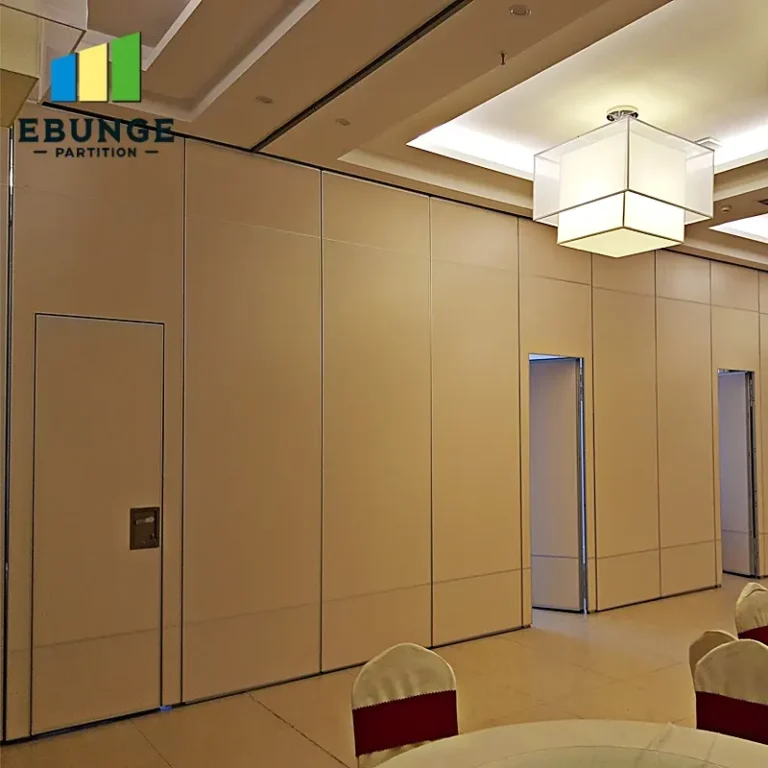
Exhibition halls often require custom sizes, shapes, or finishes. A dealer must assess the supplier’s ability to customize without compromising quality. This includes the flexibility to modify panel dimensions, incorporate curved sections, or integrate with existing architecture.
Customization also extends to the operation method: manual, electric, or remote-controlled. The choice affects cost and installation complexity. The dealer should discuss these options with the client and the supplier to find the best solution.
When requesting a quote, provide detailed drawings and specifications. This enables the supplier to give an accurate price and production plan. Avoid vague descriptions that lead to assumptions.
Practical Checklist for Quotation Readiness
Use this checklist before sending any quotation for a soundproof movable wall project:
| Item | Status |
|---|---|
| Opening size (HxWxD) confirmed | ☐ |
| Acoustic target (Rw/STC) documented | ☐ |
| Finish preference (color code/sample) | ☐ |
| Ceiling structure and load capacity | ☐ |
| Floor flatness tolerance | ☐ |
| Power supply for automation | ☐ |
| Supplier production lead time | ☐ |
| Warranty terms in writing | ☐ |
| After-sales support contact | ☐ |
| Delivery schedule with buffer | ☐ |
This checklist ensures that no critical information is missing. It also serves as a communication tool with the client, showing that you are thorough.
Conclusion: Reducing Risk Through Verified Data and Collaboration
Reducing risk in soundproof movable wall projects requires a disciplined approach to quotation readiness. By verifying opening size, acoustic targets, finish preferences, and installation conditions, overseas partition dealers can avoid costly mistakes. Factory-direct support, including drawings and installation guidance, enhances accuracy and reliability. Remember to base every decision on confirmed project data, not assumptions. This not only protects your margins but also builds long-term client trust.
For more insights on movable partition systems, explore our movable partition wall resources. To understand installation best practices, visit our Movable Partition Installation category. If you have specific project challenges, contact us for expert guidance.
Frequently Asked Questions
How do I determine the acoustic target for a soundproof movable wall?
The acoustic target is typically specified in the project brief or architectural drawings. It is expressed as an Rw or STC value. If not specified, you should ask the client or acoustician for the required level. The actual performance of a movable partition depends on the system and installation, so always verify with the supplier’s test reports.
What finish options are available for movable partitions in exhibition halls?
Common finishes include laminates, wood veneers, fabric, and paint. For exhibition halls, durable finishes like high-pressure laminates or melamine are popular. Custom colors and patterns are possible. Always request samples or color codes to ensure accurate matching.
How can I verify the installation complexity of a movable partition?
Review the architectural drawings and conduct a site survey if possible. Key factors include ceiling structure, floor flatness, and access for panels. Ask the supplier for installation guidelines and any special requirements. This helps in planning labor and equipment.
What should I include in a quotation to avoid disputes?
Include a detailed scope of work, exact dimensions, acoustic performance, finish specifications, delivery timeline, warranty terms, and exclusions. Reference the project drawings and specifications. This transparency reduces misunderstandings.
How important is factory-direct support for overseas dealers?
Factory-direct support is crucial. It provides access to accurate drawings, technical guidance, and after-sales service. This reduces the risk of errors and delays. A supplier that offers direct communication and documentation adds significant value.
Send the opening size and drawings to discuss a differentiated soundproof movable wall solution.