
For government and public building projects, selecting a sliding folding partition for a multipurpose room is a decision that carries long-term operational and budgetary implications. Unlike typical office partitions, these systems must meet rigorous acoustic standards, withstand frequent use, and align with public procurement requirements. As you prepare to compare suppliers, the key is to focus on quotation readiness and risk mitigation. This article guides you through a structured comparison, emphasizing the technical and logistical details that often get overlooked. By the end, you will have a clear framework to evaluate proposals and make an informed choice for your project.
Direct Answer: When comparing sliding folding partition suppliers for a government multipurpose room, prioritize those who request your opening size, acoustic target, finish preference, and drawings before quoting. A reliable supplier will offer factory-direct support, transparent warranty terms, and a detailed installation plan. Focus on total cost of ownership, including maintenance and durability, rather than upfront price alone.
Understanding the Unique Requirements of Government Multipurpose Rooms
Government multipurpose rooms serve diverse functions—from town hall meetings and public hearings to community events and emergency operations. This versatility demands a partition system that can quickly reconfigure space while maintaining acoustic privacy and safety compliance. Unlike office meeting rooms, these spaces often have higher ceilings, larger spans, and more stringent building codes. Therefore, the partition must be engineered for frequent operation and long-term reliability.
When evaluating suppliers, consider the specific operational patterns: how often will the partition be moved? What is the maximum opening width? Are there any structural limitations? These factors directly influence the choice of a sliding folding partition, which is known for its space-saving design and ease of operation. Ensure that the supplier understands these nuances and can provide a solution tailored to your needs.
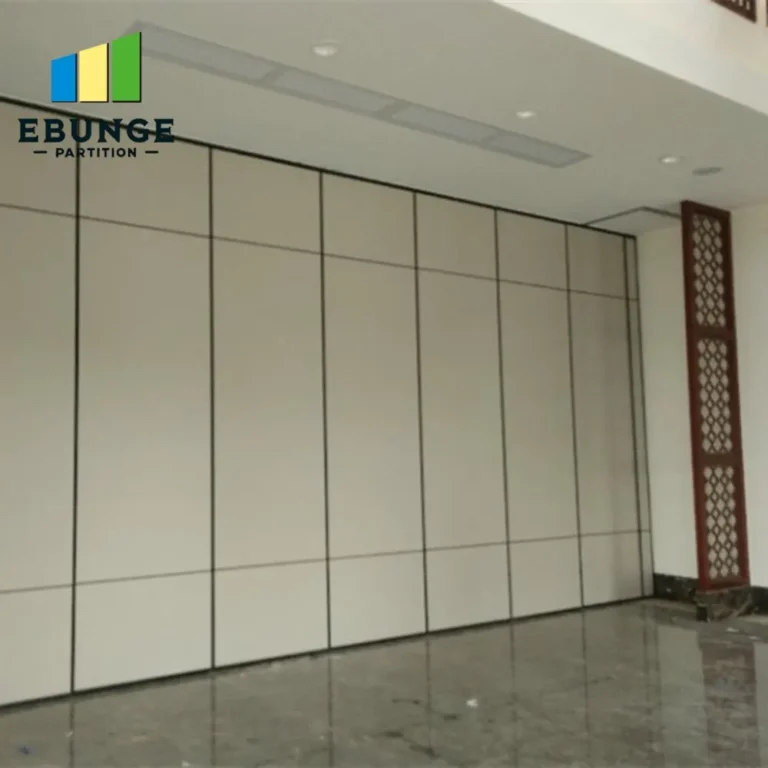
Need help turning the sliding folding partition requirements into a practical project layout?
Key Criteria for Comparing Sliding Folding Partition Suppliers
Comparing suppliers goes beyond price. You need a holistic assessment that covers product quality, warranty, installation complexity, maintenance costs, acoustics performance, customization options, supplier reliability, and delivery timeline. Each criterion carries weight depending on your project’s specific context. For government projects, transparency and documentation are paramount.
Start by shortlisting suppliers who have experience with public sector projects. Check their track record for on-time delivery and post-installation support. Ask for references and, if possible, visit completed installations. A supplier’s willingness to provide detailed specifications and drawings is a positive indicator of their confidence in the product.
Quotation Readiness: What a Supplier Should Ask You
A competent supplier will not provide an accurate quotation without essential project details. Be wary of those who quote immediately without asking questions. Key information includes:
- Opening size: Width, height, and number of panels required.
- Acoustic target: The desired sound insulation class (e.g., STC or Rw rating).
- Finish preference: Material, color, and texture that match the interior design.
- Drawings: Architectural and structural drawings to assess constraints.
- Operational frequency: How often the partition will be moved.
These inputs enable the supplier to recommend the right system and provide a precise quotation. If a supplier does not ask for these, it indicates a lack of diligence, which could lead to costly changes later.
Acoustic Performance: The Core of a Multipurpose Room
Acoustic privacy is critical in government settings, where confidential discussions may occur. The partition’s acoustic performance is measured by its sound insulation capability, typically expressed as a Sound Transmission Class (STC) or weighted sound reduction index (Rw). For multipurpose rooms, an STC of 40-50 is common, but your specific needs may vary.
When comparing suppliers, ask for acoustic test reports from accredited laboratories. Ensure the reports are relevant to the exact configuration you plan to install, as performance can vary with panel size, seals, and track systems. A reputable supplier will provide these documents without hesitation. Remember, the partition is only as good as its installation—proper sealing and alignment are crucial.
Installation Complexity and Maintenance Costs
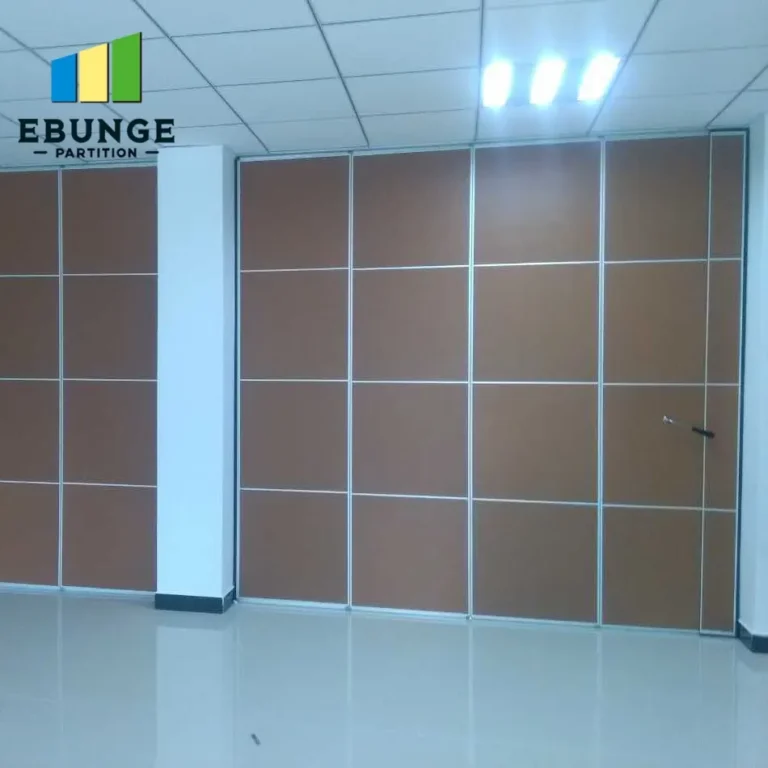
Installation complexity directly impacts your project timeline and budget. A sliding folding partition with a top-hung track system, like those offered by EBUNGE, eliminates the need for floor rails, simplifying installation and reducing future maintenance. However, the structural support for the overhead track must be verified. Ask the supplier about the required header beam size and any modifications needed.
Maintenance costs over the building’s life can exceed the initial investment. Inquire about the durability of moving parts, seal replacement intervals, and the availability of spare parts. A supplier that offers factory-direct support and comprehensive installation guidance can reduce long-term risks. Request a maintenance schedule and warranty terms in writing.
Customization Options and Aesthetics
Government buildings often have architectural significance, and the partition should complement the interior design. Suppliers should offer a range of finishes, including laminates, veneers, and paint options. Custom sizes and shapes may be necessary for unique openings. Ensure the supplier can accommodate your finish preferences without compromising acoustic performance.
Ask for samples and mock-ups to evaluate the visual quality. Also, consider the flexibility of the system for future changes—can panels be added or removed if the room configuration changes? A modular design offers better adaptability.
Share the opening, drawings, finish direction, and privacy target for a project-specific review.
Supplier Reliability and Delivery Timeline
Public projects often have strict deadlines. Assess the supplier’s manufacturing capacity and lead times. Ask for a detailed production schedule and contingency plans for delays. Check their financial stability and reputation in the industry. A supplier that is heavily reliant on imported components may face supply chain disruptions.
Additionally, consider the supplier’s after-sales service. Who do you call if a panel jams or a seal wears out? Is there a local service team? For government entities, a responsive support system is vital.
Comparing Quotations: A Checklist for Decision-Making
Once you receive quotations, use the following checklist to compare apples to apples:
| Criteria | Supplier A | Supplier B | Supplier C |
|---|---|---|---|
| Acoustic rating (STC/Rw) | |||
| Warranty period (years) | |||
| Installation time (days) | |||
| Maintenance cost (annual) | |||
| Customization options | |||
| Delivery timeline (weeks) | |||
| Factory-direct support |
This table helps you identify hidden costs and value differences. Do not hesitate to ask suppliers to clarify any ambiguous line items.
Common Pitfalls to Avoid When Selecting a Sliding Folding Partition
One common mistake is focusing solely on the lowest bid. A cheap partition may have poor acoustics, higher maintenance, or a shorter lifespan, leading to greater costs over time. Another pitfall is neglecting the importance of proper installation. Even a high-quality partition will underperform if installed incorrectly. Ensure the supplier provides detailed installation drawings and on-site supervision.
Also, be wary of suppliers who cannot provide references or case studies. For government projects, transparency is non-negotiable. Finally, always verify that the partition meets local building codes and accessibility standards.
Conclusion: Making an Informed Decision
Choosing a sliding folding partition for a government multipurpose room is a significant investment. By focusing on quotation readiness and project decision risk, you can avoid costly mistakes. Remember to evaluate suppliers on their ability to understand your needs, provide accurate quotations based on detailed information, and offer reliable long-term support. With the right approach, you can select a partition system that serves your community effectively for decades.
For more insights on movable partition costs and selection, explore our Movable Partition Cost category and blog resources. If you have specific project requirements, contact our team for expert guidance.
Frequently Asked Questions
1. What is the typical lead time for a sliding folding partition?
Lead times vary based on customization and order size. Typically, it ranges from 4 to 8 weeks after approval of drawings. Always confirm the exact timeline with the supplier, considering potential delays in materials or production.
2. How do I determine the acoustic performance needed?
Assess the room’s intended use. For multipurpose rooms where confidential discussions may occur, aim for an STC of at least 45. Consult an acoustician if necessary. The supplier should provide test data for the specific configuration.
3. Can the partition be customized to match the interior design?
Yes, most suppliers offer a variety of finishes and panel dimensions. Provide your finish preference and architectural drawings to the supplier to ensure a seamless integration.
4. What maintenance does a sliding folding partition require?
Regular maintenance includes cleaning the track, checking seals, and lubricating moving parts. The frequency depends on usage. Ask the supplier for a maintenance schedule and warranty terms.
5. Is factory-direct support important?
Factory-direct support ensures you have access to original spare parts and technical expertise. It can simplify warranty claims and reduce downtime. Choose a supplier that offers this service.
Send the opening size and drawings to discuss a differentiated sliding folding partition solution.