
When your church, auditorium, or community center plans to divide an exhibition hall with a folding partition wall, the path from concept to a signed quotation is often where projects stall. You need a space that adapts to worship services, conferences, and community events, but you also need to protect your budget and your timeline. The key is to reduce risk before you commit: by clarifying your opening size, acoustic target, finish preferences, and by working with a factory-direct partner who can review your drawings. This article focuses on how to prepare for a quotation-ready project, so you can make decisions with confidence.
Direct answer: To reduce risk in your folding partition wall project, start by measuring the exact opening size, defining your acoustic target (STC rating), and selecting finishes that match your interior design. Then, request a factory-direct consultation that includes a review of your architectural drawings. This ensures your quotation is accurate, your installation timeline is realistic, and your total cost of ownership is minimized.
Why a Folding Partition Wall Project Needs a Risk Management Approach
For churches, auditoriums, and community centers, a folding partition wall is a significant investment. It affects how you use your space, how you control sound, and how your facility appears to visitors. The risk is not just in the product itself, but in the entire project: from initial measurements to final installation. A mismatch between the partition and your opening size, an unrealistic acoustic expectation, or a finish that clashes with your interior can lead to costly changes and delays.
By taking a structured approach to project planning, you can avoid these pitfalls. This means gathering the right information, asking the right questions, and working with a supplier who understands the complexities of large-scale movable partitions.
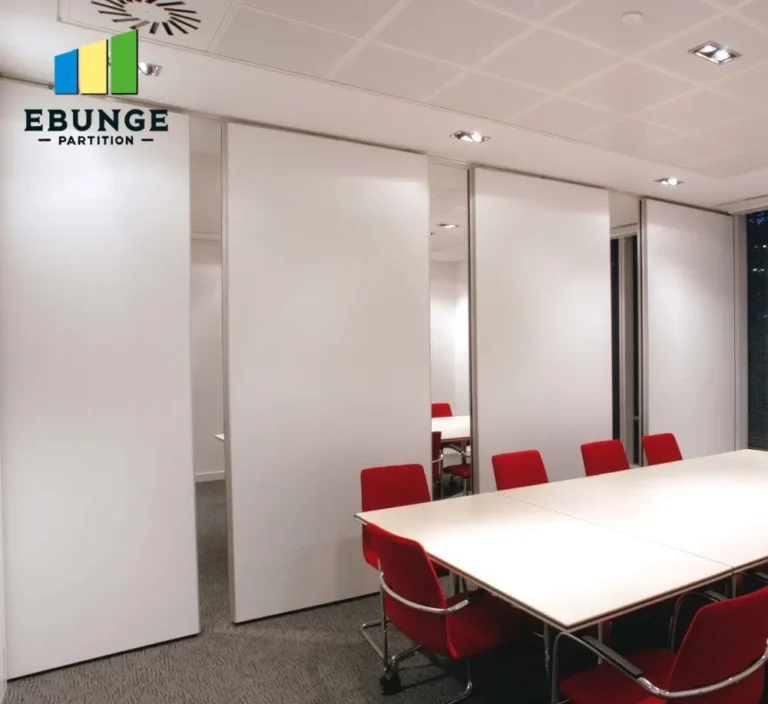
Need help turning the folding partition wall requirements into a practical project layout?
Key Decisions That Impact Your Quotation and Project Success
Before you request a quotation, you need to make several key decisions. These decisions will influence the cost, the installation timeline, and the final performance of your partition. Here are the most critical ones:
1. Opening Size and Configuration
The size of your opening is the starting point for any partition system. It determines the number of panels, the weight of the system, and the complexity of the track installation. When measuring, be precise: include the height, width, and any obstructions like columns or ductwork. If you have architectural drawings, share them with your supplier. This is the first step to ensuring a quotation that reflects your actual needs.
2. Acoustic Target (STC Rating)
Acoustic performance is often a top priority for churches and auditoriums. You need to know what STC (Sound Transmission Class) rating you require. This depends on the activities you will host: a quiet meeting room needs less soundproofing than a music rehearsal space. Be realistic about your target, as higher STC ratings typically require thicker panels and more complex sealing systems, which can affect cost and installation.
3. Finish and Interior Design Compatibility
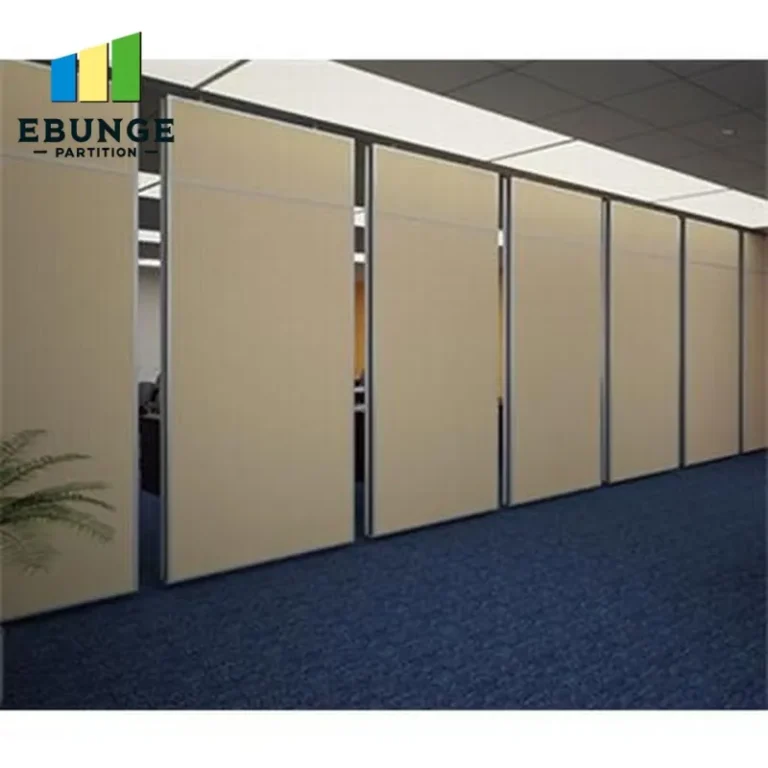
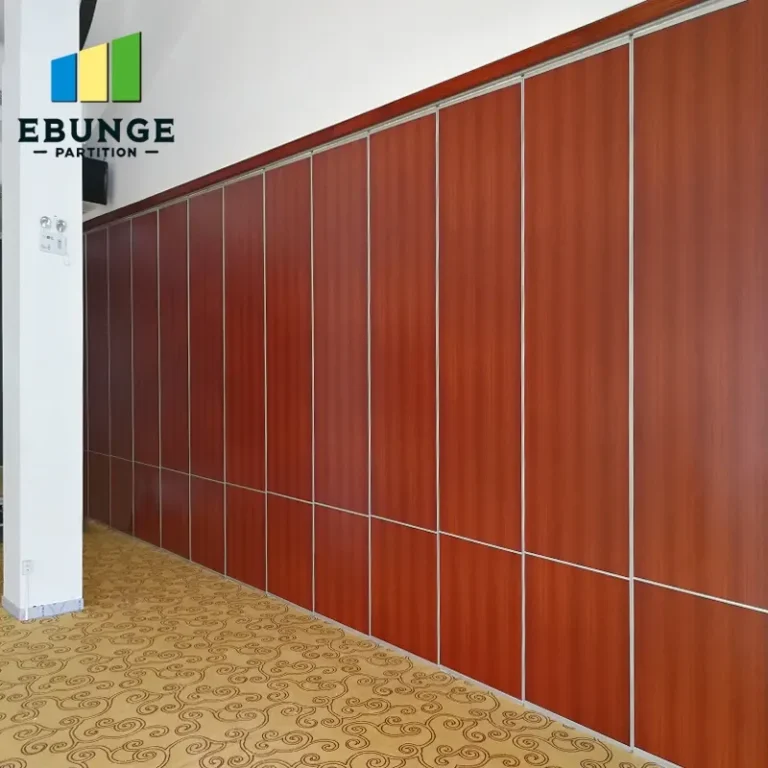
The finish of your folding partition wall should complement your interior design. Whether you prefer a wood veneer, a laminate, or a paintable surface, the finish affects both aesthetics and cost. Some finishes are more durable than others, and some are easier to maintain. Think about the long-term: will the finish hold up to frequent use? Can it be repaired if damaged? Matching finishes with your existing architecture is not just about looks; it is about practicality.
Understanding Total Cost of Ownership
When comparing quotations, do not just look at the initial price. The total cost of ownership includes installation, maintenance, and potential repairs over the life of the partition. A cheaper system may require more frequent maintenance or have a shorter lifespan. Ask your supplier about the expected lifespan of the components, the availability of spare parts, and the warranty terms. A factory-direct supplier can often offer better support and more transparent pricing.
Safety Compliance and Ease of Operation
Safety is non-negotiable in public buildings. Your folding partition wall must meet all applicable building codes and safety standards. This includes fire safety, emergency egress, and accessibility. Ensure that your supplier provides documentation of compliance. Additionally, consider how easy the partition is to operate. If your staff or volunteers will be moving the partition regularly, it should be designed for smooth, safe operation, with clear instructions and minimal physical effort.
Installation Timeline and Coordination
A realistic installation timeline is crucial for your project planning. The installation of a folding partition wall involves coordination with other trades, such as electrical and HVAC. A factory-direct supplier can help you sequence the installation to minimize disruption. They can also provide guidance on site preparation, such as ensuring the floor and ceiling are level. Be sure to ask for a detailed installation schedule and confirm that it aligns with your overall project timeline.
Warranty and After-Sales Support
Warranty is a sign of a manufacturer’s confidence in their product. Look for a warranty that covers both parts and labor for a reasonable period. Also, ask about after-sales support: who do you call if there is a problem? A factory-direct supplier is often more responsive than a distributor. They can provide training for your staff and offer maintenance services if needed.
Share the opening, drawings, finish direction, and privacy target for a project-specific review.
How to Prepare for a Quotation-Ready Project
To get an accurate quotation, you need to provide your supplier with complete information. Here is a checklist to help you prepare:
- Architectural drawings (floor plans, elevations, sections)
- Exact opening dimensions (width, height, depth)
- Acoustic requirements (desired STC rating)
- Finish preferences (samples or color codes)
- Operational requirements (manual or motorized, frequency of use)
- Site access information (for delivery and installation)
- Project timeline (when you need the partition installed)
By providing this information upfront, you reduce the risk of surprises and ensure that your quotation is as accurate as possible.
Comparison Table: Factors to Evaluate in a Folding Partition Wall Supplier
| Factor | Why It Matters | Questions to Ask |
|---|---|---|
| Factory-direct support | Direct access to engineers and production team | Do you provide design assistance? Can you review my drawings? |
| Acoustic performance | Ensures sound isolation meets your needs | What STC rating does your system achieve? Is it tested? |
| Finish options | Matches your interior design | Can you match a specific wood veneer or laminate? What colors are available? |
| Installation process | Affects timeline and disruption | How long does installation take? Do you provide installation services? |
| Warranty | Protects your investment | What does the warranty cover? How long is it? |
Why Choose a Top-Hung Track System Without a Floor Rail?
For many churches and community centers, a top-hung track system is ideal because it does not require a floor track. This not only preserves your flooring but also makes the partition easier to operate and maintain. A top-hung system is also more flexible for non-linear openings, which can be a challenge in existing buildings. When you work with a factory-direct supplier, they can help you determine if this type of system is right for your project.
Conclusion: Make Your Folding Partition Wall Project a Success
Reducing risk in your folding partition wall project is about preparation and partnership. By defining your requirements, providing complete information, and working with a factory-direct supplier who offers custom project coordination, finishes, drawings, and installation guidance, you can achieve a partition that meets your needs, fits your budget, and enhances your facility. Start your project on the right foot by requesting a consultation today.
Frequently Asked Questions
What is the typical lead time for a folding partition wall?
Lead times vary based on the complexity of the project and the supplier’s production schedule. A factory-direct supplier can provide a more accurate timeline after reviewing your drawings and specifications.
Can you match the existing woodwork or paint color in our building?
Yes, many manufacturers offer custom finishes to match your interior design. Provide samples or color codes, and your supplier can advise on the best options.
How do I know what STC rating I need?
Consider the activities that will take place in the divided spaces. For speech privacy, an STC of 50 is often sufficient, but for music or loud events, you may need a higher rating. Your supplier can help you assess your needs.
Is installation included in the quotation?
Some suppliers offer installation services, while others provide only the product. Be sure to ask what is included and whether they can recommend a qualified installer.
What maintenance is required for a folding partition wall?
Regular maintenance typically includes cleaning the track and panels, checking the seals, and lubricating moving parts. Your supplier can provide a maintenance schedule.
For more information on movable partition walls, visit our movable partition wall page. You can also explore our blog for project insights and cost considerations. If you are ready to discuss your project, contact us for a consultation.
Send the opening size and drawings to discuss a differentiated folding partition wall solution.