
When your church, auditorium, or community center is planning a renovation or new construction, the choice of a folding door system can feel like a high-stakes decision. You need to divide large spaces for different events, but you also need to ensure the solution meets acoustic, safety, and aesthetic requirements — all while staying within budget and on schedule. This article focuses on how to prepare for a folding door project so that you can request accurate quotations, compare options fairly, and reduce risk before any contract is signed.
Direct answer: To reduce risk in a folding door project, start by defining your opening size, acoustic target, finish preference, and available drawings. Then, engage with a manufacturer that offers factory-direct support, such as EBUNGE, which can provide detailed drawings and installation guidance. This preparation ensures you receive accurate quotations and avoid costly surprises during installation.
Why Project Preparation Matters for Folding Door Installations
In a church or community center, the folding door is not just a wall; it is a multifunctional element that must perform acoustically, visually, and operationally. Without proper preparation, you may face mismatched finishes, acoustic leaks, or installation delays. By focusing on quotation readiness, you can align your expectations with what the manufacturer can actually deliver, reducing the risk of change orders and disputes.
Consider this: many folding door projects fail because the buyer and supplier have different assumptions about what is included. For example, the opening size might be measured differently, or the acoustic target might be unrealistic for the partition type. This article will guide you through the critical decisions you need to make before requesting a quote.
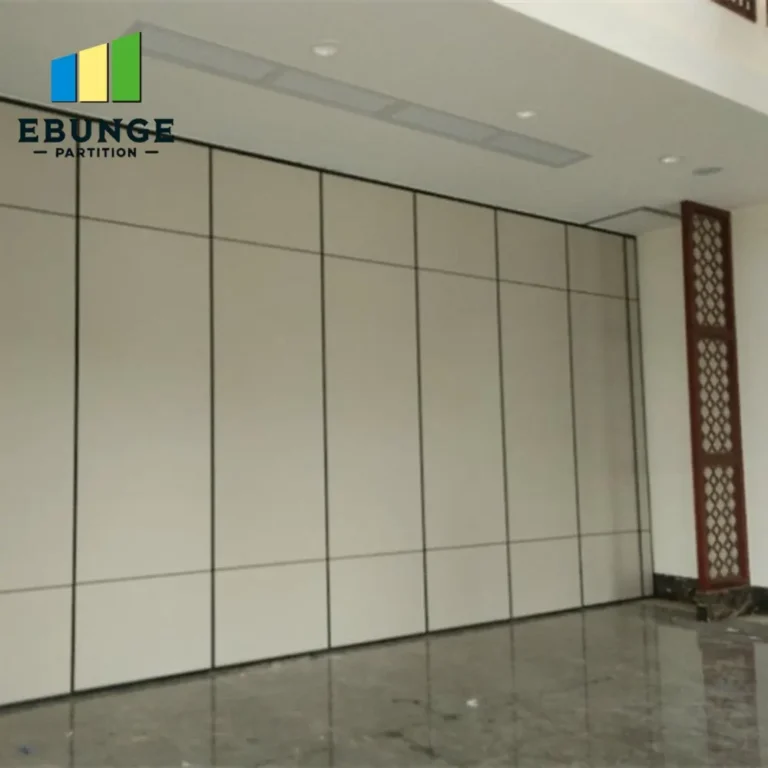
Need help turning the folding door requirements into a practical project layout?
Define the Opening Size and Configuration
The first step is to accurately measure the opening where the folding door will be installed. This includes width, height, and depth, as well as the load-bearing capacity of the ceiling and floor. For top-hung track systems, like those offered by EBUNGE, the header must be strong enough to support the weight of the partition.
You should also consider the stacking space: where will the panels go when the door is open? This affects the usable space and the design of the pocket or exposed stack. Make sure to provide these dimensions in your request for quotation, as they directly impact the cost and feasibility.
Set an Acoustic Target Based on Real Needs
Acoustic performance is a common concern, but it is often misunderstood. The sound insulation of a folding door is measured in Rw (weighted sound reduction index) or STC (Sound Transmission Class). However, the actual performance depends on the entire wall assembly, including flanking paths and sealing.
Instead of specifying a vague “soundproof,” define your acoustic target in decibels and consider the activities in your space. For a recording studio, you might need a higher rating than for a classroom. Be realistic: a movable partition cannot match a fixed wall, but a well-sealed system can provide adequate isolation for many uses.
Ask your manufacturer for test data, but also ask how the field installation might affect performance. EBUNGE, for example, provides detailed installation guidance to minimize sound leaks.
Choose Finishes That Match Your Interior Design
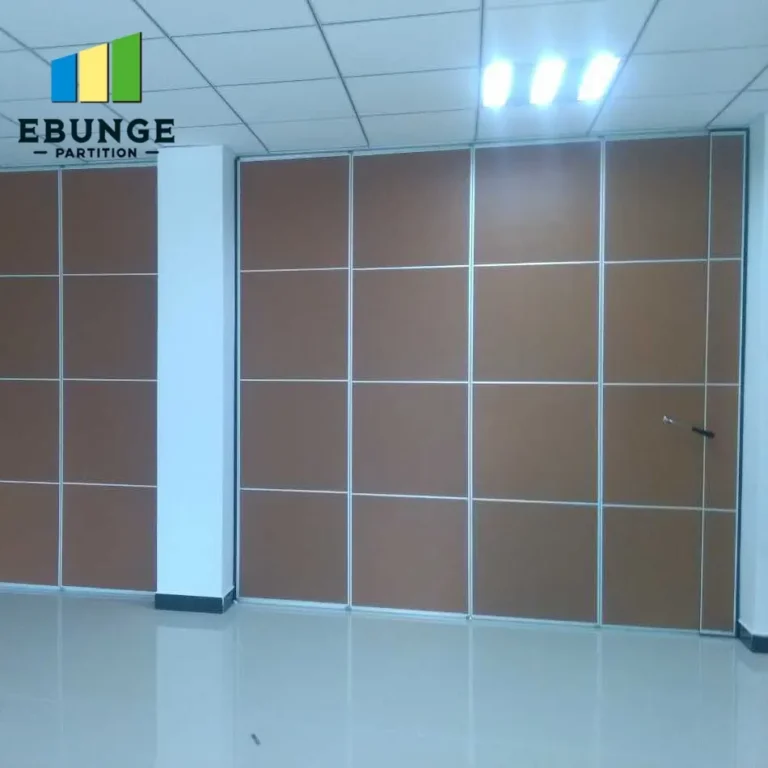
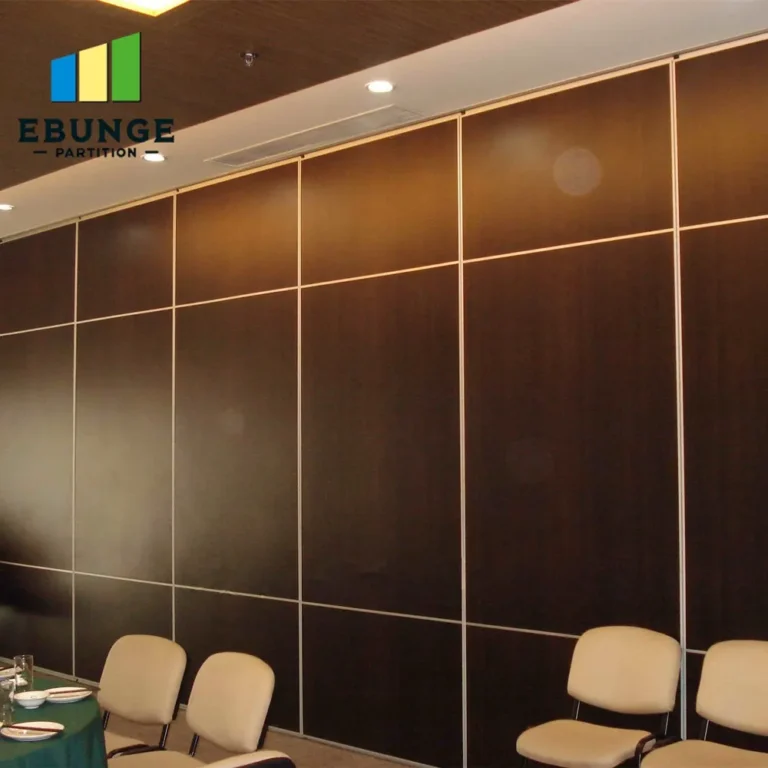
One of the biggest pain points is matching the folding door finish with your existing interior. Whether you need a wood grain, laminate, or painted surface, you must specify the color, texture, and gloss level. Some manufacturers offer custom finishes, but this may affect lead time and cost.
To reduce risk, request physical samples before committing. Also, consider the durability of the finish in high-traffic areas. A church lobby may see different wear than a classroom. Your choice should balance aesthetics with maintenance requirements.
Review Fire Safety and Building Code Compliance
Folding doors in public buildings must meet local fire safety regulations. This includes the fire rating of the partition, which is typically measured in minutes (e.g., 30, 60, or 90 minutes). You must provide the required fire rating based on your building’s egress plan.
Additionally, the installation must comply with accessibility standards, such as ADA, if applicable. This might affect the operation mechanism or the width of the panels. Your manufacturer should be able to guide you, but it is your responsibility to confirm local codes.
Evaluate Ease of Operation and Maintenance
Folding doors are operated either manually or with a motorized system. For a church or community center, ease of operation is crucial, especially if volunteers will be handling the partition. Manual systems should have smooth gliding and secure locking mechanisms. Motorized systems offer convenience but require electrical work and more complex controls.
Consider the frequency of use. A folding door that is moved daily will need more durable hardware than one used occasionally. Ask about the warranty on moving parts and the availability of replacement parts.
Understand Warranty and Support Expectations
Warranty terms vary by manufacturer, so you need to read the fine print. What is covered? For how long? Does the warranty include labor for repairs or only parts? For a custom project, you also want to know the manufacturer’s support for installation issues.
EBUNGE, for instance, emphasizes factory-direct support, meaning you can get expert advice directly from the manufacturer, not just a distributor. This can be invaluable during installation and after.
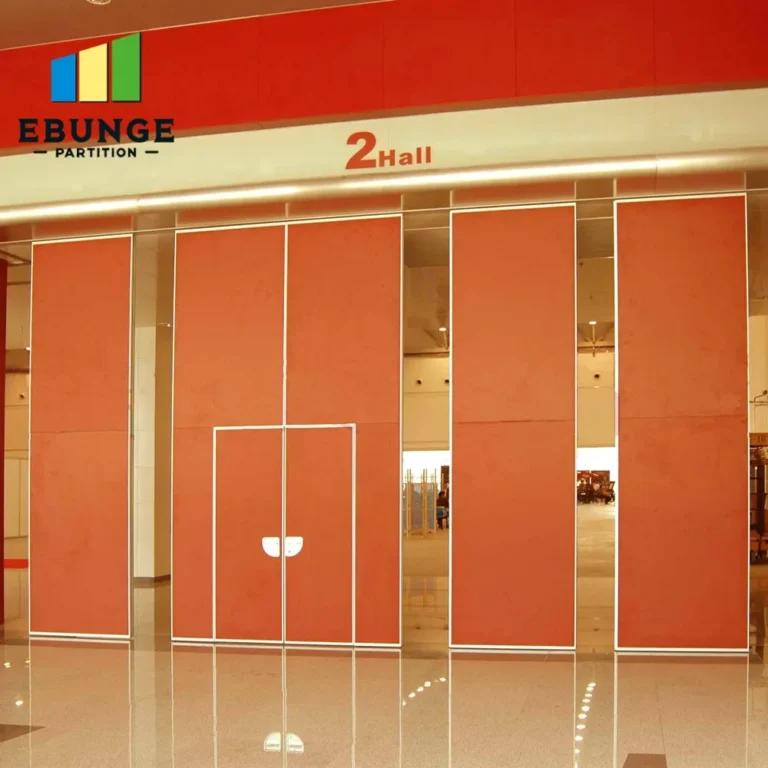
Share the opening, drawings, finish direction, and privacy target for a project-specific review.
Plan for Installation Timeline and Logistics
Installation of a folding door can take from a few days to several weeks, depending on the complexity. Your project schedule must account for the manufacturing lead time, delivery, and installation. Also, consider site access: will the panels fit through doorways and elevators? Are there any obstructions?
Coordinate with your general contractor to ensure the ceiling and floor are prepared. A top-hung track system requires a level header, so any modifications should be done before installation.
Assess Total Cost of Ownership
The initial quotation is only part of the story. You must also consider energy costs (if the space is conditioned), maintenance, and potential repairs. A cheaper system might require more frequent maintenance, costing more over time.
Request a detailed breakdown of costs, including hardware, installation, and any optional features. Compare this with the expected lifespan of the product. A higher upfront cost may be justified by lower long-term expenses.
Prepare a Detailed Request for Quotation
To get accurate quotes, you need to provide complete information. This includes architectural drawings, if available, showing the opening and surrounding structure. If you don’t have drawings, ask the manufacturer to measure, but expect additional costs.
Also, specify your acoustic target, finish preference, fire rating, and operation type. The more details you provide, the fewer assumptions the manufacturer has to make, reducing the risk of mismatched expectations.
Checklist for Your Folding Door Quotation Request
- Opening dimensions (width, height, depth)
- Stacking space and direction
- Acoustic target (Rw or STC)
- Finish specification (color, material, gloss)
- Fire rating required
- Operation type (manual or motorized)
- Number of panels and configuration
- Accessibility requirements
- Site access and installation constraints
- Project timeline and desired completion date
Compare Quotes and Evaluate Suppliers
When you receive quotes, compare them on an equal basis. Look for deviations in specifications, not just price. A lower quote might exclude essential features like acoustic seals or custom finishes.
Evaluate the supplier’s experience with similar projects. Ask for references and visit installations if possible. Also, check their customer support responsiveness. A manufacturer that offers factory-direct support, like EBUNGE, can provide more consistent guidance than a reseller.
Conclusion: Reduce Risk with Informed Decisions
In a folding door project, the key to reducing risk is preparation. By defining your opening size, acoustic target, finish preference, and having drawings ready, you can obtain accurate quotations and make informed decisions. Engage with a manufacturer that offers factory-direct support, such as EBUNGE, to ensure you get the guidance you need from start to finish. Remember, the cheapest quote is not always the best value; consider the total cost of ownership and the supplier’s reliability.
Frequently Asked Questions
What is the typical lead time for a custom folding door?
Lead times vary by manufacturer and complexity. It is best to ask for a specific timeline in your quotation request. Custom finishes and motorized systems may add time.
Can a folding door be installed in an existing building?
Yes, but the existing structure must support the track and header. A site survey may be required to assess the conditions.
How do I know the acoustic rating is accurate?
Look for test reports from accredited laboratories. However, field performance may differ due to installation and flanking paths. Discuss this with your manufacturer.
What maintenance does a folding door require?
Regular maintenance includes cleaning the track, lubricating moving parts, and checking the seals. The manufacturer’s guidelines should be followed.
Can the finish be matched to my interior design?
Many manufacturers offer custom finishes. Provide a sample or a color code, and ask about the options and any additional costs.
For more insights on movable partitions, visit our movable partition wall page or read our blogs. If you have a project in mind, contact us for factory-direct support. For installation-related articles, check our Movable Partition Installation category.
Send the opening size and drawings to discuss a differentiated folding door solution.