
When planning a recording studio, rehearsal room, or music classroom, the acoustic separation between spaces is as critical as the equipment inside. A soundproof movable wall is often specified to divide large areas into isolation rooms, but the success of such a project depends less on marketing claims and more on precise specifications. This guide focuses on the technical parameters, quotation readiness, and decision risks you must address before committing to an acoustic movable wall. It is written for buyers who need to compare options, prepare tender documents, and avoid costly installation surprises.
Direct answer: For a recording studio, a soundproof movable wall must be specified based on the required STC rating, the exact opening size, the acoustic target (e.g., music practice vs. vocal recording), finish preferences, and the structural interface. You should request a factory-direct consultation that includes review of your drawings, confirm the top-hung track system (no floor rail), and clarify installation timelines and customization options. The wall’s performance is verified by the STC rating provided in the quotation, but the actual in-situ result depends on perimeter sealing, wall construction, and proper installation.
Soundproof Movable Wall: Why STC Rating Alone Is Not Enough for Your Studio
The Sound Transmission Class (STC) is the most commonly cited number, but it does not tell the whole story. For recording studios, low-frequency sounds (bass, drums) are the hardest to isolate. STC ratings are measured under laboratory conditions, and real-world performance can be lower due to flanking paths, air gaps, and structural vibrations. When comparing acoustic movable walls, ask for the STC rating and the test standard (e.g., ASTM E90). But also request data on low-frequency performance (e.g., TL at 125 Hz) if the wall will separate drum rooms or bass-heavy rehearsal spaces. A wall with a high STC but poor low-frequency isolation may not meet your needs.
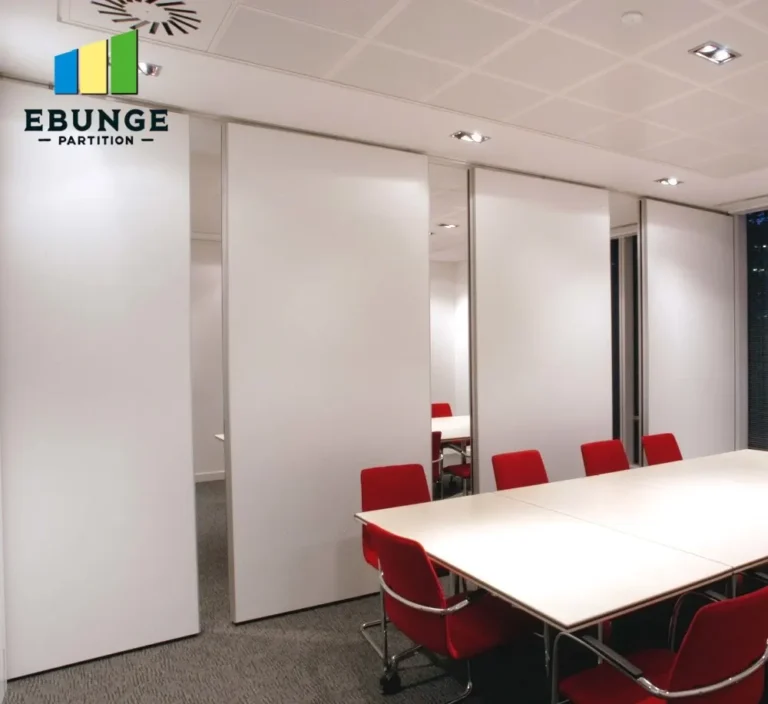
Moreover, the STC rating applies to the entire assembly, including the wall panels, seals, and track. Ensure the quotation specifies the complete system, not just the panel. In practice, the perimeter seals—especially the top and bottom—are the weakest points. A top-hung track without a floor rail, as offered by EBUNGE, eliminates the need for a floor channel, but the bottom seal must be automatic and compress against the floor to maintain the acoustic barrier. Verify that the bottom seal is part of the specification and that it is tested with the wall.
Need help turning the soundproof movable wall requirements into a practical project layout?
Defining Your Acoustic Target: STC, OITC, and Usage
Before requesting quotations, define the acoustic target based on the intended use. For a vocal booth, an STC of 45-50 may suffice, but for drum rooms or live rehearsal spaces, you may need STC 50-60. Consider also the Outdoor-Indoor Transmission Class (OITC) if the studio is near traffic or external noise. The acoustic target should be specified in the tender documents, so suppliers can offer appropriate wall configurations.
It is also essential to consider the room dimensions and the existing construction. A movable wall cannot outperform the surrounding walls, ceiling, and floor. If the studio has lightweight partitions or a suspended ceiling with poor sealing, the overall isolation will be compromised. A professional supplier will ask for your architectural drawings to assess the interface. Be prepared to share floor plans, sections, and details of the opening.
Key Specifications to Request in Your Quotation
When requesting a quote for an acoustic movable wall, include the following specifications:
- Opening size: Width, height, and stacking space (where the panels will park).
- Acoustic target: STC rating, and if possible, low-frequency transmission loss.
- Finish preference: Laminate, veneer, fabric, or paint; also specify color and pattern.
- Track system: Confirm top-hung, no floor rail, and the type of suspension (e.g., trolleys).
- Seals: Automatic bottom seal, perimeter gaskets, and acoustic compression.
- Operation: Manual or motorized? If motorized, specify control type.
- Warranty and support: What is covered and for how long? Is installation included?
These details ensure that all suppliers quote on the same basis, making comparison easier. Also, request the delivery lead time and installation schedule, as these affect your project timeline.
Installation Considerations: Top-Hung Track vs. Floor Rail
Traditional movable walls often require a floor rail to guide the panels, but this creates a track in the floor that is a trip hazard, collects dirt, and can compromise the acoustic seal. EBUNGE’s top-hung track system eliminates the floor rail, leaving the floor flush and unobstructed. This is particularly beneficial in recording studios where cables and equipment are often moved. However, the top-hung system requires a robust overhead structure to support the weight of the panels. The ceiling or overhead steel must be engineered to carry the load. Ensure your structural engineer reviews the supplier’s specifications.
Installation time varies based on the number of panels, the complexity of the opening, and site conditions. A typical single-leaf wall might be installed in a few days, but a multi-panel folding wall could take longer. The supplier should provide a detailed installation plan, including any required preparation of the opening (e.g., patching, leveling).
Customization and Finish Options for Studio Aesthetics
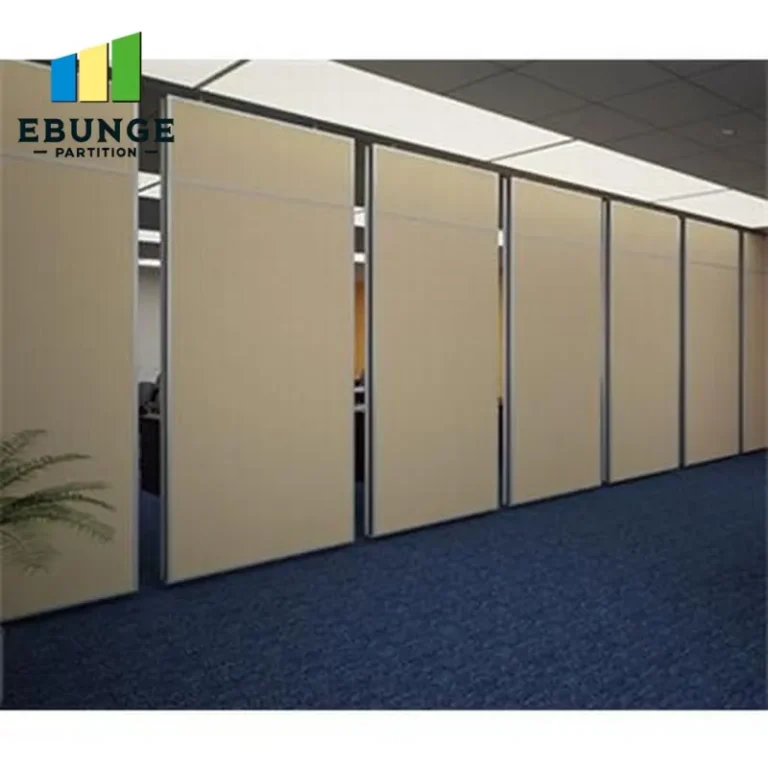
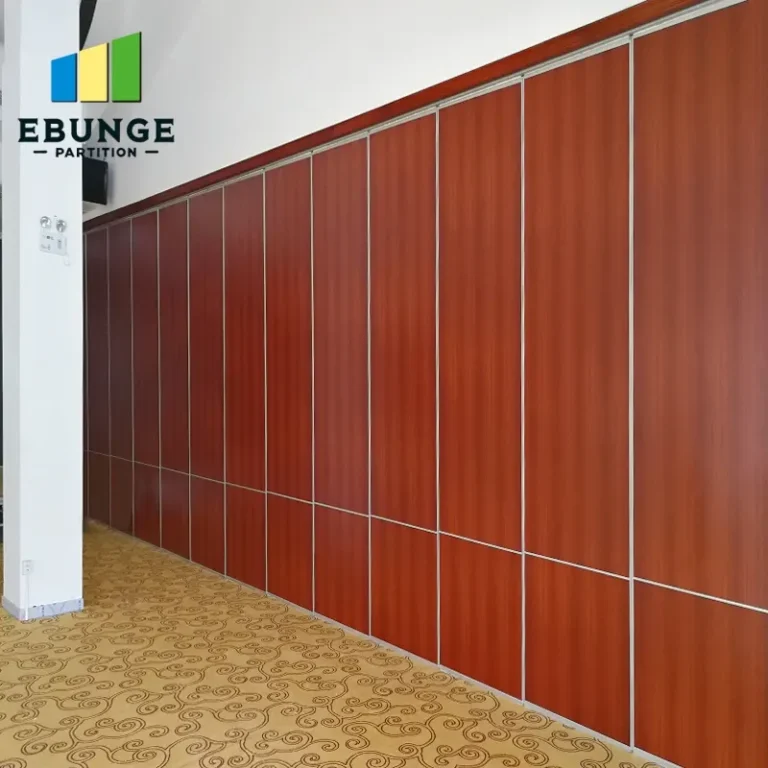
Recording studios often have specific aesthetic requirements, whether it’s to match the acoustic treatment, brand colors, or a professional look. Movable walls can be finished with a variety of materials: wood veneers, laminates, fabrics (acoustically transparent), or even writeable surfaces. The finish not only affects appearance but also acoustic absorption if the panels have a fabric face. If you plan to hang acoustic panels on the movable wall, ensure the finish can support the additional weight.
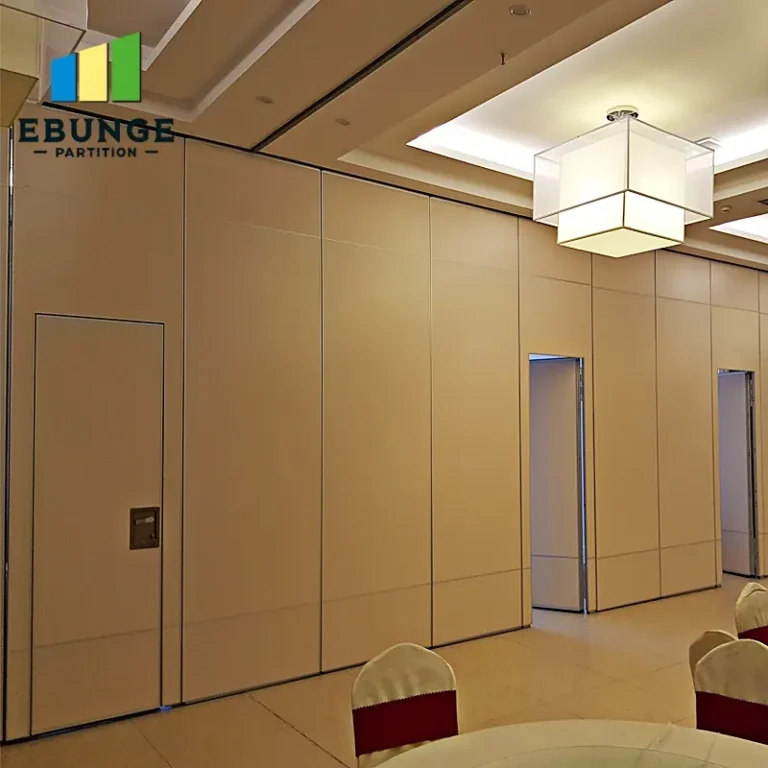
Customization also includes the number of panels, the stacking configuration, and the operation (e.g., turning a 90-degree corner). Some walls can be designed with integrated doors or windows, but these add complexity and may reduce acoustic performance. Discuss your layout with the supplier to find the optimal configuration.
Share the opening, drawings, finish direction, and privacy target for a project-specific review.
Warranty, Support, and the Importance of Factory Direct Consultation
Warranty terms vary, so ask for written details. A typical warranty might cover mechanical components for 5 years, but acoustic performance is not usually warranted because it depends on installation and site conditions. However, a reputable supplier will stand behind the product and offer support for troubleshooting. Factory direct consultation is invaluable: you can speak directly with engineers who understand the product and can advise on your specific application. This is especially important for custom projects. EBUNGE offers factory direct support, meaning you can get expert advice on drawings, installation, and troubleshooting without intermediaries.
Decision Checklist Before You Order
Use this checklist to evaluate proposals and avoid common pitfalls:
| Item | Questions to Ask |
|---|---|
| Acoustic rating | Is the STC rating based on a full assembly test? What is the low-frequency performance? |
| Opening size | Is the quote based on my exact dimensions? Are there height or width limitations? |
| Track system | Is it top-hung without floor rail? What are the structural requirements? |
| Seals | Are automatic bottom seals included? How are perimeter gaps sealed? |
| Finish | What finish options are available? Can you match my samples? |
| Installation | Is installation included? What is the timeline? Who prepares the opening? |
| Warranty | What is covered and for how long? Is acoustic performance warranted? |
| Delivery | What is the lead time? Are there expediting options? |
Common Mistakes in Movable Wall Projects
One common mistake is specifying a wall with an STC rating that is too high for the budget, leading to cost overruns. Another is ignoring the structural support needed for the top-hung track. Also, failing to coordinate with HVAC and lighting systems can result in penetrations that destroy the acoustic seal. Always involve the supplier early in the design phase.
Conclusion: Make Your Studio Project Ready with the Right Specifications
Choosing a soundproof movable wall for your recording studio is a technical decision that requires careful planning. Focus on the acoustic target, exact dimensions, structural interface, and factory-direct support. By specifying your needs clearly and asking the right questions, you can avoid costly mistakes and ensure the wall performs as intended. For detailed guidance and a quotation that matches your project, consult with a specialist who can review your drawings and provide a tailored solution.
Frequently Asked Questions
What STC rating do I need for a recording studio?
How long does it take to install a movable wall?
Does the top-hung track require a floor rail?
Can I customize the finish of the movable wall?
What warranty is typically provided?
For more information on movable partition costs and project planning, visit our movable partition cost guide. To discuss your specific studio needs, contact our team for a factory-direct consultation. You can also explore our blog for additional insights on movable partition walls.
Send the opening size and drawings to discuss a differentiated soundproof movable wall solution.