
Understanding the movable wall vs fixed partition choice
Quick project answer
Church halls often serve worship, community meals, meetings and events. The movable wall vs fixed partition decision affects how that space adapts over time. A fixed partition remains in one place. A movable wall can be repositioned to divide or combine areas. The choice depends on how the hall is used and what the building can support.
This article compares the two approaches using confirmed product information. It focuses on the top-hung principle, floor conditions, parking planning, finish coordination and the inputs needed for project drawings. Route and parking decisions remain subject to the approved layout, circulation, ceiling interfaces and operating plan.
The top-hung principle in movable wall systems
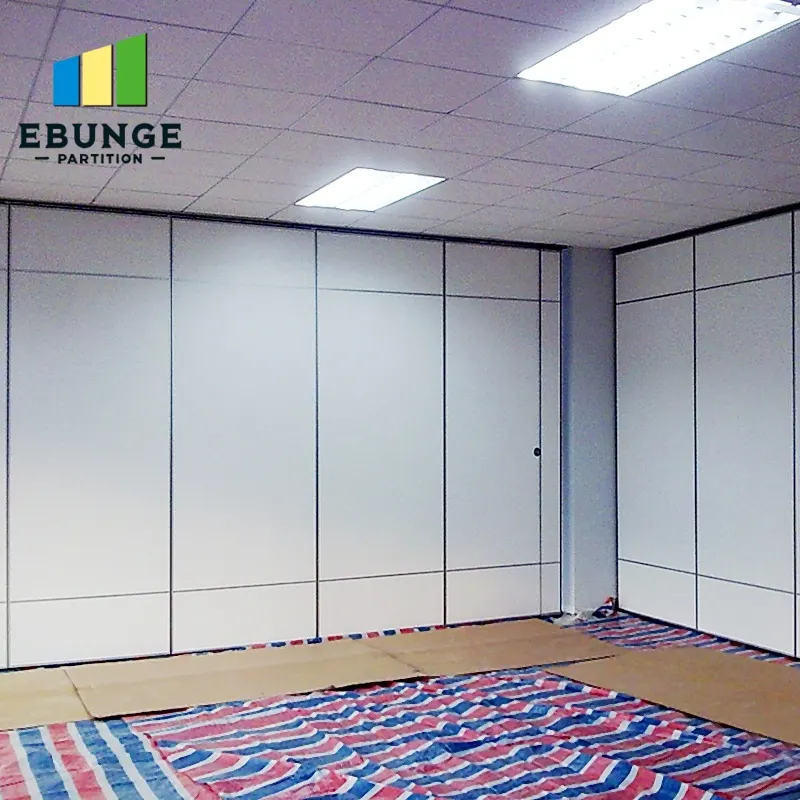
The EBUNGE movable partition system is top-hung. That means the panels are supported from an overhead track rather than from a floor-mounted track. This principle shapes how the movable wall vs fixed partition comparison works in practice. A top-hung system does not require a continuous floor running track or operating hardware in the finished floor along the partition line.
Because the floor does not carry a track, it remains physically uninterrupted by the maintained EBUNGE top-hung system. The floor is not cut or damaged for a floor track. This is a meaningful difference in the movable wall vs fixed partition discussion. A fixed partition is built in place and does not move, so it does not raise the same floor-track question.
Floor conditions and the uninterrupted floor
In many church halls, the floor is a visible and functional part of the room. Stone, timber, tile or another finish may run continuously from wall to wall. With a top-hung movable partition, the finished floor along the partition line is not interrupted by a track. The floor surface remains continuous.
This does not mean every floor is suitable without review. The coordinated drawings remain the authority for parking position, overhead continuity, route and junction arrangement. The movable wall vs fixed partition comparison should always include a review of the actual floor and overhead conditions.
Parking and stacking considerations
When a movable wall is opened, the panels must be parked somewhere. Panel parking style can be customized to the customer layout and project requirements, subject to coordinated drawings. A suitable approved parking arrangement can use the stacking area more compactly and coordinate with the space design.
The exact track, support and panel layout still require project drawings. This is a key part of the movable wall vs fixed partition comparison. A fixed partition does not need parking space, but it also cannot be moved. A movable wall needs a planned parking position that works with the hall layout and adjacent rooms.
- Parking style can be customized to the customer layout.
- Project requirements and coordinated drawings guide the arrangement.
- An approved parking arrangement can use the stacking area more compactly.
- The exact track, support and panel layout require project drawings.
Finish and care coordination
Finish materials for movable partitions can be customized. However, cleaning and maintenance methods vary with the selected finish. The movable wall vs fixed partition comparison should include a review of how each option will be cared for over time.
A fixed partition may use a finish that is cleaned in a particular way. A movable wall may use a different finish that needs different care. Neither approach should be selected without confirming the finish and the corresponding care method. The exact finish and care requirements must be confirmed from the coordinated project drawings.
Non-limiting application examples
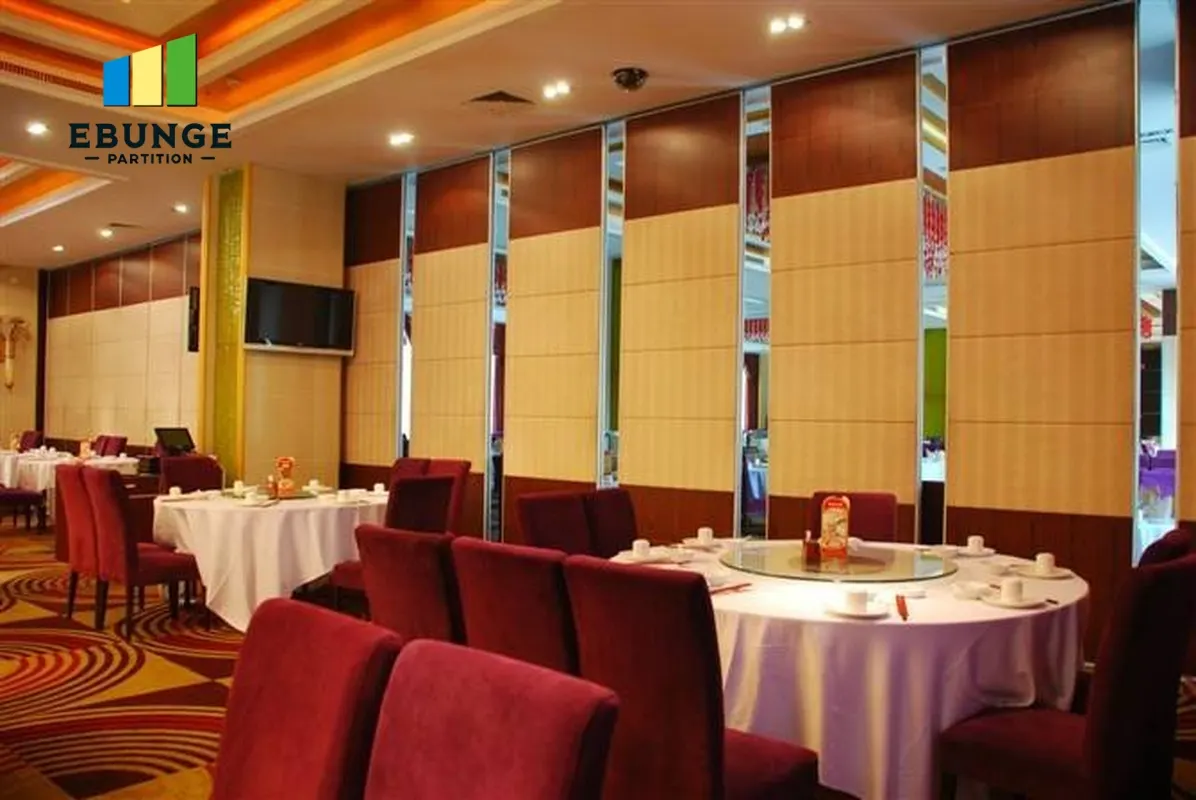
Movable partitions can be used wherever flexible space division, combination or reconfiguration is required. Application examples are not limiting. EBUNGE has completed many types of hotel-related movable-partition projects. Ballrooms, wedding halls and multifunction halls are non-limiting examples.
Church halls may share some characteristics with these spaces, such as the need to divide a large room or combine smaller rooms. The movable wall vs fixed partition comparison should consider how the hall is used week by week. A fixed partition suits a permanent division. A movable wall suits a space that needs to change.
The coordinated drawings remain the authority for parking position, overhead continuity, route and junction arrangement.
Buyer inputs and drawing approvals
Before choosing between a movable wall and a fixed partition, gather the inputs that affect the decision. These include how the hall will be divided, where panels will park when open, and what finish is expected. The movable wall vs fixed partition comparison depends on these project-specific details.
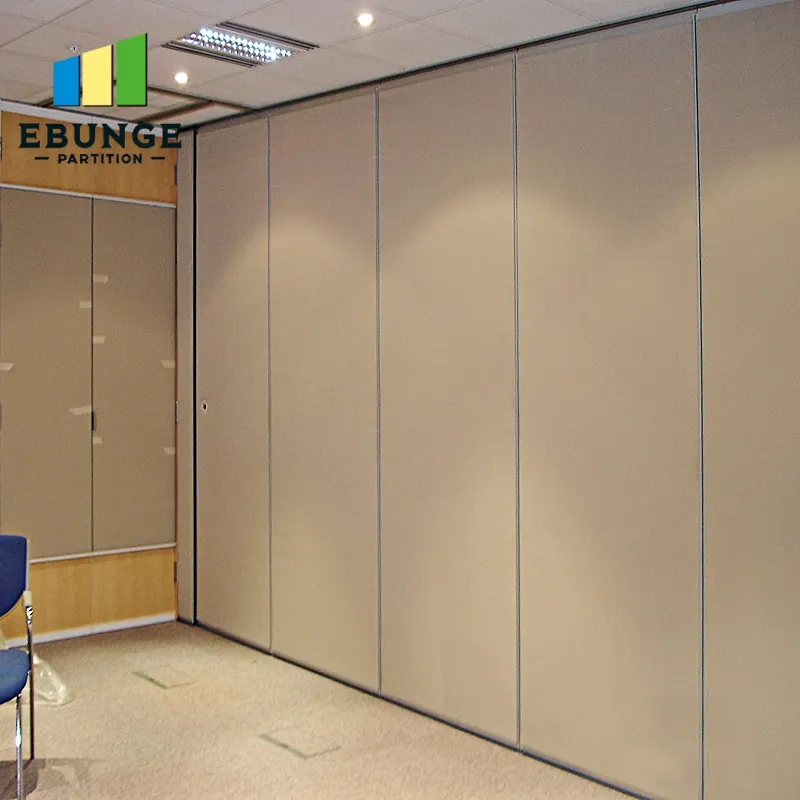
No customer names, locations, quantities, ratings, certifications or outcomes may be inferred from EBUNGE project experience. The confirmed facts are limited to the top-hung principle, the uninterrupted floor, customizable parking style, customizable finishes and finish-specific care. All other engineering details must come from coordinated drawings.
- Define how the hall will be divided or combined.
- Identify a potential parking area for movable panels.
- Confirm the finish direction and care method.
- Review the overhead path and support conditions with the project team.
- Obtain coordinated drawings before finalizing the movable wall vs fixed partition choice.
How to compare options for a church hall
Start by listing the hall’s regular uses. Note which ones need a single large room and which need smaller rooms. Then consider whether a fixed partition would permanently reduce the largest possible space. A movable wall can be opened to restore the full area, but it requires parking space and an overhead track.
The movable wall vs fixed partition comparison should also consider the floor. If the floor must remain continuous, a top-hung movable partition avoids a floor track. If the floor can accept a fixed partition, the floor-track question does not apply. The coordinated drawings remain the authority for parking position, overhead continuity, route and junction arrangement.
Frequently asked questions
What is the main difference between a movable wall and a fixed partition?
A fixed partition is built in one position and does not move. A movable wall can be repositioned to divide or combine spaces. The movable wall vs fixed partition choice depends on how often the hall layout needs to change.
Does a movable wall require a floor track?
The EBUNGE movable partition system is top-hung and has no continuous floor running track or operating hardware in the finished floor along the partition line. The floor is not cut or damaged for a floor track and remains physically uninterrupted by the maintained system.
Can the parking arrangement be customized?
Panel parking style can be customized to the customer layout and project requirements, subject to coordinated drawings. A suitable approved parking arrangement can use the stacking area more compactly and coordinate with the space design.
Are finishes customizable?
Finish materials can be customized. Cleaning and maintenance methods vary with the selected finish. The exact finish and care method should be confirmed from the coordinated project drawings.
Where can movable partitions be used?
Movable partitions can be used wherever flexible space division, combination or reconfiguration is required. Application examples are not limiting. EBUNGE has completed many types of hotel-related movable-partition projects, but no customer names, locations, quantities, ratings, certifications or outcomes may be inferred.
What should be confirmed before choosing?
The movable wall vs fixed partition decision should be based on coordinated project drawings. The exact route, junction arrangement, continuous overhead path and parking position must be confirmed from those drawings.
Making the decision with project drawings
The movable wall vs fixed partition comparison for church halls comes down to flexibility, floor conditions and parking. A top-hung movable partition keeps the finished floor uninterrupted along the partition line. A fixed partition does not move and does not need parking space.
Both options require coordinated project drawings to confirm the exact route, junction arrangement, continuous overhead path and parking position. For movable walls, panel parking style and finish materials can be customized. Cleaning and maintenance methods vary with the selected finish.
To discuss your church hall project, review the movable partition wall range or contact EBUNGE. You can also read more articles in our blogs.