
What a Bidder’s Track Zone Method Statement Reveals in Tender Review
Quick answer: method statement
A bidder track zone method statement tender review is not a formality. It is the moment when you can see whether a bidder has actually understood how the movable wall will travel, where it will park and what the overhead route depends on. Because EBUNGE movable panels are individually movable and suspended from a top track, the track zone is the spine of the whole proposal. If the method statement is vague there, the rest of the submission deserves closer reading.
This article sets out what to look for, what the document can and cannot prove, and how to keep the evaluation tied to drawings and confirmed project information rather than optimistic wording.
Why the Track Zone Deserves Its Own Review Line
Movable wall panels cross the opening without a floor track and park at a planned stacking position. The exact route, junction arrangement, continuous overhead path and parking position must be confirmed from the coordinated project drawings.
A method statement is the bidder’s written account of how those assumptions are handled. Read it as a map of the bidder’s understanding, not as proof of performance.
What the document can show
- Whether the bidder has traced the full route from closed position to parking position.
- Whether straight, turning and stacking routes have been reviewed from the layout.
- Whether the bidder names the drawings and revisions used.
- Whether interfaces with structure and adjacent trades are acknowledged.
What it cannot show on its own
The suitability of each route and parking arrangement depends on the approved layout, circulation, ceiling interfaces and operating sequence. Treat unsupported statements as open questions, not as settled facts.
A Reading Sequence for Tender Reviewers
Work through the submission in a fixed order so that every bidder is judged on the same basis. The sequence below keeps the review comparable across submissions.
- Confirm the drawing register and revision dates referenced by the bidder.
- Trace the movement route on the layout, including any turn.
- Locate the proposed parking or stacking zone and check what shares that space.
- Check how the bidder describes the overhead route and its continuity.
- Review finish assumptions against the approved finish options.
- Note pass-door requirements and any documentation the bidder promises.
- List every statement that needs project-specific confirmation.
Evidence note: a method statement is a description of intent. Structural support, acoustic performance and dimensional fit require separate, project-specific confirmation before award.
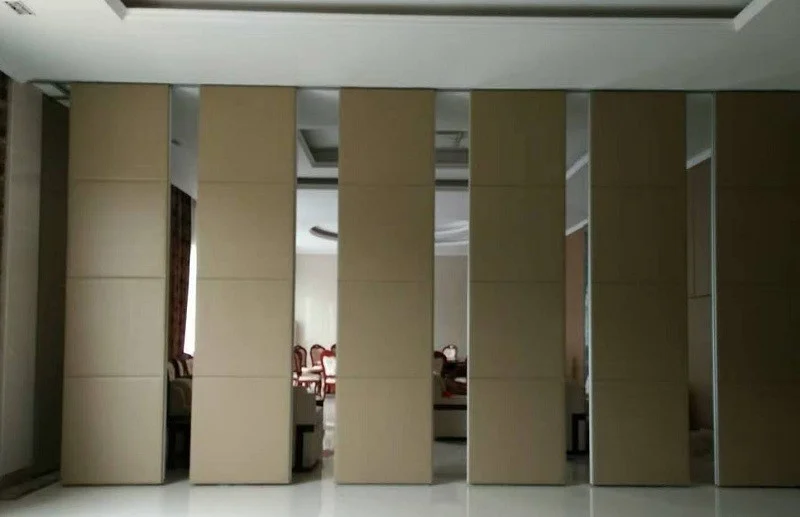
Route Logic: Straight, Turning and Stacking
EBUNGE reviews straight, turning and stacking routes from the layout. A bidder should do the same. Ask for a marked-up plan showing the closed line, the travel path and the final parked position.
Every proposed movement path requires a continuous connected overhead route and project-specific support review. If the method statement describes panels crossing an opening that the drawing does not connect, that is a clarification item.
Parking position questions
- Is the stacking position shown on the same drawing revision as the route?
- Does the parked stack obstruct circulation, escape routes or fixed furniture?
- Has the bidder described how the stack relates to adjacent walls or columns?
Support and Interface Assumptions
The top track carries the panels, so the structure above it matters. A credible method statement identifies the interface and states who confirms it. It should not quietly assume that any soffit or beam is suitable.
The exact overhead route and support arrangement must be confirmed by the responsible project team from coordinated drawings.
| Review point | Weak signal | Stronger signal |
|---|---|---|
| Route drawing | No marked-up plan | Route and parking shown on a dated revision |
| Overhead continuity | Assumed without comment | Interface named, confirmation owner stated |
| Parking zone | Described in words only | Located on plan with adjacent constraints noted |
| Finishes | Generic reference | Selected from approved options with samples discussed |
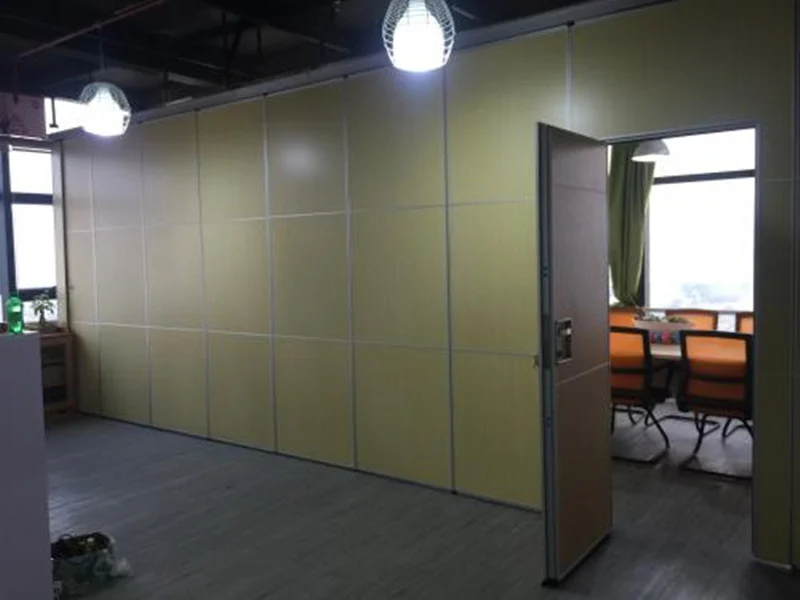
Finishes, Pass Doors and Documentation
Confirmed finish options include laminate, melamine, fabric, leather, glass and other approved surfaces. A method statement should connect each proposed finish to the room’s use without claiming cleaning, durability or acoustic outcomes that are not evidenced.
Pass-door requirements can be discussed as part of the configuration. Ask the bidder to show where a pass door sits relative to the track route and the parked stack, and to state what project documentation will be issued.
Questions that expose gaps
- Which finish option is proposed, and on what basis?
- Is a pass door required, and how does it affect the route?
- What documentation will be provided, and when?
Acoustic Language: Read It Carefully
Seals and acoustic concepts can be explained generically, but a tender review should not accept a single number as a promise.
Confirm project-specific acoustic requirements with the responsible specialist.
Scoring the Submission Fairly
Use a short decision checklist so that prose quality does not outweigh drawing evidence. Score each item as met, partly met or not met, and record the clarification requested.
- Route and parking shown on a current drawing revision.
- Overhead continuity and support responsibility stated.
- Finish selection tied to approved options.
- Pass-door and documentation requirements addressed.
- Acoustic statements bounded by project-specific confirmation.
- Open items listed rather than hidden.
For product context while scoring, refer to the movable walls range and compare the bidder’s description with the maintained facts.
FAQ
Does a detailed method statement prove the partition will meet acoustic targets?
No. It shows the bidder’s understanding of the configuration.
Should I reject a bidder who has not marked the parking zone on a drawing?
Treat it as a clarification first. Ask for a marked-up plan on the current revision, then judge the response.
How do I check the overhead route in the submission?
Trace the closed line, travel path and parked position on the layout. Confirm the route is continuous and that support responsibility is stated.
Can finishes be changed after tender?
Finish options include laminate, melamine, fabric, leather, glass and other approved surfaces. Any change should be confirmed against the project specification and drawings.
What if the bidder mentions a pass door only in passing?
Ask for its position relative to the route and stack, and for the documentation that will follow. Pass-door requirements can be discussed directly.
Is a floor track needed along the partition line?
EBUNGE panels are top-hung and move without a continuous floor running track along the partition line. Confirm the specific configuration for your project.
Conclusion and Next Step
Reward submissions that show the route, locate the parking zone and state who confirms support. Flag anything that reads as an unverified performance promise.
Before award, confirm project-specific support, acoustic and dimensional requirements with the responsible parties. To discuss pass-door requirements, finishes or documentation for your project, contact the EBUNGE team.