
Track Zone Handover Pack Trolley Load Path Evidence
Quick project answer
A track zone handover pack trolley load path evidence set is the document bundle that lets a project team see, on paper, how each movable panel travels from its closed position to its parking position. The suitability of each route and parking arrangement depends on the approved layout, circulation, ceiling interfaces and operating sequence. Its job is narrower and more useful: to show that the overhead route has been drawn, coordinated and reviewed before the space is handed over.
For overseas contractors, architects, interior designers, owners and renovation teams, the handover pack is often the first point where installation, ceiling coordination and room operation meet. This guide sets out what the pack should prove, what it cannot prove on its own, and where project-specific confirmation is required.
Why the Track Zone Deserves Its Own Handover Evidence
EBUNGE movable wall panels are individually movable and suspended from a top track. They cross the opening without a floor track and park at a planned stacking position. Because the panels hang from above, the overhead route is the operating spine of the system. A handover pack that documents only the finished wall elevation leaves the most important coordination questions unanswered.
The track zone is also where trades overlap. A pack that shows the trolley route in plan and section gives each trade a shared reference.
What the Pack Should Show About the Trolley Route
The core evidence is a route drawing. It should trace the path each panel follows from the closed opening to the parking location, including every change of direction. Straight, turning and stacking routes are reviewed from the layout, so the pack should present them together rather than as separate fragments.
Plan and section views
A plan view shows the horizontal route and the parking footprint. A section or elevation view shows the relationship between the track, the supporting structure and the ceiling zone. Both views should carry the same drawing number and revision so reviewers can cross-check them.
Route continuity
Every proposed movement path requires a continuous connected overhead route. The pack should make that continuity visible, including at junctions and turns. A gap in the drawn route is a coordination question, not a detail to be resolved on site by assumption.
A Review Checklist for the Handover Pack
Use the following checklist as a scannable review aid. Each item should be traceable to a drawing, a schedule entry or a written confirmation in the pack.
- Route drawing: plan and section views of the full travel path, with revision numbers.
- Parking position: the planned stacking location shown against the room layout.
- Turning points: any change of direction identified and reviewed.
- Ceiling coordination: the overhead band shown against ceiling and service zones.
- Support interface: the connection between track zone and supporting structure flagged for project-specific review.
- Finish schedule: confirmed finish options recorded against each panel or elevation.
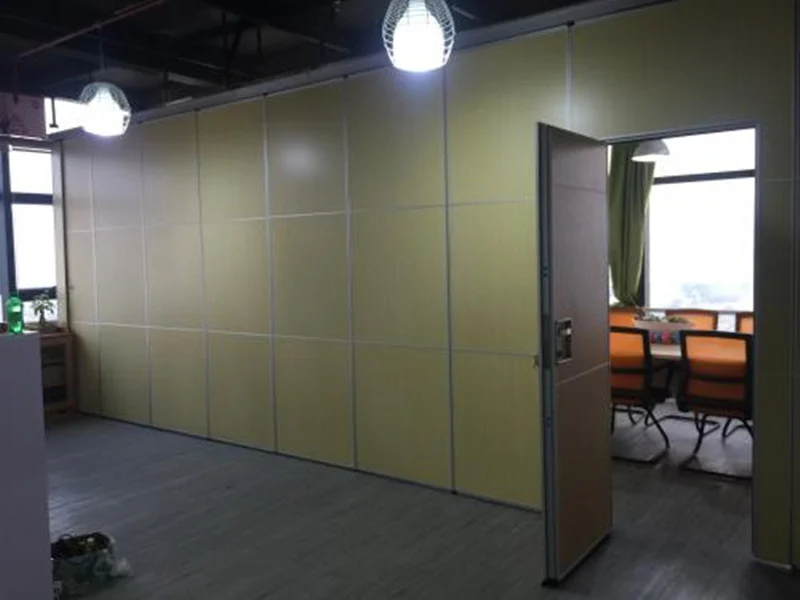
- Pass-door requirements: any pass-door need discussed and recorded.
- Open items: unresolved questions listed with an owner and a review route.
Evidence note: a drawing shows a proposed route. It does not prove structural capacity, acoustic performance or code compliance. Those require separate, project-specific confirmation by the responsible parties.
Separating Drawing Evidence From Performance Claims
Handover packs often drift into performance language. A route drawing may be labelled with acoustic terms, for example, even though the drawing itself says nothing about measured performance. Where acoustic requirements matter, they need their own project-specific evidence and review.
The same discipline applies to structure. The pack can show where the track zone sits and how the route relates to the building.
What the pack can and cannot prove
| Question | Drawing evidence can show | Requires separate confirmation |
|---|---|---|
| Where does each panel travel? | Route in plan and section | Site verification of the built condition |
| Where do panels park? | Planned stacking position | Clearance and layout coordination |
| Is the overhead route continuous? | Drawn continuity at turns | Support and fixing review |
| Will the space meet acoustic needs? | Not established by route drawings | Project-specific acoustic evidence |
Coordinating the Pack Across Trades and Stages
If the pack is assembled only at the end of installation, the route may already conflict with finished elements. The exact route, junction arrangement, continuous overhead path and parking position must be confirmed from the coordinated project drawings.
Assign one document owner, keep a single revision register, and record every change to the route. When a route changes, the parking position and ceiling coordination should be re-checked together. The EBUNGE resources page is a useful starting point for general planning context, while the movable walls product page sets out the maintained product facts that the pack should reflect.
Common Gaps Reviewers Should Look For
Most handover problems are omissions rather than errors. A route drawn only in plan, with no section, leaves the overhead band unexamined. A parking position shown without its approach route leaves the final movement unexplained. A finish schedule that lists options without recording which finish applies to which elevation creates ambiguity at handover.
Reviewers should also check that the pack does not imply performance from appearance. Treat any such inference as an open item to be confirmed.
Frequently Asked Questions
What is a track zone handover pack?
It is a document bundle covering the overhead track zone of a movable wall installation. It typically includes route drawings, parking positions, finish schedules and a list of open items, and it supports coordination between the parties responsible for the space.
Does the pack prove the trolley load path is structurally adequate?
No.
Should straight, turning and stacking routes appear together?
Yes. These routes are reviewed from the layout, so presenting them together helps reviewers see how panels move between the opening and the parking position without gaps in the drawn path.
Can the pack confirm acoustic performance?
Not by itself. Acoustic requirements need their own project-specific evidence. Visible references can support layout discussion but do not verify hidden construction or performance.
Which finish information belongs in the pack?
Record the confirmed finish option for each panel or elevation. Confirmed options include laminate, melamine, fabric, leather, glass and other approved surfaces. A finish record does not establish cleaning compatibility or performance.
How are pass-door requirements handled?
Pass-door requirements can be discussed with the project team and recorded in the documentation. The pack should show where a pass door is required and flag any coordination points for review.
Conclusion: Evidence, Limits and the Next Review
A good track zone handover pack does two things well. It makes the trolley route visible and reviewable, and it is honest about what the drawings do not establish. When the pack shows continuous overhead routes, planned parking positions and a clear list of open items, the project team can review the layout with confidence about scope and with appropriate caution about performance.
Before sign-off, confirm project-specific support, acoustic and dimensional requirements with the responsible parties.
To discuss pass-door requirements, project documentation or route review for your layout, contact the EBUNGE team with your drawings and project details.